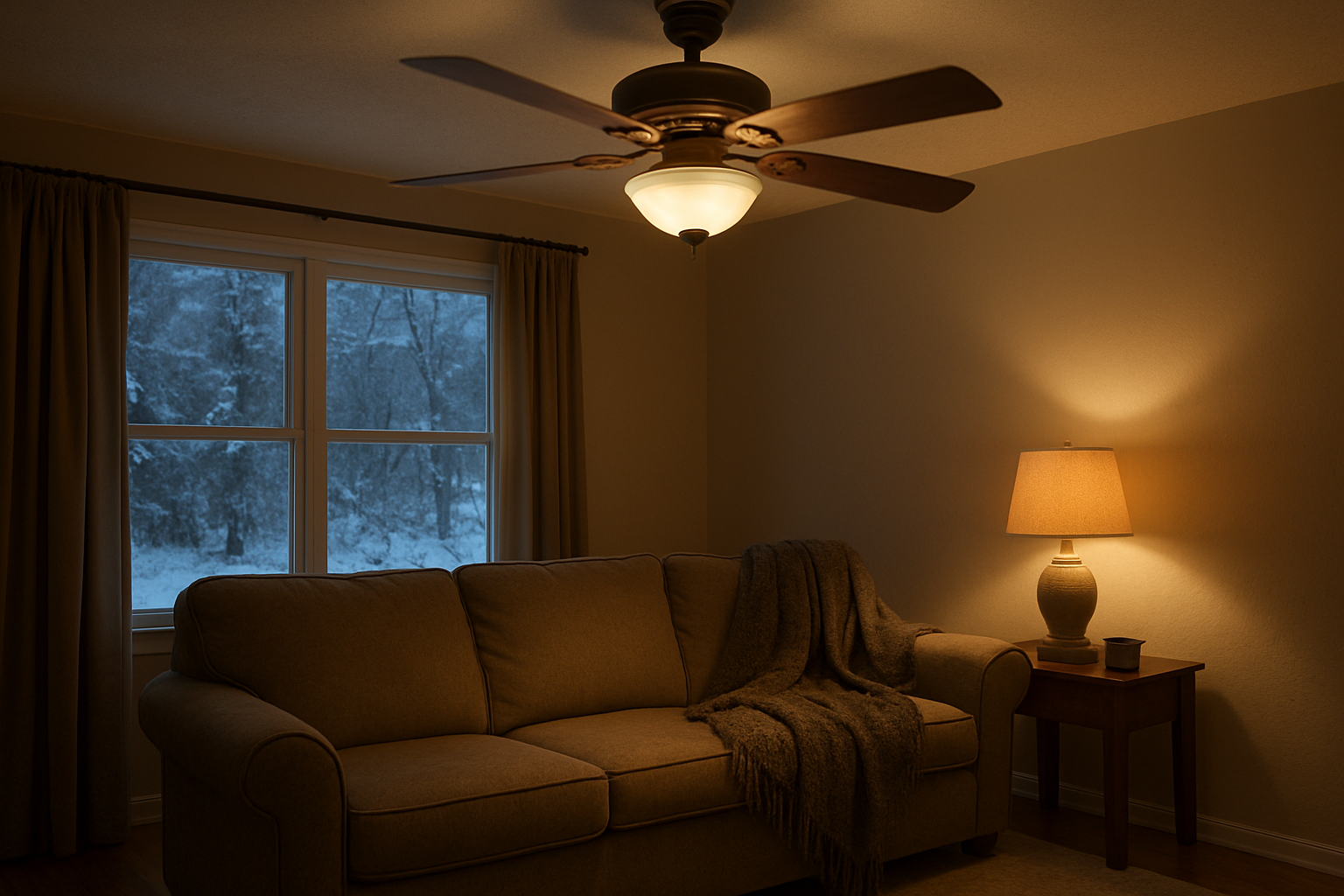
Ceiling Fan Direction in Winter: How to Set It Right
A ceiling fan is not just for hot weather. Used the right way, it can help move warm air that collects near the ceiling back into the room, which is especially helpful in rooms with tall ceilings, stairwells, or uneven temperatures.
The key is setting the ceiling fan direction in winter correctly: in most homes, that means clockwise on the lowest comfortable speed. Here is how to check it, change it, and avoid the chilly draft that makes people turn the fan off too soon.
Which Way Should a Ceiling Fan Turn in Winter?
For winter, most ceiling fans should turn clockwise when you are standing underneath and looking up. This creates a gentle updraft, pulling cooler air upward and helping push warmer air near the ceiling outward and down along the walls.
That matters because warm air rises. If your heat is running but your feet are cold, some of that warmth may be sitting where you cannot feel it. A slow clockwise fan helps mix the air without blowing directly on you.
The easiest rule to remember is:
- Winter: clockwise, low speed, gentle air movement
- Summer: counterclockwise, higher speed, cooling breeze downward
There are a few exceptions depending on blade pitch and fan design, but this rule applies to the vast majority of standard ceiling fans sold for home use.
How to Check Your Fan Direction
Stand directly under the fan and look up at the blades while it is running on low. If the blades appear to move clockwise, you are set for winter. If they appear to move counterclockwise, the fan is still in its summer setting.
You can also use the tissue test. Hold a lightweight tissue or strip of toilet paper at about shoulder height below the fan. In winter mode, you should not feel a strong breeze pushing straight down. The paper may flutter slightly, but it should not whip around like it would in summer.
How to Change Ceiling Fan Direction
Always turn the fan off first and wait for the blades to stop completely before changing direction. Then use the method that matches your fan.
If Your Fan Has a Small Switch on the Motor Housing
- Turn the fan off at the wall switch, pull chain, or remote.
- Wait until the blades stop moving.
- Look for a small sliding switch on the fan’s motor housing, usually above the blades.
- Flip the switch to the opposite position.
- Turn the fan back on at low speed and check the direction from below.
You may need a sturdy step ladder to reach the switch. Do not stand on a chair, and do not try to flip the switch while the fan is moving.
If Your Fan Uses a Remote or Wall Control
Many newer ceiling fans have a reverse button on the remote or wall control. Look for a button labeled reverse, an icon with arrows in a circle, or a fan direction setting in the app if you have a smart fan.
Some models require you to hold the button for a few seconds. Others only allow direction changes when the fan is off. If the fan does not reverse, turn it off, wait for the blades to stop, and try again.
If You Cannot Find the Reverse Switch
Check the top of the motor housing, above the light kit, or near the downrod. On some fans, the switch is tucked out of sight. If you still cannot find it, search the model number printed on the fan or inside the canopy cover. Older or very basic fans may not be reversible.
Use Low Speed, Not High Speed
Winter fan use works best when it is subtle. Set the fan to the lowest speed that moves air without creating a noticeable draft. If you feel a breeze on your skin, the fan is probably too fast.
This is the most common mistake. A ceiling fan does not make heat; it only moves air. On high speed in winter, it can make the room feel colder even if the thermostat has not changed. Low speed is enough to help mix the warm air near the ceiling with the cooler air below.
Best Rooms for Winter Ceiling Fan Use
Winter fan direction is most useful in rooms where warm air has somewhere to collect. Try it first in these spots:
- Rooms with high or vaulted ceilings: Warm air rises far above seating level.
- Living rooms with fireplaces: A fan can help move heat away from the ceiling area.
- Stairwells and open foyers: Heat often drifts upward and leaves lower rooms cooler.
- Bedrooms over garages or colder spaces: Gentle circulation may help even out chilly corners.
- Open-plan rooms: Moving air slowly can reduce hot and cold pockets.
In a small room with a standard 8-foot ceiling, the difference may be less noticeable. If the room feels drafty with the fan on, even at low speed, leave it off or use it only for short periods.
Can It Lower Your Heating Bill?
A ceiling fan can help with comfort, but it only saves money if you use that comfort to reduce heating demand. In plain terms: the fan itself will not lower the bill unless it helps you keep the thermostat a little lower or prevents you from using extra space heaters.
Try this practical approach. Set the fan clockwise on low, let it run for 20 to 30 minutes, then see whether the room feels more even. If it does, lower the thermostat by one degree and give the house time to adjust. If everyone is still comfortable, you may be able to leave it there.
Do not run fans all day in empty rooms. Ceiling fans help people feel more comfortable; they do not warm furniture, walls, or the room itself like a heating system does.
Quick Cleaning Before You Reverse It
Before switching your fan for the season, take five minutes to clean the blades. Dust buildup can fling grime around the room and may make the fan wobble.
- Turn the fan off and let the blades stop.
- Place an old sheet or towel under the fan if it is very dusty.
- Slide an old pillowcase over each blade and pull it back to trap dust inside.
- Wipe the blade tops with a lightly damp microfiber cloth.
- Dry the blades before turning the fan back on.
Avoid soaking the blades, especially if they are wood or wood veneer. Moisture can warp some blade materials.
Troubleshooting: If the Room Still Feels Drafty
If your ceiling fan feels wrong in winter, run through this checklist:
- Check the direction again: Stand underneath and confirm it is turning clockwise.
- Lower the speed: Use the lowest setting, especially over beds and sofas.
- Use it intermittently: Run it for 15 to 30 minutes to mix air, then turn it off.
- Move seating if needed: Sitting directly under a fan can feel chilly even on low.
- Look for actual drafts: Cold air from windows, doors, attic hatches, and outlets can overpower the benefit of fan circulation.
If the fan wobbles, clicks, or hums loudly after you change direction, turn it off and inspect it. Tighten visible blade screws if you can do so safely, and make sure the blades are clean. Persistent wobbling may need a balancing kit or professional help.
The Simple Winter Ceiling Fan Routine
At the start of heating season, clean the blades, switch the fan to clockwise, and run it on low. Use it most in rooms with high ceilings or uneven temperatures, and turn it off when the room is empty.
That small seasonal change can make a heated room feel more comfortable without adding another gadget or project to your list. If your fan has been sitting still all winter, this is an easy fix worth trying tonight.