How to Clean a Humidifier the Right Way
A humidifier can make dry winter air feel much more comfortable, but only if the machine itself stays clean. A tank that sits wet for days can collect mineral scale, slime, and musty odors, then send some of that mess back into the room.
The good news: learning how to clean a humidifier is simple once you split the job into daily rinsing, deeper cleaning every few days, and a careful dry-out before storage. Always check your owner’s manual first, but the routine below works for many portable home humidifiers.
Why humidifier cleaning matters
Portable humidifiers hold water in a warm indoor room, often overnight. That is exactly why the U.S. Environmental Protection Agency says proper care is important for reducing possible exposure to microorganisms such as bacteria and molds, especially with ultrasonic and impeller models. The EPA also notes that mineral scale can become a place where microorganisms grow. ([epa.gov](https://www.epa.gov/indoor-air-quality-iaq/use-and-care-home-humidifiers?utm_source=openai))
There is also the white-dust problem. If you use mineral-heavy tap water in some cool-mist humidifiers, fine mineral particles can settle on furniture and surfaces. The EPA recommends using water with lower mineral content, such as distilled water, to reduce minerals released into the air. ([epa.gov](https://www.epa.gov/indoor-air-quality-iaq/use-and-care-home-humidifiers?utm_source=openai))
A clean humidifier is not just about appearances. Mayo Clinic advises cleaning humidifiers every three days, removing mineral buildup or film from the tank and other parts, and following the manufacturer’s directions. ([mayoclinic.org](https://www.mayoclinic.org/diseases-conditions/common-cold/in-depth/humidifiers/art-20048021?pg=1&utm_source=openai))
What you’ll need
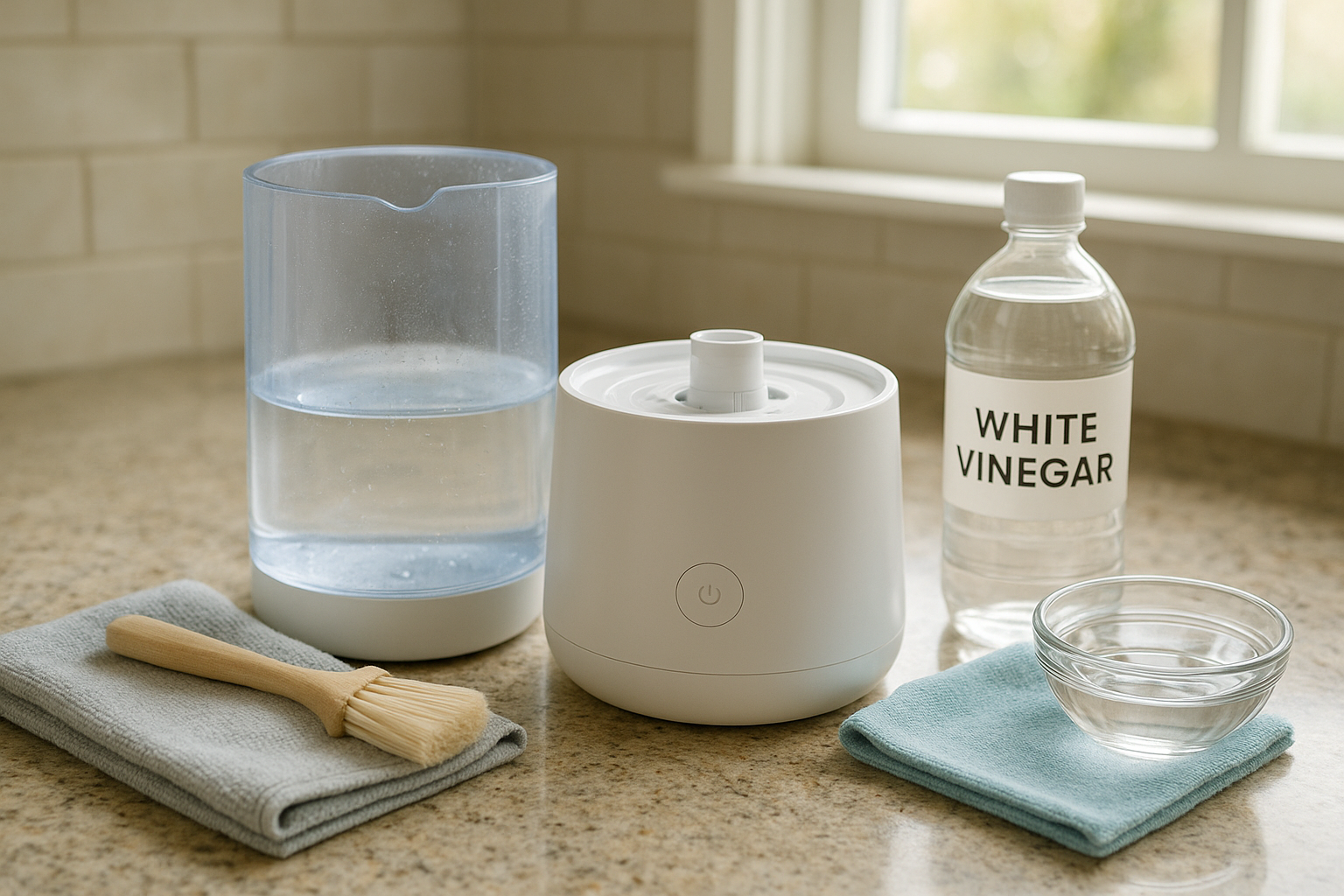
- White vinegar
- Clean water
- Soft bottle brush or old soft toothbrush
- Microfiber cloth or paper towels
- 3% hydrogen peroxide, if recommended by your humidifier manual
- Rubber gloves, optional
- Distilled water for refilling, especially for ultrasonic or cool-mist models
Important: Do not mix cleaning products. Vinegar and hydrogen peroxide should not be combined in the tank at the same time. Also avoid harsh abrasives that can scratch plastic and create places for buildup to cling.
The quick daily routine
If your humidifier runs most nights, this little habit makes the deeper clean much easier.
- Unplug the humidifier. Never clean it while it is plugged in.
- Empty the tank and base. Do not keep topping off old water. Dump it out every day.
- Rinse with clean water. Swish the tank, pour it out, and rinse any water tray or base area your manual says can be rinsed.
- Wipe dry if possible. Use a clean cloth to dry reachable surfaces before refilling.
- Refill with fresh water. Distilled water is the better choice for reducing mineral dust and scale.
That daily dump-and-rinse step is the difference between maintaining a clean machine and trying to rescue one that smells like a pond.
How to deep clean a humidifier every 3 days
Plan on a deeper cleaning about every third day during heavy use, or sooner if you notice film, pink residue, crusty white scale, or a musty smell. Here is a practical method for many portable units.
1. Unplug and take it apart
Remove the tank, cap, mist nozzle, tray, and any washable parts according to your manual. Set aside filters, wicks, cartridges, or electronic pieces that should not be soaked. If your unit has a paper-like wick filter, vinegar soaking may damage it, so follow the replacement and care instructions from the maker.
2. Soak mineral scale with vinegar
Pour enough white vinegar into the tank to wet the scaled areas. For the base or tray, add vinegar only where the manual allows liquid. Let it sit for 15 to 30 minutes. Vinegar helps loosen chalky mineral buildup so you do not have to scrape.
3. Brush the corners
Use a soft brush to scrub around seams, the tank cap, grooves, and the mist outlet. These small parts often hold the most residue. If your hand will not fit inside the tank, use a bottle brush and rotate the tank so the vinegar reaches each corner.
4. Rinse very thoroughly
Pour out the vinegar and rinse several times with clean water. This step matters because leftover cleaner can be sent into the air the next time the humidifier runs. Keep rinsing until there is no vinegar smell.
5. Disinfect if your manual recommends it
Some manufacturers recommend periodic disinfection with 3% hydrogen peroxide or another product. Mayo Clinic specifically mentions using a 3% hydrogen peroxide solution to remove mineral buildup or film, while still emphasizing that users should follow manufacturer directions. ([mayoclinic.org](https://www.mayoclinic.org/diseases-conditions/common-cold/in-depth/humidifiers/art-20048021?pg=1&utm_source=openai)) If you use hydrogen peroxide, do it after the vinegar has been rinsed away, not mixed with it.
6. Air dry completely
Set the parts on a clean towel and let them dry before reassembling, especially if you are not turning the humidifier back on right away. Dry surfaces are less friendly to mold and bacteria than damp, closed-up tanks.
What about bleach?
Some humidifier manuals allow a diluted bleach solution for disinfecting; others do not. Because designs vary, use bleach only if your specific manual says it is safe. If you do use it, rinse repeatedly and air dry completely before running the machine again.
Never mix bleach with vinegar, hydrogen peroxide, ammonia, or other cleaners. When in doubt, skip the bleach and stick with the cleaning method your manufacturer recommends.
Use the right water
If you have been fighting white dust on furniture, crusty buildup in the tank, or a gritty film near the humidifier, your water may be part of the problem. Distilled water contains fewer minerals than typical tap water, which helps reduce scale in the machine and mineral particles in the room.
This is especially helpful for ultrasonic and impeller humidifiers, which can disperse minerals from water more readily than some other designs. The EPA says using water with lower mineral content can reduce exposure to minerals and other materials from these humidifiers. ([epa.gov](https://www.epa.gov/indoor-air-quality-iaq/use-and-care-home-humidifiers?utm_source=openai))
Keep indoor humidity in the safe zone
Cleaning matters, but so does how high you run the humidifier. Too much moisture can encourage condensation on cold windows, damp walls, and mold growth around the house. Mayo Clinic recommends keeping indoor humidity between 30% and 50% and using a hygrometer to monitor the level. ([mayoclinic.org](https://www.mayoclinic.org/diseases-conditions/common-cold/in-depth/humidifiers/art-20048021?pg=1&utm_source=openai))
If you see water beading on windows or dampness around the humidifier, turn the unit down or run it for shorter periods. A humidifier should make the air comfortable, not leave nearby surfaces wet.
Signs your humidifier needs cleaning now
- The mist smells musty, sour, or stale.
- You see pink, orange, green, black, or gray residue.
- There is white crust around the tank, cap, or base.
- The mist output is weaker than usual.
- The tank feels slippery inside.
- Dusty white powder appears near the humidifier.
If cleaning does not remove the odor or buildup, check whether the filter, wick, cartridge, or tank cap needs replacing. Some parts are meant to be disposable and will not come fully clean after a season of use.
How to store a humidifier at the end of the season
Before you put the humidifier away, empty it, clean it thoroughly, rinse it well, and let every part dry completely. Do not store it with water in the tank or moisture trapped in the base. Pack it loosely with the cap off or ajar if the design allows, so air can circulate.
When dry air returns, give the tank a quick rinse before the first use. Starting with a clean machine is much easier than discovering old residue on the first cold night you need it.
The simple schedule to remember
- Every day: Empty, rinse, and refill with fresh water.
- Every 3 days: Deep clean to remove film and mineral scale.
- As needed: Replace filters, wicks, or cartridges according to the manual.
- End of season: Clean, rinse, dry completely, and store open to air.
A humidifier should help your home feel better, not add another cleaning headache. With fresh water, regular rinsing, and a deeper clean every few days, you can keep it running more safely and avoid the musty tank problem before it starts.