How to Clean a Dishwasher Filter the Right Way
If your dishwasher smells a little sour or your glasses come out with gritty specks, the filter may be overdue for a cleaning. The good news is that learning how to clean a dishwasher filter is simple, takes about 10 minutes, and can make a noticeable difference in how well your machine washes.
Most modern dishwashers have a manual filter in the bottom of the tub. It catches food bits before they can recirculate onto dishes or clog parts of the drain system, so it needs regular attention. Whirlpool and Maytag both recommend checking your model’s filter instructions and cleaning more often when you wash frequently or leave more food soil on dishes. ([whirlpool.com](https://www.whirlpool.com/blog/kitchen/fixing-removing-and-replacing-dishwasher-filters.html?utm_source=openai))
How to Tell Your Dishwasher Filter Needs Cleaning
A dirty filter does not always announce itself dramatically. Sometimes the first clue is simply that your dishwasher is not doing its job as well as it used to.
Check the filter if you notice:
- Grit, crumbs, or cloudy residue on clean dishes
- A musty or rotten smell when you open the door
- Water pooling around the filter area after a cycle
- Food bits stuck to cups, bowls, or the top rack
- A greasy film on the bottom of the dishwasher tub
- Longer cycles that still do not leave dishes fully clean
A little standing water in the sump area can be normal on some machines, but more than an inch of water near the filter can point to a clog or drainage issue that needs attention. ([maytag.com](https://www.maytag.com/blog/kitchen/dishwasher-troubleshooting.html?utm_source=openai))
What You’ll Need
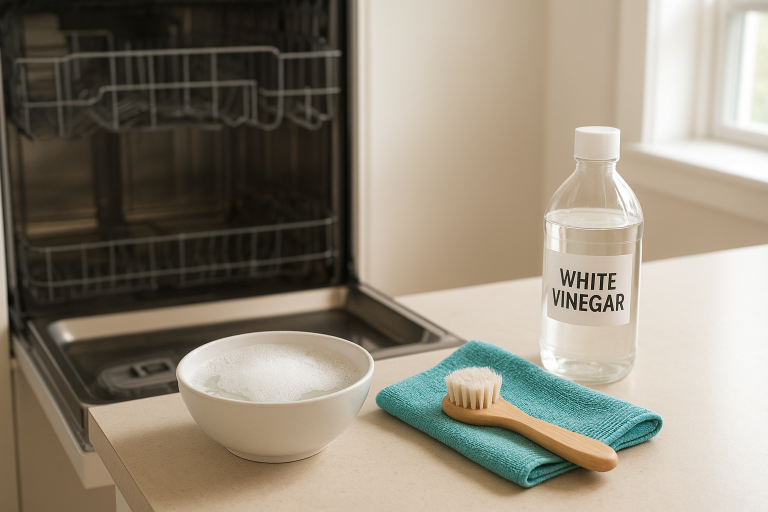
You do not need harsh cleaners or special tools for a basic dishwasher filter cleaning. Gather these before you start:
- Rubber gloves, if desired
- A small bowl or sink of warm water
- A few drops of dish soap
- A soft brush, old toothbrush, or non-abrasive sponge
- Microfiber cloth or paper towel
- Flashlight, optional but helpful
Avoid steel wool, sharp tools, bleach, and abrasive scouring powders. The filter mesh and plastic tabs can be damaged if you scrub too aggressively.
Step-by-Step: How to Clean a Dishwasher Filter
1. Empty the dishwasher and remove the lower rack
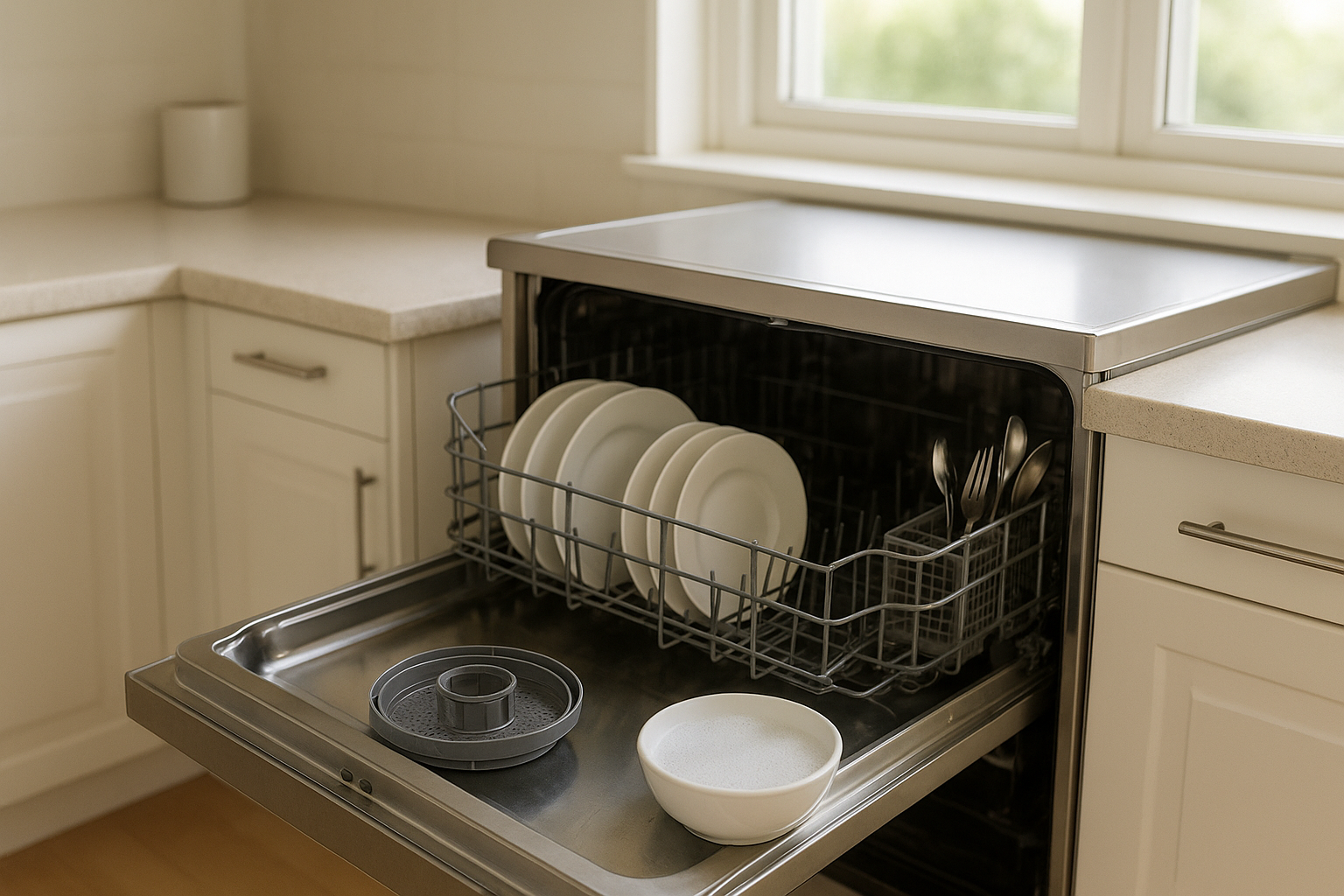
Start with a cool, empty dishwasher. Pull out the bottom rack and set it aside. This gives you room to reach the filter, which is usually located on the floor of the dishwasher tub, often near the spray arm.
2. Find the filter assembly
Many dishwashers have a round upper filter that twists loose and a lower flat filter that lifts out. Other models look slightly different, so check your owner’s manual if anything feels stuck. Do not force the parts. Whirlpool’s filter-cleaning guidance notes that the filter assembly is typically removed by turning the upper filter and lifting it out, then removing the lower filter. ([producthelp.whirlpool.com](https://producthelp.whirlpool.com/Dishwashers/Dishwasher/Other/Cleaning_and_Odor/Cleaning_and_Maintenance/Cleaning_the_Filter/Cleaning_the_Filter_-_Dishwasher?utm_source=openai))
3. Remove loose debris first
Before rinsing, look around the filter cup and drain area. Pick out any obvious food scraps, labels, bits of glass, twist ties, seeds, or broken pasta pieces. If you suspect broken glass, wear thick gloves and use a flashlight.
This is also a good time to wipe the dishwasher floor around the filter. Grease and soft food debris often collect in that low spot.
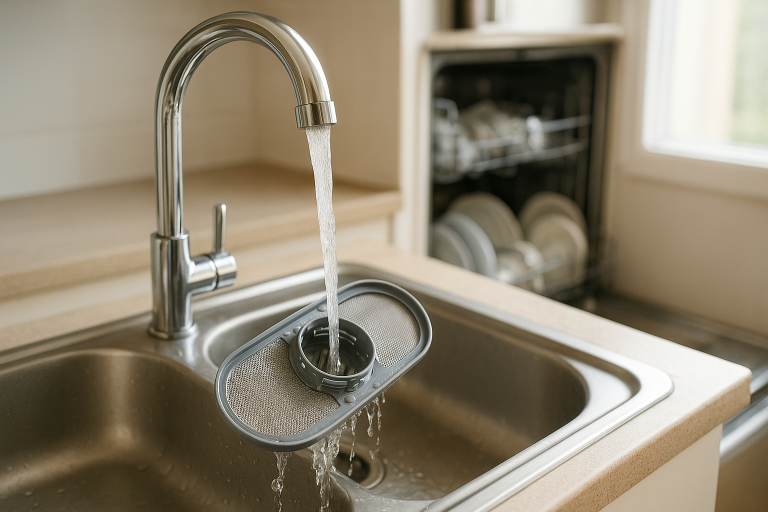
4. Rinse the filter under warm running water
Hold the filter under warm water and rinse from both sides. Use your fingers to gently loosen soft food buildup. If the filter is only lightly dirty, this may be enough.
If it has a greasy film or stuck-on residue, soak it for 5 to 10 minutes in warm, soapy water. Then scrub gently with a soft brush. Pay attention to the fine mesh, the plastic frame, and any grooves where food can hide.
5. Clean the filter housing
While the filter is out, wipe the opening where it sits. Do not pour anything harsh down into the dishwasher drain. Just remove visible debris and wipe away grime with a damp cloth.
Spin the lower spray arm by hand, too. It should move freely. If the spray holes look clogged, clear them gently with a toothpick and wipe the arm clean. A blocked spray arm can mimic the symptoms of a dirty filter.
6. Reinstall the filter securely
Put the lower filter back first if your model has one, then replace the upper filter and twist it until it locks. This part matters: a loose or incorrectly installed filter can let food particles back into the wash water or interfere with the spray arm.
Do not run the dishwasher without the filter properly installed. Manufacturer guidance commonly warns that the filter protects internal parts and helps keep food soil from circulating through the machine. ([appliancemaintenance.center](https://www.appliancemaintenance.center/error-codes/maytag-dishwasher-filter-cleaning/?utm_source=openai))
7. Run a short rinse or cleaning cycle
Once the filter is back in place, run a rinse cycle or a hot wash cycle with the dishwasher empty. If the whole machine smells stale, use a dishwasher cleaner according to the package directions. Some brands also give instructions for cleaning the dishwasher interior after the filter is back in place. ([whirlpool.com](https://www.whirlpool.com/blog/kitchen/how-to-clean-a-dishwasher.html?utm_source=openai))
How Often Should You Clean a Dishwasher Filter?
For many homes, once a month is a good routine. If you run the dishwasher daily, cook greasy meals often, or do not scrape dishes well before loading, check it every one to two weeks. If you use the dishwasher only occasionally and scrape plates thoroughly, you may be able to clean it less often.
The best answer is your own dishwasher’s manual. Some Maytag guidance, for example, notes that cleaning frequency can vary widely depending on how often the dishwasher is used and how much food is left on dishes. ([producthelp.maytag.com](https://producthelp.maytag.com/%40api/deki/pages/632/pdf/How%2Bto%2BClean%2Bthe%2BDishwasher%2BFilters.pdf?utm_source=openai))
Should You Rinse Dishes First?
You usually do not need to fully pre-rinse dishes, and many modern dishwashers are designed to sense soil. But you should scrape off bones, large food scraps, fruit pits, toothpicks, and sticky labels before loading.
Think of it this way: sauce and crumbs are dishwasher work. Half a bowl of rice, a pile of salad greens, and a loose jar label are filter problems waiting to happen.
Mistakes to Avoid
- Using wire brushes or scouring pads: They can tear fine mesh or scratch plastic parts.
- Forcing the filter: If it will not turn or lift, stop and look up your model instructions.
- Running the dishwasher without the filter: This can allow debris to reach places it should not go.
- Ignoring odors after cleaning: If the filter is clean but the smell remains, check the door gasket, spray arms, drain hose, and garbage disposal connection.
- Using regular dish soap in the dishwasher: It can create excessive suds and leaks. Use dish soap only for hand-washing the removed filter.
If Dishes Are Still Dirty After Cleaning the Filter
If a clean filter does not solve the problem, check the basics before assuming the dishwasher is failing. Make sure the spray arms can spin without hitting tall pans or utensils. Use fresh dishwasher detergent, fill the rinse aid dispenser if your model has one, and run hot water at the kitchen sink before starting a cycle so the dishwasher begins with hot water.
Also look at how you load. Bowls nested tightly together, sheet pans blocking the spray, and spoons stacked face-to-face can all prevent water from reaching surfaces.
If you see standing water, hear unusual grinding, or continue to get poor cleaning after the filter and spray arms are clear, it may be time to check the drain path or call an appliance technician.
The Simple Habit That Helps Most
The easiest way to keep your dishwasher working well is to make filter cleaning part of your monthly kitchen routine. Pull the rack, twist out the filter, rinse and scrub gently, then lock it back in place. It is not glamorous, but it is one of those small home maintenance jobs that pays you back with cleaner dishes, fewer odors, and fewer frustrating rewashes.