
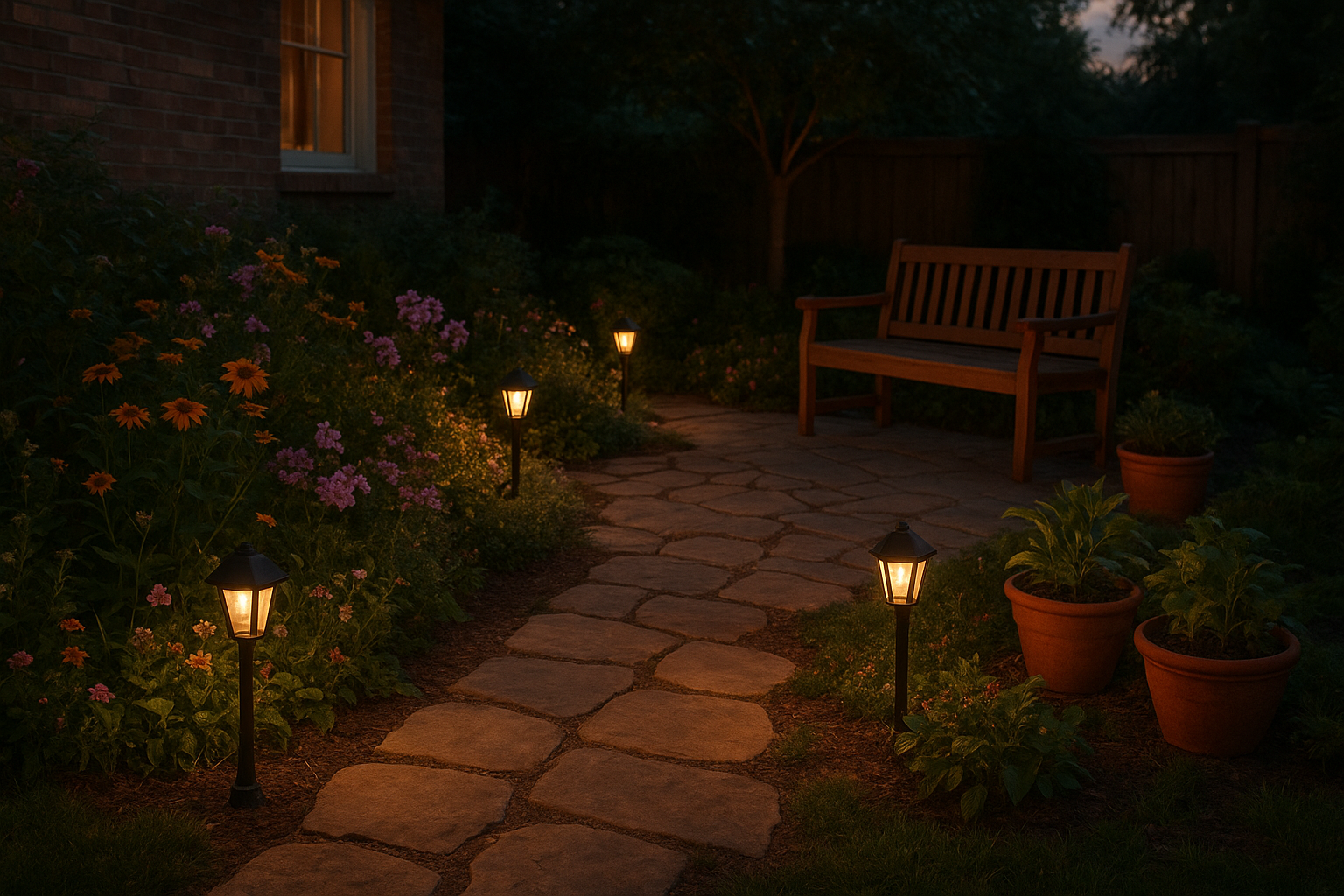
Why Solar Garden Lights Are Replacing Floodlights
As evenings stretch longer in summer, many homeowners are swapping bright floodlights for softer, more welcoming outdoor lighting. Solar garden lights have become a popular choice because they’re easy to install, inexpensive to run, and create a calmer atmosphere after dark.
If you’ve been thinking about upgrading your yard lighting, solar options can be a smart place to start. They’re not perfect for every space, but when used well, they can make patios, paths, and planting beds feel more usable and inviting without a complicated wiring project.
Why solar lights are having a moment
The appeal is easy to understand: solar lights charge during the day and switch on automatically at night. That means no digging trenches, hiring an electrician for simple accent lighting, or worrying about a higher electricity bill just to brighten up the garden.
They’re especially effective in summer, when daylight is plentiful and outdoor living tends to happen later into the evening. By the time you sit down for dinner or gather around a fire pit, the lights have already had hours in the sun to recharge.
What makes them appealing
- Low operating cost: They use sunlight instead of grid power.
- Simple setup: Many models only need to be staked into the ground or mounted with screws.
- Flexible placement: You can move them around if your layout changes.
- Gentler look: They provide a softer glow than a harsh overhead beam.
- Wide style range: You can find path lights, lanterns, string lights, and spotlights.
Where solar lighting works best
Solar lighting shines in places where you want visibility without overpowering brightness. Think of it as a way to add layers of light rather than replace every outdoor fixture.
Good spots for solar garden lights
- Garden paths: Helpful for guiding guests and preventing trips.
- Along steps: Useful for safety and visibility.
- Near seating areas: Great for a relaxed glow around a table or bench.
- At the edge of beds: Can highlight flowers, shrubs, or ornamental grasses.
- Fence lines or borders: Good for subtle definition without flooding the yard with brightness.
For the best results, place lights where they receive direct sun for much of the day. Even the best solar fixture won’t perform well if it’s tucked under a tree, beside a tall wall, or shaded by a roof overhang.
What solar lights can do well — and where they fall short
Solar lights are ideal for mood, direction, and low-level illumination. They’re less effective when you need strong, all-night brightness across a large area.
Advantages
They’re budget-friendly over time. Since they don’t draw electricity, you won’t see them adding to monthly utility costs. They also make sense for renters or anyone who wants a temporary solution.
They’re easier to install than wired lighting. That makes them a good weekend project for beginners. Many people can set up a full path or border in a single afternoon.
They’re less visually harsh. A gentle glow is often more flattering to patios and planting beds than a bright, high-mounted floodlight.
Drawbacks
Performance depends on sunlight. Cloudy weather, winter days, or shaded gardens can reduce charging.
Brightness varies by model. Inexpensive lights may look lovely but won’t always offer much illumination.
Batteries wear out. Over time, rechargeable batteries lose capacity and may need replacing.
They may need more units. Because each light is modest, you sometimes need several to cover a larger area.
How to choose better solar lights
Not all solar lights are equal. A well-chosen fixture will last longer, charge more reliably, and look better in your space.
- Check the battery type. Rechargeable batteries are standard, but some are easier to replace than others. A model with replaceable batteries is usually a better long-term buy.
- Look for weather resistance. Outdoor lights should be rated for rain and general exposure.
- Choose the right brightness. If you want pathway guidance, modest brightness is fine. For accenting a wall or tree, look for a stronger beam.
- Match the style to your garden. Lanterns, globe lights, stake lights, and string lights all create different effects.
- Read the charging claim carefully. Pay attention to how long the light needs in the sun and how many hours it is expected to stay on.
If you live in an area with less intense sun or you have a shady yard, consider solar lights with separate panels or hybrid models that can supplement charging more efficiently.
How to make solar lighting work better
A few simple habits can make a big difference in how well your lights perform.
- Wipe the panels regularly. Dust, pollen, and dirt can block sunlight.
- Angle lights toward the sun. Avoid pointing panels into shade or under dense foliage.
- Trim back overgrowth. A plant that’s harmless in June can become a shade source by August.
- Use layers of light. Combine solar path lights with a porch light or one wired fixture if you need more brightness.
- Move fixtures seasonally. If the sun changes angle or trees leaf out, relocate lights for better charging.
Safety and practicality tips
Solar lights are often chosen for decoration, but they can also improve everyday safety. The key is to use them thoughtfully.
Mark changes in level. Put lights near steps, uneven paving, or transitions from grass to stone so people can see where they’re walking.
Avoid over-lighting. Too many bright fixtures can create glare and actually make it harder to relax outdoors.
Don’t rely on them for security alone. If you want your yard well covered after dark, solar lights are best paired with a porch light, motion sensor fixture, or another dependable source of illumination.
When floodlights still make sense
Floodlights haven’t disappeared for a reason: they’re still useful in certain situations. If you need to illuminate a driveway, large side yard, workshop area, or back entrance for security and visibility, a stronger wired fixture may be the better choice.
The best lighting plans often use both approaches. A floodlight or motion light can cover practical safety needs, while solar garden lights add warmth, charm, and direction where you want a softer touch.
A simple way to get started
If you’re new to outdoor lighting, start small. Pick one path, one seating area, or one border and add a handful of well-placed solar fixtures. Watch how they look at dusk and after full darkness, then adjust placement before buying more.
That gradual approach helps you avoid clutter and gives you a clearer sense of what your yard actually needs. In many cases, the goal isn’t to make the garden brighter — it’s to make it more enjoyable.
With the right setup, solar garden lights can turn an ordinary evening into something calm, functional, and surprisingly elegant. For many homeowners, that’s a welcome upgrade from a blinding floodlight.