How to Clean a Shower Head with Vinegar
If your shower has started spraying sideways, dribbling from a few holes, or feeling weaker than usual, mineral buildup may be the culprit. The good news is that learning how to clean a shower head with vinegar is simple, inexpensive, and usually does not require removing the fixture.
This method works best for hard-water scale, the chalky white or crusty buildup that collects around the spray nozzles. It is also a useful maintenance habit: the EPA recommends periodically checking showerheads for scale and using white vinegar or an appropriate cleaner to remove it. ([epa.gov](https://www.epa.gov/watersense/home-maintenance?utm_source=openai))
Why Shower Heads Get Clogged
Most shower head clogs come from mineral deposits left behind as water dries. If you have hard water, calcium and magnesium can build up around the tiny spray holes. Over time, those deposits narrow the openings, causing weak pressure, uneven spray, or streams that shoot in odd directions.
There is another reason to keep the fixture clean. The CDC notes that germs can grow in biofilm inside home plumbing and water devices, including showerheads, especially when water sits unused for a week or longer. Cleaning visible buildup and flushing unused showers helps reduce the debris and conditions where germs can collect. ([cdc.gov](https://www.cdc.gov/drinking-water/prevention/preventing-waterborne-germs-at-home.html?utm_source=openai))
What You’ll Need
- Distilled white vinegar
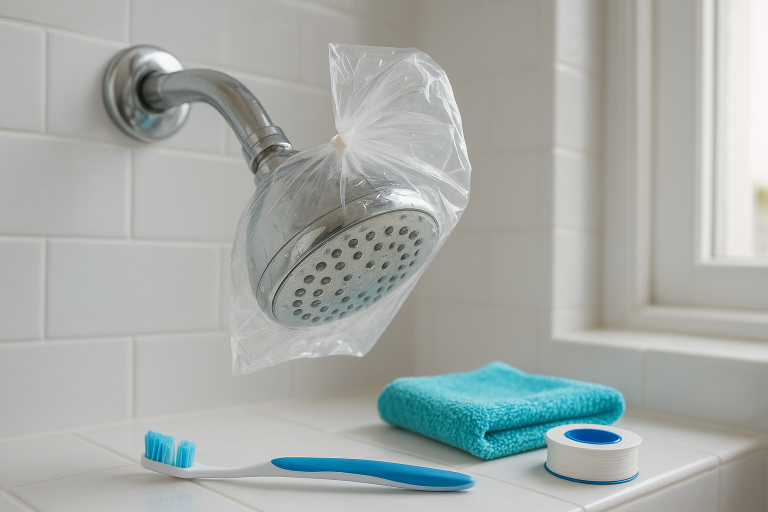
- A sturdy plastic bag large enough to cover the shower head
- Rubber band, twist tie, or zip tie
- Old toothbrush or small soft cleaning brush
- Microfiber cloth
- Toothpick or wooden skewer, optional
- Adjustable wrench and plumber’s tape, optional if removing the shower head
Do not mix vinegar with bleach. Also avoid harsh abrasive pads, which can scratch chrome, brushed nickel, matte black, and other finishes.
Quick Method: Clean the Shower Head Without Removing It
This is the easiest approach for a fixed shower head or for anyone who does not want to unscrew plumbing parts.
- Wipe the outside first. Use a damp cloth to remove loose dust, soap film, and surface grime. This lets the vinegar work directly on the mineral buildup.
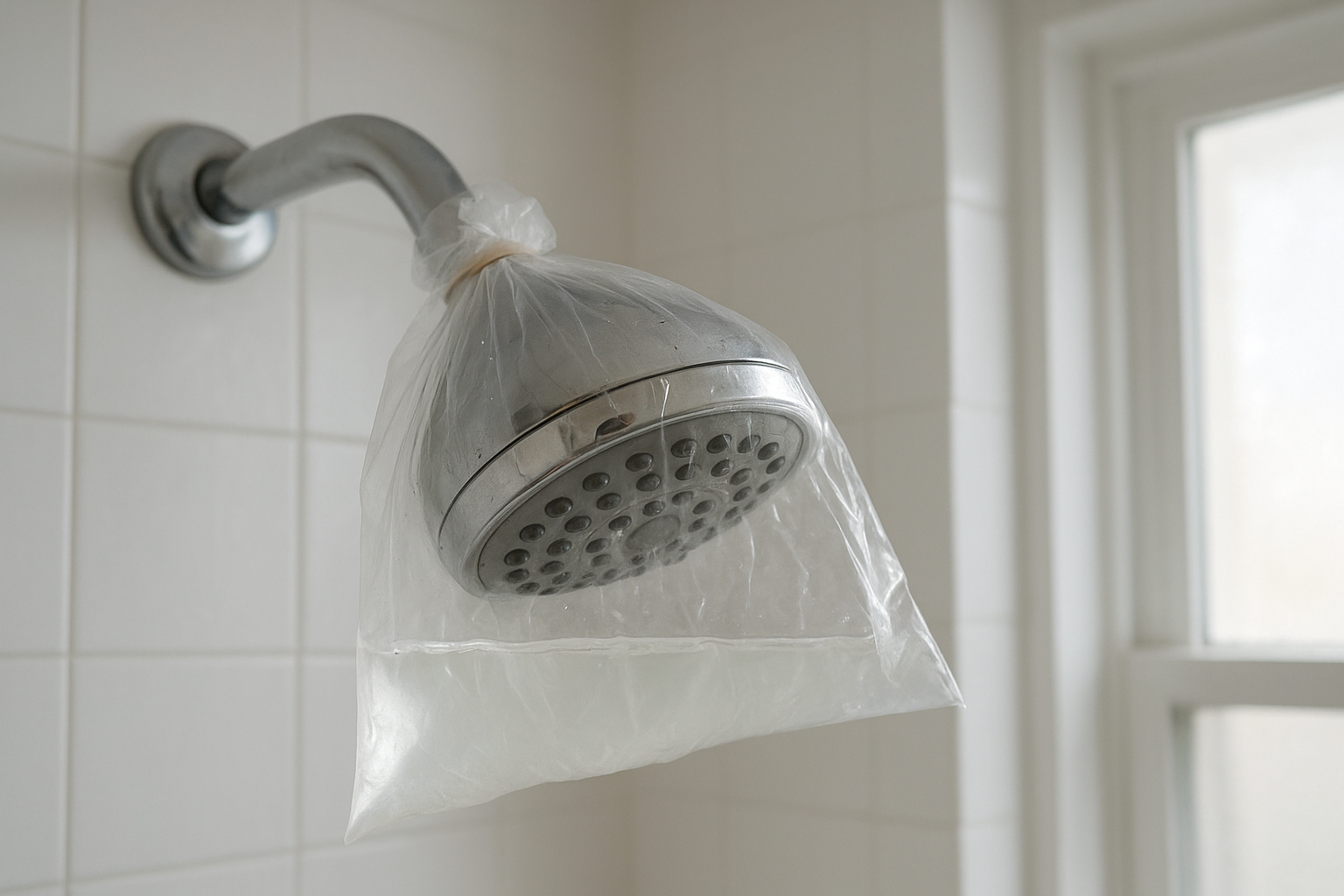
- Fill a plastic bag with vinegar. Add enough white vinegar to fully cover the face of the shower head and the clogged spray holes. You do not need to fill the whole bag.
- Secure the bag around the fixture. Lift the bag over the shower head and fasten it tightly with a rubber band or twist tie. Make sure the spray face is submerged.
- Soak for 30 minutes to 2 hours. For light buildup, 30 minutes may be enough. For heavier crust, let it soak longer. If your shower head has a delicate finish, start with a shorter soak and check it often.
- Remove the bag carefully. Pour the vinegar down the drain and rinse the outside of the fixture with clean water.
- Scrub the nozzles gently. Use an old toothbrush to loosen softened deposits. If your shower head has flexible rubber nozzles, rub them with your fingers to help break up scale.
- Flush with hot water. Turn the shower on fully for a minute or two to rinse loosened debris out of the fixture.
- Dry and polish. Wipe the shower head with a microfiber cloth to remove water spots.
Deeper Clean: Remove and Soak the Shower Head
If the spray is still uneven after the bag method, remove the shower head for a deeper soak. This is also helpful for handheld shower heads with hoses, where buildup may collect inside the connection.
- Turn the shower off completely. You do not usually need to shut off water to the whole house for this small task, but the faucet must be off.
- Unscrew the shower head. Try turning it by hand first. If it is tight, use an adjustable wrench, but wrap the connector with a cloth to protect the finish.
- Soak in vinegar. Place the shower head in a bowl or bucket and cover the spray face with white vinegar. Soak for about 30 minutes to 2 hours, checking delicate finishes as you go.
- Brush and rinse. Scrub around the holes with a toothbrush. Use a toothpick or wooden skewer only if a hole remains clogged, and avoid forcing anything metal into the nozzles.
- Flush from both directions if possible. Rinse water through the threaded end and the spray face to push out loosened grit.
- Reattach. Replace worn plumber’s tape on the shower arm threads if needed, then screw the shower head back on snugly. Do not overtighten.
- Test for leaks and spray. Run the shower and check the connection. Tighten slightly if it drips at the threads.
How Long Should Vinegar Stay on a Shower Head?
For most routine cleaning, 30 to 60 minutes is a good starting point. Heavy hard-water buildup may need up to 2 hours, or a second round after rinsing and brushing.
Avoid leaving vinegar on plated finishes all day or overnight unless the manufacturer says it is safe. Vinegar is mild, but it is still acidic. Long soaks can dull or damage some finishes, especially if the coating is already worn.
What If Vinegar Doesn’t Fix the Spray?
If the spray is still weak or patchy, try these checks before replacing the shower head:
- Look for trapped grit. Vinegar can loosen mineral chunks that then lodge inside the fixture. Remove the shower head and rinse it thoroughly from the threaded end.
- Check the washer or screen. Some shower heads have a small filter screen where the fixture connects to the shower arm. Rinse away sediment and reinstall it.
- Flush the shower arm. With the shower head removed, briefly run water into a bucket to clear loose debris from the pipe.
- Inspect the hose. For handheld models, disconnect and rinse the hose if water flow seems restricted.
- Consider the age of the fixture. If the finish is flaking, the nozzles are brittle, or the inner parts are badly scaled, replacement may be more practical.
If you do replace it, look for a WaterSense-labeled showerhead. The EPA says replacing one showerhead with a WaterSense labeled model can save the average family about 2,700 gallons of water per year, along with energy used to heat water. ([epa.gov](https://www.epa.gov/watersense/shower-better?utm_source=openai))
How Often to Clean a Shower Head
A good rule for most homes is to clean the shower head whenever you see visible buildup or notice the spray pattern changing. In hard-water areas, that may mean every month or two. In homes with softer water, every three to six months may be enough.
The CDC specifically recommends cleaning showerheads and faucet aerators when you can see buildup, and says you may need to remove and soak the showerhead or hose in a solution such as white vinegar to remove it. ([cdc.gov](https://www.cdc.gov/drinking-water/prevention/preventing-waterborne-germs-at-home.html?utm_source=openai))
Flush Showers After Vacations or Long Gaps
If a shower has not been used for a week or longer, flush it before stepping in. The CDC recommends running cold water fully for 2 minutes, then running hot water until it starts to feel hot. For a single-handle shower, move the handle fully to cold first, then fully to hot. ([cdc.gov](https://www.cdc.gov/drinking-water/prevention/preventing-waterborne-germs-at-home.html?utm_source=openai))
This is especially smart in a guest bathroom, basement shower, vacation home, or any shower that sits unused. Stand clear of the spray while flushing, and open a window or turn on the bathroom fan if possible.
Simple Prevention Tips
- Dry the fixture after cleaning. A quick wipe with a towel slows new water spots and scale.
- Rub rubber nozzles weekly. Many modern shower heads have flexible tips you can rub with your fingers to dislodge early buildup.
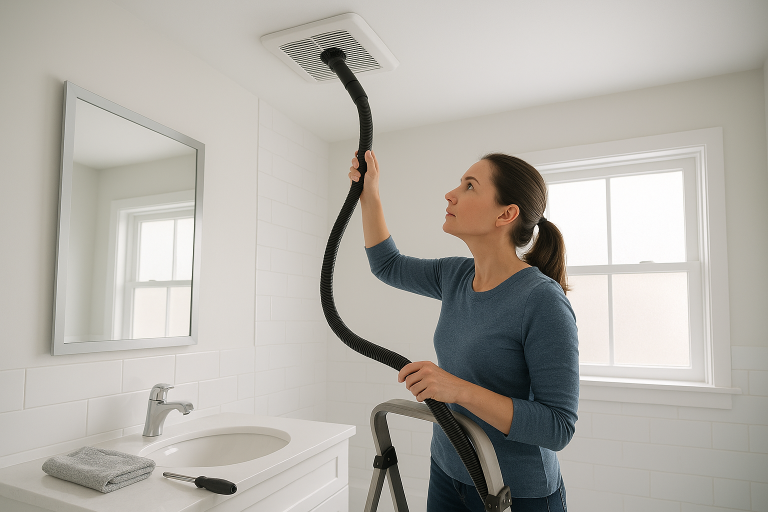
- Keep the bathroom ventilated. Run the fan during and after showers to reduce lingering moisture.
- Clean before it clogs badly. A short vinegar soak is easier than rescuing a shower head with months of crusted scale.
A clean shower head can make the whole shower feel better: stronger spray, fewer sideways streams, and less chalky buildup on the fixture. Start with the vinegar bag method, give the nozzles a gentle scrub, and make it part of your regular bathroom routine before hard water has a chance to take over again.