
Birth Month Moon Names and What Each Full Moon Means
If you love birthdays, gardening, or a bit of old-fashioned folklore, a birth month moon is a charming way to connect your birthday with the seasons. Each full moon name grew out of observation: people noticed what was happening in fields, forests, and weather, then used that pattern to mark the year.
These names are not strict scientific labels, and different regions sometimes used different versions. Still, they remain a beautiful seasonal guide and a fun way to celebrate your month with something rooted in nature.
What is a birth month moon?
A birth month moon is simply the traditional full moon name linked to the month you were born in. Many of these names come from Indigenous North American traditions, later blended with European folk names and local seasonal customs. They reflect what people saw around them: snow, planting, harvest, animal behavior, and flower bloom times.
That makes them especially appealing for gardeners. A moon name can tell you a lot about what the landscape usually looks like at that time of year, even if the exact timing shifts a little from year to year.
Birth month moon names by month
Here is a simple month-by-month guide to the best-known full moon names and what they traditionally suggest.
January: Wolf Moon
The Wolf Moon is usually associated with midwinter, when food was scarce and wolf packs were more likely to be heard near settlements. It signals a quiet, dormant garden season.
- Garden meaning: Plan, prune on mild days, and check stored bulbs and tubers.
- Practical tip: Use this month to sharpen tools and review next season’s seed orders.
February: Snow Moon
February often brought deep snow in much of North America, which is why this full moon earned its name. It is a reminder that winter still has a hold on the garden.
- Garden meaning: Protect roots, feed birds, and inspect overwintering plants.
- Practical tip: Start a simple indoor seed-sowing list so you are ready when light levels improve.
March: Worm Moon
As the ground begins to thaw, earthworms and other soil life return near the surface, and birds often follow. This moon marks the first strong signs that spring is coming back.
- Garden meaning: Soil begins to wake up.
- Practical tip: Test your soil before adding compost or fertilizer, especially in beds you plan to plant early.
April: Pink Moon
The Pink Moon is named for early spring wildflowers, especially pink phlox in North America, rather than the color of the moon itself. It points to the season when borders start to brighten.
- Garden meaning: Bulbs, perennials, and early blossoms are taking center stage.
- Practical tip: Deadhead spring flowers and mulch beds before weeds take off.
May: Flower Moon
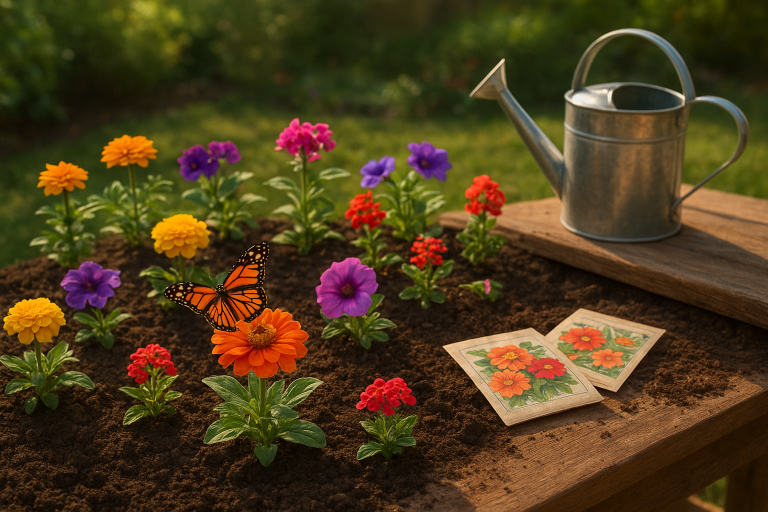
May’s full moon is a straightforward celebration of bloom. Gardens and hedgerows are often at their most colorful, and pollinators are busy.
- Garden meaning: Peak flowering begins.
- Practical tip: Plant nectar-rich annuals and keep watering consistent as temperatures rise.
June: Strawberry Moon
This moon is linked to the short strawberry harvest in parts of North America. It often appears just as berries and early summer fruits are ready.
- Garden meaning: Fruit season is beginning.
- Practical tip: Net berries before birds find them, and pick regularly to keep plants productive.
July: Buck Moon
Young deer grow new antlers in midsummer, which gives July’s full moon its name. In the garden, growth is strong and foliage can be lush.
- Garden meaning: Vegetative growth is at its height.
- Practical tip: Support tall stems, water deeply, and watch for hungry pests in warm weather.
August: Sturgeon Moon
This name comes from the large fish that were historically more plentiful in late summer in some regions. It marks a practical, harvest-focused part of the year.
- Garden meaning: Summer crops are maturing.
- Practical tip: Harvest frequently, remove tired annuals, and sow quick crops for autumn.
September: Harvest Moon
The Harvest Moon is the full moon nearest the autumn equinox. Its extra-bright evenings helped farmers work later into the night while gathering crops.
- Garden meaning: Main harvest time.
- Practical tip: Gather seeds, cure onions and squash, and start clearing spent vegetable beds.
October: Hunter’s Moon
After the fields were cleared, this moon traditionally marked a time to hunt and prepare for winter. It also fits the garden transition from abundance to slowdown.
- Garden meaning: Beds are being emptied and stored crops are checked.
- Practical tip: Plant spring bulbs now while soil is still workable.
November: Beaver Moon
Beavers were busy reinforcing their dams before winter, and people were preparing for colder weather too. The garden is usually heading into dormancy.
- Garden meaning: Final prep before frost.
- Practical tip: Drain hoses, protect tender plants, and cut back only what truly needs it.
December: Cold Moon
Winter is settling in, and the name reflects the long, chilly nights of the season. It is a moon of stillness, reflection, and planning.
- Garden meaning: Rest and recovery.
- Practical tip: Focus on wildlife support with feeders, water, and shelter rather than major garden work.
How to use moon names in everyday gardening
You do not need to follow moon folklore strictly to benefit from it. Think of it as a seasonal reminder system. If you know your birth month moon, you can use it as a cue for the kind of garden tasks that usually make sense at that time of year.
Try these simple ideas
- Create a moon journal: Write down the full moon name, weather, flowering plants, and any tasks you complete that month.
- Plan by season, not just date: The moon name can remind you that local conditions matter more than the calendar alone.
- Link chores to the moon: Use the Flower Moon for deadheading, the Harvest Moon for seed saving, and the Cold Moon for tool cleaning.
- Teach children the cycle: Kids often enjoy connecting the moon to what they can see outdoors, from buds to berries to bare branches.
Should you garden by the moon?
Many gardeners enjoy planting by moon phase, and some believe it supports better growth. While results can vary and science is mixed, there is no harm in using moon phases as a gentle planning tool. At the very least, it encourages regular attention to the garden, which is often what makes the biggest difference.
If you want to try it, start small. Track one bed or one crop group and note whether planting near a full moon, new moon, or waning moon seems to suit your routine and climate. The goal is not perfection; it is observation.
A meaningful way to celebrate your birthday
A birth month moon is more than a pretty name. It offers a seasonal snapshot of the world around us and a reminder that birthdays happen inside the larger rhythm of nature. Whether your moon suggests flowers, harvest, snow, or silence, it can become a lovely personal tradition.
You might mark it by taking a moonlit walk, planting something in your garden, writing a note in your journal, or simply looking up at the sky and noticing the season you were born into. That small ritual can make a birthday feel a little more grounded, calm, and memorable.
And if you are a gardener, the best part is this: every full moon is also a forecast of sorts, offering clues about what is happening in the beds, borders, and hedges right outside your door.