How to Plant Fall Carrots for a Sweeter Harvest
If you have only grown carrots in spring, you may be missing out on one of the best harvests of the year. Fall carrots often develop a sweeter flavor, and with a little timing and one simple trick, they can be easier to germinate too.
The key is planting at the right point in late summer so the roots have time to size up before hard freezes arrive. A wooden board can help the seedbed stay evenly moist and cooler during germination, which is especially useful in warm weather.
Why fall carrots are worth growing
Carrots grown for a fall harvest often taste sweeter because cooler nights encourage the plant to store more sugars in the root. Many gardeners also find that late-summer sowings avoid some of the spring problems that can plague carrots, such as soggy soil, cool weather delays, and competing weed flushes.
Fall-grown carrots can be harvested young for tender bunching carrots or left to mature into full-sized roots. If your climate allows it, you can even leave mature carrots in the ground under a layer of mulch and dig them as needed well into winter.
When to plant fall carrots
The best planting window depends on your local frost date and the variety you choose. As a general rule, sow carrot seed about 10 to 12 weeks before your first expected fall frost. In colder regions, that may mean starting in mid- to late summer. In milder climates, planting can stretch later into the season.
Because carrot seed can take a while to sprout, it helps to count backward not only from frost but also from the days listed on the seed packet. Most carrots need roughly 60 to 80 days to mature, though some smaller or early types are ready sooner.
A simple timing guide
- Early varieties: Sow 8 to 10 weeks before frost
- Main-season varieties: Sow 10 to 12 weeks before frost
- Storage carrots: Sow 12 weeks or more before frost if your season is long enough
If you are unsure, a local extension office or frost-date calculator can help you work out the safest planting window. It is better to sow a little earlier than to wait until cold weather slows growth too much.
Choose the right carrot variety
Not every carrot is equally suited to a fall planting. If your season is short, choose faster-maturing types. If you have a longer stretch of mild weather, you can grow larger storage carrots for winter use.
- Short-rooted types: Great for shallow or rocky soils and faster harvests
- Standard Nantes types: Sweet, crisp, and reliable for many gardens
- Storage carrots: Longer roots that hold well in the ground or cellar
Look for varieties described as quick, early, or storage-friendly, and pay attention to the days to harvest. For fall sowing, that number matters just as much as flavor or shape.
Prepare the bed for better roots
Carrots grow best in loose soil that is free of stones, clumps, and fresh manure. If the soil is compacted, roots may fork or twist. Before sowing, work the bed to a depth of at least 8 to 10 inches, or choose a raised bed filled with a fluffy, well-draining mix.
Rake the surface smooth so tiny seeds have good contact with the soil. Carrot seed is small and should be planted shallowly, usually just a quarter inch deep. Cover it lightly with fine soil or compost, then press the row gently to firm the seed in place.
Helpful soil tips
- Avoid heavy clods and large bits of organic matter
- Keep pH near neutral if possible
- Water the bed before planting if the soil is very dry
- Do not let the seed row crust over after watering
How a wooden board helps carrot seeds
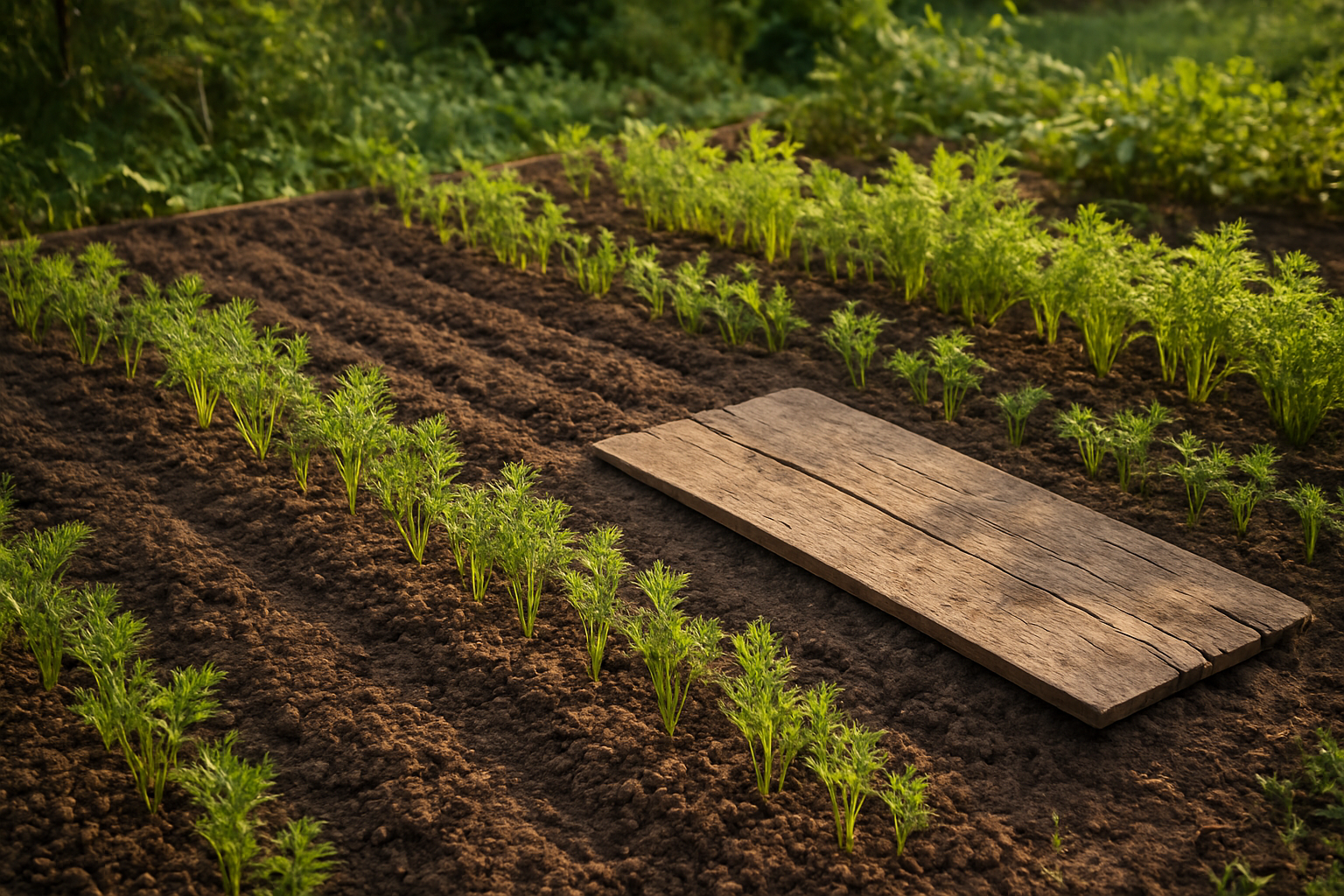
One of the most useful tricks for fall carrots is to place a wooden board over the planted row after sowing. This does several jobs at once: it shades the soil, slows evaporation, and helps keep the seed zone evenly moist while the carrots are germinating.
That matters because carrot seed can be slow and finicky to sprout, especially in warm, late-summer weather. Dry topsoil can stop germination before it starts. A board creates a stable microclimate that encourages steady moisture without soaking the bed.
Use a flat board that lies lightly on the soil. Remove it once you see signs of germination, usually after 1 to 3 weeks depending on temperature and moisture. Leaving it on too long can reduce light and airflow for the seedlings.
How to use the board method
- Sow carrot seed in a prepared row.
- Water the row thoroughly.
- Place a clean, untreated wooden board over the row.
- Check the bed every couple of days for moisture.
- Remove the board as soon as seedlings begin to emerge.
Some gardeners also premoisten the seed row and then use a board to keep the top layer from drying out. If your weather is hot and breezy, this method can make a noticeable difference in germination success.
Keep seedlings watered and thinned
Once the seeds sprout, carrots need steady moisture to develop straight, tender roots. Uneven watering can lead to tough texture and splitting. Aim for consistent moisture rather than soaking the bed occasionally.
When seedlings are a few inches tall, thin them so each plant has enough room to form a root. This step is important, even though it feels wasteful. Crowded carrots compete for water and nutrients, and the roots often end up small or misshapen.
Spacing basics
- Thin seedlings to about 2 inches apart for small carrots
- Allow 3 inches or more for larger storage types
- Snip extra seedlings at soil level instead of pulling, to avoid disturbing nearby roots
After thinning, water again and mulch lightly with fine straw or shredded leaves to hold moisture and reduce crusting.
Watch for fall-growing challenges
Fall carrots have a few common obstacles. Hot soil can delay germination, while heavy rain can pack the surface and make it hard for sprouts to push through. Later in the season, shortening days and cooler nights slow growth, so timing becomes even more important.
To keep the crop on track, weed the bed regularly and avoid letting the soil dry out for long periods. If deer, rabbits, or other pests are an issue in your garden, use row cover or fencing. Carrot rust fly can also be a problem in some areas, so rotating crops and covering seedlings may help.
When and how to harvest
Harvest carrots once the shoulders look full enough and the roots have reached the size you want. Smaller carrots are often sweeter and more tender, while larger ones may be better for storing. Gently loosen the soil with a fork before pulling to avoid snapping the tops off.
If frost arrives, do not panic. A light frost can actually improve flavor. In many gardens, carrots can stay in the ground longer if you cover the row with mulch. Just harvest before the soil freezes solid.
Best ways to store your crop
- In the garden: Mulch heavily in mild winter climates and dig as needed
- In the fridge: Remove tops and store roots in a perforated bag
- In a root cellar: Pack in damp sand or sawdust for longer storage
Quick fall carrot checklist
- Count backward from your first frost date
- Choose a variety that fits your season length
- Prepare loose, stone-free soil
- Sow shallowly and keep the row evenly moist
- Use a wooden board to improve germination
- Thin seedlings early and water consistently
- Harvest before hard freeze or store in the ground with mulch
With the right timing and a simple board over the row, fall carrots can reward you with crisp, sweet roots when the rest of the garden is winding down. It is a small seasonal shift that can make a big difference in both flavor and harvest success.