How to Clean a Dryer Vent the Right Way
If your towels take forever to dry or your laundry room feels unusually hot, the dryer vent may be trying to tell you something. Learning how to clean a dryer vent is a simple home maintenance job that can help clothes dry faster, reduce wasted energy, and lower a real fire risk.
You do not need to be especially handy, but you do need to work carefully. The basic job is to unplug the dryer, disconnect the vent, remove lint from the lint trap area, brush and vacuum the duct, then check that the outside vent flap opens freely.
Why Dryer Vent Cleaning Matters
Dryers need steady airflow to carry heat, moisture, and lint outdoors. When lint builds up in the lint screen housing, transition hose, duct, or outside vent hood, the dryer has to run longer and hotter than it should.
The U.S. Fire Administration warns that the risk of a clothes dryer fire is higher when the lint filter and dryer vents are not cleaned. It also recommends checking that the venting behind the dryer is not damaged, crushed, or restricted, and that the outdoor vent covering opens while the dryer is running. ([usfa.fema.gov](https://www.usfa.fema.gov/downloads/pdf/publications/clothes_dryer_fire_safety_flyer.pdf?utm_source=openai))
There is an everyday comfort reason, too: ENERGY STAR says cleaning the lint filter after every load improves air circulation and dryer efficiency, and notes that dryer sheet residue can leave a film on the filter that reduces airflow. ([energystar.gov](https://www.energystar.gov/products/clothes_dryers?utm_source=openai))
Signs Your Dryer Vent Needs Cleaning
You do not have to wait for a scheduled cleaning if the dryer is giving warning signs. Clean the vent soon if you notice:
- Clothes take more than one cycle to dry, especially heavy towels or jeans.
- The dryer top or laundry room feels very hot during a normal cycle.
- Clothes smell musty or slightly scorched when the cycle ends.
- The outside vent flap barely opens when the dryer is running.
- Lint collects around the dryer, hose, or exterior vent.
- Your dryer shows a vent blockage warning or airflow error.
If your vent run is very long, exits through the roof, or disappears into a wall you cannot access, consider calling a professional instead of forcing a brush through blindly.
How Often Should You Clean a Dryer Vent?
For many households, cleaning the dryer duct about once a year is a good baseline. The U.S. Department of Energy’s Building America Solution Center says annual dryer duct cleaning can help clothes dry faster, save energy, and help prevent fire. ([basc.pnnl.gov](https://basc.pnnl.gov/diy-guides/clean-dryer-exhaust?utm_source=openai))
You may need to clean it more often if you do several loads a day, have pets, wash a lot of fleece or towels, or have a long duct run with several bends. The lint screen should still be cleaned every load, and the lint screen itself should be scrubbed regularly if dryer sheets leave a waxy film. ENERGY STAR recommends scrubbing the lint filter monthly with a toothbrush if you use dryer sheets. ([energystar.gov](https://www.energystar.gov/products/clothes_dryers?utm_source=openai))
Tools and Supplies
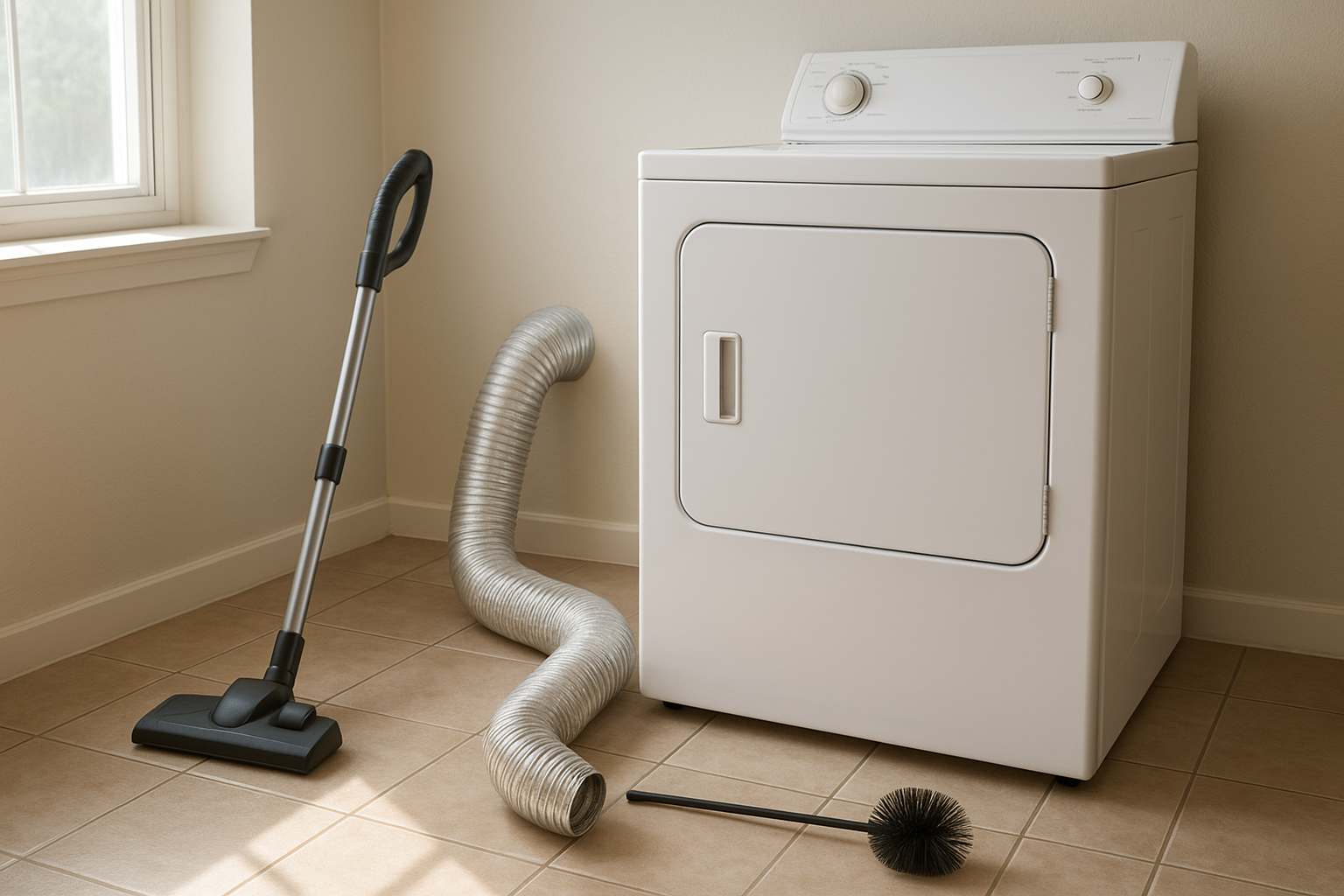
- Vacuum with hose attachment
- Dryer vent brush kit, preferably flexible rods made for dryer ducts
- Screwdriver or nut driver for the hose clamp
- Work gloves
- Flashlight
- Microfiber cloth
- Warm soapy water and an old toothbrush for the lint screen
- Foil HVAC tape, if you need to reseal a metal duct joint
Do not use random wire, a broom handle, or anything sharp inside the duct. You want to remove lint, not puncture the duct or knock a hidden joint apart.
Step-by-Step: How to Clean a Dryer Vent
1. Unplug the dryer and turn off gas if needed
For an electric dryer, unplug it before you move it or open anything. For a gas dryer, unplug it and turn off the gas valve if you need to pull the dryer far enough to strain the gas line. If you are not comfortable moving a gas dryer, stop here and hire a technician.
2. Pull the dryer away from the wall
Move slowly. The transition hose behind the dryer can be crushed, torn, or loosely attached. A crushed hose restricts airflow, so take note of its condition as you pull the dryer forward.
3. Remove and clean the lint screen
Pull out the lint screen and remove the lint by hand. If the screen looks dull, sticky, or water beads on it instead of passing through, scrub it gently with warm soapy water and an old toothbrush. Rinse well and let it dry completely before reinstalling.
4. Vacuum the lint trap housing
Use a narrow vacuum attachment or lint trap brush to clean down inside the slot where the lint screen sits. This area often holds a surprising amount of lint even when you clean the screen every load.
5. Disconnect the dryer hose
Loosen the clamp where the vent hose attaches to the back of the dryer. Pull the hose off gently. Vacuum lint from the dryer outlet and the inside of the hose opening.
6. Brush and vacuum the duct
Insert the dryer vent brush into the duct opening and work it through slowly. If your brush kit attaches to a drill, use a low speed and follow the kit instructions carefully. Feed the rods in gradually, then pull lint back toward you. Vacuum loose lint as you go.
If the brush suddenly stops, do not force it. You may have reached a bend, a joint, or a blockage that needs to be approached from the other end.
7. Clean from the outside vent too
Go outside and find the dryer vent hood. Remove lint from the flap area and brush inward from that end if you can. The outside flap should move freely. The U.S. Fire Administration specifically recommends making sure the outdoor vent covering opens when the dryer is operating. ([usfa.fema.gov](https://www.usfa.fema.gov/downloads/pdf/publications/clothes_dryer_fire_safety_flyer.pdf?utm_source=openai))
Avoid exterior vent covers with fine screens. Building America notes that screens should not be used for clothes dryer exhaust ducts because they can clog with dryer lint and stop airflow. ([basc.pnnl.gov](https://basc.pnnl.gov/diy-guides/clean-dryer-exhaust?utm_source=openai))
8. Reconnect the hose without crushing it
Reconnect the hose to the dryer and tighten the clamp. Keep the hose as short and straight as practical. Building America’s dryer venting guidance warns that spiral duct designs can trap lint and that excessive length and bends restrict airflow. ([basc.pnnl.gov](https://basc.pnnl.gov/resource-guides/proper-clothes-dryer-venting?utm_source=openai))
If your old hose is flimsy, crushed, split, or much longer than necessary, replacing it with a proper metal dryer transition duct is often worth it. Do not use screws that protrude into the duct; lint can catch on them.
9. Test the airflow
Plug the dryer back in, run it on an air-only or low-heat setting, and check the outside vent. You should feel strong airflow, and the flap should open. If airflow is still weak after cleaning, the duct may be disconnected, too long, crushed inside a wall, or clogged beyond your reach.
When to Call a Pro
Call a professional dryer vent cleaner or appliance technician if the dryer vents through the roof, the duct run is very long, you smell gas, the dryer overheats after cleaning, or you cannot confirm good airflow outside. Also call for help if the vent has not been cleaned in years and the brush will not pass through.
A Simple Maintenance Routine
- Clean the lint screen before or after every load.
- Scrub the lint screen monthly if you use dryer sheets.
- Look at the outside vent every few months to be sure the flap opens and lint is not piling up.
- Pull the dryer out and inspect the hose at least once a year.
- Schedule a full duct cleaning yearly, or more often for heavy laundry households.
A clean dryer vent is one of those small chores that pays you back right away. Your dryer can breathe, clothes dry more predictably, and you remove a hidden lint buildup that should never be ignored.