How to Wash a Down Comforter Without Clumps
A good down comforter can last for years, but washing it the wrong way can leave it lumpy, flat, or smelling faintly musty. The trick is not a fancy laundry product—it is giving the comforter enough room, using a gentle wash, and drying it completely.
Here is a practical, home-friendly guide to washing a down comforter without clumps, including when to use your own washer and when the laundromat is the better choice.
First, Check the Care Label
Before anything gets wet, read the care tag. Some down comforters are machine washable, while others say dry clean only. The care label should always win over general advice, especially for silk-covered, wool-filled, antique, or extra-delicate bedding. Major appliance care guides also stress checking the label first because some comforters are not meant for home washing. ([homedelivery.whirlpoolcorp.com](https://homedelivery.whirlpoolcorp.com/blog/washers-and-dryers/how-to-wash-down-comforters.html?utm_source=openai))
If the tag is missing or unreadable, use caution. A basic cotton-covered down comforter with stitched boxes is usually a better candidate for washing than one with fragile fabric, loose seams, decorative trim, or unknown filling.
When to Use a Laundromat Instead of Your Washer
The biggest mistake people make is cramming a comforter into a washer that is too small. Down needs room for water and detergent to move through it. If the comforter fills the drum tightly before the cycle even starts, it will not rinse well and may come out with soap residue, flat spots, or damp pockets.
As a rule of thumb, use a large-capacity front-loading washer if possible. Whirlpool advises that if a washer drum cannot hold the comforter with about one-quarter of the drum still free, the comforter likely will not wash properly. ([homedelivery.whirlpoolcorp.com](https://homedelivery.whirlpoolcorp.com/blog/washers-and-dryers/how-to-wash-down-comforters.html?utm_source=openai))
Head to a laundromat if:
- Your comforter is queen, king, or oversized and your washer is standard size.
- You have a top-loader with a tall center agitator that twists bulky bedding.
- The comforter barely fits or has to be shoved down to close the lid.
- You do not have a dryer large enough for the comforter to tumble freely.
What You Need
- A mild liquid laundry detergent or down-safe wash
- A large-capacity washer
- A large-capacity dryer
- Two to six wool dryer balls or clean tennis balls
- A clean white cloth for blotting stains
- Optional: stain remover suitable for the comforter’s outer fabric
Use less detergent than you would for a regular load. Too much soap is hard to rinse out of bulky bedding and can make down feel heavy. The American Cleaning Institute recommends following product labels and choosing washer and dryer settings that suit the item to prevent poor cleaning results, residue, and fabric damage. ([cleaninginstitute.org](https://www.cleaninginstitute.org/cleaning-tips/clothes/laundry-basics?utm_source=openai))
Step 1: Inspect and Pretreat Stains
Spread the comforter over the bed or a clean floor. Look for yellowing near the top edge, makeup marks, pet spots, or food stains. If you see a stain, gently pull the outer fabric away from the down filling underneath so you can treat the shell without soaking the fill.
Apply a small amount of mild detergent or a fabric-safe stain remover to the stained area. Blot with a damp white cloth. Do not scrub hard, because aggressive rubbing can weaken the fabric or push the stain deeper. Let it sit for 10 to 15 minutes, then wash.
If the stain is oily, body-soil based, or stubborn, pretreating before laundering is especially helpful. The American Cleaning Institute recommends pretreating stains and washing again before drying if stains remain, because dryer heat can make some stains harder to remove. ([cleaninginstitute.org](https://www.cleaninginstitute.org/cleaning-tips/clothes/laundry-basics?utm_source=openai))
Step 2: Wash on a Gentle Cycle
Load the comforter by itself. Choose a gentle, delicate, or bulky bedding cycle if your washer has one. Use cold or warm water unless the care label says otherwise. Add a small amount of mild detergent—usually less than a normal load needs.
Avoid bleach unless the care label specifically allows it. Skip fabric softener, too. It can leave residue on the shell and fill, and residue is the enemy of fluffy down.
If your washer allows an extra rinse, use it. Comforters are thick, and an extra rinse helps remove detergent from the inner layers. This is one of the simplest ways to prevent stiffness and clumping after drying.
Step 3: Move It Carefully to the Dryer
When the washer finishes, the comforter may look sad, heavy, and flat. That is normal. Wet down clumps together before it dries.
Lift the comforter carefully so you do not strain the wet fabric. If it feels extremely heavy and dripping, run an extra spin cycle if your washer allows it. Do not wring or twist the comforter by hand.
Step 4: Dry Low and Slow
Drying is the most important part. Put the comforter in a large dryer with wool dryer balls or clean tennis balls. Set the dryer to low heat, no heat, or a bulky bedding setting if available. Maytag recommends low or no heat when drying comforters, and several bedding care guides advise dryer balls to help keep the fill moving. ([maytag.com](https://www.maytag.com/blog/washers-and-dryers/how-to-wash-comforter.html?utm_source=openai))
Expect this to take a while. A down comforter can take several cycles to dry fully, especially in a home dryer. Feathered Friends, a down bedding company, notes that down bedding may need several hours of low to medium heat drying with dryer balls. ([featheredfriends.com](https://featheredfriends.com/blogs/feathered-friends-blog/how-to-wash-down-bedding-comforters?utm_source=openai))
Every 30 to 45 minutes, pause the dryer. Take the comforter out, shake it, and break up any thick clumps with your hands. Rotate it before putting it back in. This helps prevent one damp ball from forming in the center.
How to Tell When It Is Truly Dry
A down comforter can feel dry on the outside while still holding moisture deep in the baffles. That hidden dampness is what leads to musty smells and mildew.
Check for these signs before you put it back on the bed:
- No cool or heavy spots when you press through the thickest sections
- No sour, wet-feather, or musty smell
- The comforter feels light again, not dense or limp
- The fill separates easily when you pinch and fluff it
If you are unsure, dry it longer on low or no heat. It is better to give it one more gentle cycle than to store or use it slightly damp.
What If the Down Is Still Clumpy?
Clumps usually mean the comforter is not fully dry yet. Put it back in the dryer with dryer balls and continue on low heat or air fluff. Stop often to shake it out and massage the baffle boxes.
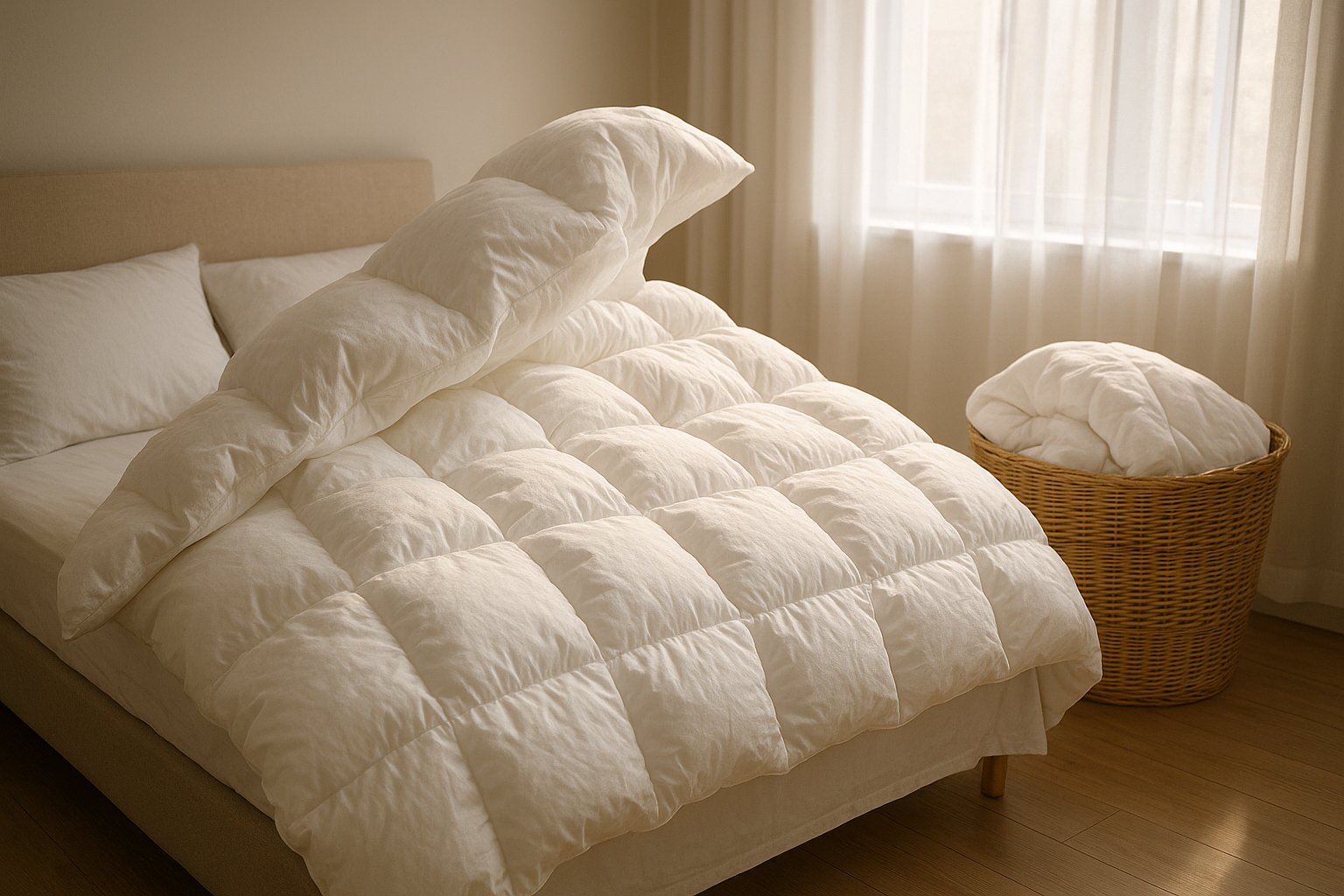
If it is dry but uneven, lay it flat on the bed and use your hands to redistribute the fill. Push the down from overfilled squares into thin areas, working section by section. Then tumble it again for 20 to 30 minutes on air fluff.
How Often Should You Wash a Down Comforter?
If you use a duvet cover and wash the cover regularly, the insert itself does not need frequent washing. For many homes, washing the comforter once or twice a year is enough, unless there are spills, pet accidents, heavy sweating, or allergy concerns.
Between washes, air it out on a dry day, fluff it when you make the bed, and use a washable duvet cover. The cover takes the daily wear, body oils, and dust so the down insert stays cleaner longer.
Common Mistakes to Avoid
- Using too much detergent: More soap does not mean cleaner bedding. It often means more residue.
- Washing in a cramped machine: If it cannot move, it cannot clean or rinse well.
- Using high heat: High heat can damage delicate fabrics and down. Low and slow is safer.
- Stopping the dryer too soon: Damp down can smell musty and clump badly.
- Storing it in plastic: Use a breathable cotton bag or closet shelf once it is completely dry.
The Bottom Line
You can wash a down comforter at home if the care label allows it and your machines are large enough. Use a gentle cycle, a small amount of mild detergent, an extra rinse, and plenty of drying time on low heat with dryer balls.
The real secret is patience. A down comforter may take hours to dry, but once every section is light, fluffy, and fully dry, it will feel cozy again instead of clumpy or musty.