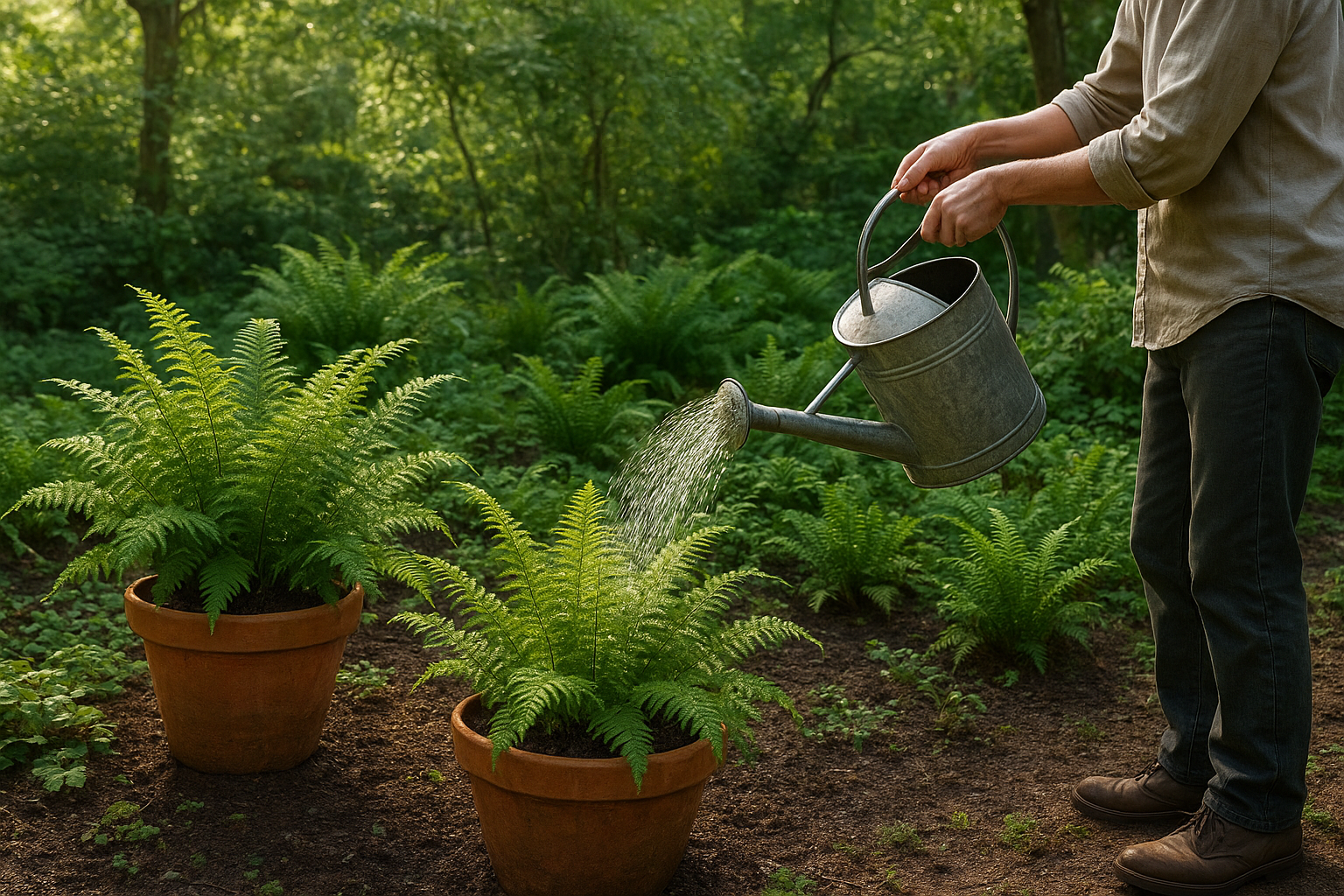
August Fern Care: 5 Simple Ways to Keep Ferns Green
Ferns can be some of the most beautiful plants in the garden, but late summer can be a tough stretch for them. Hot sun, dry air, and inconsistent watering often show up as pale, crispy, or browned fronds just when you want your shade planting to look its best.
The good news is that August fern care does not require anything complicated. A few small adjustments to watering, placement, and cleanup can make a big difference in how your ferns look through the rest of the season.
1. Check soil moisture every day
Ferns are not drought-tolerant plants. In August, the soil can dry out much faster than it did earlier in the season, especially in containers, under roof overhangs, or in beds that get afternoon sun. The easiest habit to build is a quick daily moisture check.
Stick your finger about 1 to 2 inches into the soil. If it feels dry at that depth, water thoroughly. If it still feels cool and slightly damp, you can usually wait a day and check again. The goal is steady moisture, not soggy soil.
Helpful watering rules:
- Water in the morning whenever possible.
- Soak the root zone deeply rather than giving a light sprinkle.
- For pots, water until it begins to drain from the bottom.
- Use a moisture meter if you have several ferns and want a quicker check.
If a fern is drying out repeatedly, move it to a shadier spot or consider repotting into a larger container that holds moisture longer.
2. Give them more shade if the sun is too strong
Most ferns prefer filtered light, woodland shade, or bright indirect light. In August, even a plant that has handled spring sun well may struggle if the light becomes too intense. Afternoon sun is usually the biggest problem because it combines heat with strong direct rays.
If your fern’s fronds are fading, curling, or turning crispy at the edges, try giving it extra protection. You may not need to move the plant far, just a few feet to a more sheltered place.
Ways to reduce sun stress
- Move container ferns under trees, a porch roof, or a patio umbrella.
- Use a lattice panel or shade cloth to soften harsh afternoon light.
- Plant ferns on the east side of a building where they get gentler morning sun.
- Avoid placing them against reflective walls or hot paving stones.
Shade is especially important for ferns grown in pots, since containers heat up quickly and dry out faster than garden beds.
3. Raise humidity around the plant
Ferns naturally grow in damp, sheltered places, so dry summer air can make them look tired even if you water regularly. Increasing humidity helps fronds stay supple and reduces the chance of browning tips.
Misting can help for a short time, but it is not a full solution on its own. Think of it as a bonus, not the main watering method. A better approach is to create a more humid microclimate around the fern.
Simple humidity boosts that work outdoors or indoors
- Group several plants together so they hold moisture around one another.
- Place potted ferns on saucers filled with pebbles and water, making sure the pot sits above the water line.
- Mulch garden ferns with shredded bark or leaf mold to slow evaporation.
- Keep ferns away from hot, dry air blowing from vents, fans, or exhaust outlets.
If you do mist, do it early in the day so the foliage dries before evening. Wet fronds sitting overnight can invite problems in humid weather.
4. Mulch to protect the roots
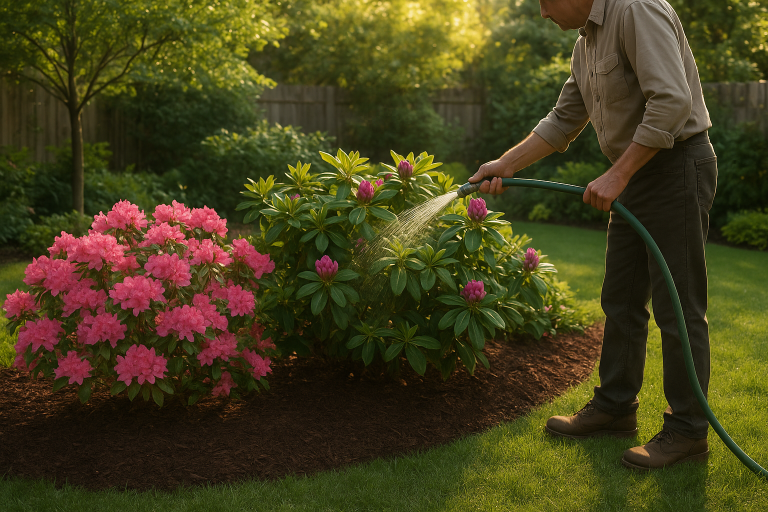
In-ground ferns benefit a lot from mulch during the hottest part of the year. A 2- to 3-inch layer helps keep the soil cooler, reduces moisture loss, and gives the roots more stable conditions.
The best mulch for ferns is something loose and organic, such as shredded leaves, pine needles, compost, or fine bark. These materials mimic the forest-floor environment many ferns naturally enjoy.
Mulching tips:
- Leave a small gap around the crown so moisture does not collect right against the base.
- Refresh mulch if it has broken down or blown away.
- Use leaf litter or compost if you want a softer, more natural look.
Container ferns can also benefit from a thin top dressing of compost or fine bark chips, though potted plants still need more frequent watering than garden plants.
5. Trim damage without overcutting
It is normal for a few older fern fronds to brown over the course of summer, especially in very hot weather. Removing the worst-looking fronds keeps the plant tidy and helps it direct energy to healthy growth.
Use clean scissors or pruners and snip damaged fronds off near the base. Focus on fully brown, brittle, or broken growth. If a frond is only lightly scorched at the tip, you can leave it in place until the plant produces enough new growth to cover it.
What not to do:
- Do not cut back every frond just because a few look rough.
- Do not remove green, functional foliage unless it is badly damaged.
- Do not fertilize heavily right after stress pruning.
Healthy green fronds are what feed the plant, so keeping as much intact foliage as possible helps the fern recover faster.
Watch for signs your fern needs help
Ferns usually tell you when something is off. Browning tips often point to dry air or inconsistent watering. Yellowing can mean too much sun, poor drainage, or overwatering. Wilted, floppy fronds usually mean the plant is too dry, while soft, darkened growth may indicate it is staying too wet.
If you see repeated stress, check more than one factor at once. A fern in a pot may need both more shade and more frequent watering. A garden fern may need mulch and a shift to a less exposed location. Solving the full set of conditions usually works better than changing just one thing.
Should you fertilize ferns in August?
Usually, only lightly, if at all. If your fern is already stressed by heat, strong sun, or dryness, heavy feeding can add more pressure than benefit. In most cases, it is better to focus on water, shade, and soil protection first.
If the plant is healthy and actively growing, a diluted, balanced fertilizer can be used sparingly according to the product directions. But for many home gardeners, a rich planting mix, compost, or yearly mulch does enough on its own.
A quick August fern checklist
- Check soil moisture every day.
- Water deeply in the morning.
- Shield plants from harsh afternoon sun.
- Boost humidity and mulch the soil.
- Remove only the fronds that are truly damaged.
With a little attention, ferns can stay graceful and green even in the dog days of summer. The main goal is simple: keep the roots cool, the moisture steady, and the foliage out of the harshest heat. Do that, and your ferns have a much better chance of staying lush instead of turning brown and crispy before the season is over.