How to Clean a Dishwasher Filter the Easy Way
If your dishwasher smells a little sour or leaves grit on glasses, the problem may not be the detergent. Many newer dishwashers have a removable filter at the bottom that catches food bits, labels, seeds, and greasy residue before they can recirculate onto your dishes.
The good news: cleaning it usually takes less than 10 minutes and does not require special tools. Here is how to clean a dishwasher filter safely, how often to do it, and what to check before you run the next load.
Why the Dishwasher Filter Matters
A dishwasher filter helps keep food particles out of the pump and wash water. Whirlpool describes many filter systems as having an upper filter assembly that blocks larger debris and fine particles from the pump, plus a lower filter that helps keep food from being recirculated onto dishes. ([producthelp.whirlpool.com](https://producthelp.whirlpool.com/Dishwashers/Product_Info/Dishwasher_Cleaning_and_Care/How_to_Clean_the_Dishwasher_Filters?utm_source=openai))
When that filter gets clogged, the dishwasher can still run, but it may not clean well. Common signs include:
- Grit or sandy residue on cups and bowls
- A stale or rotten smell when you open the door
- Food specks stuck to plates after a full cycle
- Standing water or slow draining
- A visibly dirty screen or basket in the bottom of the tub
Before you call for service, clean the filter and check the spray arms. Those two quick jobs solve a surprising number of everyday dishwasher complaints.
How Often Should You Clean a Dishwasher Filter?
A good household rule is to check the filter once a month. Some manufacturers recommend cleaning approximately every 30 days for best performance, especially if you run frequent loads or notice odors. ([producthelp.whirlpool.com](https://producthelp.whirlpool.com/Dishwashers/Dishwasher/Other/Cleaning_and_Odor/Cleaning_and_Maintenance/Cleaning_the_Filter/Cleaning_the_Filter_-_Dishwasher?utm_source=openai))
There is some wiggle room depending on how you use the machine. A Whirlpool owner’s manual gives a more detailed schedule: households running 8 to 12 loads a week and only scraping dishes may need filter cleaning every two months, while lighter use may need it only once or twice a year. Very hard water, however, can mean cleaning at least monthly. ([whirlpool.com](https://www.whirlpool.com/content/dam/global/documents/202404/owners-manual-w11711835-revA.pdf?utm_source=openai))
For real life, keep it simple: if you run the dishwasher daily, check the filter monthly. If you run it a few times a week, check it every other month. If dishes start coming out gritty, clean it right away.
What You Need
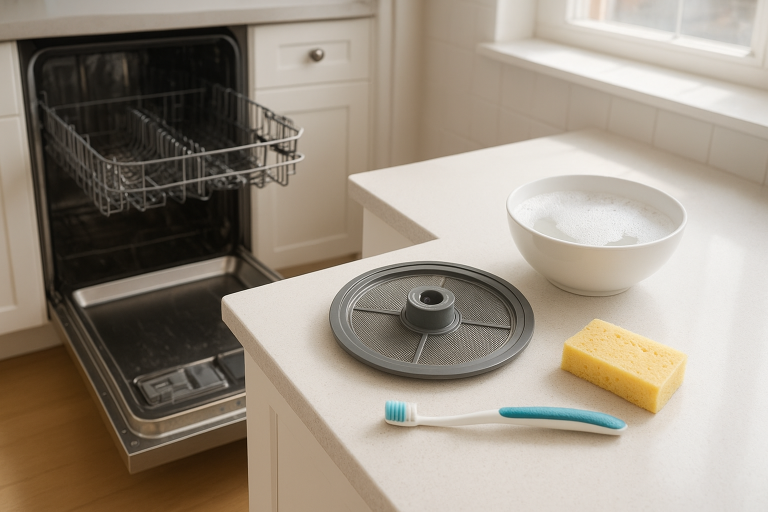
- Dish soap
- Warm water
- Soft sponge or dishcloth
- Old toothbrush or small soft brush
- Towel
- Flashlight, optional
Do not use a wire brush, scouring pad, knife, or anything sharp on the filter screen. Whirlpool cautions that wire brushes and scouring pads can damage dishwasher filters. ([whirlpool.com](https://www.whirlpool.com/content/dam/global/documents/202404/owners-manual-w11711835-revA.pdf?utm_source=openai))
How to Clean a Dishwasher Filter Step by Step
1. Empty the bottom rack
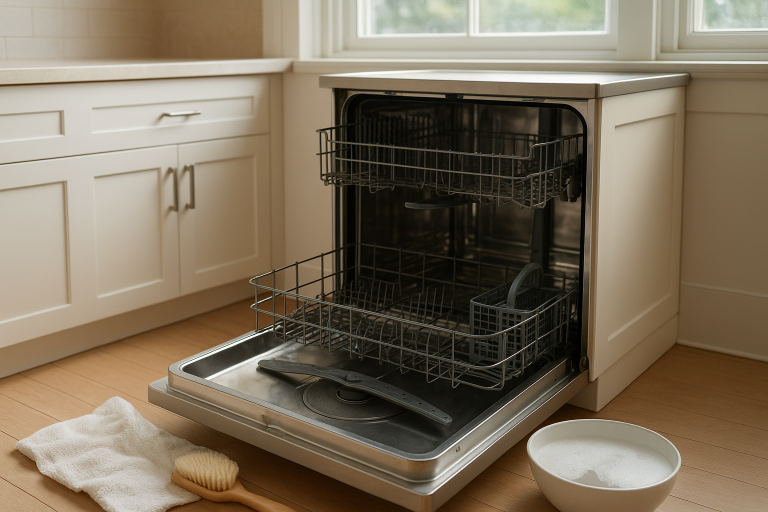
Pull out the lower rack and set it aside if it slides out easily. This gives you room to work and keeps you from bumping the spray arm.
2. Find the filter
Most removable dishwasher filters sit in the bottom of the tub, often near the center or back corner under the lower spray arm. Look for a round plastic piece with a mesh screen, twist handle, or small arrows showing lock and unlock positions.
If you do not see a removable filter, check your owner’s manual. Some dishwashers have a maintenance-free filter system or a small foreign-object cup instead of the twist-out filter many people expect. ([producthelp.whirlpool.com](https://producthelp.whirlpool.com/Dishwashers/Dishwasher/Other/Cleaning_and_Odor/Cleaning_and_Maintenance/Cleaning_the_Filter/Cleaning_the_Filter_-_Dishwasher?utm_source=openai))
3. Remove the filter gently
On many models, you turn the upper filter assembly about one-quarter turn counterclockwise and lift it out. Then you may be able to lift or slide out the lower filter plate. Do not force it. If it will not move, stop and look up your exact model number.
4. Rinse away loose food
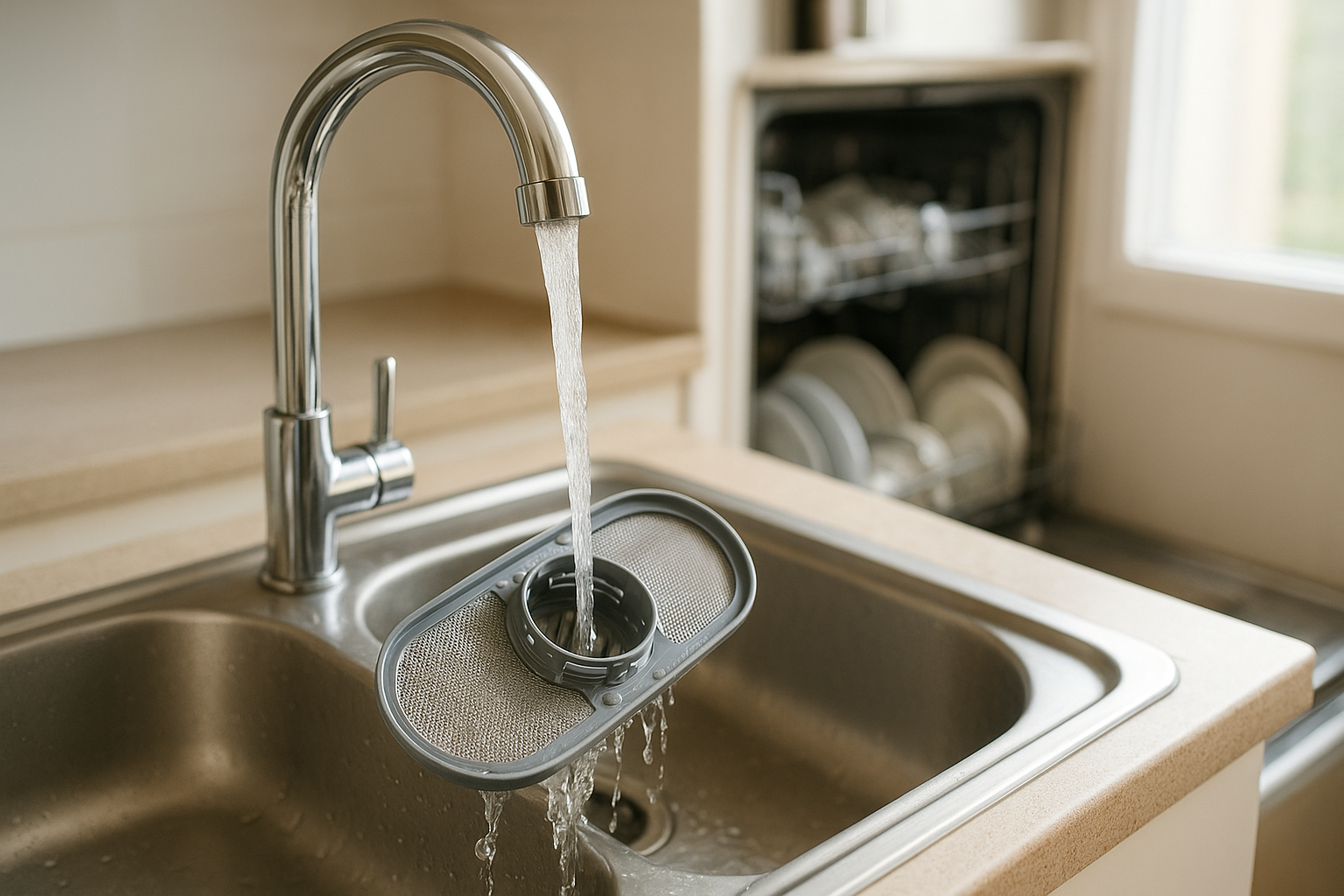
Take the filter to the sink and rinse it under warm running water. Hold it at different angles so water can push debris out of the mesh and crevices.
5. Wash with soap and a soft brush
Add a drop of dish soap to a sponge or soft brush and gently scrub away grease, cloudy buildup, and stuck-on food. Pay attention to the mesh, seams, and little tabs where gunk collects.
If you have hard water, you may see chalky white mineral deposits. A soft brush under warm water is usually the safest first try. Avoid harsh scraping, since a torn screen cannot do its job well.
6. Wipe the filter well
Before reinstalling the filter, look into the sump area where the filter sits. Remove any visible bits of glass, fruit pits, paper labels, bones, or twist ties. Use caution and wear gloves if you suspect broken glass.
7. Reinstall and lock it in place
Put the lower filter back first, then reinstall the upper filter assembly. Turn it until it locks. Whirlpool warns not to run the dishwasher unless the filters are properly installed; if the upper filter turns freely, it is not locked. ([producthelp.whirlpool.com](https://producthelp.whirlpool.com/Dishwashers/Product_Info/Dishwasher_Cleaning_and_Care/How_to_Clean_the_Dishwasher_Filters?utm_source=openai))
Should You Rinse Dishes Before Loading?
You usually do not need to prewash dishes. ENERGY STAR notes that today’s dishwashers and detergents are designed to do the cleaning, and many modern machines use soil sensors to adjust the cycle based on how dirty the water is. ([energystar.gov](https://www.energystar.gov/products/dishwashers?utm_source=openai))
The better habit is to scrape, not rinse. Scrape bones, skins, toothpicks, and large food pieces into the trash or compost, then load the dishwasher. This keeps bulky debris out of the filter without wasting sink water or confusing soil-sensing cycles.
What If the Dishwasher Still Smells?
If the filter is clean but the smell remains, try these next checks:
- Clean the door gasket: Wipe the rubber seal with warm soapy water, especially along the bottom edge.
- Check the drain area: Look for labels, seeds, or small scraps trapped near the filter opening.
- Inspect the spray arms: Food particles can clog the small holes. Remove debris with a toothpick if your manual allows it.
- Run a cleaning cycle: Many manufacturers recommend cleaning the dishwasher interior about every 30 days to reduce filming, spotting, and odors. ([producthelp.whirlpool.com](https://producthelp.whirlpool.com/Dishwashers/Product_Info/Dishwasher_Cleaning_and_Care/Cleaning_the_Dishwasher_Interior?utm_source=openai))
- Run full hot cycles: Short or cool cycles can leave more greasy residue behind.
Common Mistakes to Avoid
- Running the dishwasher without the filter: This can allow debris into places it should not go.
- Forcing the filter out: If it does not twist or lift easily, check the manual for your model.
- Using bleach with stainless steel interiors: Bleach can damage stainless surfaces and parts.
- Ignoring broken glass: A tiny shard can block the filter or damage hands during cleaning.
- Assuming all filters are the same: Filter shape and removal steps vary by brand and model.
A Simple Maintenance Routine
Put dishwasher filter cleaning on the same monthly list as wiping the fridge shelves and cleaning the range hood filter. It is a small task, but it helps the machine wash better and keeps your kitchen from smelling like yesterday’s dinner.
Once a month, scrape out the filter, rinse it clean, wipe the door seal, and check the spray arms. That little routine is often all your dishwasher needs to keep plates clean, glasses clear, and odors under control.