Best Pumpkin Fertilizer for Bigger, Healthier Pumpkins
Pumpkins grow fast, spread wide, and pull a lot of nutrients from the soil while they build vines, leaves, flowers, and fruit. If you want strong plants and larger pumpkins, feeding them well matters just as much as watering and sunlight.
The good news is that you do not need a complicated fertilizer routine to grow great pumpkins. A simple plan built around healthy soil, the right nutrients, and a few well-timed feedings can make a big difference.
What pumpkins need most
Pumpkins are heavy feeders, which means they use up nutrients quickly during the growing season. Early on, they need enough nitrogen to produce healthy leaves and vines. Once flowering begins, they benefit more from phosphorus and potassium, which support blossoms, fruit set, and overall plant strength.
That balance is important. Too much nitrogen can give you a huge plant with lots of leaves but few pumpkins. Too little nutrition, on the other hand, can slow growth and reduce fruit size.
A good fertilizer ratio for pumpkins
For most home gardens, a fertilizer with a lower nitrogen number and higher middle and last numbers works well. Look for something around:
- 5-10-10
- 4-8-8
- 10-10-10 in a more moderate application
If your soil is already rich, you may only need compost and a light feeding. If your plants are pale, slow-growing, or are producing few flowers, a more complete fertilizer can help.
Start with the soil, not just the plant
The best fertilizer plan begins before you plant a seed. Pumpkins grow best in loose, fertile soil that drains well and holds moisture. If possible, mix several inches of finished compost into the planting area. Compost improves soil structure and gives the roots a steady supply of nutrients.
A soil test is even better. It tells you whether your garden is low in nitrogen, phosphorus, potassium, or has a pH problem that may be limiting growth. Pumpkins usually prefer slightly acidic to neutral soil, around 6.0 to 6.8.
What to add before planting
- 2 to 4 inches of finished compost worked into the top layer of soil
- An all-purpose garden fertilizer if your soil test recommends it
- Well-rotted manure, if available and fully aged
Avoid fresh manure. It can burn young plants and may carry pathogens.
How to fertilize pumpkin plants at each stage
Feeding pumpkins works best in phases. Their needs change as they move from seedlings to sprawling vines to fruiting plants.
1. At planting time
When you plant seeds or transplants, focus on building a strong root zone. Use compost and, if needed, a starter fertilizer that is not too high in nitrogen. This helps young plants settle in without forcing weak, leafy growth too quickly.
2. When vines begin to spread
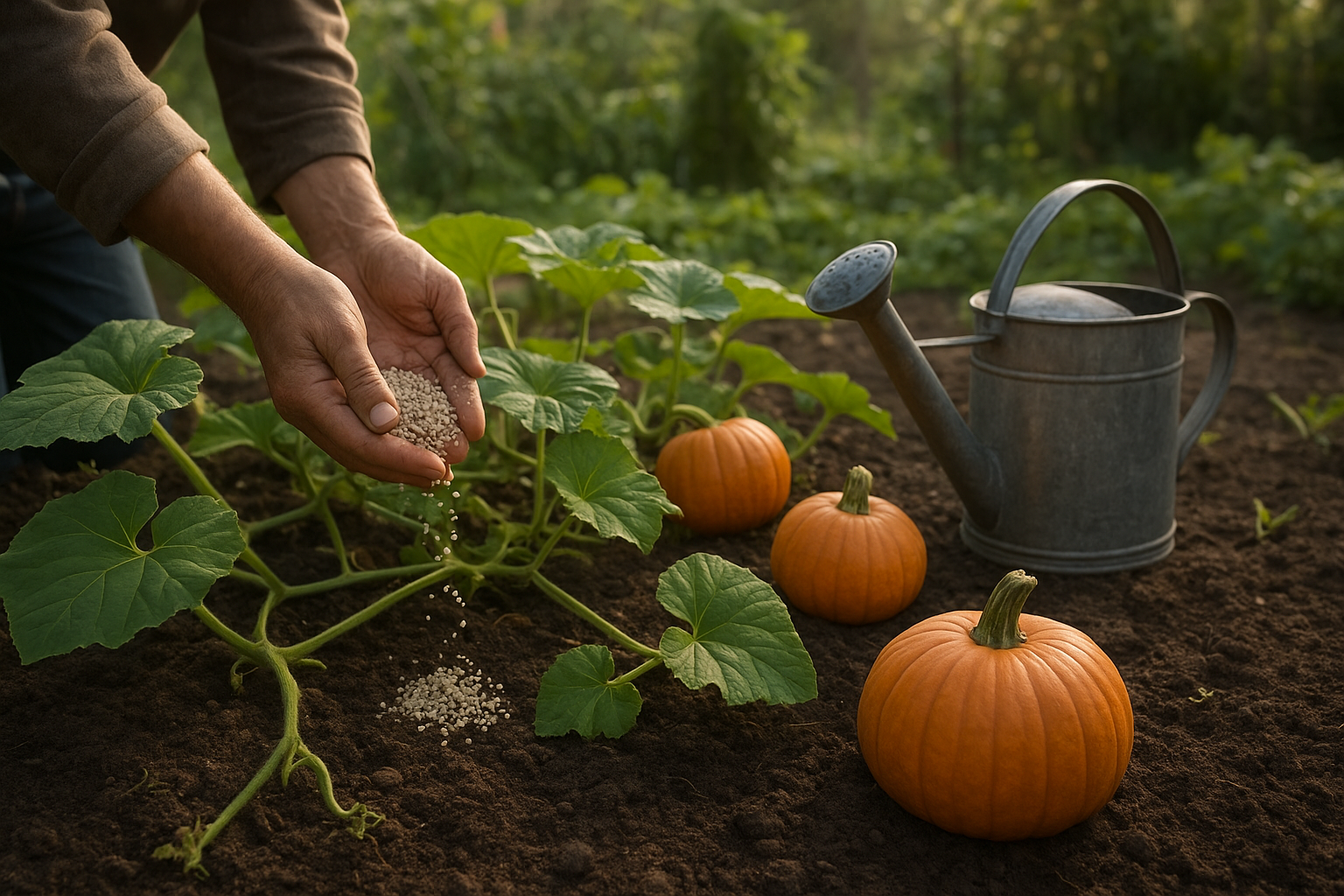
Once the plant is actively growing and begins to run, side-dress with a balanced or slightly low-nitrogen fertilizer. Apply it a few inches away from the main stem so you do not damage roots or burn the plant.
Water after feeding to help the nutrients move into the soil.
3. At flowering and fruit set
This is when many gardeners make the mistake of keeping the same high-nitrogen feeding schedule. Instead, shift toward a fertilizer that supports blooms and fruit. A product with more phosphorus and potassium can help the plant direct energy into pumpkins instead of just more vine growth.
4. While fruit is sizing up
Continue with light, regular feeding if your soil is not especially rich. This is also a good time to use compost tea, liquid fish emulsion, or a diluted organic fertilizer if you prefer gentler options. Keep the dose modest; more is not always better.
Organic and synthetic options that work
There is no single correct fertilizer for pumpkins. The best choice depends on your soil, your goals, and how often you want to feed.
Organic fertilizers
- Compost for steady, slow nutrition
- Aged manure for long-lasting soil improvement
- Fish emulsion for a quick boost during vine growth
- Bone meal to support flowering and root development
- Greensand or sulfate of potash for added potassium, if needed
Organic fertilizers are especially useful if you want to build healthier soil over time. They often feed more slowly, which is helpful for a long-season crop like pumpkins.
Synthetic fertilizers
Granular garden fertilizers can be a convenient choice because they are easy to measure and apply. They are useful when you need a quick, predictable nutrient boost. Just be careful not to overapply, especially products high in nitrogen.
How often to feed pumpkins
For many home gardens, pumpkins do well with feeding every 3 to 4 weeks during active growth. If you are using compost and rich soil, you may need less. If your plants are in poor soil or growing huge vines and fruits, they may need more frequent attention.
Watch the plant rather than the calendar alone. Signs that pumpkins may need fertilizer include:
- Pale or yellowing leaves
- Slow vine growth
- Few flowers
- Small fruit that stops sizing up
- Weak-looking stems
At the same time, be cautious if you see very dark green leaves and long, aggressive vine growth with few blossoms. That often means the plant is getting too much nitrogen.
Fertilizer tips that help pumpkins grow bigger
- Water first, then feed. Dry soil plus fertilizer can stress roots.
- Apply around the root zone. Do not pile fertilizer against the stem.
- Mulch after feeding. Straw or shredded leaves help hold moisture and reduce nutrient loss.
- Do not skip pollination. Fertilizer helps the plant, but pollination is what turns flowers into pumpkins.
- Limit the number of fruits per plant if you want larger pumpkins. A plant that supports too many pumpkins will divide its energy.
Common fertilizer mistakes to avoid
One of the biggest mistakes is overfeeding with nitrogen. That can make the plant lush but less productive. Another common problem is applying fertilizer too close to the stem, which can damage roots and leaves.
It is also easy to assume that bigger doses mean bigger pumpkins. In reality, pumpkin plants respond best to steady care, not heavy feeding. Healthy soil, proper spacing, consistent watering, and the right nutrient balance usually produce better results than pushing the plant too hard.
A simple feeding plan for home gardeners
- Before planting, work compost into the bed.
- At planting, use a mild starter fertilizer if your soil needs it.
- As vines spread, side-dress with a balanced fertilizer.
- When flowers appear, reduce nitrogen and support fruiting nutrients.
- During fruit growth, feed lightly and water consistently.
If you keep your pumpkin patch evenly watered and avoid nutrient extremes, the plants will be much more likely to produce strong vines and sturdy, well-sized fruit.
The bottom line
The best pumpkin fertilizer is one that supports steady growth without overwhelming the plant with nitrogen. In most gardens, that means starting with compost, then using a balanced fertilizer or one slightly higher in phosphorus and potassium as the season progresses.
Feed thoughtfully, mulch well, and watch the plants closely. With the right care, your pumpkin patch can reward you with bigger, healthier pumpkins at harvest time.