How to Fix a Squeaky Door Hinge for Good
A squeaky door is one of those little household annoyances that can make a quiet morning feel much louder than it needs to be. The good news: you usually do not need a new door, a handyman, or a complicated repair.
The best way to fix a squeaky door hinge is to get lubricant where the friction actually happens: on the hinge pin and inside the hinge knuckles. A quick spray on the outside may help for a few days, but cleaning and lubricating the pin is the fix that tends to last. Several home repair sources recommend working lubricant into the hinge and, for stubborn squeaks, partially or fully removing the hinge pin so the lubricant reaches the moving surfaces. ([bobvila.com](https://www.bobvila.com/articles/how-to-fix-a-squeaky-door/?utm_source=openai))
What Causes a Door Hinge to Squeak?
Most hinge squeaks come from metal rubbing against metal. Over time, dust, old grease, tiny rust flakes, paint residue, or normal wear can make the hinge pin drag inside the hinge. Every time the door swings, that friction turns into a squeak.
A squeak can also be a clue that the door is slightly misaligned. If the door rubs the frame, sticks at the top, or needs to be lifted to latch, lubrication may quiet it temporarily, but you may also need to tighten screws or adjust the hinge later.
Supplies You’ll Need
- Flathead screwdriver or nail set
- Small hammer
- Clean rag or paper towels
- Old toothbrush or cotton swabs
- White lithium grease, silicone spray, light machine oil, or petroleum jelly
- Scrap cardboard to protect the wall and trim
- Optional: fine steel wool for light rust
Best lubricant choice: white lithium grease is a good long-lasting option for metal hinges because it stays put better than thin sprays. Silicone spray is cleaner and easier to apply, especially if you do not want visible grease. Graphite powder can work where oil would attract dust, but it is messy and can stain if you overdo it. Home repair guides commonly list silicone spray, multipurpose oil, lithium grease, petroleum jelly, and graphite as workable hinge lubricants, with grease often lasting longer than a quick surface spray. ([bobvila.com](https://www.bobvila.com/articles/best-lubricants-for-door-hinges/?utm_source=openai))
Can You Use WD-40 on a Squeaky Door?
You can use standard WD-40 as a short-term silencer or to help loosen and clean a dirty hinge, but it is not the longest-lasting fix by itself. For a better repair, treat it as a cleaning step, wipe away the grime, then follow with a true lubricant such as white lithium grease, silicone spray, or light oil. Automotive and home repair sources make the same practical distinction: standard WD-40 can help free or clean parts, while white lithium grease or silicone products are better choices when you want lubrication to last. ([thehingejournal.com](https://thehingejournal.com/how-to-fix-squeaky-door-hinges/?utm_source=openai))
Step-by-Step: How to Fix a Squeaky Door Hinge
1. Find the noisy hinge
Open and close the door slowly while listening closely. Most interior doors have two or three hinges, and the squeak may come from just one. Put your fingers lightly on each hinge as the door moves; the noisy one often vibrates a bit.
2. Protect the area
Slide a piece of cardboard behind the hinge if it is close to painted trim or wallpaper. Keep a rag under the hinge to catch drips. This small step matters, especially with oil or graphite.
3. Try the quick outside-lubrication method first
If the squeak is minor, you may not need to remove the pin. Apply a small amount of silicone spray, light oil, or lithium grease at the top of the hinge where the pin enters the hinge barrel. Open and close the door 10 to 15 times to work the lubricant downward. Wipe off every bit of excess from the outside of the hinge.
If the squeak is gone, you are done. If it comes back quickly or never fully stops, move on to the hinge-pin method.
4. Tap the hinge pin up
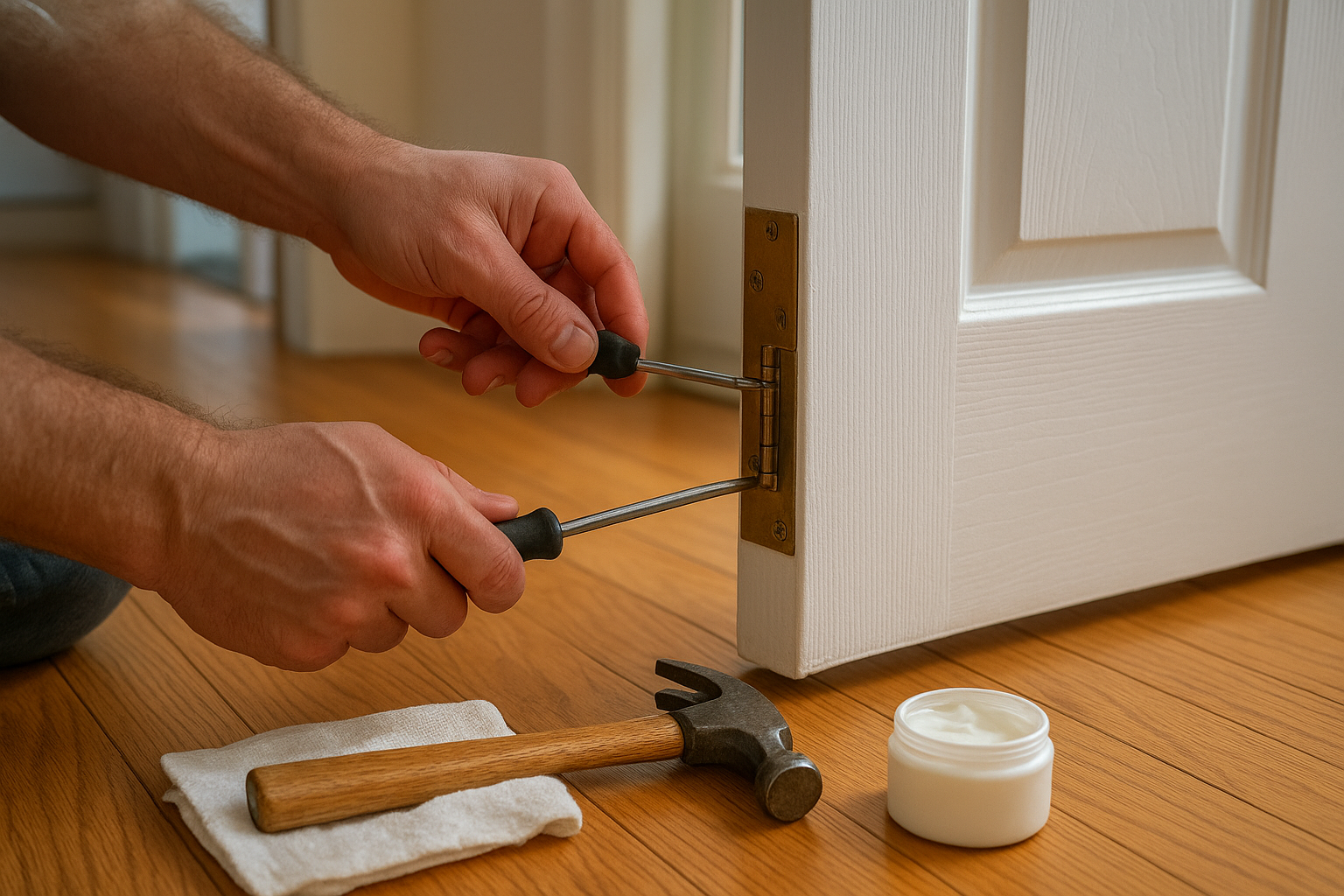
Close the door so it is supported by the frame. Place the tip of a flathead screwdriver or nail set under the head of the hinge pin. Tap gently with a hammer until the pin rises. Pull it out with your fingers or the screwdriver.
Important: remove and clean one hinge pin at a time. Do not pull every pin from the door at once, or the door can shift and become hard to realign.
5. Clean the pin
Wipe the hinge pin with a rag. If it has sticky buildup, use a little household degreaser on the rag, then dry it thoroughly. For light rust, rub gently with fine steel wool. Do not grind or sand the pin aggressively; you just want it clean and smooth.
6. Clean inside the hinge knuckles
Use a cotton swab, twisted paper towel, or old toothbrush to remove visible grime from the hinge barrel. If the hinge is very dirty, a short spray of cleaner or penetrating product can help flush it out, but wipe away the residue before adding your final lubricant.
7. Lubricate the hinge pin
Apply a thin coat of white lithium grease, petroleum jelly, silicone spray, or light machine oil to the hinge pin. Thin is the key word. A heavy glob will squeeze out, collect dust, and leave dark streaks on the hinge or door.
8. Reinstall the pin and work the door
Slide the pin back into the hinge. Tap it down gently until it is fully seated. Open and close the door several times so the lubricant spreads inside the hinge. Wipe off any extra from the top, bottom, and sides of the hinge.
If the Door Still Squeaks
If one hinge is quiet but the door still squeaks, repeat the same process on the other hinges. Squeaks can travel through the door, so the hinge that sounds guilty is not always the only one causing trouble.
If all hinges are lubricated and the noise remains, check for these common problems:
- Loose hinge screws: tighten the screws on the door and jamb side. If a screw spins without grabbing, fill the hole with wood glue and toothpicks, let it dry, then reinstall the screw.
- Door rubbing the frame: look for shiny rub marks or worn paint along the top, latch side, or bottom edge.
- Bent hinge: if the hinge leaves are warped or the pin wobbles, replacement may be easier than repeated lubrication.
- Paint in the hinge: painted-over hinges often squeak because paint gets between moving parts. Carefully score paint lines before removing hardware.
Household Fixes in a Pinch
If you do not have proper lubricant, you can use a few household stand-ins. Petroleum jelly works surprisingly well because it clings to the pin. A dry bar of soap or a little candle wax can also quiet a hinge for a while. Cooking oil can work in an emergency, but use very little; it can become sticky and attract dust over time.
For a frequently used door, buy a small tube or spray can of the right lubricant when you can. It is inexpensive, stores easily, and is useful for cabinet hinges, gate latches, and other small moving parts around the house.
How Often Should You Lubricate Door Hinges?
Most interior hinges do not need regular attention unless they start making noise. For busy doors, exterior doors, laundry room doors, and bathroom doors exposed to humidity, check the hinges once or twice a year. Wipe away dust and add a very small amount of lubricant if the swing feels dry or noisy.
When to Replace the Hinge Instead
Replace the hinge if it is deeply rusted, cracked, badly bent, missing screws that will not hold, or has a loose pin that will not stay seated. Also consider replacing mismatched or painted-over hinges during a room refresh; new hinges are inexpensive and can make the door swing more smoothly.
For most squeaky doors, though, the fix is simple: clean the pin, lubricate it lightly, reinstall it, and wipe away the excess. That ten-minute repair is usually enough to make the door quiet again without creating a greasy mess.