How to Prune Tomato Plants for More Fruit
Tomatoes are one of the most rewarding crops to grow, but they can also become a tangle of stems and leaves if left alone all season. A little smart pruning helps the plant stay healthier, easier to support, and more focused on producing fruit instead of excess foliage.
If you’ve ever wondered how to prune tomato plants without stressing them out, the good news is that it’s simpler than it looks. You do not need to shave the plant down to bare stems. In most gardens, a few careful snips at the right time make all the difference.
Why Pruning Tomatoes Helps
Tomato plants naturally want to keep growing. That energy can go into leaves, side shoots, and new stems, or it can go into flowers and fruit. Pruning helps guide the plant’s energy toward the harvest while also improving growing conditions around the plant.
Done well, pruning can:
- Improve airflow through the plant
- Help leaves dry faster after rain or watering
- Make it easier to spot pests and disease early
- Keep fruit easier to see and pick
- Reduce the weight and size of unruly plants
That said, pruning is not mandatory for every tomato. Some varieties need very little help, while others benefit from regular attention throughout the season.
Know Your Tomato Type Before You Cut
The biggest mistake gardeners make is pruning all tomatoes the same way. Start by figuring out whether you’re growing a determinate or indeterminate type.
Determinate Tomatoes
Determinate varieties grow to a set size, then put most of their energy into ripening fruit over a shorter period. They tend to be compact and bushier, which means they usually need only light pruning.
For determinate tomatoes, focus on removing damaged leaves, diseased growth, and any stems that are touching the soil. Avoid heavy pruning, since that can reduce the number of fruits the plant can produce.
Indeterminate Tomatoes
Indeterminate varieties keep growing and producing throughout the season until frost ends the crop. These are the best candidates for regular pruning because they can quickly become dense and overgrown.
On indeterminate plants, pruning helps keep the structure manageable and can encourage stronger fruiting along the main stems.
What to Remove First
When you are learning how to prune tomato plants, begin with the obvious problem areas. Not every cut needs to be strategic; some are just basic cleanup.
- Yellowing or damaged leaves: Remove leaves that are turning yellow, spotted, torn, or wilted.
- Leaves touching the soil: These are more likely to pick up disease from splashing water or damp ground.
- Crossing stems: Stems rubbing against each other can create wounds and crowd the center of the plant.
- Suckers on indeterminate plants: These small side shoots grow where a leaf branch meets the main stem.
Cutting a few of these problem areas can immediately improve airflow and reduce clutter without stressing the plant.
How to Prune Suckers the Right Way
Suckers are the most talked-about part of tomato pruning. They are the small shoots that form in the leaf joints, and on indeterminate plants they can turn into full stems if left alone.
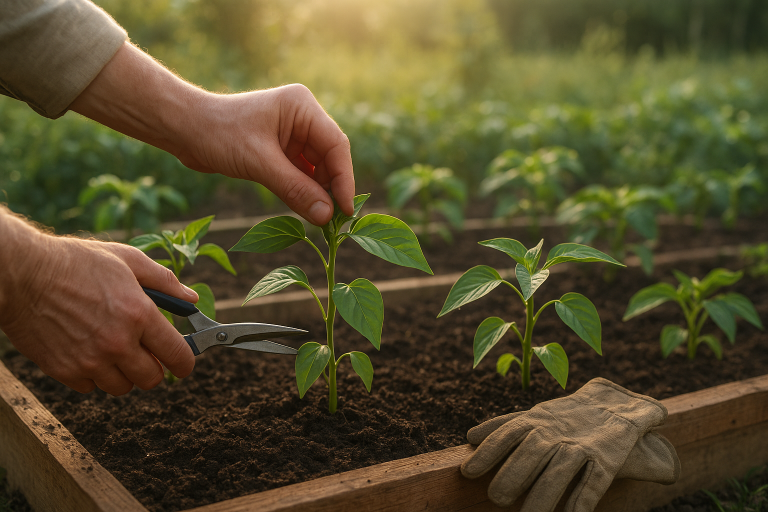
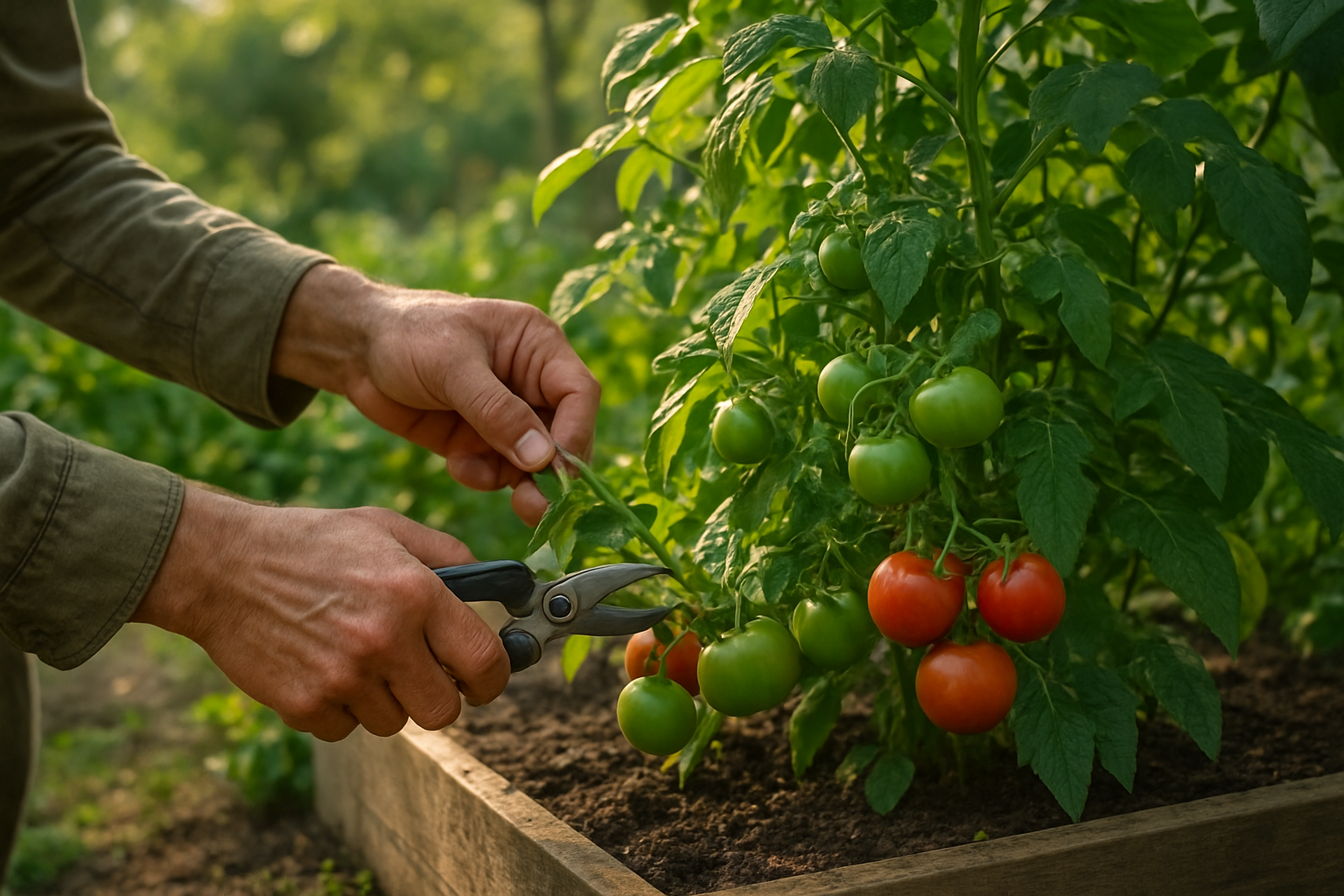
If you want a simpler plant with fewer main stems, remove some of the suckers while they are still small. Pinching them off by hand works well when they are tender. If they are already thick, use clean snips so you do not tear the stem.
A practical approach is to leave the strongest main stem and one or two well-placed side stems, especially if the plant is supported by a sturdy cage, stake, or trellis. This keeps the plant productive without letting it become a jungle.
Tip: Do not try to remove every sucker on every plant. A completely stripped tomato can become sunburned, stressed, and less productive.
How Much Should You Prune?
Less is usually better. Instead of removing large amounts all at once, prune gradually as the plant grows. That gives the tomato time to adjust and keeps you from accidentally taking away too much leaf cover.
A good general rule is to avoid removing more than about one-third of the plant at a time. If the plant is very dense, spread the work over a few days rather than doing a major haircut in one session.
For indeterminate plants, some gardeners also remove lower leaves as the plant matures, especially if the lower section is crowded or close to the soil. This can reduce the chance of splashback and create a tidier base.
Best Time of Day to Prune
Try pruning in the morning on a dry day. That gives any small cuts time to dry out before evening humidity or watering. Dry foliage also makes it easier to see what you are doing and spot problem spots on the plant.
Skip pruning when plants are wet from rain or overhead watering if you can. Wet conditions make disease easier to spread from plant to plant.
Tools and Cleanup Matter
Good pruning starts with clean tools. Use sharp hand pruners, garden snips, or even your fingers for soft young shoots. Wipe the blades with rubbing alcohol or a disinfecting wipe before moving from one plant to another, especially if you have seen any signs of disease.
Keep a small bucket, bag, or trug nearby for clippings. Do not leave diseased leaves on the ground under the plant, where they can become a problem later.
Signs You’ve Pruned Too Much
Tomatoes are forgiving, but overpruning can still cause problems. If you remove too many leaves, the plant may struggle to protect its fruit from direct sun and may slow down fruit production.
Watch for these warning signs:
- Fruit suddenly getting too much direct sunlight
- Stunted growth after a major pruning session
- Wilting in hot weather because the plant lost too much leaf cover
- A sparse plant with very few leaves left to support fruit development
If that happens, stop cutting and let the plant recover. New leaves will fill in, but the goal is always balance, not bare stems.
Simple Tomato Pruning Routine for Home Gardeners
If you want an easy system, follow this repeatable routine once a week:
- Check the plant from top to bottom.
- Remove any yellow, damaged, or soil-touching leaves.
- Pinch off small suckers on indeterminate varieties.
- Thin a few crowded stems if airflow is poor.
- Step back and make sure the plant still has plenty of healthy foliage.
This small weekly habit is often enough to keep a tomato plant neat and productive without turning pruning into a big project.
When Not to Prune
There are times when it is better to leave the plant alone. Avoid heavy pruning during extreme heat, drought stress, or right after transplanting. Young plants need leaves to build energy and establish roots.
If a tomato is already struggling from pests, disease, or nutrient issues, address the underlying problem first. Pruning can help, but it is not a cure-all.
The Bottom Line
Learning how to prune tomato plants is really about making thoughtful cuts, not aggressive ones. Remove the clutter, keep airflow moving, and match your approach to the type of tomato you’re growing. With a sharp tool and a light hand, you can help your plants stay healthier and make harvesting much easier.
The best tomato patch is not always the wildest one. Often, it is the one that has been gently guided toward strong stems, clean spacing, and abundant fruit.