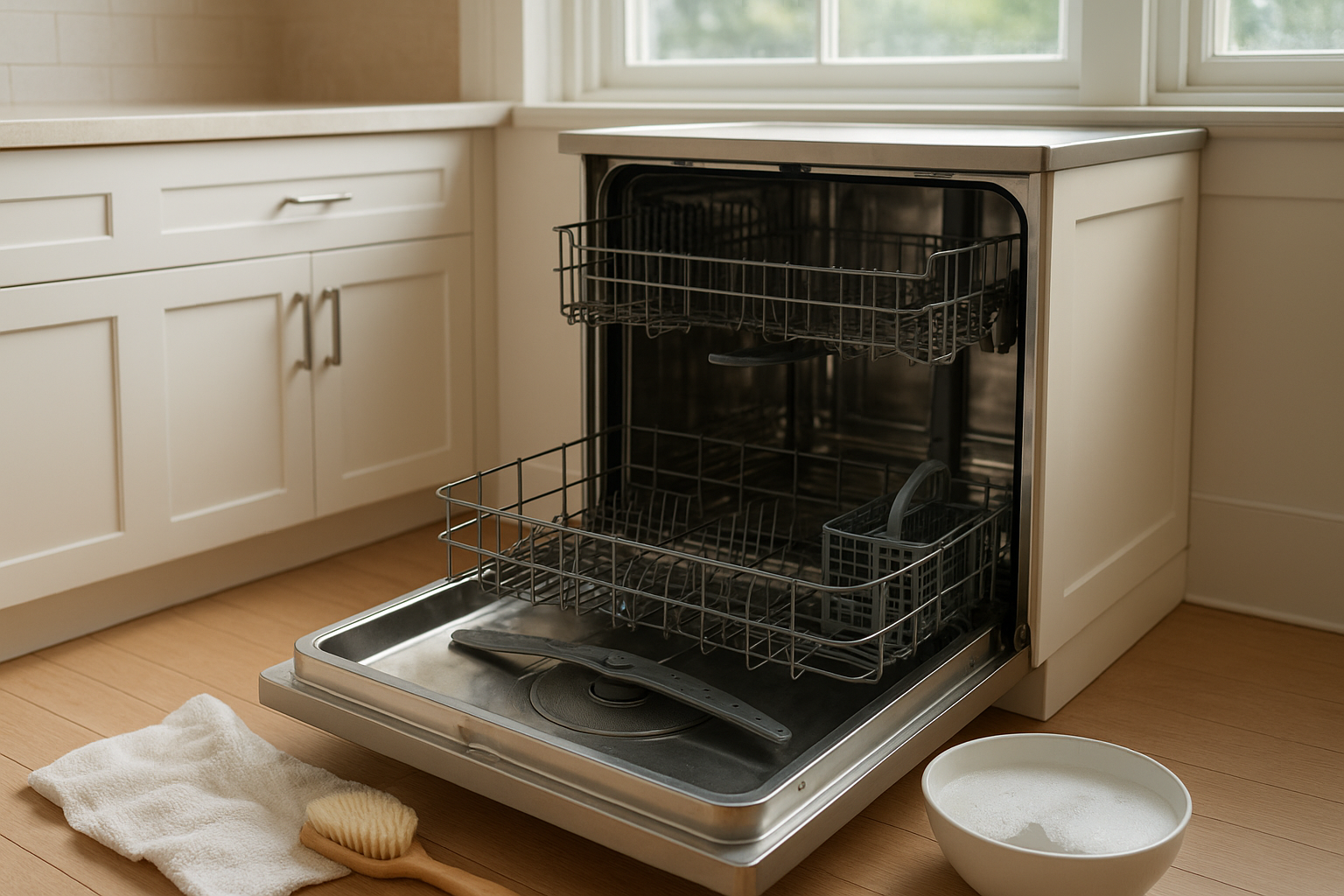
How to Clean a Dishwasher Filter and Spray Arms
If your dishwasher smells musty, leaves grit on glasses, or suddenly seems worse at its one job, the problem is often hiding in plain sight. Learning how to clean a dishwasher filter and spray arms is one of the fastest ways to improve cleaning without calling a repair person.
Most modern dishwashers recirculate water during the cycle, so a clogged filter or plugged spray holes can send food bits right back onto your dishes. This job usually takes 20 to 30 minutes and only needs simple household supplies.
Why the Filter and Spray Arms Matter
The filter catches food particles before they can move through the pump and back into the wash water. Whirlpool notes that cleaning the filter regularly helps keep water flowing strongly and helps prevent food particles from recirculating during the cycle. ([producthelp.whirlpool.com](https://producthelp.whirlpool.com/Dishwashers/Dishwasher/Other/Cleaning_and_Odor/Cleaning_and_Maintenance/Cleaning_the_Filter/Cleaning_the_Filter_-_Dishwasher?utm_source=openai))
The spray arms do the other half of the work. They spin and push water through small holes to reach plates, bowls, glasses, and silverware. GE Appliances advises checking that spray arms can rotate freely when wash performance drops, because blocked or stuck arms can keep water from reaching the load. ([products.geappliances.com](https://products.geappliances.com/appliance/gea-support-search-content?contentId=22167&utm_source=openai))
How Often to Clean a Dishwasher Filter
A good rule for most busy kitchens is to check the filter once a month. If you run the dishwasher daily, cook with a lot of rice, oatmeal, eggs, seeds, or melted cheese, or have hard water, check it every two weeks until you know how quickly it gets dirty.
You may need to clean it sooner if you notice:
- Grit or sandy bits on clean dishes
- A sour or swampy smell when you open the door
- Water left in the bottom after a cycle
- Cloudy glasses that used to come out clear
- Food specks stuck inside mugs or bowls
- A humming sound without good spray action
Also, keep in mind that scraping plates is usually enough. ENERGY STAR recommends scraping instead of pre-rinsing dishes, and says ENERGY STAR certified dishwashers can save about 5,800 gallons of water over their lifetime. ([energystar.gov](https://www.energystar.gov/products/dishwashers?utm_source=openai)) The EPA’s WaterSense home maintenance guidance also recommends scraping food waste into the trash or compost before loading instead of rinsing dishes first. ([epa.gov](https://www.epa.gov/watersense/home-maintenance?utm_source=openai))
What You’ll Need
- Dish soap
- Warm water
- Soft brush or old toothbrush
- Microfiber cloth or sponge
- Toothpick, wooden skewer, or piece of thin wire
- Small bowl
- Towel for the floor
- White vinegar, optional
- Dishwasher cleaner or citric acid cleaner, optional
Do not use bleach inside a stainless steel dishwasher tub unless your owner’s manual specifically says it is safe. Avoid steel wool, sharp knives, and anything that can gouge the filter screen or enlarge the spray arm holes.
Step 1: Empty the Dishwasher and Pull the Lower Rack
Start with a cool, empty dishwasher. Slide out the lower rack and set it on a towel so you have room to work. Look at the bottom of the tub, usually near the back or center, for the filter assembly.
Many dishwashers have a round upper filter that twists to unlock, plus a flat lower filter screen underneath. Some older models have a self-cleaning grinder instead of a removable filter. If you do not see an obvious twist-out filter, pause and check your owner’s manual before forcing anything.
Step 2: Remove the Dishwasher Filter
Turn the upper filter gently in the direction marked on the filter, often counterclockwise, then lift it out. Remove the lower screen if your model has one. Take a quick photo before removing parts if you are worried about putting them back correctly.
Dump loose food into the trash. You may find labels, lemon seeds, bits of glass, twist ties, eggshell, popcorn hulls, or greasy buildup. Check the filter well too, but be careful. If a glass has broken in the dishwasher, wear gloves and use a flashlight instead of reaching blindly.
Step 3: Wash the Filter by Hand
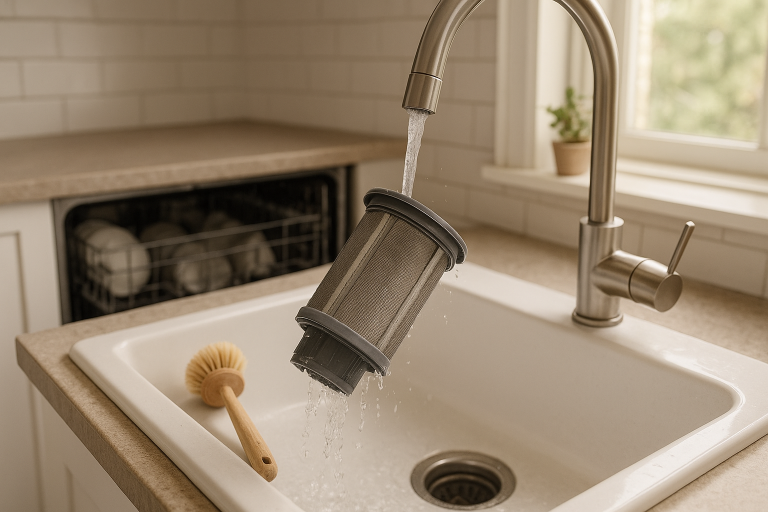
Rinse the filter under warm running water. Add a drop of dish soap and scrub gently with a soft brush. Pay attention to the mesh, folds, and plastic frame where grease can cling.
If the filter feels slimy, soak it in a bowl of warm soapy water for 10 minutes, then scrub again. For mineral crust, soak only the affected area in a 50-50 mix of white vinegar and warm water for a few minutes, then rinse well. Do not bang the filter against the sink; a cracked filter can let debris through.
Step 4: Clean the Filter Area in the Tub
Before reinstalling the filter, wipe the sump area with a damp cloth. Remove any visible food, paper labels, noodles, or soft debris. Check around the heating element if your dishwasher has an exposed one, but do not scrub wiring or parts you do not understand.
If there is standing water, a dirty filter may be the cause, but it is not the only possibility. A kinked drain hose, clogged air gap, blocked garbage disposal inlet, or pump issue can also leave water behind. Clean the filter first, then run a short cycle to see if drainage improves.
Step 5: Check and Clean the Spray Arms
Spin the lower spray arm by hand. It should rotate easily without hitting a tall utensil, rack part, or fallen item. Look closely at the small holes. If you see white mineral buildup, seeds, plastic bits, or food lodged inside, the arm cannot spray evenly.
Many lower spray arms lift off, twist off, or are held by a simple center nut. Upper spray arms vary more by model, so remove them only if they come off easily or your manual explains how. If an arm does not want to release, leave it installed and clean the holes in place.
- Use a toothpick, wooden skewer, or thin wire to loosen debris from the spray holes.
- Rinse removable spray arms under warm water, letting water run through the center opening and out the holes.
- Shake the arm gently to dislodge hidden grit.
- Wipe the outside with a damp cloth.
- Reinstall it securely and spin it again by hand.
Be gentle with the spray holes. The goal is to clear them, not widen them. Enlarged holes can change the spray pattern and reduce cleaning power.
Step 6: Reinstall the Filter Correctly
Put the lower filter screen back first, then insert the upper filter and twist it until it locks. This matters. A loose filter can rattle, float, or allow food into the pump area.
After it is locked in, tug lightly upward. It should feel seated, not wobbly. Slide the lower rack back into place and make sure nothing blocks the spray arm.
Step 7: Run a Cleaning Cycle
Once the filter and spray arms are clean, run the dishwasher empty on a hot cycle with a dishwasher cleaner. GE says soap buildup and residue may be removed with vinegar, citric acid, or a quality dishwasher cleaning product, depending on the situation and model guidance. ([products.geappliances.com](https://products.geappliances.com/appliance/gea-support-search-content?contentId=21552&utm_source=openai)) Whirlpool also suggests monthly deep cleaning with a dishwasher cleaner or a vinegar and baking soda method. ([whirlpool.com](https://www.whirlpool.com/blog/kitchen/how-to-clean-a-dishwasher.html?utm_source=openai))
If using vinegar, place a dishwasher-safe cup with white vinegar upright on the top rack and run a hot cycle. Do not mix vinegar with bleach or harsh cleaners. If your manual warns against vinegar, use a dishwasher cleaner instead.
Simple Habits That Keep It Cleaner Longer
- Scrape, do not rinse heavily. Remove chunks of food, bones, toothpicks, labels, and seeds before loading.
- Load so water can move. Avoid nesting bowls and spoons together where spray cannot reach.
- Check the bottom before each load. A fallen measuring spoon or jar lid can stop the spray arm from spinning.
- Use rinse aid. It helps water sheet off dishes and can reduce spotting, especially in hard-water homes.
- Run hot water at the sink first. This helps the dishwasher start with hotter water, especially if the kitchen is far from the water heater.
- Clean monthly. Put a reminder on your calendar if odors or grit keep returning.
When Cleaning Is Not Enough
If dishes are still dirty after the filter, spray arms, and tub are clean, look for other clues. Detergent may be old or clumped, the water may not be hot enough, the inlet valve may not be filling the machine properly, or the drain may be restricted. Hard water can also leave a chalky film that looks like food residue.
Call for service if you hear grinding, smell burning, see leaks, find broken glass in the pump area, or notice the dishwasher is not filling or draining after basic cleaning. But for everyday grit, odor, and weak spray, this simple filter-and-spray-arm reset solves a surprising number of problems.
The best part is that the job gets easier once you know your machine. Check the filter, clear the spray holes, run a hot cleaning cycle, and your dishwasher has a much better chance of sending out truly clean dishes again.