How to Clean a Showerhead Without Removing It
If your shower has started spraying sideways, dribbling from a few holes, or feeling weaker than usual, the showerhead is often the first place to look. Mineral scale from hard water can clog the tiny spray openings, but you usually do not need to remove the fixture or call a plumber.
This simple bag-and-vinegar method is one of the easiest ways to clean a showerhead without removing it. The U.S. EPA’s WaterSense guidance specifically recommends periodically checking showerheads for scale buildup and using white vinegar or a cleaning product to remove it. ([epa.gov](https://www.epa.gov/watersense/home-maintenance?utm_source=openai))
When This Method Works Best
This cleaning method is for mineral buildup: the chalky white, gray, tan, or greenish crust that forms around spray holes and joints. It is especially useful if you have hard water, well water, or a shower that has not been descaled in a few months.
It may help if you notice:
- Water spraying in odd directions
- Some holes not spraying at all
- Lower water pressure from the showerhead only
- White crust around the face of the showerhead
- Drips from the showerhead after use
If every faucet in the house has weak pressure, the issue may be your home’s plumbing, water supply, or pressure regulator—not just the showerhead.
What You’ll Need
- Distilled white vinegar
- A sturdy plastic food storage bag
- Rubber band, twist tie, or zip tie
- Old toothbrush or small nylon brush
- Microfiber cloth
- Toothpick or wooden skewer, optional
- Dish soap, optional for greasy residue
Plain white vinegar is the main cleaner here because its acidity helps loosen mineral scale. Several home-maintenance and cleaning sources recommend vinegar for showerhead scale, including This Old House, which suggests routine vinegar cleanings to help with both function and buildup. ([thisoldhouse.com](https://www.thisoldhouse.com/cleaning/a-shower-head?utm_source=openai))
Before You Start: Check the Finish
Most basic chrome showerheads tolerate a short vinegar soak well, but decorative finishes deserve more caution. If your showerhead is brass, oil-rubbed bronze, matte black, nickel, gold-toned, or has a special coating, check the manufacturer’s care instructions first.
When in doubt, use a shorter soak—about 15 to 30 minutes—and test a hidden spot with a vinegar-dampened cloth. Do not scrub with steel wool or an abrasive pad, which can scratch the finish. For delicate finishes, mild soap and warm water may be safer than a long acid soak.
How to Clean a Showerhead Without Removing It
1. Wipe off loose grime first
Before soaking, wipe the showerhead with a damp microfiber cloth. If there is soap scum, body oil, or general bathroom grime on the outside, add a drop of dish soap to the cloth and rinse it clean. Vinegar works better when it can reach the mineral deposits directly.
2. Fill the bag with vinegar
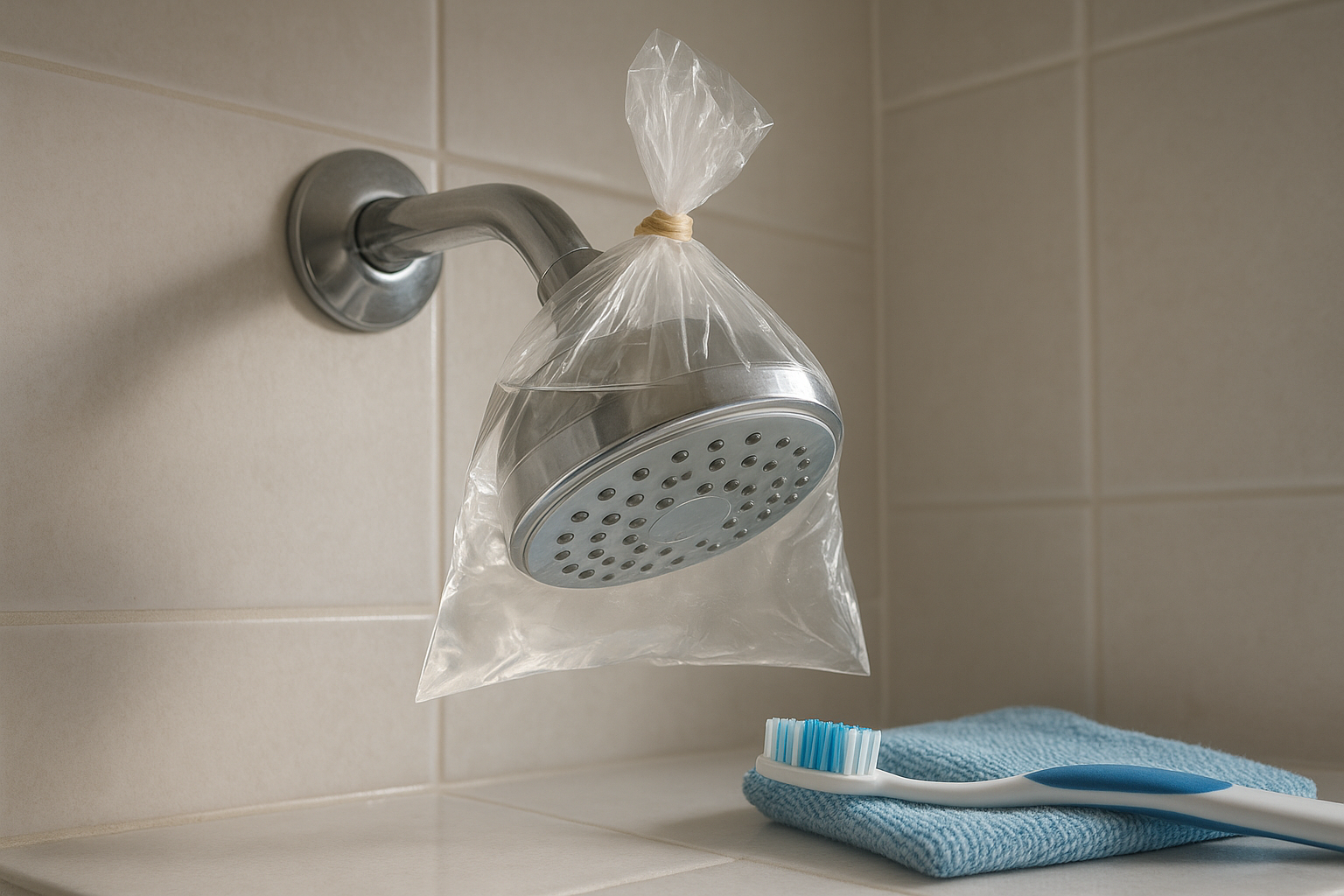
Pour enough white vinegar into a plastic bag to cover the spray face of the showerhead. For most fixed showerheads, 1 to 2 cups is plenty. You do not need to fill the whole bag; too much liquid just makes it heavier and harder to secure.
3. Secure the bag around the showerhead
Carefully lift the bag over the showerhead so the spray holes are submerged. Wrap a rubber band, twist tie, or zip tie around the neck of the showerhead to hold the bag in place.
Make sure the bag is supported and not pulling hard on the pipe coming out of the wall. If the shower arm feels loose, skip the hanging bag and use the gentler cloth method below.
4. Let it soak
For light buildup, soak for 30 minutes. For heavier hard-water deposits on a standard chrome showerhead, soak for 1 to 2 hours. Some cleaning guides suggest longer soaks for stubborn mineral deposits, but a shorter soak is the safer first pass if you are unsure of the finish. ([mollymaid.com](https://www.mollymaid.com/practically-spotless/how-to-clean-your-showerhead-with-vinegar/?utm_source=openai))
Avoid using vinegar and bleach together. Mixing acids with chlorine bleach can create dangerous fumes. If you recently used a bleach-based bathroom cleaner nearby, rinse the area well and wait before using vinegar.
5. Remove the bag and scrub gently
Take the bag off carefully and pour the used vinegar down the drain with plenty of running water. Use an old toothbrush to scrub around the spray holes, seams, and edges where softened scale is clinging.
For clogged nozzles, gently rub the flexible rubber tips with your fingers. If a hole is still blocked, use a toothpick or wooden skewer to loosen the deposit. Avoid metal pins if possible; they can scratch or widen delicate openings.
6. Flush the showerhead
Turn the shower on hot and let it run for 1 to 2 minutes. This helps push loosened mineral bits out through the spray holes. Molly Maid also recommends running hot water after the soak to rinse out remaining deposits from inside the showerhead. ([mollymaid.com](https://www.mollymaid.com/practically-spotless/how-to-clean-your-showerhead-with-vinegar/?utm_source=openai))
7. Polish and check the spray
Wipe the showerhead dry with a microfiber cloth. Turn the shower back on and check the spray pattern. If most of the holes are clear but a few still spray sideways, repeat the toothbrush step while the fixture is wet.
Gentler Method for Delicate Finishes
If you are worried about the finish, skip the full vinegar bag soak. Instead, dip a microfiber cloth in a mixture of equal parts vinegar and water, wrap it around the spray face for 10 to 15 minutes, then remove it and rinse thoroughly.
This is slower, but it reduces contact time and keeps vinegar from sitting on decorative trim. You can repeat it once if needed.
What If the Showerhead Is Still Clogged?
If the spray is still weak after one or two cleanings, try these checks:
- Look for a screen washer: Some showerheads have a small mesh screen inside the connection point. If you are comfortable removing the showerhead, that screen may need rinsing.
- Check the hose: On a handheld shower, mineral buildup can collect in the hose or connection points too.
- Inspect the age of the fixture: If the showerhead is old, cracked, corroded, or permanently clogged, replacement may be more practical.
- Choose a WaterSense model if replacing: EPA WaterSense-labeled showerheads are designed to meet water-efficiency and performance criteria. ([epa.gov](https://www.epa.gov/watersense/home-maintenance?utm_source=openai))
How Often to Clean a Showerhead
For most homes, cleaning the showerhead every 2 to 3 months is enough. In a hard-water home, a monthly quick clean may keep the spray holes from clogging again. This Old House notes that regular monthly, quarterly, and annual maintenance can improve both hygiene and function. ([thisoldhouse.com](https://www.thisoldhouse.com/cleaning/a-shower-head?utm_source=openai))
Between deep cleans, wipe the showerhead dry when you clean the bathroom. A quick weekly wipe with a damp cloth—or a light spray of diluted vinegar on plain chrome—helps keep mineral spots from turning into crusty buildup.
Common Mistakes to Avoid
- Soaking too long on special finishes: Vinegar can dull or damage some coatings.
- Using bleach with vinegar: Never combine them.
- Scrubbing with steel wool: It can scratch metal and plated finishes.
- Ignoring leaks: If water leaks at the wall connection, cleaning will not fix a worn washer or loose fitting.
- Forgetting to flush: Running hot water afterward helps clear loosened grit from inside the showerhead.
The Bottom Line
The easiest way to clean a showerhead without removing it is to soak the spray face in white vinegar, scrub the softened mineral deposits, and flush the fixture with hot water. It takes very little effort, uses supplies you probably already have, and can make a weak, messy shower spray feel noticeably better in under an hour.