How to Clean Window Tracks Without Making a Muddy Mess
Window tracks are one of those places you can ignore for months, then suddenly notice all at once. Dust, pollen, dead bugs, pet hair, and damp grime settle into the narrow channels, and if you spray first, the whole thing turns into muddy sludge.
The good news: learning how to clean window tracks is mostly about doing the steps in the right order. Start dry, loosen the corners, wash lightly, then dry well so the track does not stay damp.
Why Window Tracks Get So Dirty
Window tracks act like tiny gutters inside your home. Every time you open a window, outdoor dust and pollen blow in. Condensation can add moisture, especially in bathrooms, kitchens, basements, and bedrooms where windows stay closed for long stretches.
That damp dust can look like mold or mildew, especially in corners. The EPA notes that mold cleanup is mainly about removing the mold and fixing the moisture problem, not just spraying a chemical over it. For routine household mold cleanup, EPA guidance says bleach is not usually recommended as a standard first step, and bleach should never be mixed with ammonia or other cleaners. CDC guidance also warns never to mix bleach with ammonia or other cleansers.
What You’ll Need
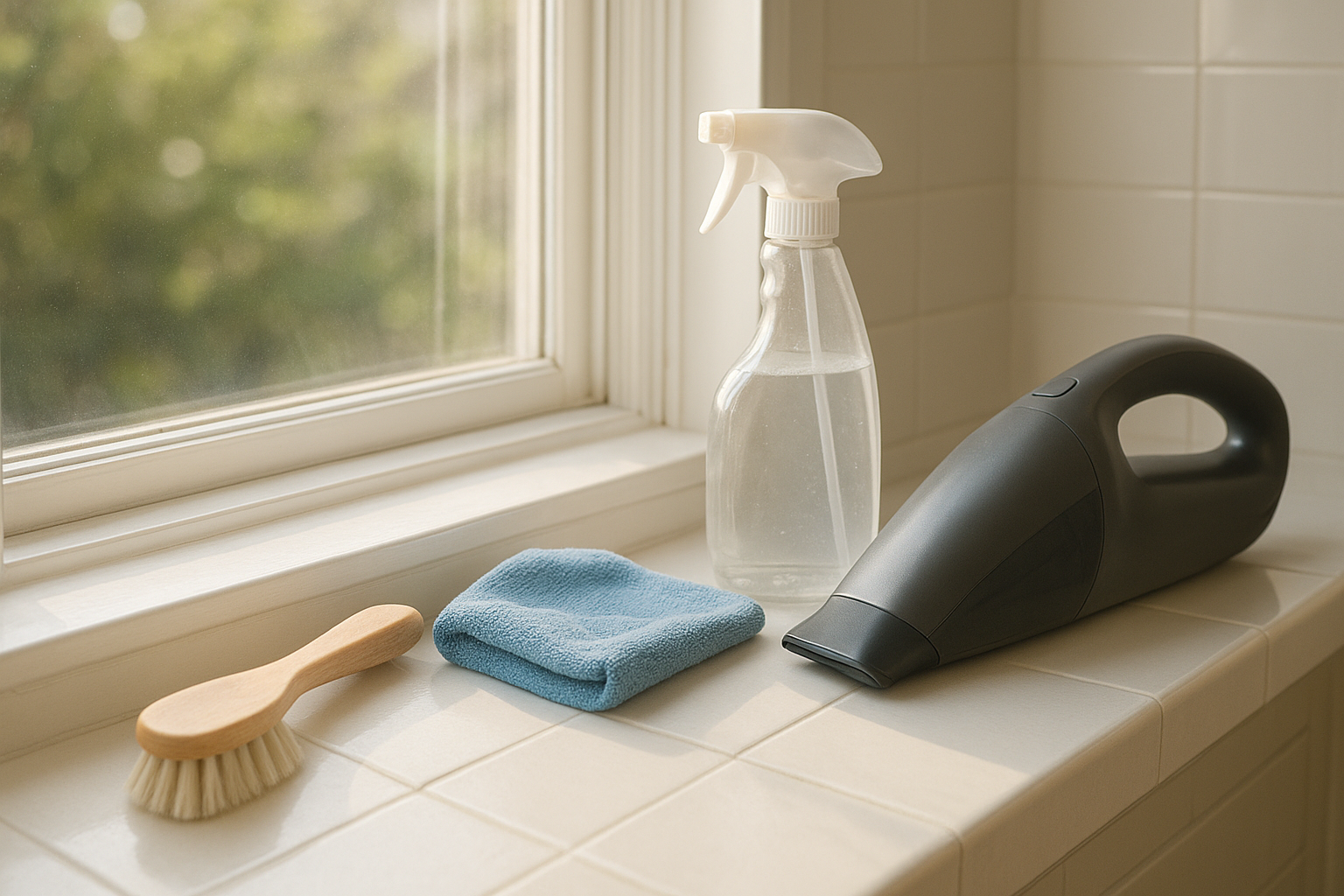
- Vacuum with crevice tool or handheld vacuum
- Old toothbrush, small detail brush, or soft grout brush
- Wooden skewer, butter knife, or chopstick wrapped in a cloth
- Microfiber cloths or sturdy paper towels
- Small bowl of warm water
- A few drops of dish soap
- Spray bottle with equal parts white vinegar and water, optional
- Cotton swabs for tight corners
- Thin towel to protect the sill and floor
Skip the harsh mixing. Do not combine vinegar with bleach, hydrogen peroxide, ammonia, toilet cleaner, or any other disinfecting product. If you choose to disinfect later, clean first, rinse, dry, and follow the label on that product.
The Low-Mess Method for Cleaning Window Tracks
1. Open the window and check the drainage holes
Open the window fully so you can see the whole track. Many sliding windows have small weep holes or drainage slots near the outside edge. These help water escape. If they are clogged with dirt, the track can hold moisture, which makes grime come back faster.
Use a dry brush or a wooden skewer to gently loosen debris around those openings. Do not seal or caulk over weep holes; they are there for a reason.
2. Vacuum before you add any liquid
This is the step that keeps the job from turning into mud. Use the crevice attachment and vacuum the entire track slowly. Run the nozzle along the front channel, back channel, corners, and the area where the window closes.
If the dirt is packed in, brush first, then vacuum again. An old toothbrush works well because the bristles reach into grooves without scratching most vinyl, aluminum, or painted tracks.
3. Loosen stuck-on grime with a dry brush
Before spraying anything, scrub the corners and seams with a dry brush. For narrow slots, wrap a microfiber cloth around the tip of a butter knife, chopstick, or plastic putty knife. Keep the pressure light. You want to lift the dirt, not gouge the track.
Vacuum one more time after brushing. It feels repetitive, but removing dry debris first saves several rounds of wiping later.
4. Wash with warm soapy water
Mix a small bowl of warm water with a few drops of dish soap. Dip a cloth into the solution, wring it out well, and wipe the track. The cloth should be damp, not dripping.
For corners, use cotton swabs or the cloth-wrapped tool again. If you have a very dirty track, change the rinse water halfway through so you are not spreading grit back into the channels.
5. Use vinegar spray for mineral film or musty residue
If the track still looks dull or smells musty after soap and water, lightly mist it with a 50/50 mix of white vinegar and water. Let it sit for a few minutes, then scrub and wipe. Vinegar can help cut light mineral deposits and everyday grime, but it is not a cure for an ongoing moisture problem.
Use vinegar carefully on natural stone sills nearby, since acids can etch stone. Spray the cloth instead of the track if you need more control.
6. Rinse and dry completely
Wipe the track with a clean damp cloth to remove soap or vinegar residue. Then dry it thoroughly with a microfiber cloth. Pay special attention to corners, latch areas, and the lower channel where water tends to sit.
If the window is in a damp room, leave it open for a short time if weather allows, or run the bathroom fan or a nearby fan to help the area dry. Drying is not just a finishing touch; it is what keeps grime and musty smells from returning quickly.
How to Handle Black Spots in Window Tracks
Black spots in a window track can be mildew, mold, old dirt, deteriorated weatherstripping, or staining. Start with the cleaning method above. If spots wipe away and the area dries well, routine cleaning may be enough.
If you see fuzzy growth, smell a persistent musty odor, or the spots keep returning, look for the moisture source. Common causes include condensation, clogged weep holes, leaky windows, poor bathroom ventilation, or indoor humidity that is too high.
For small areas on hard, nonporous surfaces, scrub with detergent and water, rinse, and dry. Wear gloves if you are dealing with visible mold, and ventilate the room. If the moldy area is large, keeps coming back, or is connected to a leak inside the wall, it is time to fix the water problem and consider professional help.
What Not to Do
- Do not spray first. Liquid turns dry dust into paste and makes the job harder.
- Do not flood the track. Excess water can run into places you cannot dry easily.
- Do not mix cleaners. Especially avoid mixing bleach with vinegar, ammonia, or other cleaners.
- Do not use a wire brush on soft tracks. It can scratch vinyl, paint, or aluminum finishes.
- Do not ignore clogged drainage holes. Standing water brings the grime back.
How Often to Clean Window Tracks
For most homes, clean window tracks two to four times a year. If you live near a busy road, have pets, open windows often, or deal with heavy pollen, a quick monthly vacuum helps a lot.
A good routine is to deep clean tracks in spring before open-window season and again in fall before cold weather. In bathrooms and kitchens, check more often because condensation can build up faster.
A 5-Minute Maintenance Trick
Once the tracks are clean, keeping them that way is easy. Every time you vacuum near the windows, run the crevice tool along the lower track. Then wipe with a dry microfiber cloth.
If you notice moisture, dry it right away and make sure the window can drain. That small habit prevents the thick layer of grime that makes window tracks such a frustrating chore.
Quick Troubleshooting
The window still sticks after cleaning
Look for grit under the sliding sash, damaged weatherstripping, bent metal, or paint buildup. Clean again under the movable part if you can safely access it. For sliding windows, a dry silicone spray may help, but check the window manufacturer’s care instructions first and avoid greasy products that attract dust.
The track smells musty
Clean with dish soap, rinse, dry, and improve airflow. If the smell returns quickly, look for condensation or hidden leaks. Cleaning helps, but moisture control solves the problem.
Dirt keeps collecting in one corner
That corner may be the low spot where water drains or where air blows in. Check the weep hole, clean the screen, and inspect the exterior side of the window for built-up debris.
Bottom Line
The best way to clean window tracks is simple: vacuum dry debris first, scrub the grooves, wash lightly, rinse, and dry completely. Do that in order, and you will avoid the muddy mess while helping your windows slide better and smell fresher.