How to Clean a Dishwasher Filter the Right Way
If your dishwasher smells sour or leaves little bits of grit on clean plates, the problem may not be the detergent. In many newer dishwashers, a removable filter catches food particles during the wash cycle, and it needs regular cleaning to keep water moving and dishes rinsing clean.
The good news: learning how to clean a dishwasher filter is simple, usually takes about 15 minutes, and does not require harsh chemicals. Here is a practical, model-safe way to do it.
What a Dishwasher Filter Does
A dishwasher filter sits at the bottom of the tub, usually under the lower spray arm. Its job is to trap food particles and debris so they do not recirculate onto your dishes. Whirlpool notes that the lower filter helps keep food from being sent back onto dishes during the cycle, while GE says dirty filters can be linked to decreased wash performance or dishes that feel gritty. ([producthelp.whirlpool.com](https://producthelp.whirlpool.com/Dishwashers/Product_Info/Dishwasher_Cleaning_and_Care/How_to_Clean_the_Dishwasher_Filters?utm_source=openai))
Not every dishwasher has the same style of filter. Many newer models have a removable manual-clean filter. Some older machines, and some current models, use self-cleaning filtration instead. If you cannot find an obvious twist-out filter, check your owner’s manual before forcing anything. GE specifically notes that some models do not have a removable filter for routine cleaning. ([products.geappliances.com](https://products.geappliances.com/appliance/gea-support-search-content?contentId=35611&utm_source=openai))
How Often Should You Clean a Dishwasher Filter?
For most homes, a good starting point is once a month. Whirlpool recommends monthly cleaning as a general rule, and more often if the dishwasher is used heavily. GE recommends inspecting and cleaning fine and ultra-fine filters every other month or more often depending on use. ([producthelp.whirlpool.com](https://producthelp.whirlpool.com/Dishwashers/Product_Info/Dishwasher_Cleaning_and_Care/How_to_Clean_the_Dishwasher_Filters?utm_source=openai))
Clean it sooner if you notice any of these signs:
- Dishes come out gritty, cloudy, or speckled with food bits.
- The dishwasher smells musty, sour, or like old food.
- Water seems slow to drain from the bottom.
- You can see debris on or around the filter screen.
- The dishwasher sounds louder than usual during washing.
If you run the dishwasher daily, cook a lot of pasta, rice, eggs, or oatmeal, or have hard water, you may need to clean the filter every two weeks. Some Whirlpool manuals also call for at least monthly filter cleaning when water hardness is above 15 grains. ([whirlpool.com](https://www.whirlpool.com/content/dam/global/documents/201605/owners-manual-W10579121-RevC.pdf?utm_source=openai))
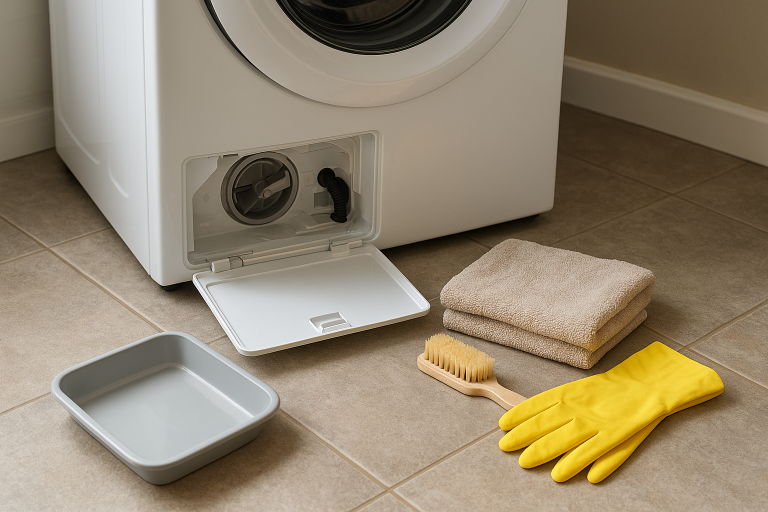
What You’ll Need
- Dish soap
- Warm running water
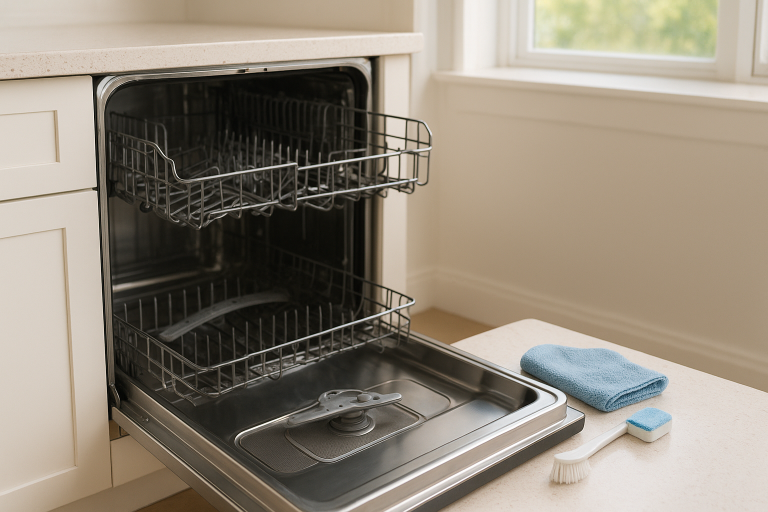
- Soft sponge or microfiber cloth
- Old toothbrush or soft cleaning brush
- Towel
- Rubber gloves, optional
Avoid wire brushes, scouring pads, knives, and harsh scrapers. Whirlpool cautions that a wire brush or scouring pad can damage dishwasher filters. ([producthelp.whirlpool.com](https://producthelp.whirlpool.com/Dishwashers/Product_Info/Dishwasher_Cleaning_and_Care/How_to_Clean_the_Dishwasher_Filters?utm_source=openai))
How to Clean a Dishwasher Filter Step by Step
1. Empty the Dishwasher
Start with an empty dishwasher. Pull out the lower rack and set it aside so you can reach the bottom of the tub. If the dishwasher recently ran, give the heating element and interior a little time to cool.
2. Locate the Filter
Look in the bottom center or back corner of the dishwasher tub. Many removable filters look like a round plastic cylinder or a flat mesh plate with a twist-lock center. You may see two pieces: an upper filter assembly and a lower filter.
If you are unsure, search your model number with the words “filter cleaning” or look up the appliance manual. This matters because filter designs vary, and forcing the wrong part can crack plastic tabs.
3. Remove the Filter Carefully
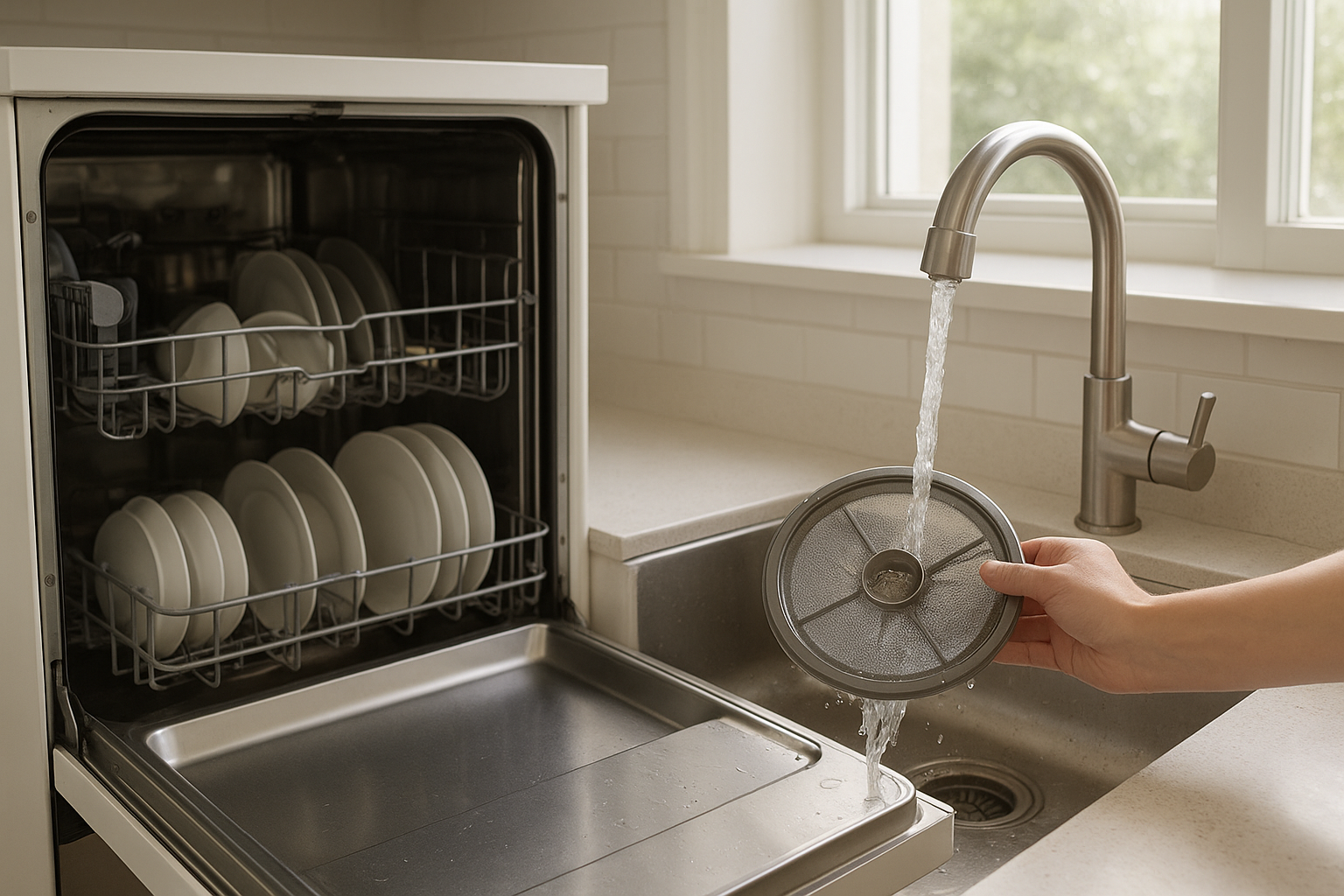
Most round filters unlock with a short counterclockwise twist, then lift out. On many Whirlpool-style filters, the upper filter assembly turns one-quarter turn counterclockwise and lifts out, then the lower filter lifts slightly and pulls forward. ([producthelp.whirlpool.com](https://producthelp.whirlpool.com/Dishwashers/Product_Info/Dishwasher_Cleaning_and_Care/How_to_Clean_the_Dishwasher_Filters?utm_source=openai))
Go slowly. If the filter does not move easily, do not yank it. Check for arrows, lock symbols, or a release tab. Take a quick phone photo before removing parts so you know how everything should sit when you put it back.
4. Remove Loose Debris
Before rinsing, wipe out any visible food scraps, labels, seeds, broken glass, toothpicks, or bits of plastic from the sump area. Use gloves if needed. If you suspect broken glass, use a paper towel or tongs rather than bare hands.
5. Rinse Under Warm Water
Hold the filter under warm running water. Rinse from both sides to push out trapped food. Most of the grime should loosen with water and gentle rubbing.
If the filter is greasy, add a drop of dish soap to a sponge and gently wash the plastic frame and mesh. Rinse well so no suds remain.
6. Brush the Mesh Gently
Use an old toothbrush or soft brush to clean the crevices. Pay special attention to the fine mesh screen, the ring around the filter, and any little grooves where sludge collects.
For mineral buildup from hard water, let the filter sit in warm water for a few minutes, then brush again. Do not use bleach, drain cleaner, or oven cleaner on dishwasher parts.
7. Wipe the Filter Well
Before reinstalling the filter, wipe the circular opening and surrounding floor of the dishwasher. This is where wet crumbs, grease, and cloudy film often collect. A damp microfiber cloth works well.
Also spin the lower spray arm gently with your hand. It should move freely. If you see food blocking the spray holes, remove it with a toothpick and wipe the arm clean.
8. Reinstall and Lock It in Place
Put the lower filter back first if your model has one, then reinstall the upper filter assembly. Twist until it locks. This step is important: Whirlpool warns not to run the dishwasher unless the filters are properly installed and locked in place. ([producthelp.whirlpool.com](https://producthelp.whirlpool.com/Dishwashers/Product_Info/Dishwasher_Cleaning_and_Care/How_to_Clean_the_Dishwasher_Filters?utm_source=openai))
If the filter still turns freely after you think it is locked, remove it and try again. A loose filter can let food debris recirculate and may affect cleaning performance.
Should You Run a Cleaning Cycle Too?
Yes, if the dishwasher smells or has visible buildup. After the filter is clean and back in place, run an empty hot cycle with a dishwasher cleaner made for this purpose, following the package directions. This helps clean areas you cannot easily reach, such as the tub, racks, pump area, and hoses.
If you prefer a simple routine, make filter cleaning your first step, then run the empty cleaning cycle. A dishwasher cleaner cannot fully clean a packed manual filter if the trapped debris is still sitting in the screen.
What Not to Do
- Do not run the dishwasher without the filter. It can allow debris into places it should not go.
- Do not use a wire brush. It can tear or deform the filter mesh.
- Do not force stuck parts. Look up the manual by model number instead.
- Do not use regular dish soap in the dishwasher tub. It can create excessive suds.
- Do not ignore standing water. If cleaning the filter does not fix drainage, the clog may be in the drain hose, air gap, garbage disposal connection, or pump area.
How to Keep the Filter Cleaner Longer
You do not need to pre-wash every dish, but you should scrape off large food scraps before loading. Remove bones, fruit pits, toothpicks, twist ties, jar labels, and chunks of rice or pasta. These are exactly the kinds of things that can clog a filter quickly.
Use the right amount of dishwasher detergent for your water hardness and soil level. Too much detergent can leave residue, while too little may not handle greasy loads well. Also run hot water at the kitchen sink before starting the dishwasher if your machine takes a while to receive hot water.
Finally, set a reminder. A dishwasher filter is easy to forget because it is out of sight. Add it to a monthly kitchen cleaning checklist, or clean it on the same day you wipe the fridge shelves or descale the coffee maker.
When to Call for Help
Call an appliance technician if the dishwasher still leaves gritty residue after the filter is clean, the filter will not lock into place, you hear grinding, or water remains pooled in the bottom after a cycle. Those symptoms can point to a deeper drainage or pump issue rather than simple filter maintenance.
For most homes, though, this small chore makes a noticeable difference. Clean the filter regularly, lock it back in place, and your dishwasher has a much better chance of doing what it is supposed to do: sending out clean, fresh-smelling dishes without a second wash.