How to Deadhead Marigolds for More Summer Blooms
Marigolds are wonderfully forgiving flowers, but they look and bloom better with one small habit: deadheading. Once the old blooms turn brown, papery, or soggy, removing them helps the plant put its energy back into fresh flowers instead of seed.
The good news is that deadheading marigolds is quick, simple, and easy to fit into a normal watering or weeding routine. Here’s how to do it without accidentally cutting off the next round of buds.
Why Deadhead Marigolds?
Deadheading means removing spent flowers after they fade. Colorado State University’s PlantTalk describes deadheading as a way to prolong flowering, improve plant appearance, and prevent unwanted fruit or seed formation. Marigolds are one of the annuals that commonly benefit from this simple maintenance job. ([planttalk.colostate.edu](https://planttalk.colostate.edu/topics/annuals-perennials/1072-deadheading-how-to-and-when-to/?utm_source=openai))
When a marigold flower finishes blooming, the plant naturally starts forming seeds in that old flower head. That is useful if you want to save seed, but not as helpful if your goal is a full, colorful plant. Illinois Extension notes that marigolds benefit from removing old flowers to encourage strong rebloom. ([extension.illinois.edu](https://extension.illinois.edu/flowers/caring-annuals?utm_source=openai))
Deadheading also keeps the plant cleaner. The University of Minnesota Extension notes that marigold blooms can rot easily in humid conditions, and deadheading helps plants stay looking clean and fresh. ([extension.umn.edu](https://extension.umn.edu/gardening-minnesota/marigolds?utm_source=openai))
When to Deadhead Marigolds
Start deadheading once the first flowers begin to fade. A marigold bloom is ready to remove when the petals are shriveled, dry, browned, mushy after rain, or no longer colorful. You do not need to wait until the whole head is completely dry unless you are saving seeds.
For most gardens, check marigolds once or twice a week. In hot, rainy, or humid weather, you may want to check more often because old blooms can get slimy and unattractive fast. Nebraska Extension recommends pinching off faded blooms weekly, or as often as possible, for annuals including larger marigolds to encourage continued blooming through the season. ([lancaster.unl.edu](https://lancaster.unl.edu/growing-annual-flowers/?utm_source=openai))
What You’ll Need
- Your fingers: Fine for small, tender stems and quick touch-ups.
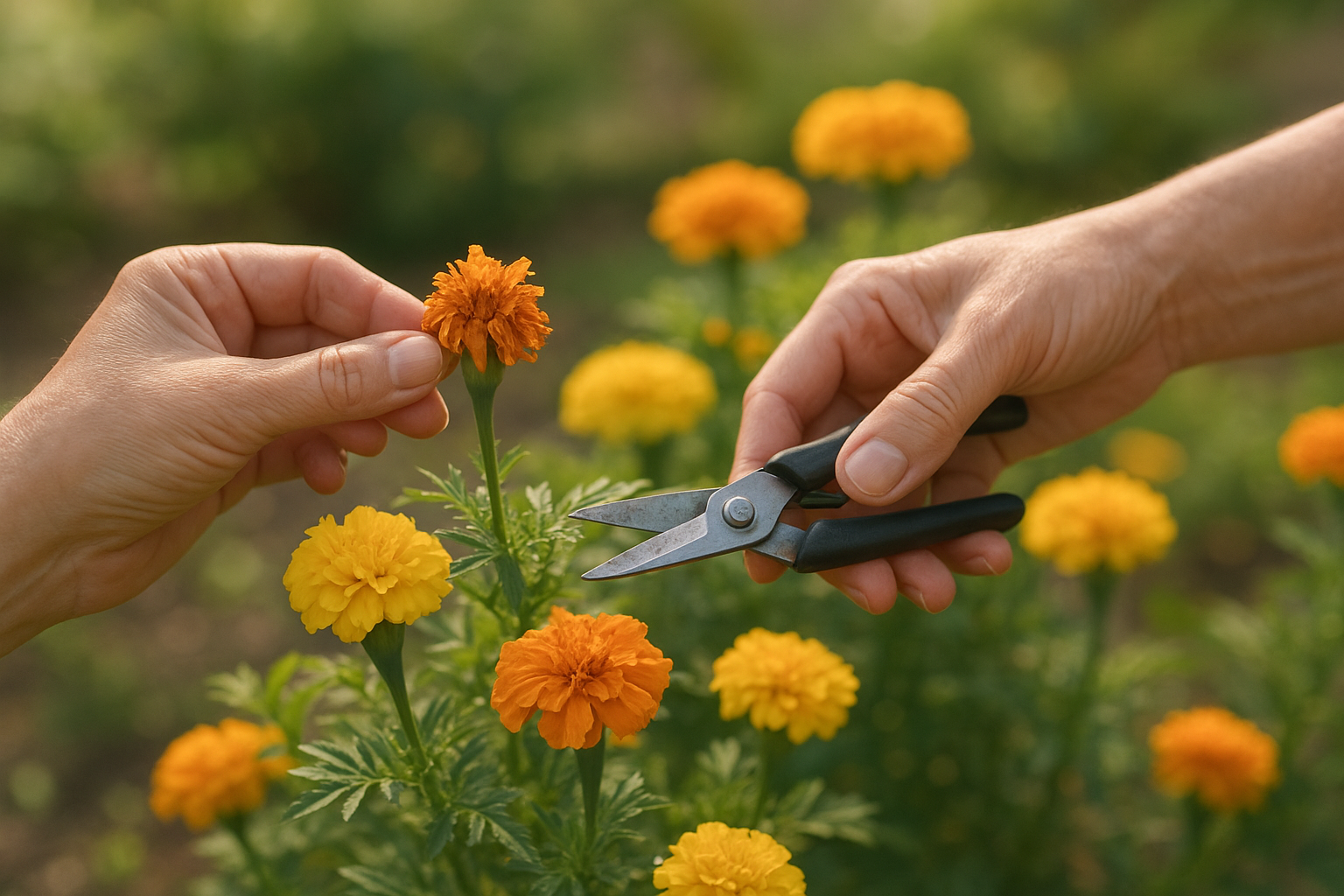
- Small pruning snips or scissors: Best for thicker stems, large marigolds, or a neater cut.
- A small bucket or bag: Handy for collecting old blooms as you go.
- Clean hands or clean tools: Especially useful if plants are wet, crowded, or showing any disease problems.
If your marigolds are dry and healthy, finger-pinching is usually enough. If stems are tough or you find yourself tugging hard, switch to snips so you do not tear the plant.
How to Deadhead Marigolds Step by Step
- Find the faded flower. Look for blooms that are brown, collapsed, dried, or past their best color.
- Follow the stem down. Do not just pull off the petals. Trace the little flower stem down to where it meets a set of leaves, a branching point, or a new bud.
- Cut or pinch above healthy growth. Iowa State University Extension recommends removing spent blooms just above the next healthy set of leaves or buds. This same rule works well for marigolds. ([yardandgarden.extension.iastate.edu](https://yardandgarden.extension.iastate.edu/how-to/deadheading-herbaceous-ornamentals-and-roses?utm_source=openai))
- Avoid cutting new buds. Marigold buds are small, round, and green before they open. If you see one tucked below the old bloom, cut above it so it can keep developing.
- Collect the spent blooms. Toss healthy spent flowers into compost if you like, but throw away any that are moldy, slimy, or diseased.
The main mistake is removing only the dead petals while leaving the seed head attached. That old flower base is where seeds form, so take off the whole spent head and its short stem.
Pinching vs. Cutting: Which Is Better?
Both work. Pinching is fastest when the stems are soft. Hold the stem just below the dead bloom and snap it off with your thumb and forefinger. This is ideal for small French marigolds or a few patio pots.
Cutting is better when plants are large, stems feel woody, or you want a precise cut. Use clean snips and cut the stem back to a leaf joint or branching point. Cutting also helps avoid yanking the plant out of loose container soil.
How Often Should You Deadhead Marigolds?
For the tidiest plants, deadhead lightly every few days as you notice faded blooms. For a realistic low-maintenance routine, once a week is enough for most home gardens. If you miss a week, do not worry. Marigolds are tough annuals, and you can catch up by removing the oldest blooms first.
Container marigolds often need more frequent attention than marigolds in the ground. Pots dry out faster, flowers age quickly in reflected heat, and spent blooms are more noticeable up close on patios and porches.
Should You Deadhead All Marigolds?
Most common garden marigolds respond well to deadheading, especially French marigolds, African marigolds, and larger-flowered bedding types. Missouri Extension notes that removing spent flowers helps the floral display look more attractive and can stimulate more blooms in annuals. ([extension.missouri.edu](https://extension.missouri.edu/publications/g6629?utm_source=openai))
That said, you do not have to be perfect. A few missed flowers will not ruin the plant. Deadheading is simply a way to keep marigolds blooming more steadily and looking less tired in midsummer.
When to Stop Deadheading
If you want flowers for as long as possible, keep deadheading through summer and into early fall. Stop only when frost is near or when you want to collect seed.
To save marigold seeds, choose a few healthy blooms and leave them on the plant until the flower heads dry. The University of Arkansas Extension advises allowing spent marigold flowers to dry on the plant when saving seeds, rather than removing them right away. ([uaex.uada.edu](https://www.uaex.uada.edu/yard-garden/in-the-garden/reference-desk/annuals/marigold.aspx?utm_source=openai))
A practical approach is to deadhead most of the plant and leave a few of the best flowers alone late in the season. That gives you continued color while still allowing some seed heads to mature.
What to Do With Deadheaded Marigold Blooms
Healthy, dry spent blooms can go in the compost pile. They break down like other soft garden trimmings. If the blooms are moldy, slimy, or covered with suspicious spots, put them in the trash instead. This helps avoid spreading disease around the garden.
If you are saving seeds, let selected flower heads dry fully on the plant, then break them open once crisp. Marigold seeds are long, narrow, and usually dark on one end with a lighter, straw-like tip. Store fully dry seeds in a labeled paper envelope in a cool, dry place.
Troubleshooting After Deadheading
The plant has leaves but few flowers
Deadheading helps, but it is not the only factor. Marigolds bloom best in plenty of sun. Penn State Extension notes that marigolds planted in shade or cool, moist areas will not bloom well and may be more prone to powdery mildew. ([extension.psu.edu](https://extension.psu.edu/marigolds-from-folklore-to-the-home-garden?utm_source=openai))
The flowers turn brown quickly
This often happens after heavy rain, overhead watering, or humid weather. Remove soggy blooms promptly and water at the base of the plant when possible.
The plant looks stretched and messy
Along with deadheading, lightly trim back long, bare stems to a leafy joint. Do not shear the whole plant hard in extreme heat; just tidy a little at a time and water well afterward.
The Bottom Line
To deadhead marigolds, remove each faded flower head along with its short stem, cutting or pinching just above healthy leaves, buds, or a branch point. Do it weekly for a tidy plant, more often if you enjoy fussing over your flowers.
Keep deadheading through the blooming season if you want more color, or stop on a few selected blooms late in the season if you want seeds. It is one of the easiest garden chores you can do, and marigolds usually reward the effort with cleaner plants and a longer show.