How to Clean a Dishwasher Filter So Dishes Come Out Clean
If your dishwasher smells sour or leaves little gritty bits on glasses, the filter may be the problem. The good news: learning how to clean a dishwasher filter is simple, usually takes less than 15 minutes, and can help your machine wash and drain the way it should.
Most newer dishwashers have a removable filter near the bottom of the tub, often under the lower spray arm. Always check your owner’s manual first, because filter designs vary by brand and model, and some filters are not meant to be removed by the user. ([products.geappliances.com](https://products.geappliances.com/appliance/gea-support-search-content?contentId=35611&utm_source=openai))
Why the Dishwasher Filter Matters
The dishwasher filter catches food particles, labels, seeds, bits of glass, and other debris so they do not keep circulating through the wash water. When that filter gets clogged, your dishwasher may still run, but the results can look disappointing.
A dirty filter can contribute to:
- Food specks left on plates and bowls
- Gritty film on glasses
- Bad smells inside the dishwasher
- Poor draining or standing water near the filter area
- Longer, less effective wash cycles
Manufacturers commonly recommend rinsing removable filters under running water and using a soft brush for stuck-on food or mineral buildup. Whirlpool also notes that a filter will need cleaning throughout the life of the dishwasher, with timing based on how often you run loads and whether you scrape or rinse dishes first. ([whirlpool.com](https://www.whirlpool.com/blog/kitchen/fixing-removing-and-replacing-dishwasher-filters.html?utm_source=openai))
How Often Should You Clean a Dishwasher Filter?
For most households, a good practical schedule is once a month if you run the dishwasher often, cook at home most nights, or only scrape dishes before loading. If you use the dishwasher lightly, every two to four months may be enough.
Whirlpool’s own filter-cleaning chart gives a more specific range: homes running 8 to 12 loads per week may need to clean the filter about every two months if they only scrape dishes, while lighter-use homes may be able to clean it once or twice a year depending on loading habits. ([whirlpool.com](https://www.whirlpool.com/content/dam/global/documents/201705/UserInstructions-W10667785-RevB.pdf?utm_source=openai))
That said, do not wait for the calendar if your dishwasher is giving you clues. Clean the filter sooner if you notice odors, visible food around the filter cup, cloudy results, or water sitting in the bottom after a cycle.
What You’ll Need
- Dish soap
- Warm running water
- Soft-bristle brush or old toothbrush
- Microfiber cloth or sponge
- Small bowl or towel for catching drips
- Flashlight, optional
Avoid using: wire brushes, steel wool, knives, toothpicks that can snap off, or harsh cleaners on the filter mesh. These can damage the screen or plastic parts.
How to Clean a Dishwasher Filter Step by Step
1. Empty the Dishwasher and Pull Out the Bottom Rack
Start with an empty, cool dishwasher. Slide out the lower rack and set it aside. This gives you room to reach the bottom of the tub without bending around the rack tines.
If the dishwasher just finished running, wait until the heating element and water have cooled. You do not need to unplug the dishwasher for a basic filter rinse, but do keep the machine off while your hands are inside.
2. Find the Filter
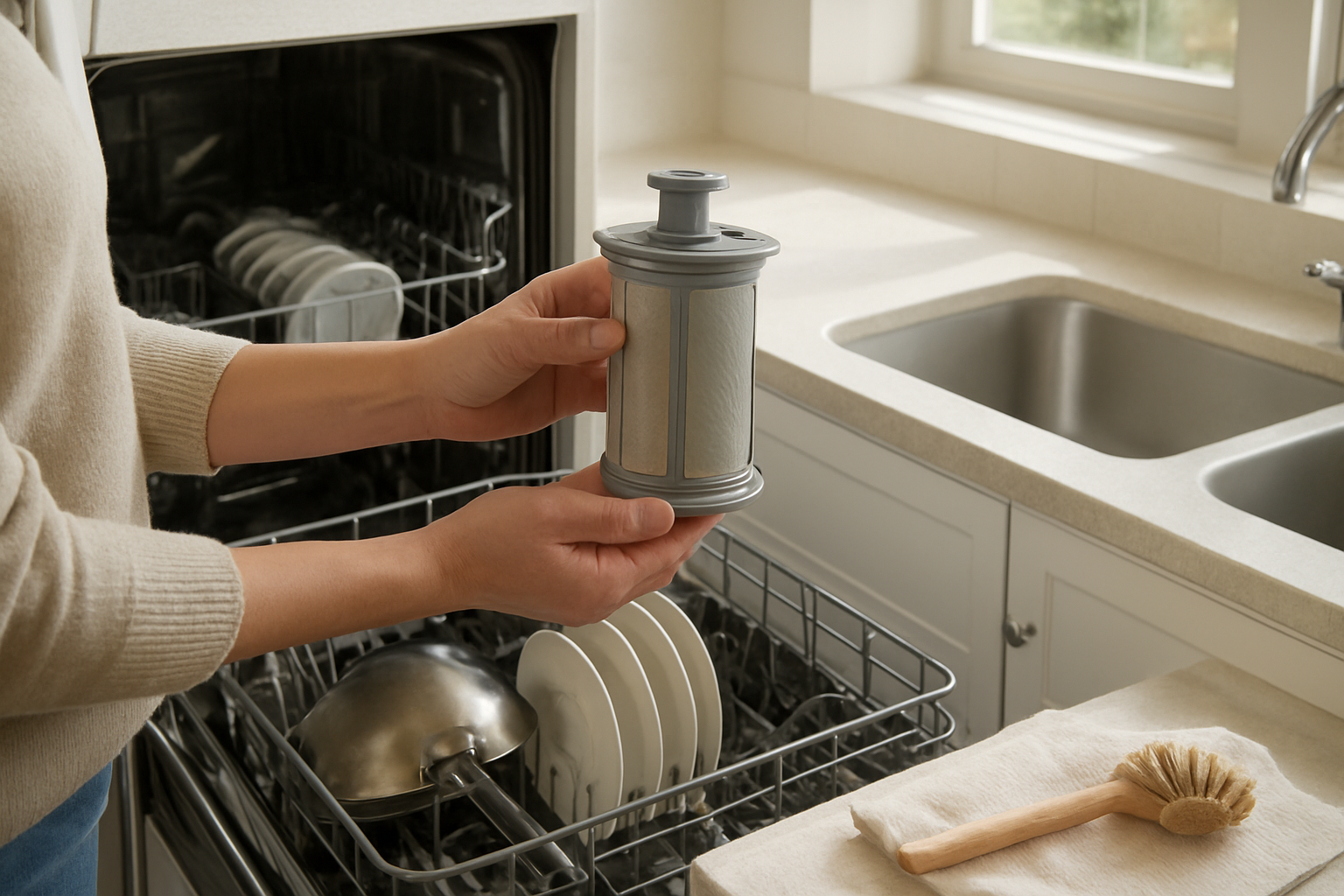
Look at the bottom center or back corner of the dishwasher tub. Many filters are round or cylindrical and sit below the lower spray arm. Some have an upper filter assembly that twists out and a lower flat filter screen that lifts out afterward.
If you are not sure what comes apart, stop and look up the model manual. GE advises checking the owner’s manual for the parts you can safely remove and clean yourself. ([products.geappliances.com](https://products.geappliances.com/appliance/gea-support-search-content?contentId=35611&utm_source=openai))
3. Remove the Filter Carefully
Most removable cylindrical filters unlock with a short counterclockwise twist, then lift straight up. Do not force it. If it feels stuck, there may be a tab, arrow, or locking mark you have missed.
Set the filter on a towel or in a bowl. If there is a lower flat screen, lift it out gently and note how it sits. Taking a quick phone photo before removing parts can make reassembly much easier.
4. Rinse Away Loose Food
Hold the filter under warm running water. Rinse from the outside and inside to flush food out of the mesh. Whirlpool’s filter guidance specifically recommends rinsing under running water until most soils are removed. ([producthelp.whirlpool.com](https://producthelp.whirlpool.com/Dishwashers/Dishwasher/Other/Cleaning_and_Odor/Cleaning_and_Maintenance/Cleaning_the_Filter/Cleaning_the_Filter_-_Dishwasher?utm_source=openai))
Check for common troublemakers: popcorn hulls, rice, lemon seeds, paper labels from jars, eggshell pieces, and small plastic bits. These can lodge in the mesh or around the filter frame.
5. Scrub Gently with Soap and a Soft Brush
Add a drop of dish soap to a soft brush and gently scrub the mesh, rim, and plastic cage. Pay attention to greasy buildup, which can trap odors even when the filter looks mostly clean.
If you have hard water, you may see chalky mineral deposits. A soft brush is usually enough. Do not scrape the mesh with a knife or metal tool, because a torn filter can let debris back into the wash system.
6. Wipe the Filter Well
Before putting the filter back, wipe the area where it sits. Use a damp cloth or sponge to remove slime, food pieces, and residue from the sump area. If you see broken glass, use gloves and remove it carefully with a paper towel, not bare fingers.
Also spin the lower spray arm by hand. If it bumps into something or the holes look clogged, clear visible debris with a soft brush and rinse the arm if your manual says it is removable.
7. Reinstall the Filter Securely
Put the lower screen back first if your dishwasher has one, then insert the cylindrical filter. Twist it into the locked position. This part matters: a loose or misaligned filter can let food circulate through the dishwasher and may affect cleaning performance.
Give it a light tug. It should feel seated, not wobbly. Slide the bottom rack back in.
Should You Run Vinegar or Dishwasher Cleaner Afterward?
Cleaning the filter removes the trapped food, but it does not always remove grease and mineral film from the whole tub. If the dishwasher still smells stale, run an empty cleaning cycle with a dishwasher cleaner made for appliances, following the product label and your dishwasher manual.
Some manufacturers also discuss vinegar or baking soda for cleaning routines, but these should not replace filter cleaning. A cleaner cycle cannot fully wash away a clogged removable filter if food is packed into the mesh. Whirlpool notes that some filters cannot be removed and that owners should check their use and care guide for the correct instructions. ([whirlpool.com](https://www.whirlpool.com/blog/kitchen/how-to-clean-a-dishwasher.html?utm_source=openai))
What If the Filter Is Clean but Dishes Are Still Dirty?
If a clean filter does not fix the problem, check these common issues next:
- Blocked spray arms: Make sure the spray arm holes are not plugged with seeds or mineral buildup.
- Poor loading: Tall pans, cutting boards, or bowls can block water from reaching the upper rack.
- Wrong detergent amount: Too much detergent can leave residue, while too little may not clean greasy loads.
- No rinse aid: Rinse aid can help with drying and spotting, especially in hard-water areas.
- Water temperature: Hot water helps detergent work. Run the kitchen tap until hot before starting a cycle if your dishwasher is far from the water heater.
- Drain trouble: Standing water may point to a clogged drain hose, garbage disposal knockout issue, or pump problem.
If you see water pooling above the filter after every cycle, hear grinding, smell burning, or cannot remove a jammed filter without force, it is time to check the manual or call an appliance technician.
Simple Habits That Keep the Filter Cleaner
- Scrape plates well before loading, but do not feel you have to fully prewash every dish.
- Remove fruit stickers and jar labels before they go near the dishwasher.
- Do not put candle wax, paint, heavy grease, or large food scraps in the dishwasher.
- Clean the filter more often after big holiday meals or heavy baking days.
- Leave the door cracked after unloading if your dishwasher tends to stay damp and musty.
A clean dishwasher filter is one of those small chores that pays off quickly. Once you know where the filter is and how it locks in place, it becomes a fast kitchen maintenance task that can prevent odors, improve cleaning, and help your dishwasher do the job you bought it to do.