How to Create a Small Koi Pond in a Backyard
A small pond can transform a backyard in a way few other features can. The sound of moving water, the reflection of plants, and the quiet activity of fish or fountain spray can make even a modest space feel more relaxed and intentional.
The good news is that you do not need a huge yard to create a beautiful water feature. A well-planned small koi pond can fit into many gardens if you choose the right location, build it with proper support systems, and keep the design simple enough to maintain.
Start with the purpose of the pond
Before buying liner, rocks, or fish, decide what you want the pond to do for your garden. That answer will shape almost every decision that follows.
- For a focal point: choose a pond shape that is visible from a patio, kitchen window, or sitting area.
- For relaxing sound: include a bubbler, fountain, or small waterfall.
- For wildlife: add shallow edges, aquatic plants, and stones for beneficial insects and birds.
- For fish: plan for deeper water, stronger filtration, and more regular maintenance.
If your main goal is simply the look and sound of water, a pondless waterfall or a small recirculating fountain may be easier to manage. If you want koi, you need a more thoughtful build, because koi grow large and produce a lot of waste.
Pick the right location
Where you place the pond matters as much as the pond itself. A poor site can lead to extra algae, temperature swings, and more cleaning than you bargained for.
Good placement tips
- Choose a spot with partial sun. Too much direct sun can encourage algae growth. A few hours of sun is fine, but all-day exposure can be challenging.
- Avoid large overhanging trees. Falling leaves and roots make maintenance harder and can clog filters.
- Keep it near a power source. Pumps and filters need electricity, and extension cords are not a long-term solution.
- Make it visible from the house. You will enjoy it more if you can actually see it often.
Also check your local rules before you begin. Some neighborhoods or municipalities have requirements for fencing, electrical work, or water features deeper than a certain height.
Size, depth, and shape: the practical basics
In a small yard, it is tempting to go tiny with everything. But koi do best in a pond that has enough water volume to stay stable. A very shallow pond may look lovely at first, but it can overheat quickly and become harder to keep healthy.
For koi, deeper is usually better. A pond depth of at least 3 feet is a strong target if you want to help fish stay more comfortable through hot weather and protect them from predators. Shallower ponds may be suitable for a fountain, aquatic plants, or goldfish, but koi need more room.
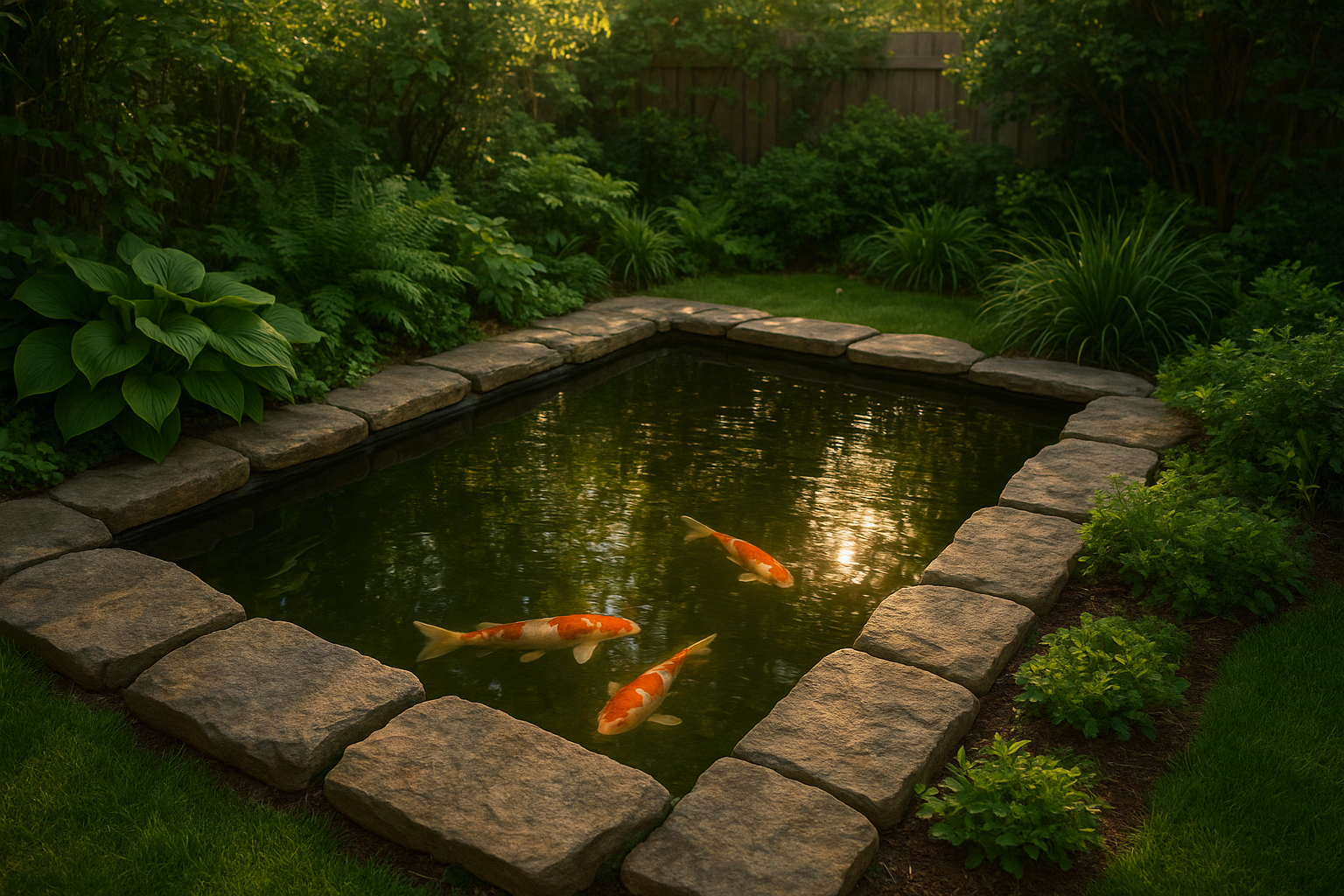
As for shape, there is no single right answer. A natural, curved outline can blend beautifully into planting beds, while a simple geometric shape can look clean and modern. In a compact garden, a rectangular or oval pond often makes the best use of space and is easier to line and maintain.
Filtration is not optional
If there is one area not to cut corners on, it is filtration. Koi are attractive and active, but they also create waste quickly. Without proper filtration, the water can become cloudy, smelly, or unhealthy for fish.
A basic koi setup should include:
- A pump to move water continuously
- Mechanical filtration to catch debris
- Biological filtration to support beneficial bacteria that help break down waste
- Good aeration to improve oxygen levels
If you are unsure how large your pump should be, a pond specialist can help you size it correctly based on pond volume, elevation changes, and whether you are running a waterfall. A pump that is too small will struggle to keep water moving, while one that is too strong can create unnecessary splash and energy use.
Build with fish safety in mind
Koi may look calm, but they need a pond designed for their safety. In addition to depth, think about where predators, sharp edges, and storm runoff could become problems.
Helpful design choices
- Use sloped shelves sparingly. Too many shallow shelves can make it easier for herons and raccoons to reach fish.
- Include hiding spots. Larger rocks, submerged planting zones, or pond structures can help koi feel secure.
- Keep edges stable. A secure edge prevents soil from washing in after rain.
- Protect the pond from runoff. Fertilizer, mulch, and lawn chemicals should never wash into the water.
If predators are common in your area, a pond net, tall marginal plants, or a deeper design can help reduce risk. Motion-activated deterrents may also be useful, especially in the first season after installation.
Choose plants that support the whole scene
Plants make a pond feel like part of the garden instead of a separate object sitting in the yard. They also help soften hard edges and create shade, which can be helpful for water quality.
Good pond companions include marginal plants such as iris, sweet flag, pickerel plant, and rushes, depending on your climate. Floating or submerged plants can also help, but keep in mind that koi may nibble on delicate choices.
For the surrounding landscape, think in layers:
- Tall plants for privacy and structure
- Medium shrubs or grasses to frame the pond
- Low groundcovers to connect the pond to the rest of the garden
Choose plants that fit your climate and won’t drop excessive debris into the water. A pond that is surrounded by tidy, well-chosen plantings tends to be easier to keep clean.
Maintenance you can actually stick with
A small koi pond does require routine care, but it should not feel like a second job. A simple weekly rhythm can keep things manageable.
- Check the pump and water level. Top off evaporation as needed.
- Remove debris. Skim leaves and twigs before they sink.
- Inspect water clarity. Cloudy water can signal a filtration or balance issue.
- Rinse filters as directed. Do not overclean biological media, since that can remove helpful bacteria.
- Watch the fish. Healthy koi are active, alert, and feed normally.
Seasonal care matters too. In spring, check equipment after winter. In summer, watch water temperature and oxygen levels. In fall, keep leaves out. In cold climates, do not let the pond freeze solid if fish are overwintering in it.
If you want the look without the fish
Not everyone wants the responsibility of caring for koi. The aesthetic of a water feature can still work beautifully without fish. In fact, a pondless waterfall or a small recirculating basin can give you motion and sound with less upkeep.
This can be a smart choice if you:
- travel frequently
- have limited time for maintenance
- want a smaller footprint
- are mainly interested in the atmosphere of water, not fish care
Many homeowners discover that they love the peaceful effect of water even more than they expected. A small installation can still become the most memorable part of the yard.
Budget-friendly ways to scale the idea
You do not need a luxury garden to enjoy a pond-inspired space. If a full koi build is out of reach right now, start with a simpler feature and expand later.
- Install a small fountain in a planted container garden.
- Create a compact wildlife pond without fish.
- Add a basin-style water bowl with a recirculating pump.
- Build the pond in phases, starting with excavation and liner, then adding rocks and plants over time.
Breaking the project into stages can make it far more affordable and less overwhelming. It also gives you time to see how the feature fits your space before adding more complexity.
The bottom line
A small koi pond can bring a surprising amount of calm and character to a backyard, even when space is limited. The key is to plan for depth, filtration, and location before you fall in love with decorative details.
Whether you build a true koi pond or a simpler water feature inspired by the same idea, focus on what you will enjoy long-term. The best pond is the one that fits your yard, your routine, and the amount of care you realistically want to give it.