How to Freeze Peaches Without Them Turning Brown
When peaches are sweet, ripe, and inexpensive, freezing a few bags is one of the easiest ways to save that summer flavor for smoothies, cobblers, oatmeal, and sauces. The trick is treating the fruit before it goes into the freezer so the slices do not turn dull brown or freeze into one hard clump.
This guide walks through how to freeze peaches at home using practical methods for everyday kitchens: tray-freezing for loose slices, a light sugar pack for better texture, and a syrup pack if you want soft, dessert-ready fruit.
Best Peaches for Freezing
Start with ripe but not mushy peaches. They should smell fragrant and give slightly when pressed near the stem end. Overripe peaches can still be frozen, but they are better for puree, smoothies, sauces, or baking than for neat slices.
The National Center for Home Food Preservation recommends selecting well-ripened fruit, handling it carefully to avoid bruising, then sorting, washing, and peeling before freezing peaches or nectarines. ([nchfp.uga.edu](https://nchfp.uga.edu/how/freeze/fruits/freezing-peaches-or-nectarines/?utm_source=openai))
If you have a whole box of peaches ripening at once, sort them first. Freeze the firm-ripe ones as slices and set aside the softest peaches for puree, jam, or a quick peach crisp.
What You’ll Need
- Ripe peaches
- Paring knife
- Large pot of boiling water, optional for peeling
- Bowl of ice water
- Ascorbic acid powder, crushed vitamin C tablets, or a produce protector made for fruit
- Lemon juice, optional but less effective than ascorbic acid for long freezer storage
- Baking sheet
- Parchment paper
- Freezer bags or freezer-safe containers
- Permanent marker for labeling
How to Peel Peaches Easily
You can freeze peaches with the skins on, but peeled peaches are usually nicer in pies, cobblers, and sauces. The skins can become chewy after freezing and thawing.
- Bring a large pot of water to a boil.
- Cut a shallow X on the bottom of each peach.
- Lower a few peaches into the boiling water for 30 to 60 seconds.
- Move them immediately to a bowl of ice water.
- When cool enough to handle, slip off the skins with your fingers or a paring knife.
If the skin does not loosen, the peach may be underripe. Give it another short dip in the boiling water, but do not cook it until soft.
How to Keep Frozen Peaches from Turning Brown
Peaches brown because cut fruit reacts with oxygen. Freezing slows that process, but it does not stop it completely. For the best color, treat the slices before packing them.
Ascorbic acid is the most reliable choice for preserving peach color and quality. The National Center for Home Food Preservation recommends ascorbic acid for better quality in frozen peaches, including 1/4 teaspoon dissolved in 3 tablespoons cold water for each quart of fruit when using a sugar pack. ([nchfp.uga.edu](https://nchfp.uga.edu/how/freeze/fruits/freezing-peaches-or-nectarines/?utm_source=openai))
Utah State University Extension also notes that cut peaches can be held in an ascorbic acid solution to prevent browning while preparing fruit for freezing, canning, or drying. ([extension.usu.edu](https://extension.usu.edu/preserve-the-harvest/research/peaches?utm_source=openai))
Simple home method: For about 1 quart of sliced peaches, dissolve 1/4 teaspoon ascorbic acid powder in 3 tablespoons cold water. Sprinkle it over the slices and toss gently before freezing or adding sugar.
If you do not have ascorbic acid, lemon juice can help for short-term color protection, but it may add tartness and is generally not as strong as ascorbic acid for freezer storage.
Method 1: Tray-Freezing Peach Slices
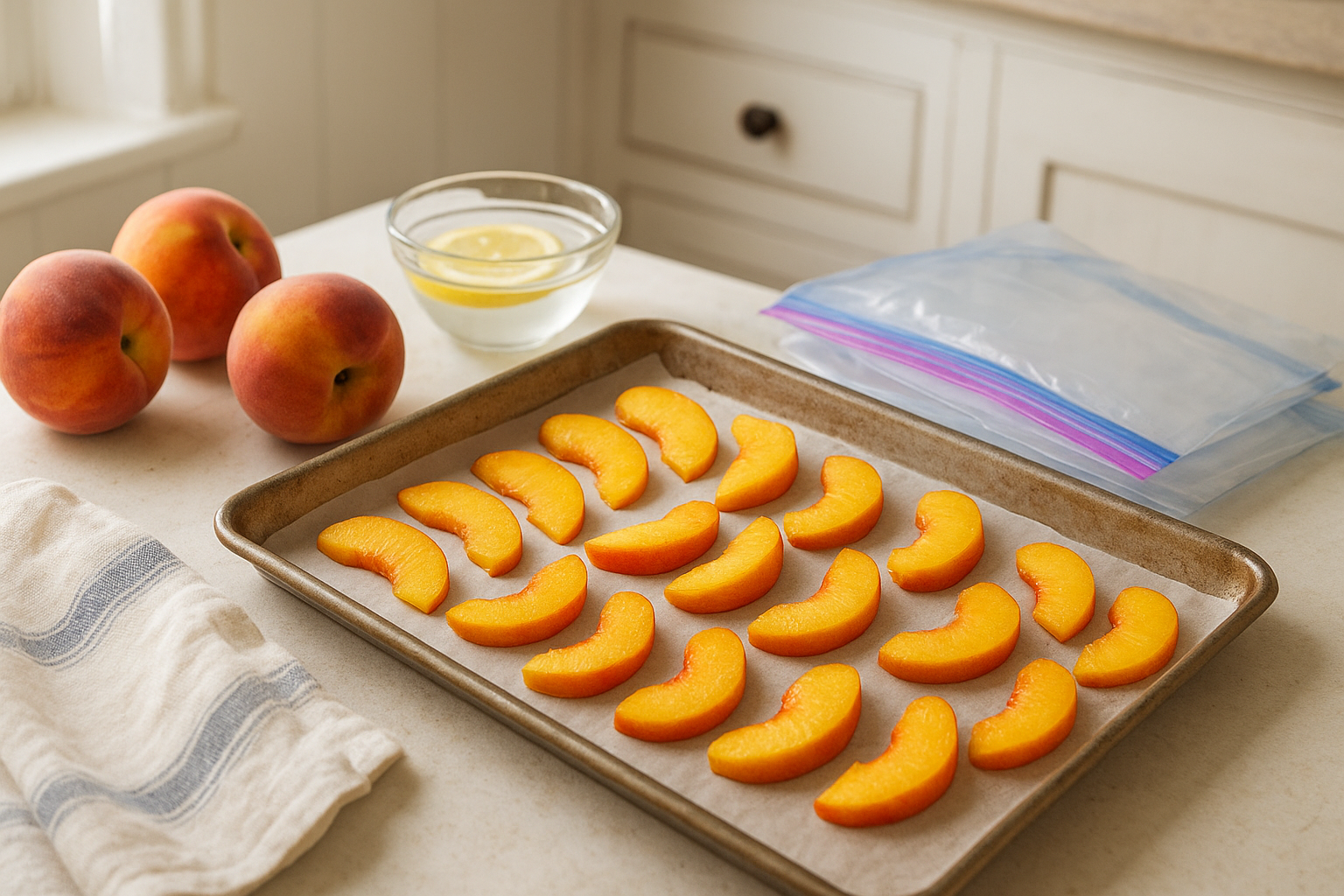
This is the best method if you want loose peach slices you can scoop out by the handful for smoothies, muffins, crisps, or oatmeal.
- Wash, peel, pit, and slice the peaches.
- Treat the slices with ascorbic acid to reduce browning.
- Line a baking sheet with parchment paper.
- Arrange peach slices in a single layer so they are not touching too much.
- Freeze until firm, usually 2 to 4 hours.
- Transfer the frozen slices to freezer bags.
- Press out as much air as possible, seal, label, and freeze.
Oregon State University Extension notes that peach slices can be individually frozen in a single layer on a cookie sheet, then packaged in freezer bags or containers once frozen. ([extension.oregonstate.edu](https://extension.oregonstate.edu/catalog/sp-50-444-preserving-peaches?utm_source=openai))
This method is convenient, but the texture will be softer after thawing than fresh peaches. That is normal. Use thawed slices in cooked recipes or eat them while still a little icy.
Method 2: Sugar Pack Peaches
A sugar pack is a good choice when you want peaches for desserts. The sugar draws out some juice and helps protect flavor and texture.
The National Center for Home Food Preservation gives a tested ratio for sugar pack peaches: for each quart, or about 1 1/3 pounds, of prepared fruit, use 2/3 cup sugar. Stir gently until the sugar dissolves, or let the fruit stand for about 15 minutes. ([nchfp.uga.edu](https://nchfp.uga.edu/how/freeze/fruits/freezing-peaches-or-nectarines/?utm_source=openai))
- Prepare 1 quart sliced peaches.
- Dissolve 1/4 teaspoon ascorbic acid in 3 tablespoons cold water.
- Sprinkle the ascorbic acid mixture over the peaches and toss gently.
- Add 2/3 cup sugar.
- Stir gently until juicy, or let stand 15 minutes.
- Pack into freezer containers, leaving headspace for expansion.
- Seal, label, and freeze.
Best uses: peach cobbler, shortcake topping, spooning over pancakes, yogurt, pound cake, or ice cream.
Method 3: Syrup Pack Peaches
A syrup pack takes a little more work, but it gives soft, pretty peaches that are especially nice for desserts. The fruit stays covered, which helps protect it from freezer air.
The National Center for Home Food Preservation recommends a 40 percent syrup for freezing peaches and suggests adding 1/2 teaspoon ascorbic acid per quart of syrup for better quality. ([nchfp.uga.edu](https://nchfp.uga.edu/how/freeze/fruits/freezing-peaches-or-nectarines/?utm_source=openai))
To make a medium-style syrup at home, combine sugar and water until the sugar dissolves, then chill the syrup before using. Pack peach slices into freezer containers and cover with cold syrup, leaving headspace so the liquid can expand as it freezes.
A small piece of crumpled freezer-safe wrap or parchment pressed on top can help keep peaches under the syrup. Seal well and label the container.
How Much Headspace to Leave
Liquids expand as they freeze, so do not fill jars or containers to the very top. Leave about 1/2 inch headspace for wide, shallow freezer containers and closer to 1 inch for taller containers with syrup or juice. If using glass, make sure it is labeled freezer-safe and has straight sides, not narrow shoulders.
How Long Frozen Peaches Last
For best flavor and texture, use frozen peaches within 8 to 12 months. They may remain safe longer if kept solidly frozen, but quality drops over time. Freezer burn, ice crystals, dull color, and a flat flavor are signs they have been stored too long or exposed to air.
To help them last, use freezer-grade bags, squeeze out extra air, and label each package with the date and amount. Freeze bags flat at first so they stack neatly once solid.
How to Use Frozen Peaches
- Smoothies: Use straight from the freezer instead of ice.
- Cobblers and crisps: Add frozen slices directly to the baking dish, adding a few extra minutes of bake time if needed.
- Oatmeal: Warm slices in a small saucepan until juicy, then spoon over oats.
- Sauce: Simmer thawed peaches with a little sugar, cinnamon, and lemon juice.
- Yogurt bowls: Thaw sugar-pack peaches in the refrigerator overnight.
Common Mistakes to Avoid
- Skipping the anti-browning step: Untreated peaches often darken, especially after thawing.
- Freezing wet slices in a pile: They will turn into a block. Tray-freeze first if you want loose pieces.
- Using thin sandwich bags: They do not protect well against freezer burn.
- Freezing underripe peaches: Freezing will not improve flavor. Let them ripen first.
- Forgetting to label: Peach slices and mango slices look surprisingly similar after a few months in the freezer.
Quick Answer: The Best Way to Freeze Peaches
For most homes, the easiest method is to peel and slice ripe peaches, toss them with ascorbic acid, freeze them in a single layer on a parchment-lined baking sheet, then pack the frozen slices into labeled freezer bags. This gives you flexible, easy-to-measure peaches without committing to sugar or syrup.
If you mainly use peaches for desserts, try the sugar pack. If you want soft, spoonable peaches with the best color, use the syrup pack. Either way, a little prep now means peach cobbler, smoothies, and warm fruit topping are only a freezer bag away.