How to Clean a Humidifier Before Winter Use
Before you run a humidifier for the first dry week of winter, give it a proper clean. A tank that sat in a closet since spring can hold old mineral crust, dust, or a thin film you do not want blowing into the room.
The good news: most portable humidifiers can be cleaned with simple supplies and about 30 to 45 minutes of hands-on time. The key is to descale first, disinfect only when needed, rinse thoroughly, and start the season with fresh water.
Why cleaning your humidifier matters
Humidifiers are helpful when indoor air gets painfully dry, but they are not set-and-forget appliances. The U.S. Environmental Protection Agency recommends emptying portable humidifier tanks daily, drying the surfaces, refilling with fresh water, and cleaning portable humidifiers every third day during use. That routine helps reduce scale and microorganisms that can build up in standing water. ([epa.gov](https://www.epa.gov/indoor-air-quality-iaq/use-and-care-home-humidifiers?utm_source=openai))
This is especially important for ultrasonic and impeller, or cool mist, humidifiers. The EPA notes that these types can disperse minerals and microorganisms from the tank into indoor air if they are not maintained well. Using low-mineral water, such as distilled water, can reduce mineral release and the crusty buildup that encourages more grime. ([epa.gov](https://www.epa.gov/system/files/documents/2022-07/Use%20and%20Care%20of%20Home%20Humidifiers.pdf?utm_source=openai))
Supplies you will need
- White distilled vinegar
- 3% hydrogen peroxide, if your manual allows it
- A soft bottle brush or old soft toothbrush
- Clean microfiber cloths or paper towels
- Cotton swabs for small crevices
- Fresh tap water for rinsing
- Distilled water for regular use, especially in ultrasonic models
- Your humidifier manual, if you still have it
Do not mix cleaning products. Never combine vinegar with bleach, hydrogen peroxide, or other cleaners. Clean with one product, rinse well, and only then move to the next step if needed.
Step 1: Unplug and take the humidifier apart
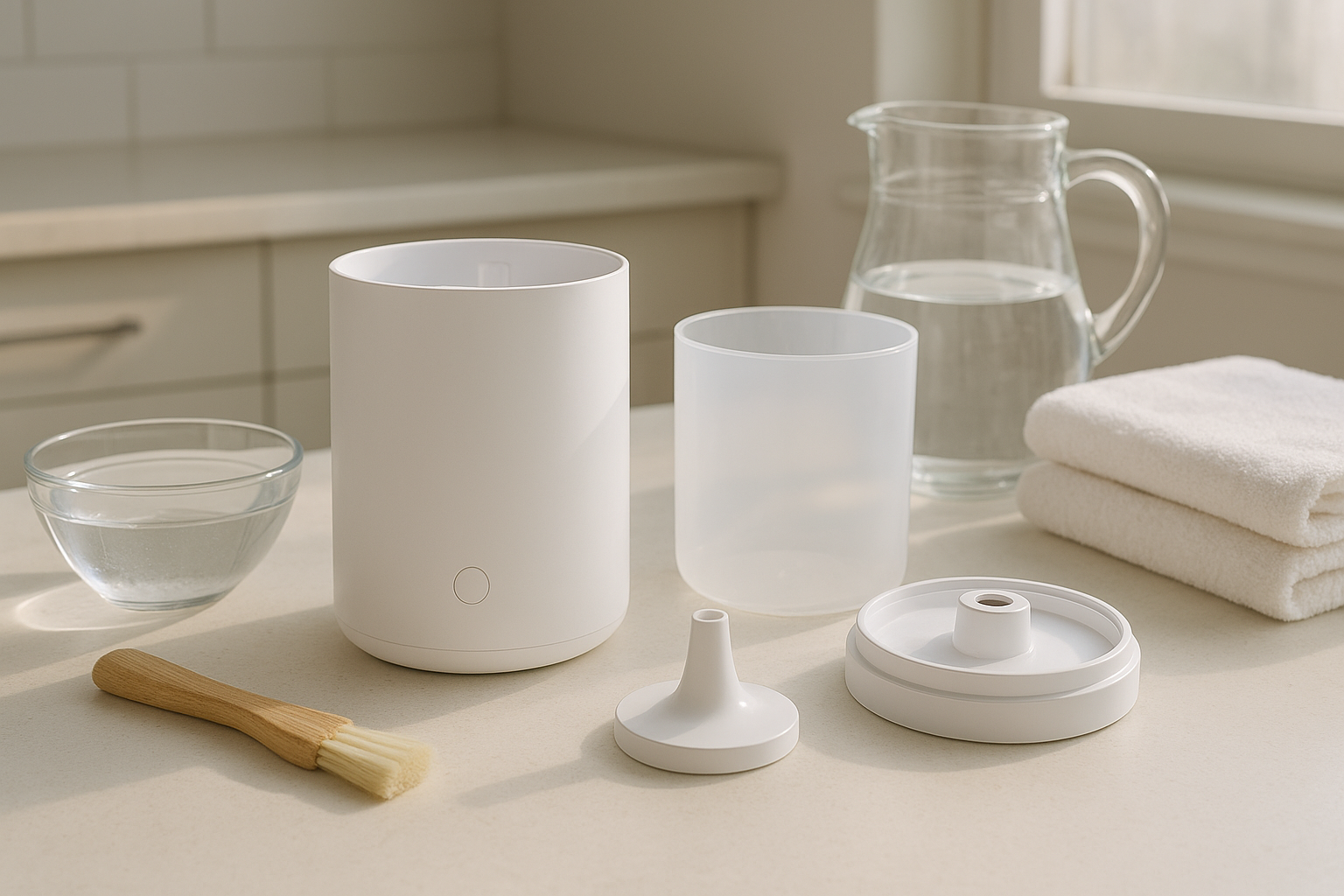
Always unplug the humidifier before cleaning it. Remove the water tank, cap, mist nozzle, tray, filter, wick, float, or any other removable parts your model allows. Set electrical base pieces aside and keep water away from cords, controls, and vents.
If the humidifier has a disposable wick or filter, check it carefully. A stiff, brown, slimy, sour-smelling, or moldy wick should usually be replaced, not scrubbed back into service. Follow your manufacturer’s instructions here, because some filters are washable and some are not.
Step 2: Empty old water and wipe loose grime
Pour out any old water from the tank and base reservoir. Wipe accessible surfaces with a damp cloth to remove dust and loose residue. If you see pink film, gray slime, or black specks, do not panic, but do plan to clean more carefully and replace any suspect wick or filter.
Use cotton swabs around seams, the tank cap, and the mist outlet. These little places often hold the gunk that makes a humidifier smell stale when it starts running again.
Step 3: Descale with vinegar
Mineral scale looks chalky, white, tan, or crusty. It forms when water evaporates and leaves minerals behind. To remove it, fill the tank with enough white vinegar to wet the scaled areas. For the base tray, pour in vinegar only to the normal water line and avoid electrical components.
Let the vinegar sit for 20 to 30 minutes. Swish the tank gently, then scrub loosened deposits with a soft brush. For stubborn crust around the tank opening or cap, soak those small removable parts in a bowl of vinegar.
Do not use metal tools, abrasive pads, or knives to chip off scale. Scratches can create more places for film to cling later. If the scale does not release, repeat the vinegar soak rather than scraping aggressively.
Step 4: Rinse until the vinegar smell is gone
Pour out the vinegar and rinse the tank, cap, and tray several times with clean water. This step matters more than many people think. The EPA advises rinsing the tank thoroughly after using any cleaning or disinfecting product so chemicals are not released into the air when the humidifier runs. ([epa.gov](https://www.epa.gov/system/files/documents/2022-07/Use%20and%20Care%20of%20Home%20Humidifiers.pdf?utm_source=openai))
Smell the tank after rinsing. If it still smells strongly like vinegar, rinse again. A faint vinegar scent after cleaning is usually not dangerous, but it can make the first tank of mist unpleasant.
Step 5: Disinfect if the humidifier was dirty or stored damp
If your humidifier was put away wet, smelled musty, had visible film, or sat with water in it, disinfect it after descaling. First, check the manual. Some manufacturers recommend specific products, and some parts should not be exposed to certain cleaners.
If there are no specific instructions, the EPA says surfaces that contact water may be cleaned with 3% hydrogen peroxide. Wet the tank and water-contact surfaces with hydrogen peroxide, let it sit for several minutes, scrub lightly if needed, and rinse thoroughly with multiple changes of clean water. ([espanol.epa.gov](https://espanol.epa.gov/cai/el-uso-y-cuidado-de-los-humidificadores-domesticos?utm_source=openai))
Some manuals allow a diluted bleach solution, but only use bleach if your manufacturer recommends it and you can rinse the unit extremely well. The Consumer Product Safety Commission warns that if bleach or another disinfectant is used, the tank should be rinsed well so you do not breathe harmful chemicals during use. ([cpsc.gov](https://www.cpsc.gov/s3fs-public/5046.pdf?utm_source=openai))
Step 6: Dry every part completely
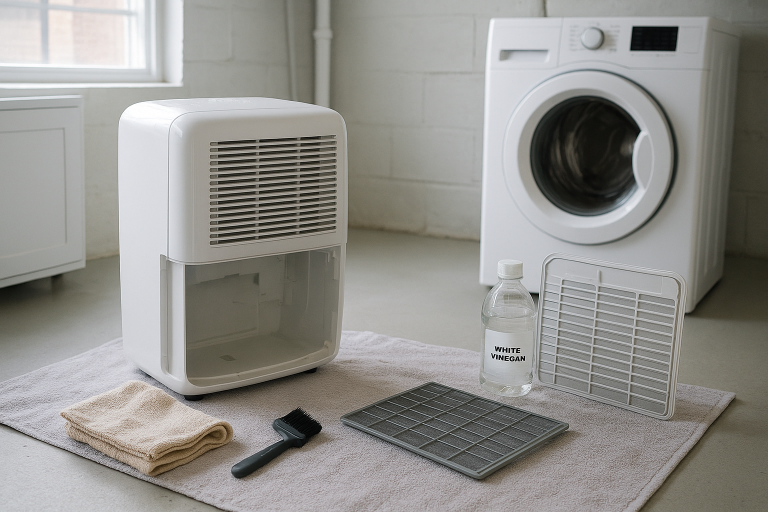
After rinsing, shake out extra water and set the parts on a clean towel to air-dry. Point the tank opening downward at an angle so water can drain instead of pooling inside. Wipe the base tray dry with a clean cloth.
If you are cleaning the humidifier for storage, let everything dry fully before reassembling. For starting winter use, it is still worth drying the parts once before the first fresh fill. Drying breaks up the damp environment that film and odors love.
Step 7: Reassemble and fill with the right water
Once dry, reassemble the humidifier with a clean filter or wick if your model uses one. Fill the tank with fresh water. For ultrasonic and cool mist units, distilled water is the best choice when practical because it contains fewer minerals than most tap water and can help reduce white dust. ([epa.gov](https://www.epa.gov/indoor-air-quality-iaq/use-and-care-home-humidifiers?utm_source=openai))
White dust is the powdery residue that can settle on furniture near some humidifiers, especially when hard tap water is used. The EPA notes that minerals in tap water can also form crusty deposits inside humidifiers, and those deposits can provide a place for microorganisms to grow. ([espanol.epa.gov](https://espanol.epa.gov/cai/el-uso-y-cuidado-de-los-humidificadores-domesticos?utm_source=openai))
How often to clean it during winter
For everyday winter use, follow this simple rhythm:
- Daily: Empty the tank, dry surfaces you can reach, and refill with fresh water.
- Every 3 days: Unplug, empty, descale, scrub away film, rinse, and dry.
- Weekly or as needed: Replace or rinse the wick or filter according to the manual.
- Any time it smells musty: Stop using it and clean it before running it again.
Also watch the room itself. The EPA advises not humidifying above 50% relative humidity because higher humidity can encourage biological growth in the home. A small hygrometer is inexpensive and much more reliable than guessing by how the air feels. If you see condensation on windows or dampness around the humidifier, lower the setting or use it less. ([espanol.epa.gov](https://espanol.epa.gov/cai/el-uso-y-cuidado-de-los-humidificadores-domesticos?utm_source=openai))
Common humidifier cleaning mistakes to avoid
- Leaving water in the tank between uses: Standing water is the main reason humidifiers get slimy or sour.
- Using fragrance oils in a model not made for them: Oils can damage plastic parts and create residue.
- Running it beside walls, curtains, or wood furniture: Mist can dampen nearby surfaces and invite mold or warping.
- Forgetting the cap and nozzle: These small pieces often hold scale and odor.
- Assuming a filter pitcher makes water mineral-free: Many household water filters improve taste but do not remove minerals the way distilled water does.
When to replace the humidifier
A humidifier is not worth saving if the tank is cracked, the cord is damaged, the base leaks, or you cannot remove a persistent musty smell after careful cleaning. You should also replace it if mineral crust blocks parts you cannot access or if the model requires filters that are no longer available.
If it cleans up well, start the season with a fresh routine: empty daily, clean every third day, keep indoor humidity below 50%, and dry the unit before storage. That small habit keeps your humidifier useful instead of turning it into one more winter chore you dread.