Swap Butterfly Bush for Summersweet, a Wildlife Favorite
If you love the long bloom season and pollinator appeal of butterfly bush but want something kinder to local ecosystems, summersweet is one of the best swaps you can make. This native shrub offers fragrant flowers, reliable garden performance, and a big return for bees, butterflies, and other beneficial insects.
Unlike butterfly bush, summersweet does not have a reputation for seeding itself into wild areas. It is also a versatile landscape plant that fits into mixed borders, foundation plantings, and wildlife gardens with very little fuss.
Why summersweet is such a smart swap
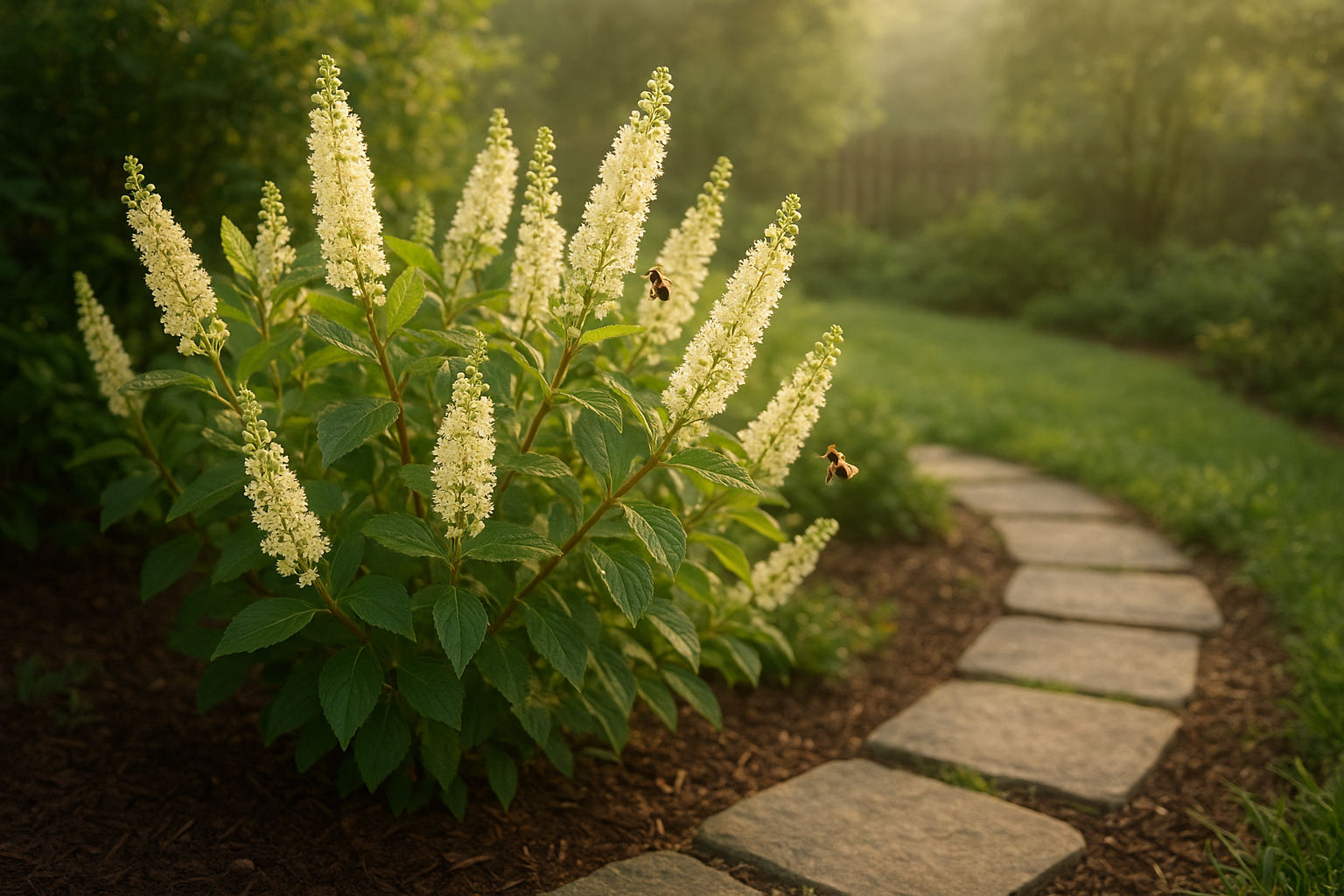
Summersweet (Clethra alnifolia) is a deciduous shrub native to the eastern United States. It’s best known for its bottlebrush-like flowers, which appear in mid to late summer just when many gardens are starting to fade. The blossoms are often white or pale pink and carry a sweet fragrance that can be enjoyed from a distance.
That fragrance is only part of the appeal. The flowers are packed with nectar and draw in a wide range of pollinators, including bees, butterflies, and native insects. Later in the season, birds may also benefit from the small seed capsules left behind.
For gardeners trying to build a more ecologically responsible space, the difference matters. A good butterfly bush alternative should do more than look pretty. It should support local wildlife, stay where you plant it, and fit into an everyday garden without demanding constant intervention.
What makes it better than butterfly bush?
Butterfly bush can be very attractive to adult butterflies, but in some regions it spreads beyond the garden and can become invasive. That means it may escape cultivation and crowd out native vegetation. Summersweet avoids that problem because it is already part of the local plant community in many eastern and southeastern landscapes.
Here’s how the two compare in practical terms:
- Wildlife value: both feed pollinators, but summersweet supports a broader range of native insects.
- Garden behavior: summersweet stays compact and manageable, while butterfly bush can self-seed aggressively in some areas.
- Seasonal interest: summersweet blooms in summer and often has good fall color, giving you more than just flowers.
- Maintenance: both are fairly easy, but summersweet generally needs less worry about cleanup from unwanted seedlings.
How to grow summersweet successfully
One reason gardeners like butterfly bush is that it is simple to grow. The good news is summersweet is just as approachable once you understand what it prefers.
Light
Plant summersweet in full sun for the heaviest flowering, or give it partial shade if your summers are hot. In brighter locations, it usually produces denser growth and more blooms.
Soil
This shrub prefers soil that stays evenly moist. It naturally grows in woodland edges, stream banks, and damp ground, so it appreciates a site that does not dry out too quickly. It can adapt to average garden soil if you water it during dry spells, but it is happiest when the soil holds moisture well.
Watering
New plants should be watered regularly during the first growing season. Once established, summersweet still prefers consistent moisture, especially during heat waves. If you have a rain garden, a low area that collects water, or a border with irrigation, it will likely do very well.
Mulch
Apply a 2- to 3-inch layer of mulch around the base of the shrub, keeping it a few inches away from the stems. Mulch helps the soil stay cool and moist while reducing weeds.
Pruning
Pruning is optional, but you can remove damaged branches in late winter or early spring. If the shrub becomes too large, lightly shape it after flowering. Avoid heavy pruning unless you need to rejuvenate an older plant.
Best ways to use summersweet in the landscape
Summersweet is adaptable enough to work in many different garden styles. It can serve as a focal point, a seasonal anchor, or part of a layered wildlife planting.
- Foundation planting: tuck one near a porch or walkway where the scent can be enjoyed.
- Mixed shrub border: pair it with other native shrubs for staggered bloom times.
- Rain garden: use it in a damp area where other shrubs struggle.
- Pollinator bed: combine it with coneflowers, bee balm, and goldenrod for a long season of nectar.
- Woodland edge: plant it with ferns and shade-tolerant perennials for a natural look.
If you like the idea of a shrub that looks polished but still feels relaxed, summersweet is especially useful. Its upright flower spikes add structure, while the foliage blends easily with grasses, perennials, and smaller shrubs.
Good companion plants
A wildlife-friendly garden works best when plants overlap in bloom time and habitat value. Around summersweet, consider adding plants that prefer similar moisture levels and sun exposure.
- Bee balm
- Joe-Pye weed
- Blue flag iris
- Swamp milkweed
- Fothergilla
- Winterberry holly
- Native viburnums
These combinations can help extend interest through the seasons and support more insects and birds over time.
If summersweet is not available, other great alternatives
Not every garden has the same conditions, so the best butterfly bush alternative depends on your space. If summersweet is hard to find or your site is drier than average, a few other native shrubs may be worth considering.
- Buttonbush: great for damp sites and loved by pollinators.
- Virginia sweetspire: tough, easy, and excellent for fall color.
- Ninebark: adaptable, attractive, and useful for wildlife.
- Arrowwood viburnum: reliable flowers, berries, and strong seasonal appeal.
Choose the plant that matches your soil, light, and moisture levels. A well-matched shrub will always outperform one that is forced to grow in the wrong spot.
How to decide if this is the right plant for you
Summersweet is a great choice if you want:
- A fragrant flowering shrub with a long summer display
- A native plant that supports pollinators
- A non-invasive option for home landscapes
- Something attractive but not difficult to maintain
- A shrub that performs well in moist soil or part shade
If your garden is very dry and full sun, you may need to water more often, especially during establishment. But for many yards, this shrub hits a sweet spot: beautiful, useful, and easy to live with.
When gardeners reach for butterfly bush, they often want color, butterflies, and a plant that does not ask for much. Summersweet delivers those same qualities in a more ecologically responsible package. It is a simple swap that can make your border look better and do more for wildlife at the same time.