3 Best Plants to Attract Cardinals to Your Garden
If you want to see more cardinals in your yard, the answer is usually less about a single bird feeder and more about creating the kind of landscape they actually use. Cardinals are drawn to gardens that offer food, cover, and safe nesting places, especially where shrubs and trees form a layered, sheltered space.
The good news is that you do not need a huge property to make your garden more inviting. A few well-chosen plants can provide berries, seeds, perches, and hiding spots that keep cardinals coming back throughout the year.
What cardinals look for in a garden
Before choosing plants, it helps to know what cardinals need most. These birds spend a lot of time near dense shrubs and low trees where they can move around without feeling exposed. They also rely on plants that provide fruit or seed, plus sturdy branches for nesting.
When planning your space, aim for plants that do more than look nice:
- Food: berries, fruit, and seeds help cardinals through different seasons.
- Cover: thick foliage protects them from predators and harsh weather.
- Nesting support: cardinals prefer shrubs and small trees with hidden branch structure.
- Water: a birdbath or shallow water source can make the area even more appealing.
If you already have a feeder, great. But adding the right plants can turn a quick stop into a regular backyard hangout.
1. Flowering dogwood
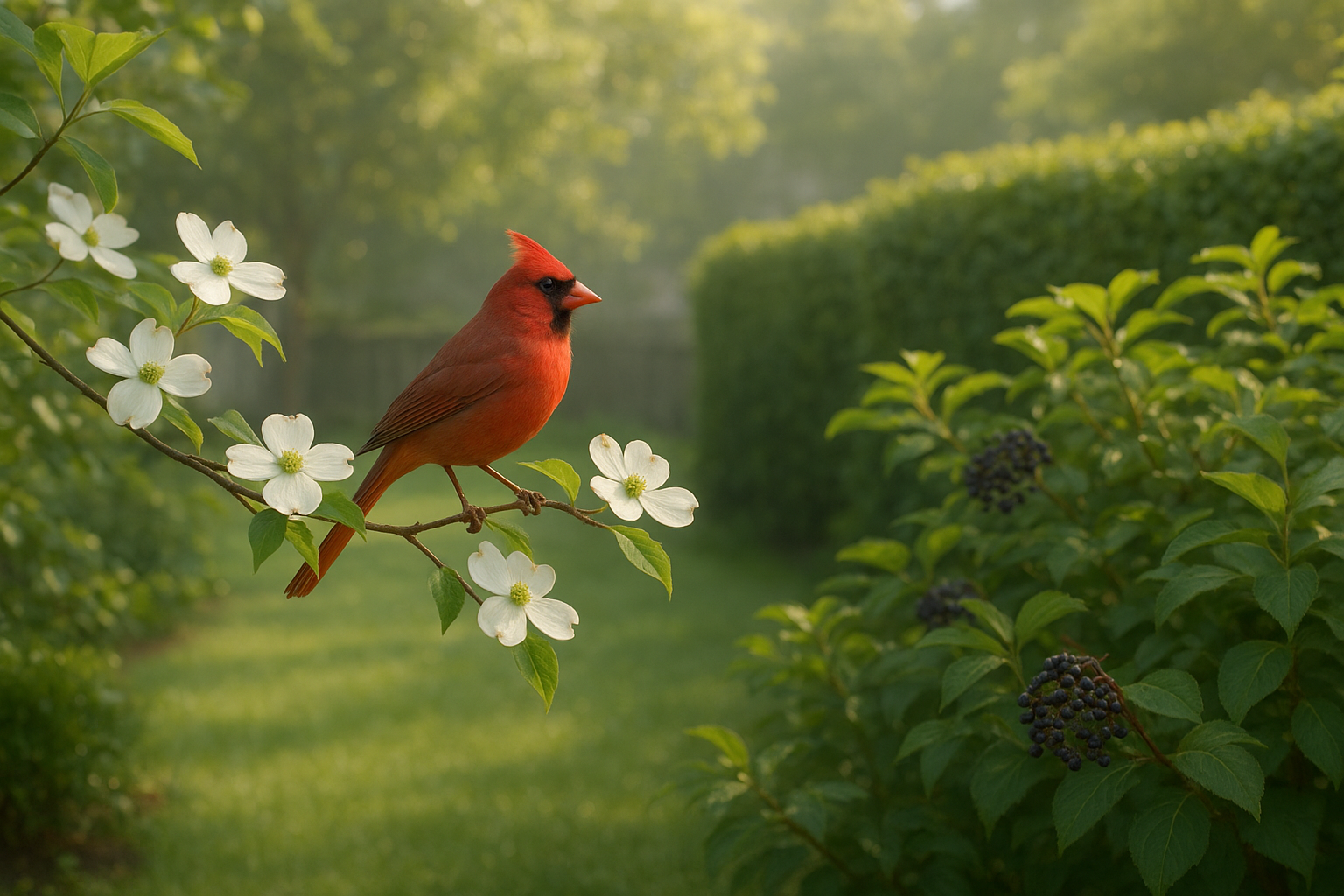
Flowering dogwood is one of the best all-around choices for attracting cardinals. Its spring blooms are beautiful, but the real wildlife value comes later in the season when it produces berries that birds enjoy. The tree also has a branching structure that offers good shelter and perching spots.
Cardinals like dogwood because it provides both food and a sense of security. The horizontal branching habit creates a more sheltered interior, which is useful for nesting birds and for birds resting between feedings.
Why it works:
- Provides berries that many birds will eat
- Offers layered branches for cover
- Fits well in smaller yards compared with larger shade trees
- Adds seasonal interest with flowers, foliage, and fruit
Growing tip: Dogwoods usually do best in well-drained soil with some afternoon shade in hotter climates. Water young trees regularly while they establish, and avoid planting too deep. A mulch ring can help keep roots cool, but keep mulch a few inches away from the trunk.
If you want the most wildlife benefit, choose a variety that is suited to your region and has a reputation for reliable fruiting. Healthy fruiting trees are far more useful to birds than struggling specimens.
2. Elderberry
Elderberry is a standout shrub for wildlife gardening because it produces clusters of berries that birds eat readily. It also grows into a dense, natural-looking thicket, which makes it especially attractive to cardinals looking for cover. In many gardens, elderberry can do more for birds than a purely ornamental shrub.
This plant is especially useful if you want to create a bird-friendly border or a mixed shrub area. Cardinals use dense vegetation to move safely through the yard, and elderberry helps create that layered feel quickly.
Why it works:
- Berries provide a valuable food source
- Dense growth offers excellent shelter
- Can be planted in groups for a more natural habitat effect
- Supports other wildlife, including pollinators
Growing tip: Elderberry prefers moist, fertile soil and full sun to partial shade. It can spread and form a large shrub, so give it room to grow. If space is tight, plan for regular pruning after fruiting to keep the plant manageable while still preserving berry production.
For better bird appeal, plant more than one elderberry if your yard has room. A small cluster creates stronger cover and often looks more natural than a single isolated shrub.
3. Native hawthorn
Hawthorn trees and large shrubs are another excellent option for cardinals. They are valued for their berries and thorny, protective branches, which help create a safer place for nesting and loafing. The dense growth habit makes hawthorn especially useful as a privacy screen or wildlife hedge.
While the thorns may seem like a drawback, they actually add to the plant’s usefulness in a bird garden. The protective structure can discourage predators and give birds more confidence to settle in nearby.
Why it works:
- Produces berry-like fruit that birds may feed on
- Dense branching creates excellent cover
- Can be used as a hedge, specimen tree, or part of a mixed border
- Helps build a more natural, layered habitat
Growing tip: Hawthorn generally does best in full sun and well-drained soil. It is a strong candidate for low-maintenance gardens, but it should be placed thoughtfully because of the thorns. Keep it away from narrow walkways, play areas, and spots where you regularly work in close quarters.
Use hawthorn where you want structure and wildlife value at the same time, such as along a fence line or at the back of a mixed border.
How to arrange these plants for the most bird appeal
Choosing the right plants is only half the job. Placement matters too. Cardinals feel most comfortable in gardens with varied heights and enough thickness to hide and move around.
- Plant in layers. Combine a small tree with one or two shrubs beneath it so the garden feels more like habitat than decoration.
- Group shrubs together. A lone shrub is fine, but clusters create safer cover and are more attractive to birds.
- Keep some open space nearby. Cardinals like cover, but they also need nearby perches and clear flight paths.
- Mix in year-round structure. Evergreen shrubs or dense borders help when deciduous plants lose their leaves.
If you are starting from scratch, a simple layout might include a flowering dogwood as the focal tree, elderberry along a border, and hawthorn as part of a boundary hedge. That combination offers flowers, berries, and dense shelter across more than one season.
Extra tips to keep cardinals coming back
Plants do a lot of the work, but a few extra touches can make your garden even more welcoming.
- Provide fresh water: A shallow birdbath is especially helpful in hot weather and during dry spells.
- Leave some leaf litter: Cardinals often forage on the ground, so not every area needs to be perfectly tidy.
- Avoid overpruning: Heavy trimming can remove the dense cover birds depend on.
- Use native plants when possible: Native species usually support more insects and fruit, which helps the whole food chain.
- Limit pesticides: Insects are an important food source, especially during nesting season.
You do not need to turn your entire yard into a thicket. Even one or two well-placed shrubs can make a noticeable difference, especially if your garden already has feeders or a water source.
Final thoughts
If your goal is to attract cardinals, think like a bird: choose plants that offer shelter first, then food, then safety. Flowering dogwood, elderberry, and native hawthorn are all strong choices because they help create the kind of layered, protective habitat cardinals prefer.
With the right mix of trees and shrubs, your garden can become more than just a pretty space. It can become a reliable stop for some of the most striking birds in the neighborhood.