6 Purple Houseplants That Bring Bold Color Indoors
If you want a quick way to make a room feel more styled, purple foliage is hard to beat. Purple houseplants add contrast, depth, and a little drama without needing flowers to do the work. Best of all, many of them are surprisingly easy to care for once you understand their basic light and watering needs.
Whether you prefer deep plum leaves, silvery purple patterns, or bright violet accents, there’s a houseplant for nearly every corner of the home. Below are six attractive options that can help you bring rich color indoors while keeping maintenance manageable.
Why purple houseplants stand out
Purple foliage works like a built-in design feature. It pairs beautifully with neutral walls, warm wood, brass accents, and white pots, but it also looks striking alongside other leafy greens. In low-light rooms, purple leaves can make a plant display feel more intentional and layered.
That said, color is often tied to growing conditions. Many purple plants keep their best color in bright, indirect light. Too little light can dull the leaves, while too much direct sun may scorch them. The goal is to find the right balance for each plant.
1. Purple waffle plant
The purple waffle plant (Hemigraphis alternata) is a compact houseplant with crinkled, textured leaves in green and deep purple. It has a lush, almost jewel-like look that works well on shelves, desks, and small plant stands.
This plant does best in bright, indirect light, which helps maintain its rich coloring. It prefers soil that stays lightly moist, so don’t let it dry out completely. At the same time, avoid soggy soil, because that can lead to root problems.
- Best for: Small spaces and tabletop displays
- Light: Bright, indirect light
- Water: Keep evenly moist
2. Tradescantia zebrina
Also known as wandering dude or inch plant, Tradescantia zebrina is one of the easiest purple-toned plants to grow indoors. Its striped leaves mix silver, green, and purple, and the trailing stems look great in hanging baskets or on high shelves.
This plant grows quickly and is often forgiving if you miss a watering. Let the top inch of soil dry out before watering again. Pinching back the stems can help it grow fuller instead of becoming sparse and leggy.
- Best for: Hanging planters and trailing displays
- Light: Bright, indirect light for stronger color
- Water: Water when the top layer of soil dries
3. Persian shield
Persian shield (Strobilanthes dyerianus) is a showstopper with metallic purple leaves and a silvery shimmer. It looks more exotic than many common houseplants, but indoors it can be very rewarding if you place it correctly.
Give Persian shield bright light without harsh direct sun, and keep the soil lightly moist. It also appreciates higher humidity, so it can do well in a kitchen or bathroom with good natural light. If the air in your home is dry, grouping it with other plants or using a pebble tray can help.
- Best for: A statement plant in bright rooms
- Light: Bright, indirect light
- Water: Even moisture, never bone dry
4. Oxalis triangularis
Oxalis triangularis, often called purple shamrock, is loved for its triangular leaves and deep violet color. The leaves open in the light and fold at night, which gives it a lively, almost animated quality.
This plant likes bright, indirect light and moderate watering. It’s also one of those plants that may go dormant for a short period, especially if conditions change. If the foliage dies back, don’t panic right away. Reduce watering and wait for fresh growth to reappear.
- Best for: A decorative plant with a bit of personality
- Light: Bright, indirect light
- Water: Water when the top layer of soil feels dry
5. Calathea roseopicta ‘Dottie’
While not all calatheas are purple, Calathea roseopicta ‘Dottie’ has dramatic dark leaves with vivid pinkish-purple markings that give it a rich, moody look. It’s a great choice if you want something elegant and bold at the same time.
Calatheas are usually a little fussier than other plants on this list. They prefer consistently moist soil, filtered light, and higher humidity. Avoid placing them near heating vents or drafty windows, and use room-temperature water if possible.
- Best for: Bathrooms, bright bedrooms, and humid rooms
- Light: Low to bright indirect light
- Water: Keep soil lightly moist
6. Purple passion plant
The purple passion plant (Gynura aurantiaca) has velvety leaves covered in fine purple hairs, which make it feel almost soft enough to touch. It brings a strong pop of color, especially when placed against pale walls or light-colored furniture.
This plant likes bright light and regular watering, but it can become floppy if it doesn’t get enough sun. It’s a good idea to rotate the pot every week or so to encourage even growth. Because the leaves are covered in fine hairs, try to water the soil rather than misting the foliage.
- Best for: Bright windowsills with space to spread
- Light: Bright, indirect light
- Water: Water when the top inch of soil dries
How to keep purple foliage looking its best
Colorful leaves need the right care to stay vibrant. If your purple houseplants are losing their intensity, a few simple adjustments can make a big difference.
Check the light first
Most purple plants need more light than people expect, but not direct, scorching sun. If a plant is fading, move it closer to a bright window with filtered light.
Use the right potting mix
Good drainage is essential. Choose a pot with drainage holes and a soil mix suited to houseplants. If a plant is prone to drying out too fast, a mix with a little extra moisture retention may help.
Water based on the plant, not the schedule
It’s better to check the soil than to water on autopilot. Stick a finger into the top inch or two of the mix. If it still feels damp, wait. If it feels dry, water thoroughly and let excess water drain away.
Watch humidity and temperature
Several purple houseplants, especially calatheas and Persian shield, appreciate more humidity than the average living room offers. Keep them away from cold drafts and hot air vents, and consider a pebble tray or humidifier in dry months.
Styling ideas for a purple plant display
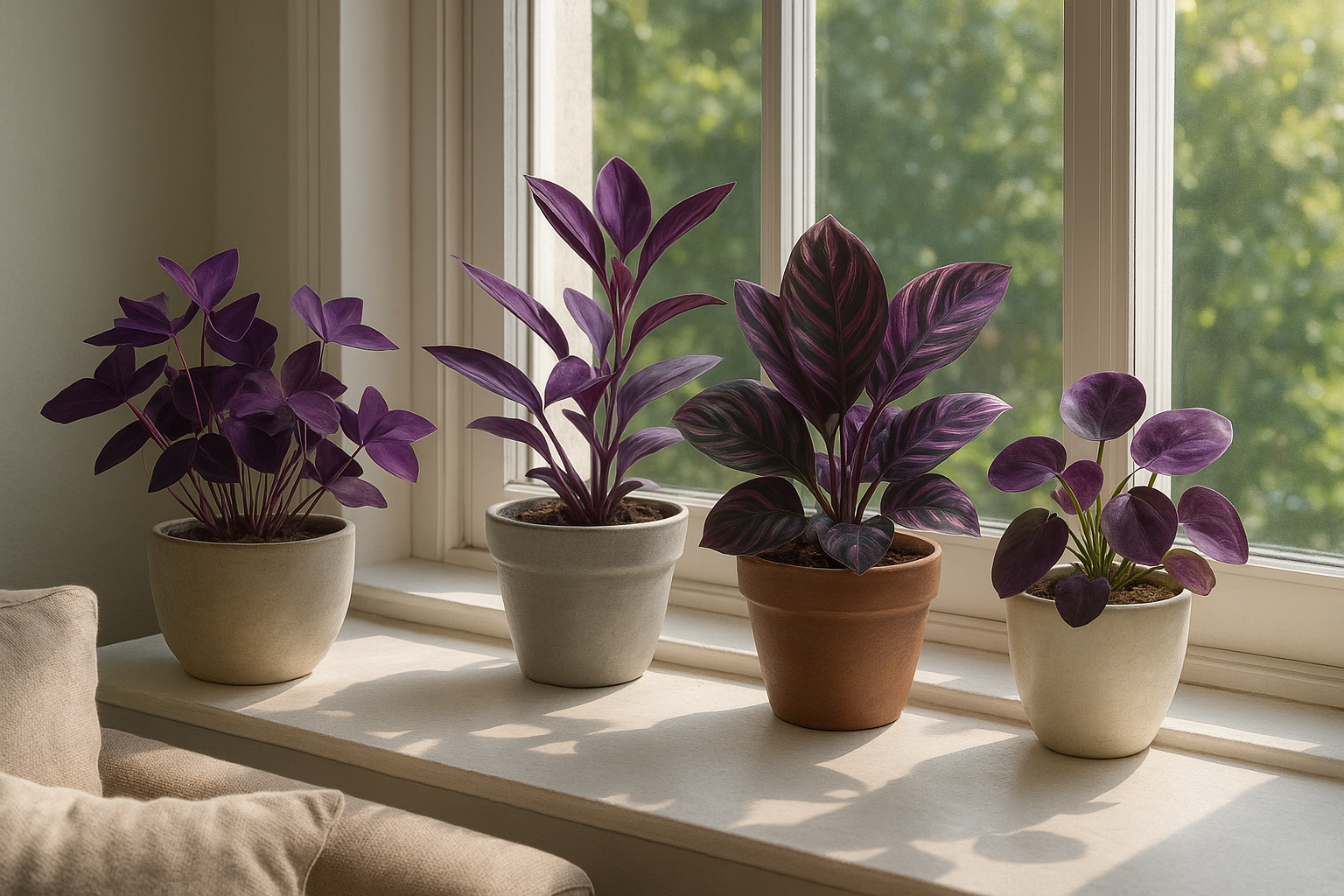
Purple foliage looks best when you let it contrast with other colors and textures. Try grouping one bold purple plant with a softer green plant and a trailing variety for balance. Light-colored planters can make purple leaves stand out, while terracotta gives them a warmer, more grounded look.
If you’re short on space, place one purple plant in a spot where it can act as a focal point: a bedside table, a kitchen shelf, or the corner of a desk. Even one plant can change the feel of a room.
Quick care checklist
- Choose bright, indirect light for the strongest color
- Water only when the plant actually needs it
- Make sure pots drain well
- Raise humidity for fussy tropical types
- Trim or pinch back leggy growth to keep plants full
With the right plant and a little attention, purple foliage can become one of the easiest ways to make your home feel more polished and inviting. Start with one or two varieties, learn how they behave in your space, and you may find yourself building a whole collection of dramatic, low-maintenance color.