How to Use a Chainsaw Safely for Clean, Easy Cuts
Getting started with a chainsaw can feel intimidating, but it becomes much easier once you understand the basics of safety, balance, and control. If you’re learning how to use a chainsaw, the goal is not speed—it’s making steady, clean cuts while keeping yourself, your tools, and your surroundings protected.
A chainsaw is one of the most useful tools for yard cleanup, pruning, and cutting firewood. With the right setup and a few simple habits, you can work more confidently and avoid the mistakes that cause messy cuts or dangerous kickback.
Before You Start: Read the Tool and the Space
Every chainsaw model is a little different, so the first step is always to read the owner’s manual. Learn where the chain brake, throttle lock, on/off switch, and chain tensioner are located. You should also know whether your saw is gas or electric, since starting and maintenance steps vary.
Next, look at your work area. The safest cutting setup is one that is calm, open, and stable. Clear away loose branches, rocks, cords, hoses, toys, and anything else you could trip over. Make sure pets and children are well away from the area before you begin.
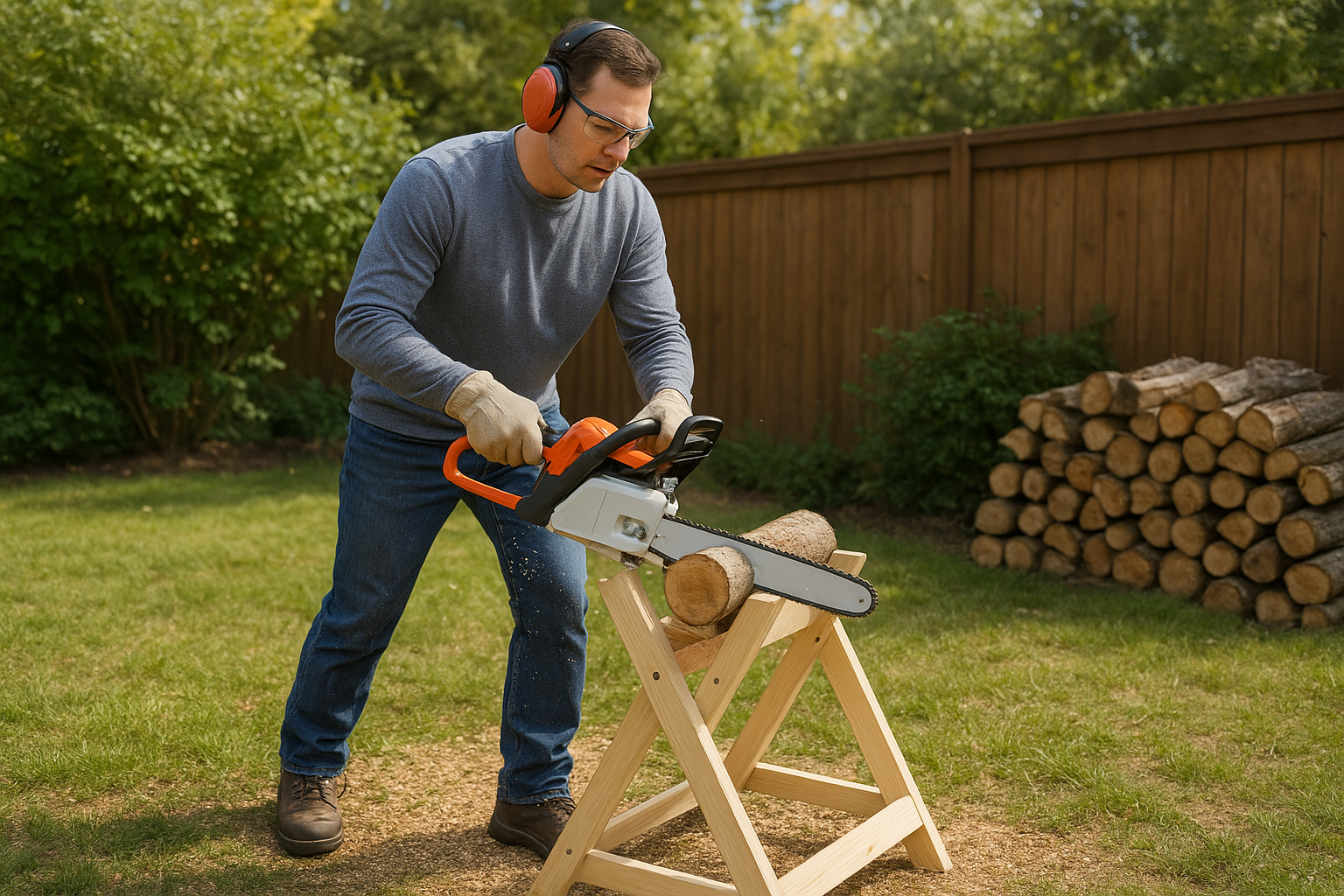
If you are cutting logs, use a sawhorse, log stand, or another secure support whenever possible. Working with the wood lifted off the ground makes cuts cleaner and keeps the chain away from dirt, which can dull it quickly.
Dress for the Job
Chainsaws are powerful enough to throw chips, dust, and small bits of bark, so personal protection matters. Before starting, wear:
- Eye protection such as safety glasses or a face shield
- Hearing protection like earmuffs or earplugs
- Close-fitting clothing that won’t catch on branches
- Long pants and sturdy boots with good traction
- Gloves for grip and comfort
Chainsaw chaps are a smart addition, especially for frequent use. They are designed to help reduce injury if the chain makes contact with your leg. Avoid loose sleeves, scarves, jewelry, or anything that could snag while the saw is running.
Learn the Basic Safety Rules
Before you make a cut, get comfortable with the most important safety habits. These are worth repeating every time you use the saw:
- Hold the saw with both hands. Keep your right hand on the rear handle and your left hand on the front handle, even if you are just moving it a short distance.
- Stand with a firm stance. Keep your feet planted shoulder-width apart so you stay balanced if the tool moves or shifts.
- Never cut above shoulder height. Overhead cutting reduces control and increases the chance of fatigue.
- Watch for kickback. This happens when the tip of the bar touches an object or gets pinched, sending the saw upward or backward unexpectedly.
- Keep bystanders far away. Nobody should stand near the cutting zone or directly behind you.
The chain should be stopped whenever you move from one spot to another. If you need to step away, shut the saw off completely before setting it down.
How to Start and Hold the Saw
Start the saw according to the manufacturer’s instructions, and always place it on a stable surface or hold it securely with the correct starting method. Once it’s running, keep the chain brake engaged until you are ready to cut if your model uses one.
Use a relaxed but controlled grip. You do not need to squeeze so hard that your hands cramp, but you do need enough pressure to keep the saw steady. Your body should be positioned slightly to the side of the cutting line, not directly behind the bar.
When you’re ready to begin, let the chain reach full speed before it touches the wood. That helps the saw bite cleanly instead of dragging or bouncing.
Making a Clean Cut
The best cuts come from letting the chain do the work. Avoid forcing the bar through the wood. Instead, guide the saw smoothly and keep the pressure even. If you push too hard, you can bind the chain, slow the motor, and create a rough cut.
For smaller branches and logs, cut in a controlled motion and support the piece so it won’t pinch the bar as it separates. If you are cutting a larger log, think ahead about how it will shift as the cut deepens. Wood under tension can close in on the bar, so make sure the log is supported in a way that allows the cut to open safely.
For overhead limbs or pruning tasks, make sure the branch is not under load before cutting. If you are unsure how a limb will move, step back and reassess. A little patience prevents a lot of trouble.
Helpful Cutting Tips for Beginners
- Use a sharp chain for smoother cuts and less effort.
- Keep the bar out of dirt and gravel.
- Take breaks if your arms or shoulders get tired.
- Stop and reposition the wood instead of forcing awkward angles.
- Cut in good daylight so you can clearly see the chain and the wood.
Know the Limits of the Tool
One of the biggest beginner mistakes is trying to do too much with a small saw or taking on a project that really needs a professional. A homeowner chainsaw is great for trimming branches, clearing storm debris, and cutting manageable firewood rounds. It is not the right tool for every tree job.
Call an arborist or tree service if a tree is leaning dangerously, if large limbs are tangled near power lines, or if the cut would require climbing. Safety matters more than doing it yourself.
After the Cut: Shut Down and Clean Up
Once you’re done, turn off the saw and let it cool before storing it. Brush off sawdust and wipe down the bar, chain, and body of the tool. Check the chain tension and look for obvious wear. If the chain is dull, damaged, or loose, fix it before the next use.
Also inspect the area around you. Move cut branches, stack logs neatly, and collect debris so the space stays safe for walking and future work. A tidy finish makes the job feel complete and helps prevent trips and slips later on.
Simple Maintenance That Makes a Big Difference
Good maintenance keeps a chainsaw working better and lasting longer. You do not need to be a mechanic to handle the basics.
- Check chain tension before each use.
- Keep the chain sharp for cleaner cuts and less strain on the motor.
- Use the right bar and chain oil so moving parts stay lubricated.
- Clean the air filter and vents regularly.
- Store the saw dry and covered in a safe place out of reach of children.
If the chain smokes, cuts slowly, or pulls to one side, that is usually a sign it needs attention. A dull chain does more than slow you down—it also makes the saw harder to control.
Final Thoughts
Learning how to use a chainsaw is mostly about respect, preparation, and steady technique. Once you understand your saw, wear the right protection, and work with a calm setup, the tool becomes far less intimidating.
Start with small jobs, keep your cuts controlled, and stop whenever something feels off. With practice and good habits, you’ll be able to tackle yard cleanup and firewood projects more safely and efficiently.