How to Clean a Dehumidifier So It Won’t Smell Musty
A dehumidifier is supposed to make a damp room feel fresher, not add a swampy smell of its own. If the bucket, filter, or drain hose sits wet and dusty for too long, it can start to smell musty and make the machine work harder.
Here’s how to clean a dehumidifier safely, including the parts most people forget: the bucket corners, air filter, intake grille, drain outlet, and coils. This routine is especially useful for basements, laundry rooms, bathrooms, and summer humidity season.
How Often Should You Clean a Dehumidifier?
For a dehumidifier that runs daily, empty and rinse the bucket every day or two, wash the bucket about once a week, and clean the filter every 2 to 4 weeks. If the unit runs in a dusty basement or near pet hair, check the filter more often.
ENERGY STAR notes that proper dehumidifier setup and maintenance help the unit perform well, and the EPA recommends keeping indoor humidity below 60 percent, ideally between 30 and 50 percent, to help discourage mold growth. ([energystar.gov](https://www.energystar.gov/products/dehumidifiers?utm_source=openai))
What You’ll Need
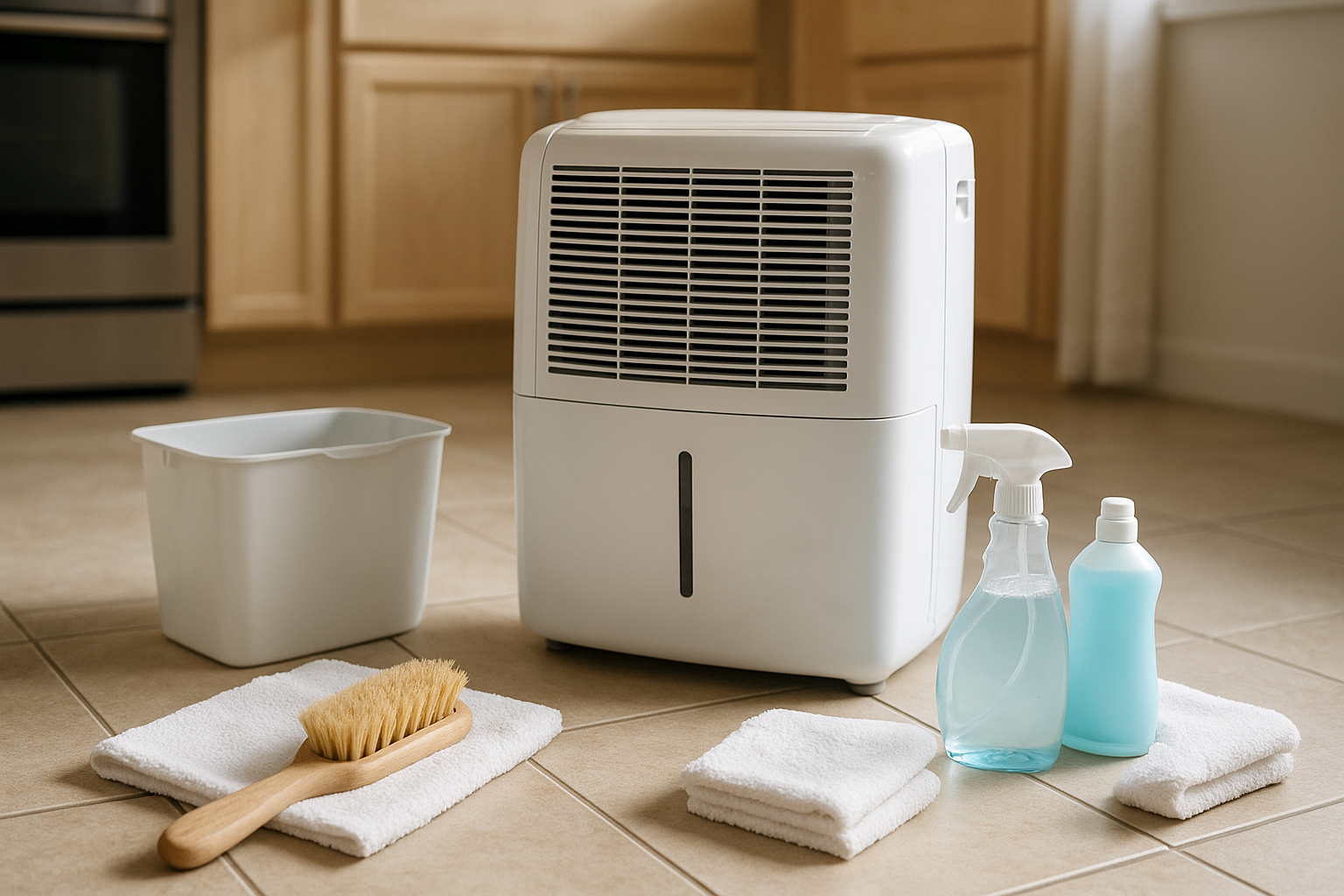
- Mild dish soap
- Warm water
- Microfiber cloths or clean rags
- Soft brush or old toothbrush
- Vacuum with brush attachment
- Cotton swabs for tight corners
- Optional: household bleach for non-metal, hard plastic parts only
- Gloves, especially if you see mold or slime
Important: Always unplug the dehumidifier before cleaning. Never spray cleaner into the motor, control panel, plug, or electrical openings.
Step 1: Unplug It and Move It to a Work Area
Turn the machine off, unplug it, and let it sit for a few minutes. Remove the water bucket and carry the parts to a sink, bathtub, laundry tub, or outdoor area where you can rinse without splashing nearby outlets.
If your dehumidifier has been running in a moldy room or the bucket smells strongly musty, wear gloves and avoid breathing right over the bucket when you open it.
Step 2: Wash the Water Bucket
The bucket is where most dehumidifier smells begin. It catches warm water from the air, and the corners, float switch, handle grooves, and lid can hold a film you may not notice at first glance.
- Dump any standing water.
- Rinse the bucket with warm water.
- Add a few drops of dish soap and scrub all inside surfaces with a soft brush.
- Use a toothbrush or cotton swab around seams, corners, and the float mechanism.
- Rinse well so no soap remains.
- Dry the bucket with a clean towel or let it air-dry fully before reinstalling.
For visible mold on hard plastic, the CDC says mold can be removed from hard surfaces with soap and water or, when needed, a bleach solution of no more than 1 cup household laundry bleach per 1 gallon of water. Never mix bleach with ammonia, vinegar, or other cleaners. ([cdc.gov](https://www.cdc.gov/mold-health/about/clean-up.html?utm_source=openai))
Step 3: Clean the Filter
A clogged filter slows airflow, traps odors, and makes the dehumidifier run longer than it needs to. Most portable dehumidifiers have a washable air filter behind the front or rear grille, but check your manual before rinsing it.
- Slide or pop out the filter.
- Vacuum loose dust with a brush attachment.
- If the filter is washable, rinse it under lukewarm water.
- For greasy or stubborn dust, use a tiny amount of mild dish soap, then rinse thoroughly.
- Let the filter dry completely before putting it back.
Do not reinstall a damp filter. That puts moisture right back into a dark, enclosed space and can bring the musty smell back quickly.
Step 4: Wipe the Intake Grille and Exterior
Dust on the outside can get pulled into the machine every time it runs. Vacuum the intake and exhaust grilles with a brush attachment, then wipe the exterior with a barely damp cloth.
Pay attention to the air intake slots, control panel edges, bucket opening, and the little channel where water drips into the tank. If you see grime in a narrow groove, use a cotton swab dampened with soapy water, then follow with a clean damp swab.
Step 5: Check the Drain Hose or Drain Port
If your dehumidifier drains continuously into a floor drain or sump area, the hose can grow biofilm inside, especially if water sits in a low spot.
- Disconnect the hose from the unit.
- Flush it with warm water.
- Look for kinks, clogs, slime, or mineral buildup.
- Wash the hose with soapy water if it looks dirty.
- Rinse and let it drain fully before reconnecting.
Keep the hose as short and straight as practical. ENERGY STAR advises placing the unit close enough to a floor drain or sump so you don’t need a long, awkward drain hose. ([energystar.gov](https://www.energystar.gov/products/dehumidifiers?utm_source=openai))
Step 6: Gently Clean Dust From the Coils
The coils sit behind the filter and grille. They collect moisture from the air, so they need good airflow to work efficiently. You do not need to scrub them aggressively, and you should not bend the thin metal fins.
With the unit unplugged and the filter removed, use a vacuum brush attachment to lift loose dust from the accessible coil area. If the fins are delicate, hold the brush slightly away from the surface and use light suction. Do not pour water into the machine unless your owner’s manual specifically says that part is washable.
If the coils are packed with dirt, bent, corroded, or growing visible mold in areas you cannot reach, it may be time for professional service or replacement, especially on an older unit.
Step 7: Dry Everything Before Reassembly
This step matters more than it seems. A clean but damp bucket, filter, or hose can quickly smell stale again.
- Set the bucket upside down on a towel until dry.
- Let the filter air-dry completely.
- Shake extra water out of the hose.
- Wipe the bucket bay before sliding the tank back in.
Once everything is dry, reassemble the dehumidifier, plug it in, and run it in an open area for a few minutes. Check that the bucket seats properly and the unit is draining as expected.
How to Keep a Dehumidifier From Smelling Musty
- Empty the bucket often. Don’t let water sit for days.
- Leave the bucket cracked open when storing. A sealed wet bucket is an odor trap.
- Keep the filter clean. Dust plus moisture is the usual source of that stale smell.
- Set a realistic humidity target. Aim for about 30 to 50 percent indoor humidity when possible, and keep it below 60 percent.
- Give the unit breathing room. Don’t push it tight against a wall or curtain.
- Clean before seasonal storage. Wash and dry the bucket, filter, and hose before putting the machine away.
When to Replace Instead of Clean
Cleaning works well for ordinary dust, slime, and light surface mold on hard plastic parts. Consider replacing the dehumidifier if it still smells musty after a thorough cleaning, has mold inside foam or insulation you cannot remove, leaks, freezes up repeatedly, or runs constantly without lowering the room’s humidity.
A dehumidifier should make your home feel drier and cleaner. With a weekly bucket wash, regular filter cleaning, and a quick check of the hose and coils, you can keep it running without the musty basement smell tagging along.