How to Winterize Outdoor Faucets Before a Freeze
Outdoor faucets are easy to forget until the first hard freeze is in the forecast. A few minutes of fall prep can help keep trapped water from freezing inside the faucet or the short pipe behind it, which is where expensive leaks often start.
This guide walks you through how to winterize outdoor faucets in a practical, homeowner-friendly way: disconnect the hose, shut off and drain the line if your house has an indoor valve, add a cover, and know when a frost-free faucet still needs attention.
Why Outdoor Faucets Freeze
Water expands as it freezes, and that pressure can split a faucet body, crack a fitting, or burst the pipe just inside the wall. The risky part is not always the visible spout outdoors. It is often the small section of pipe in an exterior wall, crawl space, garage, or basement rim joist.
Extension and winter-prep guidance commonly recommends disconnecting garden hoses, shutting off water to exterior faucets when possible, and draining the pipe that leads outside. Those steps reduce the amount of water available to freeze in the exposed section of plumbing. ([site.extension.uga.edu](https://site.extension.uga.edu/forsyth/protect-water-pipes-from-freezing/?utm_source=openai))
What You’ll Need
- Bucket or towel
- Adjustable pliers, only if the hose is stuck
- Insulated outdoor faucet cover, foam dome, or faucet sock
- Foam pipe insulation for exposed pipes in unheated areas
- Caulk or exterior sealant for gaps around the pipe penetration
- Garden hose washer, if you plan to store hoses in good shape for spring
You do not need fancy tools for most hose bibs. The biggest help is doing the job before nighttime temperatures dip below freezing, not after the faucet is already iced over.
Step 1: Disconnect Every Hose and Attachment
Start by removing garden hoses, splitters, timers, watering wands, quick-connect fittings, and backflow attachments that are not meant to stay outside all winter. A connected hose can trap water at the faucet, even if the faucet itself is turned off.
If a hose is stuck, do not crank hard enough to twist the pipe in the wall. Hold the faucet steady with one hand, use pliers gently on the hose coupling, and work it back and forth. If it will not move, stop and plan to replace or repair it before deep winter. A damaged hose connection is better dealt with in mild weather than during a cold snap.
Step 2: Drain and Store the Hose
Carry the hose to a slight slope, stretch it out, and lift one end so water runs out the other. Then coil it loosely and store it in a garage, shed, basement, or other protected spot. This prevents freeze damage to the hose and keeps water from sitting in brass fittings.
While you are at it, remove spray nozzles and watering tools. Open them briefly so trapped water can drain, then store them indoors or somewhere dry.
Step 3: Find the Indoor Shutoff Valve
Many homes in cold climates have a dedicated shutoff valve for each outdoor faucet. Look in the basement, crawl space, utility room, garage, or inside a cabinet near where the faucet exits the wall. The valve may be a round handle or a lever-style ball valve.
If you find one, turn it off. Then go outside and open the outdoor faucet fully to let water drain from the line. Some indoor shutoff valves also have a small bleeder cap or drain port. If yours does, hold a cup or towel underneath and open it carefully to release trapped water.
Leave the outdoor faucet open if that is how your setup is designed to drain for winter. If you are unsure, check the valve style or ask a plumber during a routine service visit. The key goal is simple: shut water off on the warm side of the wall and remove water from the cold side.
Step 4: What If You Do Not Have an Indoor Shutoff?
Some homes, especially in milder climates, do not have separate shutoffs for outdoor hose bibs. In that case, disconnecting the hose and covering the faucet becomes even more important.
Turn the faucet off snugly, but do not overtighten it. Add an insulated cover before freezing weather. If an unusually severe freeze is coming and your faucet or pipe is exposed, you may need additional protection for nearby piping in crawl spaces, garages, or exterior walls. Pipe insulation in unheated areas is a common freeze-prevention measure, and gaps that allow cold air to reach plumbing should be sealed. ([lowes.com](https://www.lowes.com/n/how-to/frozen-pipes-prevention-and-repair?utm_source=openai))
Step 5: Install an Outdoor Faucet Cover
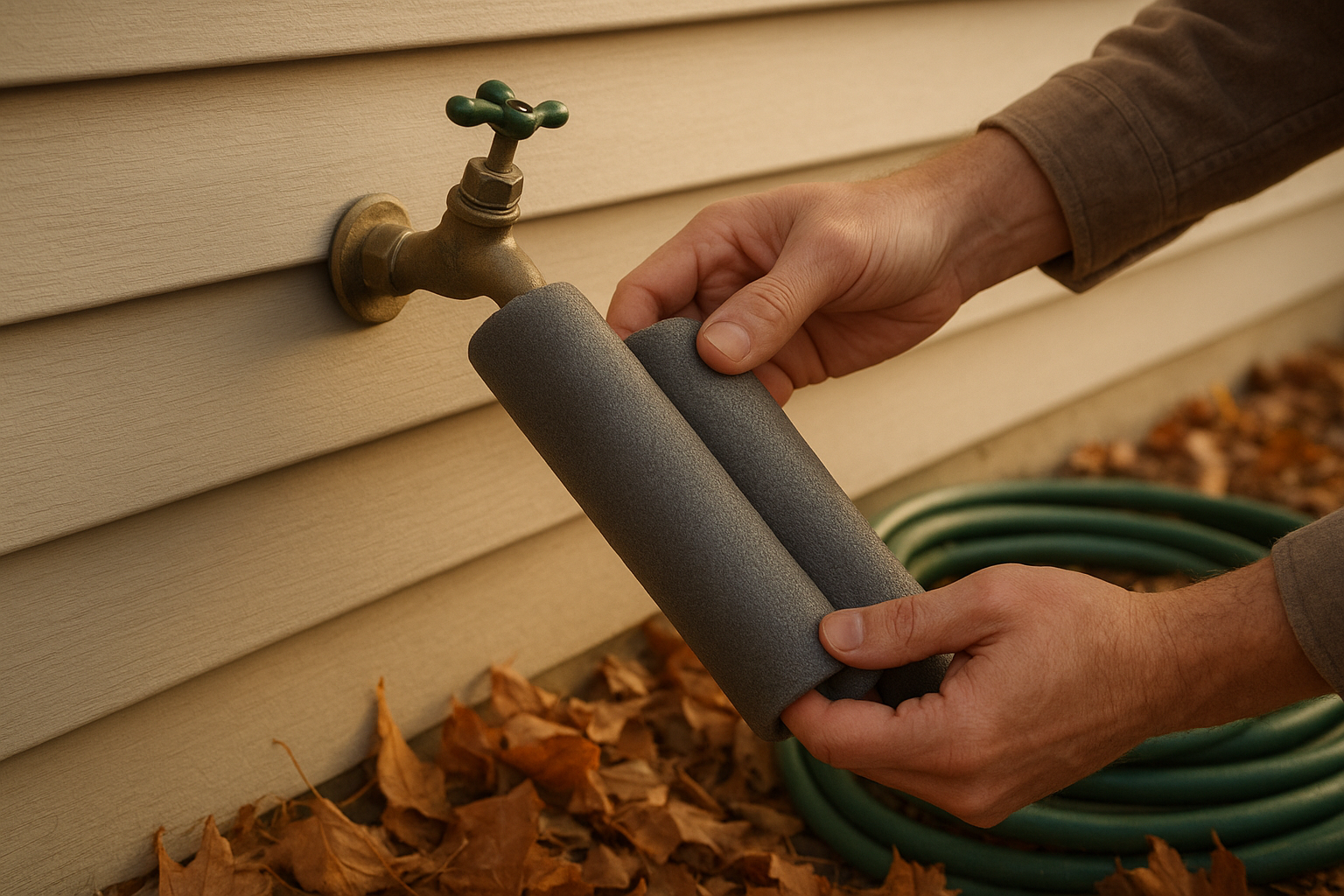
Once the hose is off and the line is drained as much as possible, install a faucet cover. Foam dome covers usually hook around the faucet and tighten with a cord. Fabric faucet socks slide over the spigot and cinch at the wall.
For the cover to work well, it should sit tight against the siding, brick, or foundation. If there is a gap, cold air can blow behind it. Choose a larger cover for oversized handles, vacuum breakers, or faucets that stick far from the wall.
A cover is best viewed as backup protection, not a substitute for draining a standard faucet when an indoor shutoff is available. It helps slow heat loss and block wind, but it cannot fix a water-filled pipe in a very cold wall.
Step 6: Check Exposed Pipes Nearby
After covering the faucet, look at the pipe on the inside of the wall if you can access it. Pipes in unheated garages, crawl spaces, basements, and exterior-wall cabinets are more vulnerable than pipes inside warm living space.
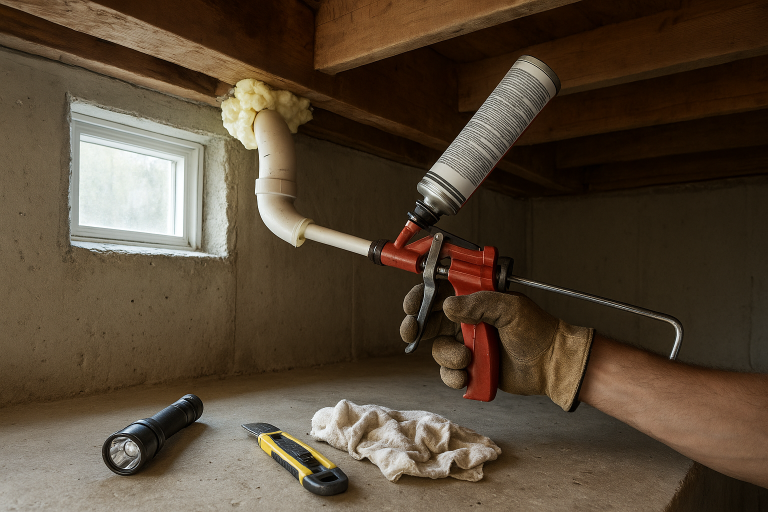
Add foam pipe sleeves to exposed plumbing where practical. Fit the insulation snugly, tape seams if needed, and pay attention to elbows and short pipe runs near the exterior wall. If you feel cold air blowing through a hole around the pipe, seal the gap with appropriate caulk or foam, keeping combustibles and sealants away from heat-producing equipment.
Do Frost-Free Faucets Need Winterizing?
Yes, at least partly. Frost-free faucets are designed so the shutoff point sits farther back inside the warmer part of the house, and the stem drains outward after the water is turned off. But they can only drain properly if the hose is disconnected. A hose, splitter, or closed-end attachment can hold water in the faucet and defeat the design.
For a frost-free faucet, remove all attachments, turn the faucet off, and let any remaining water drip out. A cover is still cheap insurance in windy or very cold locations, especially if the faucet is on a north-facing wall or above an unheated crawl space.
Quick Outdoor Faucet Winterizing Checklist
- Remove hoses, timers, splitters, and spray nozzles.
- Drain hoses completely and store them out of the weather.
- Find the indoor shutoff valve for each outdoor faucet, if your home has one.
- Shut off the indoor valve and open the outside faucet to drain the line.
- Use the bleeder port on the indoor valve if one is present.
- Install an insulated faucet cover tightly against the wall.
- Insulate exposed pipes in unheated spaces.
- Seal cold-air gaps around pipe openings where appropriate.
Common Mistakes to Avoid
- Leaving a hose attached: This is the most common problem and can trap water right where you do not want it.
- Relying only on a cover: A cover helps, but draining the line is better when your plumbing allows it.
- Forgetting splitters and timers: These small attachments often hold water and crack in freezing weather.
- Overtightening old valves: If a shutoff valve leaks or will not turn, do not force it. Add it to your plumber’s repair list.
- Ignoring crawl spaces: The faucet outside may be covered while the pipe inside sits in a cold draft.
When to Call a Plumber
Call a plumber if the faucet leaks from the wall, the indoor shutoff will not close, the hose bib spins when you try to remove a hose, or you discover there is no practical way to drain a vulnerable outdoor line. You may want to ask about adding a dedicated shutoff valve, replacing a worn hose bib, or upgrading to a properly installed frost-free faucet.
Winterizing outdoor faucets is a small fall chore with a big payoff. If you handle it before the first freeze, you can put the hoses away, cover the spigots, and head into winter with one less household worry.