How to Clean a Range Hood Filter Without the Mess
If your stove area smells greasy even after you wipe the counters, the range hood filter may be the culprit. Learning how to clean a range hood filter is a small kitchen chore that makes your vent work better, cuts lingering odors, and keeps sticky grease from building up overhead.
The good news: most metal grease filters do not need fancy cleaners. A sink full of very hot water, a grease-cutting dish soap, and a little patience will usually do the job.
Why the Range Hood Filter Gets So Greasy
Your range hood pulls steam, smoke, and cooking fumes up from the stovetop. The metal filter catches airborne grease before it can coat the fan and ductwork. That is helpful, but it also means the filter slowly fills with a tacky layer of oil, especially if you fry, sear, sauté, or cook with a lot of butter or oil.
The U.S. Environmental Protection Agency recommends routinely cleaning range hood grease filters as part of improving indoor air quality while cooking. Broan-NuTone, a major range hood manufacturer, says aluminum mesh grease filters can often be washed about once a month, depending on how much you cook. If you cook lightly, every two to three months may be enough. If you cook bacon, burgers, stir-fries, or fried foods often, monthly is a better habit.
Before You Start: Check What Kind of Filter You Have
Most home range hoods have one of these:
- Aluminum mesh filters: Lightweight, silvery, layered metal mesh. These are common and usually washable.
- Stainless steel baffle filters: Heavier filters with channels or baffles. These are common on higher-powered or pro-style hoods and are usually washable.
- Charcoal filters: Black or dark carbon filters used in ductless, recirculating hoods. These are usually not washable and should be replaced according to the appliance manual.
If your hood vents outdoors, you likely have a washable metal grease filter. If your hood does not vent outside and simply recirculates air back into the kitchen, it may use both a metal grease filter and a charcoal odor filter. When in doubt, look up the model number inside the hood or on the manual before soaking anything.
What You’ll Need
- Rubber gloves
- Very hot tap water
- Grease-cutting dish soap
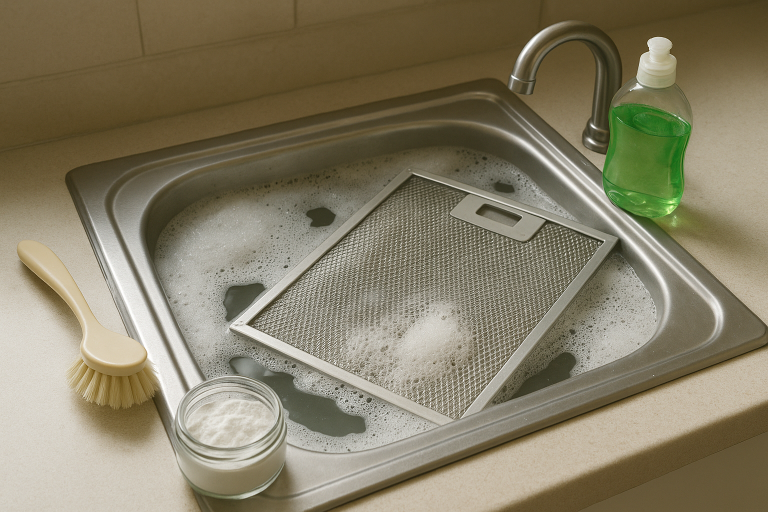
- Baking soda, optional but useful for heavy buildup
- Soft scrub brush or old toothbrush
- Large sink, dishpan, or rimmed baking sheet
- Microfiber cloth or clean towel
Avoid steel wool, harsh abrasive pads, and oven cleaner. They can scratch metal, damage finishes, or leave behind fumes you do not want near a cooking area.
How to Clean a Range Hood Filter by Hand
1. Turn Off the Fan and Let the Stove Cool
Make sure the burners are off, the stovetop is cool, and the range hood fan and light are off. If the hood light has been on for a while, give the bulb and surrounding metal time to cool before reaching underneath.
2. Remove the Filter Carefully
Most filters slide, tilt, or pop out using a small tab or latch. Support the filter with one hand as you release it so it does not drop onto the stovetop. If the filter is dripping grease, carry it flat to the sink or set it on a rimmed baking sheet.
3. Fill the Sink with Very Hot Soapy Water
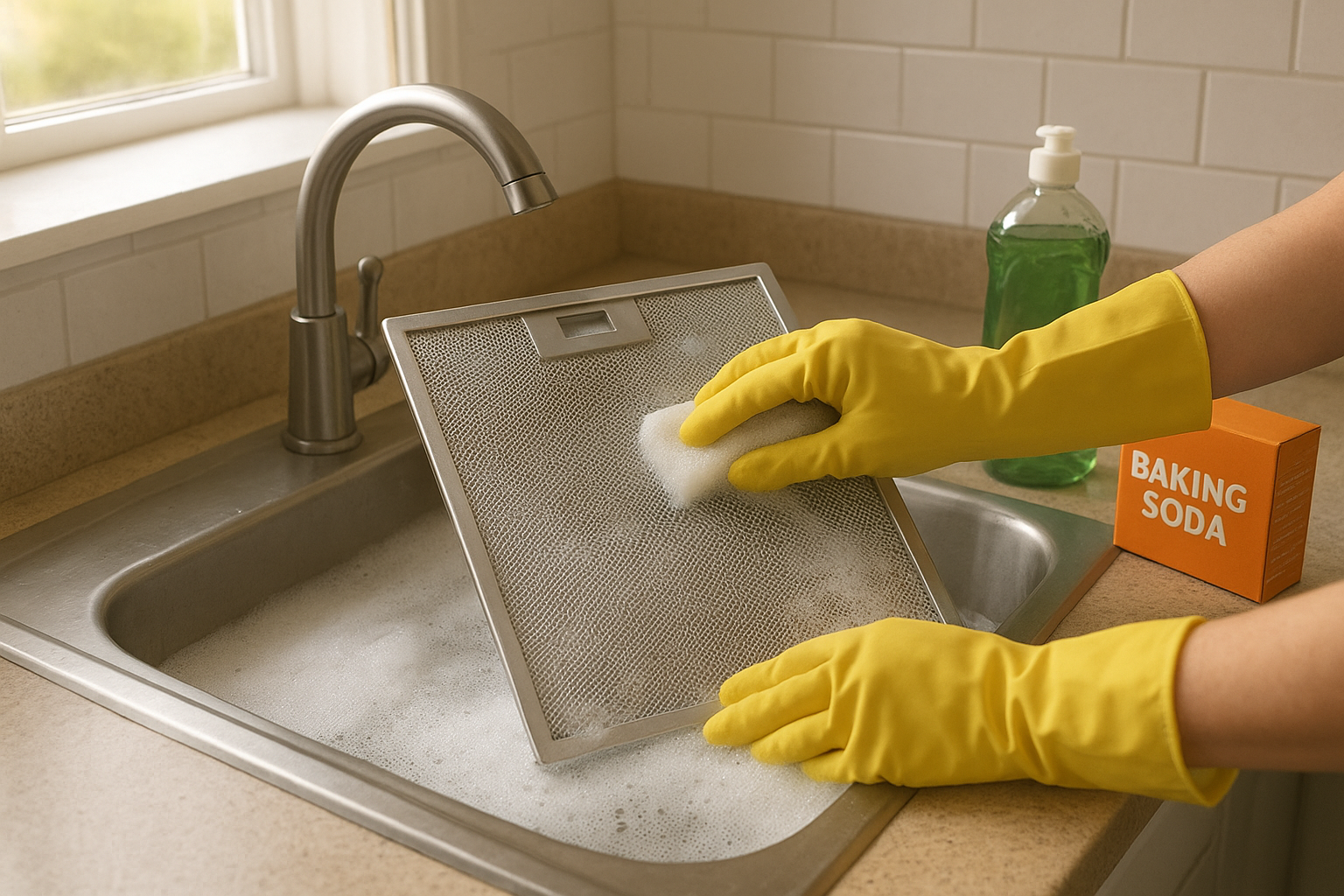
Run very hot tap water into the sink or a dishpan. Add a generous squirt of grease-cutting dish soap. For a very dirty filter, sprinkle in 1/4 to 1/2 cup baking soda and stir gently. The soap helps break down oil, while the baking soda adds mild cleaning power without being as harsh as an abrasive cleanser.
4. Soak for 10 to 20 Minutes
Submerge the filter completely. If your sink is too small, soak one side first, then flip it. Let it sit for 10 to 20 minutes. You should see the water turn cloudy or amber as grease loosens.
For thick, sticky buildup, replace the dirty water with fresh hot soapy water and soak again. It is better to do two gentle soaks than to crush or bend the mesh by scrubbing too hard.
5. Scrub Gently with the Grain of the Filter
Use a soft scrub brush or old toothbrush to clean both sides. Pay attention to the edges and corners, where grease tends to collect. If you have an aluminum mesh filter, be gentle. The layers can dent or separate if you press aggressively.
6. Rinse Well
Rinse the filter under warm running water until the water runs clear and no soap remains. Hold it at different angles so water moves through the mesh or baffles.
7. Dry Completely Before Reinstalling
Shake off excess water, then stand the filter upright on a towel to air-dry. Do not reinstall it while it is dripping. Moisture trapped in the hood is not helpful, and a wet filter may drip onto the stove the next time you cook.
Can You Put a Range Hood Filter in the Dishwasher?
Many metal range hood filters are dishwasher-safe, but check your manual first. Bosch, GE Appliances, Samsung, and Broan-NuTone all note that some metal filters can be cleaned in the dishwasher, though discoloration may happen, especially with aluminum. That discoloration is usually cosmetic, but strong dishwasher detergents can be hard on aluminum over time.
If you use the dishwasher, place the filter securely so it will not bang around. Wash it by itself or with non-food-soiled items, because greasy filters can leave residue. Skip heated dry if your manual advises against it, and let the filter air-dry fully before putting it back.
How to Clean the Hood Around the Filter
While the filter is soaking, wipe the underside of the hood. Spray a cloth with a mild degreaser or use hot soapy water; do not spray cleaner directly into the fan, light socket, controls, or motor area. Wipe the greasy rim where the filter sits, then follow with a clean damp cloth and dry it.
For stainless steel, wipe with the grain and avoid abrasive powders. If your hood has a painted surface, test any degreaser in a hidden spot first.
When to Replace Instead of Clean
A washable metal filter can last a long time, but it is not indestructible. Replace it if it is bent so badly it will not sit flat, if the mesh is separating, if the latch no longer holds, or if grease remains embedded after repeated cleaning. Charcoal filters, on the other hand, should be replaced rather than washed unless your appliance manual specifically says otherwise.
A Simple Cleaning Schedule That Works
- Light cooking: Clean every two to three months.
- Average family cooking: Clean about once a month.
- Frequent frying or high-heat cooking: Check every two weeks and clean as needed.
- After a smoky cooking mishap: Clean the filter once it is cool, even if it is not on your normal schedule.
A good reminder is to clean the range hood filter on the same day you clean the dishwasher filter or wipe down the stovetop. It is much easier to remove a light greasy film than months of sticky buildup.
Troubleshooting: If the Filter Still Feels Sticky
If the filter still feels tacky after one soak, do not give up. Empty the sink, refill it with fresh hot water and dish soap, and soak it again. For stubborn spots, rub a small amount of dish soap directly onto the greasy area, let it sit for five minutes, then scrub gently and rinse.
If that still does not work, use a kitchen degreaser labeled safe for the filter material. Follow the label directions, wear gloves, and rinse thoroughly. Avoid mixing cleaning products, especially bleach with ammonia or acidic cleaners.
The Bottom Line
A clean range hood filter helps your kitchen smell fresher and lets the fan do its job. Pull the filter, soak it in very hot soapy water, scrub gently, rinse well, and let it dry completely. Do it monthly if you cook often, and this small chore will stay quick instead of turning into a greasy project.