3 Low-Maintenance Houseplants That Can Handle Neglect
Some houseplants seem to demand a full-time caretaker. Others quietly keep growing even when life gets busy, the watering can stays put, and your attention is elsewhere. If you want greenery without the guilt trip, the best place to start is with low-maintenance houseplants that can tolerate a little forgetfulness.
The good news is that “easy” doesn’t have to mean boring. Many of the toughest indoor plants also look stylish, clean up a room instantly, and adapt well to average homes. Below are three of the best choices for anyone who wants a more forgiving indoor jungle.
Why some houseplants are so forgiving
Hardy indoor plants usually have a few things in common. They store water in their leaves or stems, grow slowly, and cope with a wider range of light than fussier species. That means they are less likely to collapse if you miss a watering or forget to move them to the “perfect” spot.
That said, neglect is not the same as no care at all. Even the toughest houseplants do best when they get the basics right: decent light, a pot with drainage, and occasional watering when the soil dries out.
1. Snake plant
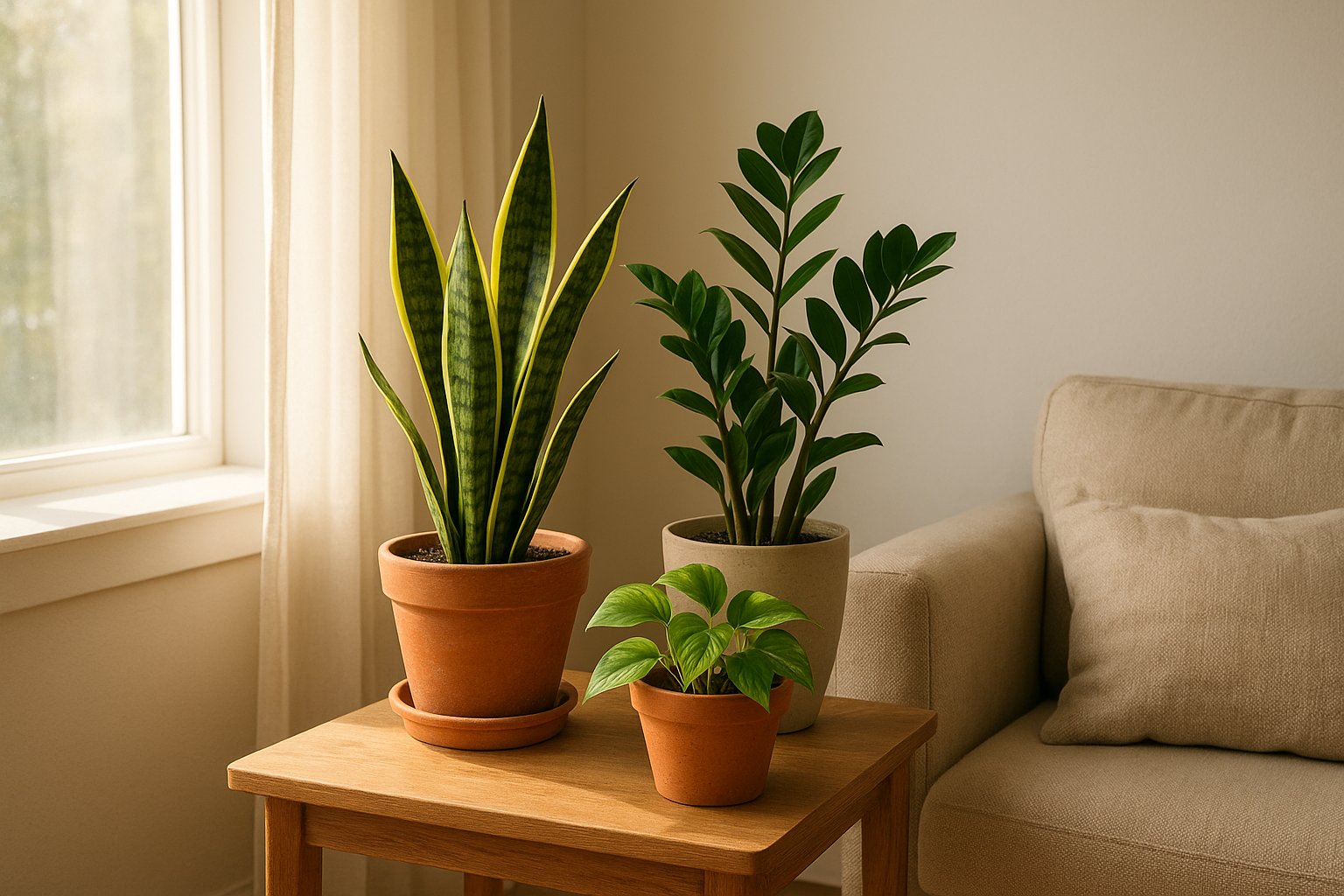
Snake plant is one of the most reliable low-maintenance houseplants you can buy. Its tall, upright leaves give it a modern look, and it is famously tolerant of dry spells. Because the leaves store moisture, it can go longer between waterings than many other indoor plants.
This plant is also useful if you have a room that is bright but not sun-drenched. It grows best in bright, indirect light, but it can also handle lower-light corners better than many alternatives. Just don’t expect fast growth in a dim spot.
How to care for a snake plant
- Water sparingly: Wait until the potting mix is completely dry before watering again.
- Use drainage: A pot with a drainage hole helps prevent root rot.
- Avoid overpotting: A snug pot is often better than a huge one that stays wet too long.
- Wipe the leaves: Dust can build up, so give them an occasional gentle clean.
If you are prone to overwatering, this is a smart choice. In fact, the biggest risk with snake plant is usually too much attention rather than too little.
2. ZZ plant
The ZZ plant is another excellent pick for anyone looking for hardy indoor greenery. Its glossy leaves and compact shape make it easy to style in living rooms, bedrooms, and home offices. What makes it especially practical is its thick, underground stems that help it store water for dry periods.
This plant is often recommended for busy households because it can handle inconsistent watering and a range of light conditions. It grows best in bright, indirect light, but it can also survive in lower light more gracefully than many tropical houseplants.
How to care for a ZZ plant
- Let the soil dry out: Water only when the top few inches feel dry.
- Go easy on watering: In cooler months, it may need water much less often.
- Choose a well-draining mix: A potting mix that doesn’t stay soggy is important.
- Rotate occasionally: Turn the pot every few weeks so the plant grows evenly toward the light.
ZZ plants are a great option for offices, hallways, or anywhere that doesn’t get perfect sunlight. They keep their shape well and tend to look neat even without constant pruning.
3. Pothos
If you want a plant that looks lush without a lot of effort, pothos is hard to beat. It has trailing stems and heart-shaped leaves that work beautifully on shelves, hanging planters, or the top of a cabinet. It is also quick to forgive the occasional missed watering.
Pothos is adaptable and grows well in medium to bright indirect light, though it can tolerate lower light too. The more light it gets, the fuller and faster it will grow, but it is still one of the easiest indoor plants to keep going.
How to care for a pothos
- Water when dry: Check the soil before watering; the top layer should feel dry first.
- Trim leggy vines: Cutting back long stems encourages a fuller plant.
- Give it support or space: Let it trail naturally or train it up a small support.
- Feed lightly: A diluted houseplant fertilizer during the growing season can help, but don’t overdo it.
Pothos is especially helpful if you are new to houseplants because it gives clear visual clues. If the leaves look a little soft or the pot feels very light, it is probably time to water.
How to keep easy houseplants healthy
Even low-maintenance houseplants do best with a simple routine. The goal is not perfection; it is consistency.
Use the right pot and soil
Most indoor plants hate sitting in wet compost. Choose pots with drainage holes whenever possible, and use a potting mix designed for houseplants. If your soil stays damp for days, the plant is more likely to develop problems than if it dries at a steady pace.
Check before you water
Instead of watering on a fixed schedule, check the soil first. Push a finger into the pot or lift it to feel the weight. A dry, lightweight pot usually means it is time to water. A heavy pot is a sign to wait.
Don’t chase every brown leaf
A few tired leaves are normal, especially on older growth. Snip off dead or yellowing leaves with clean scissors, but avoid making constant changes unless the plant is clearly struggling. Too much fussing can create more stress than help.
Watch for common mistakes
- Overwatering: This is the most common problem with resilient houseplants.
- Poor drainage: Decorative pots without drainage can trap water at the roots.
- Too little light: Tough plants can survive low light, but they still need some daylight to grow well.
- Frequent repotting: Many easy-care plants prefer to stay slightly snug in their pots.
Which one should you choose?
If you want the most forgiving option, snake plant is probably the easiest place to start. If your room has lower light and you want something with a polished look, ZZ plant is a strong contender. If you prefer a plant that grows quickly and brings a softer, trailing shape to a shelf or mantel, pothos is a great pick.
For many homes, the best answer is to choose more than one. A mix of these low-maintenance houseplants gives you greenery in different shapes and heights, and it spreads out your chances of success. Even if one plant gets slightly ignored during a busy week, the others will likely keep on looking fine.
Final tip: make plant care easy to remember
The best way to keep tough indoor plants healthy is to make care as simple as possible. Put them where you naturally see them, keep a small watering can nearby, and check the soil while you are already doing another routine task, like tidying the shelf or opening the curtains. Small habits go a long way.
If your schedule is unpredictable, start with forgiving plants first. They are proof that you do not need a perfect routine to enjoy a home full of greenery.