How to Hand-Feed Hummingbirds Safely and Successfully
Hand-feeding hummingbirds is one of those garden moments that feels almost magical. With a little patience and the right setup, you can encourage these quick, curious birds to trust your hand and sip nectar just inches away.
The trick is not to rush it. Hummingbirds are tiny, fast, and cautious, so success depends on making the experience feel familiar, safe, and rewarding from their point of view.
Start by making your garden feel safe
Before you try hand-feeding, make sure hummingbirds already visit your yard regularly. Birds are much more likely to approach a person if they are used to seeing that person near a dependable food source.
A few simple habits can help:
- Keep a regular feeder stocked with fresh nectar.
- Plant nectar-rich flowers such as salvia, bee balm, penstemon, trumpet vine, or fuchsia.
- Avoid sudden movements near feeding spots.
- Stand or sit quietly in the same area each day so the birds learn your routine.
If the birds only stop by occasionally, keep building the habit first. Familiarity is the foundation of hand-feeding.
Use the right nectar mix
For hummingbirds, plain sugar water is the safest and simplest choice. Mix 1 part white granulated sugar with 4 parts water. Stir until dissolved. If you make a larger batch, store it in the refrigerator for up to about a week.
Avoid additives that can harm birds, including:
- red dye
- honey
- brown sugar
- artificial sweeteners
If you are offering nectar by hand, use the same simple mix. It should look clear, not colored or cloudy. Cleanliness matters too, because hummingbird feeders can grow bacteria and mold quickly in warm weather.
Choose a handheld feeder that is easy to spot
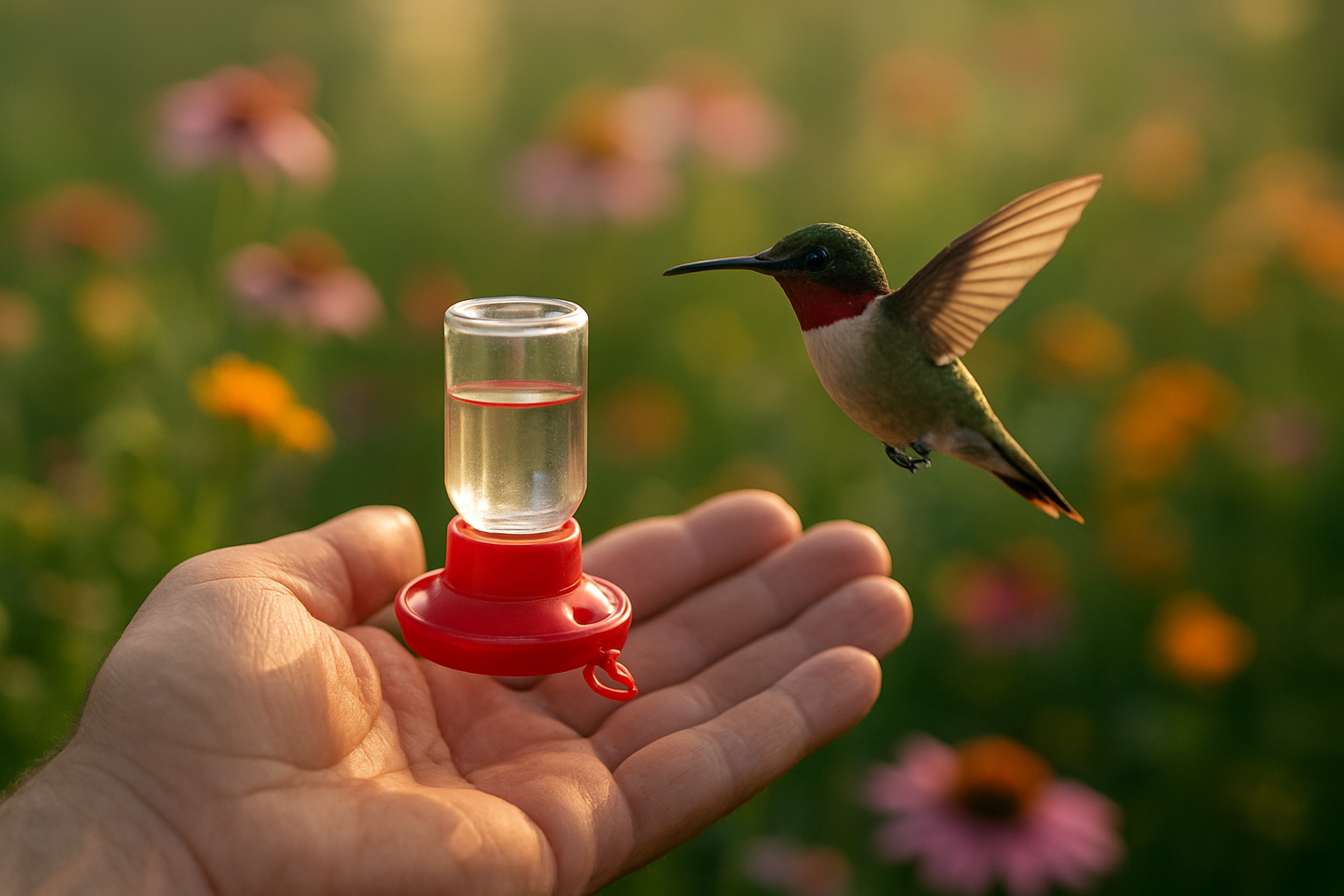
For your first attempt, use a handheld feeder with a visible flower opening or several feeding ports. A larger feeder is easier for birds to notice and gives them a little more confidence.
Good starter features include:
- bright colors, especially red or orange accents
- a stable grip for your hand
- one or more small feeding ports
- an easy-to-clean design
Once the birds are comfortable, you can try smaller handheld feeders or models designed for a single bird. But at the beginning, simple and visible is best.
Pick the best time of day
Early morning is usually the best time to try hand-feeding hummingbirds. Birds are active, hungry, and often searching for a first meal after a long night. Late afternoon can also work well.
Try to avoid:
- very windy conditions
- heavy rain
- extreme heat
- midday moments when the birds seem especially stressed or skittish
Calm weather helps hummingbirds hover steadily, and it also makes it easier for you to stay still long enough to build trust.
Stay still and let the bird come to you
The most important rule is to resist the urge to chase or reach toward the hummingbird. Hold the feeder steady and let the bird make the first move. A hand-feeding session may happen quickly, or it may take several tries over many days.
Helpful tips for the first session:
- Stand or sit in the same place near a regular feeder.
- Hold the handheld feeder at chest height or slightly lower.
- Keep your arm as still as possible.
- Wear muted colors rather than bright, flashy clothing.
- Stay quiet and patient while the bird circles.
At first, the hummingbird may hover nearby, dart away, and return. That is normal. The goal is to make your hand feel like just another safe feeding station.
Think about scent, movement, and clothing
Hummingbirds rely heavily on sight and have excellent memory for feeding spots. They also notice movement quickly. To improve your chances, avoid strong perfumes, scented lotions, and very loose accessories that flutter in the wind.
These small adjustments can help:
- wear a shirt in a solid color
- tuck back long sleeves or dangling jewelry
- keep your face angled away at first if you feel nervous
- move slowly when repositioning the feeder
The calmer and more predictable you seem, the more comfortable the bird may become.
How to build trust over several visits
Most hummingbirds do not land in a hand on the first try. A gradual approach usually works better than forcing the moment. Start by holding the feeder close to your regular feeding station. After a few days, move it a little farther away from the standard feeder so the birds begin associating your hand with nectar.
You can also try these trust-building steps:
- Hold the feeder in the same place each day.
- Remain nearby for short sessions rather than long, restless ones.
- Let the bird feed, then slowly lower your hand away.
- Repeat the routine at roughly the same time daily.
If a bird starts hovering at your hand, stay very still. Sudden movement can make it back off immediately.
If a hummingbird lands on your hand
When it finally happens, keep your hand level and steady. The bird may perch on your finger, the feeder rim, or even your knuckles for a few seconds while it drinks. Enjoy the moment, but don’t try to touch or pet it. Even a tame-looking hummingbird is still a wild animal.
After the bird flies off, lower your hand slowly. If you want to repeat the experience, continue at the same calm pace on future days. Some birds become surprisingly consistent once they trust a person and a feeding spot.
Common mistakes to avoid
Hand-feeding is simple in theory, but a few missteps can make it much harder:
- Using sticky or unsafe nectar ingredients instead of plain sugar water.
- Waving the feeder around, which makes the bird uneasy.
- Expecting instant results before the birds are familiar with you.
- Not cleaning the feeder often enough, especially in warm weather.
- Trying to hand-feed too many birds at once, which can create chaos and spook them.
Think of hand-feeding as a slow trust exercise, not a trick to perform.
Keep feeders clean and rotate them often
Because hummingbird nectar spoils quickly, especially in summer, cleaning matters just as much as the feeding method. Wash feeders with hot water and a bottle brush regularly, and rinse thoroughly so no soap remains.
As a general rule, clean more often when the weather is hot. If nectar looks cloudy, has visible debris, or smells off, throw it out and start fresh. Clean feeders support healthier birds and give you a better chance of repeated visits.
Make the experience rewarding for the birds
If you want hummingbirds to return, your yard should offer more than one food source. A thoughtful garden gives them nectar, shelter, and a sense of routine.
Try combining hand-feeding with:
- continuous blooms from spring through fall
- a shallow water feature or gentle mister
- shrubs or trees nearby for quick cover
- a quiet corner away from heavy foot traffic
When hummingbirds know they can feed, rest, and leave safely, they are far more likely to keep visiting.
A final note on patience
Some gardeners get a hand-feeding visit within days. Others wait weeks. Either outcome is normal. The real secret is consistency: a dependable feeder, a calm presence, and fresh nectar offered at the same spot day after day.
If you give hummingbirds time to learn that your hand means food and not danger, the reward can be unforgettable. One tiny bird hovering close enough to drink from your hand is a garden memory you will not forget.