6 Best Hedges to Plant in Fall for Natural Privacy
Fall is one of the best times to plant a privacy hedge. The soil is still warm, rainfall is often more reliable, and cooler air reduces stress on new shrubs while they build roots. By spring, those plants are already ahead of the game—and that means faster growth, better establishment, and a stronger screen next year.
If you want natural privacy without the look of a solid fence, the right shrubs can soften views, block wind, and add seasonal beauty at the same time. The best choices are usually plants that match your climate, space, and sun exposure. Here are six excellent hedges to plant in fall if you want a handsome living barrier.
How to choose the right privacy hedge
Before buying anything, measure the space and decide how much coverage you actually need. A hedge for screening a patio may only need to reach chest height, while a boundary hedge might need to be much taller. Also think about maintenance: some shrubs stay naturally compact, while others need yearly pruning to remain tidy.
For easier care, look for plants that:
- Grow well in your USDA hardiness zone
- Match your sun conditions: full sun, part shade, or shade
- Can handle your soil type and drainage
- Are evergreen if you want year-round screening
- Are native or regionally adapted when possible
Planting in fall gives shrubs a head start, but good spacing and mulching matter just as much as the plant choice.
1. Manzanita
Best for: warm, dry climates and low-water landscapes
Manzanitas are standout shrubs for gardeners who want beauty and resilience. Many types are evergreen, with small glossy leaves and attractive reddish bark that adds interest even in winter. In late winter or early spring, they produce clusters of bell-shaped flowers that are especially helpful for pollinators.
Some cultivars stay compact enough for a medium hedge, while others become larger shrubs. They prefer well-drained soil and dislike summer irrigation once established, so they are a smart choice for drought-prone gardens.
Why it works as a hedge
- Evergreen foliage for year-round screening
- Excellent drought tolerance once established
- Low pest and disease pressure in the right conditions
2. American Witch Hazel
Best for: four-season interest and informal screening
American witch hazel forms a large, multi-stemmed shrub with a loose, graceful habit. It is not the tightest hedge on this list, but it is one of the most beautiful if you want privacy with a softer, more natural look. In fall, the leaves can turn bright yellow, and the unusual ribbon-like flowers often appear late in the season.
Because it grows wider and more open than a boxy hedge shrub, it works best where you want layered screening rather than a clipped wall. It can be especially useful near a side yard, woodland edge, or mixed border.
Good to know
- Deciduous, so it will not block views in winter
- Can grow quite large if left unpruned
- Best used as part of a mixed privacy planting
3. Bay Laurel
Best for: a dense, elegant evergreen hedge in mild climates
Bay laurel is a classic screening shrub for warmer regions. Its deep green leaves create a dense wall of foliage, and the plant responds well to pruning if you want a formal hedge. As a bonus, the leaves can be harvested for cooking once mature and cleanly grown.
This is a strong option for patios, pools, and entryways because it looks polished year-round. It prefers sun to part shade and does best where winters are not extremely harsh.
Practical tip
Space bay laurel shrubs generously at planting time. They fill out over time, and crowded plants are harder to shape and more likely to develop poor airflow.
4. Arborvitae
Best for: quick vertical screening and narrow spaces
Arborvitae are among the most popular privacy shrubs because they grow upright, stay evergreen, and can create a dense screen fairly quickly. They are especially useful when you do not have much room for width but still need height along a property line or deck.
Different varieties vary in size, so check the mature height before planting. Some stay relatively slim, while others can become tall, broad screens. Choose a cultivar suited to your climate and be sure to water consistently the first year.
Why gardeners like them
- Fast visual screening
- Compact footprint compared with many shrubs
- Useful for narrow side yards and tight borders
5. Inkberry Holly
Best for: wet soils, coastal gardens, and evergreen structure
Inkberry holly is a versatile native evergreen shrub that can form a durable hedge in many eastern gardens. It has small, dark green leaves and a naturally rounded shape. Unlike some hollies, it is generally more adaptable to moist soil, which makes it a useful choice for spots that stay a little damp after rain.
It is especially valuable if you want a native hedge that supports wildlife while still giving your yard structure. For best results, plant several shrubs in a row and prune lightly after establishment to encourage fullness.
Best use
Inkberry works well as a low to medium hedge, foundation screen, or border around a garden room.
6. Eastern Red Cedar
Best for: large spaces and durable year-round screening
Eastern red cedar is a tough native evergreen that can provide strong privacy and wildlife value. In the landscape, it can eventually become a sizable tree, so it is best used where you have room or where a taller screen is desired. Birds appreciate the cover and berries, and the dense foliage offers excellent wind protection.
This is not the shrub to choose for a tiny yard, but in a roomy landscape it can create a long-lasting living boundary. Plant young specimens in fall so they can settle in before the heat of next summer.
Important note
Because it grows into a large plant, make sure it will not interfere with buildings, fences, or overhead lines as it matures.
How to plant hedges in fall the right way
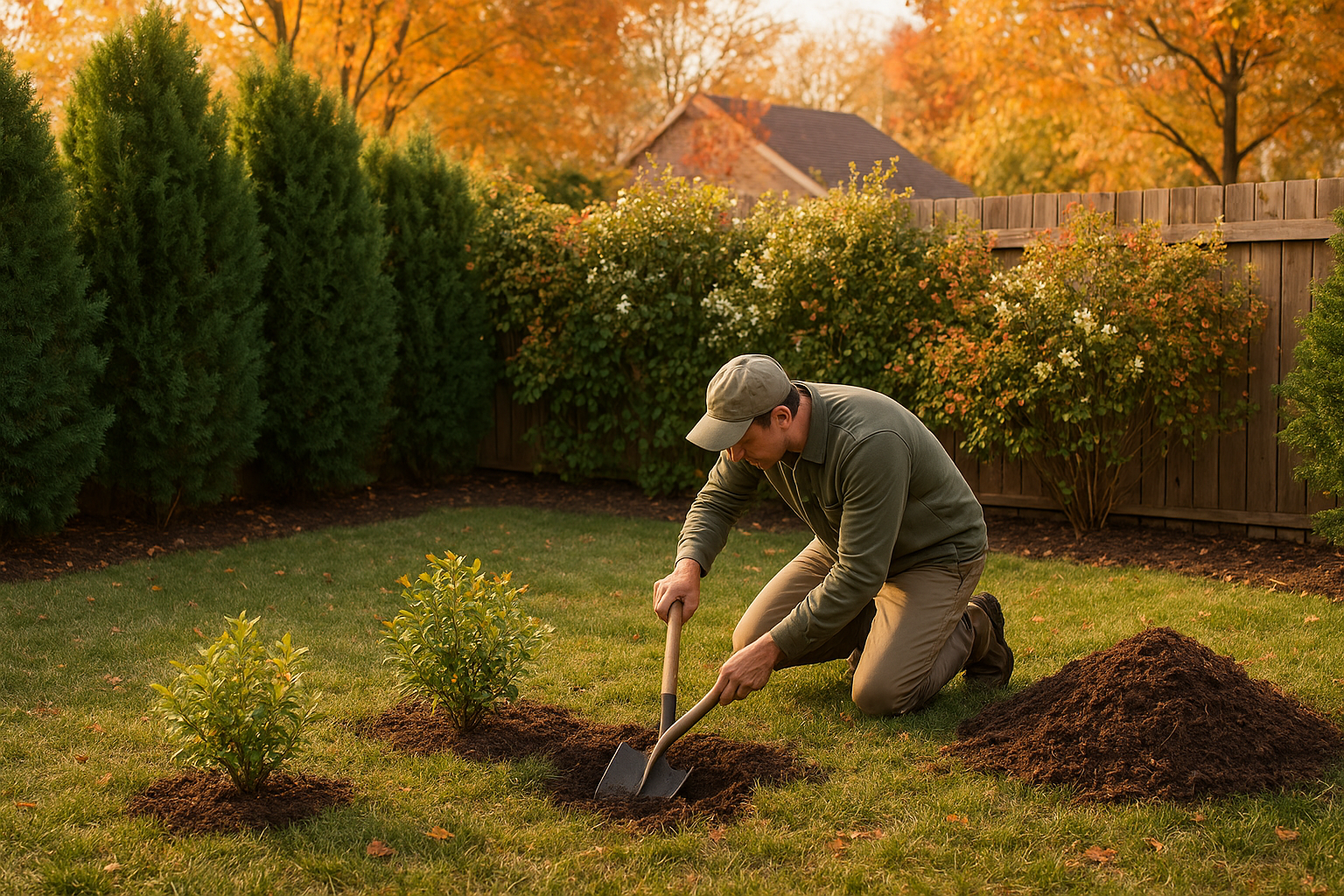
Once you pick your shrubs, good planting technique makes all the difference. Here is a simple process to help them establish:
- Dig a wide hole that is about two to three times as wide as the root ball, but no deeper than the plant’s current root depth.
- Loosen circling roots if the plant is pot-bound.
- Set plants at the right height so the top of the root ball sits level with or slightly above the surrounding soil.
- Backfill gently with the removed soil, then water thoroughly to settle it.
- Mulch around the base with 2 to 3 inches of mulch, keeping it a few inches away from the stems.
- Water regularly until the ground cools or freezes, especially during dry spells.
If you are planting several shrubs in a row, use a string line or garden hose to keep the hedge straight. For a looser, natural look, stagger the shrubs slightly instead of placing them in a rigid line.
Extra tips for a fuller hedge
- Do not overfertilize young shrubs; strong root growth matters more than fast top growth.
- Prune lightly after establishment to encourage branching.
- Choose disease-resistant varieties when available.
- Mix shrubs in larger spaces for a layered screen that feels more natural than a single plant wall.
For many gardeners, the best privacy hedge is the one that looks good while doing its job. Planting in fall gives these shrubs time to settle in quietly, so by the time warm weather returns, your yard can feel more secluded, calmer, and more finished. Whether you want a formal evergreen wall or a softer natural border, fall is the season to start building that privacy for next year.