How Often to Fertilize Tomatoes for a Bigger Harvest
Tomatoes are heavy feeders, which means they use a lot of nutrients as they grow, flower, and produce fruit. The trick is not just giving them fertilizer, but giving it at the right time and in the right amount so you get strong plants and a better harvest without producing a jungle of leaves and very few tomatoes.
If you’ve ever wondered how often to fertilize tomatoes, the short answer is: it depends on your soil, the fertilizer you use, and whether your plants are in the ground, in raised beds, or in containers. A simple feeding plan can make a big difference in plant health and fruit production.
How often should tomatoes be fertilized?
For most home gardens, tomatoes do well with fertilizer at planting time, then again every 3 to 4 weeks during the growing season. That said, the exact schedule depends on the product you’re using.
- Slow-release granular fertilizer: apply at planting, then reapply according to label directions, often every 6 to 8 weeks.
- Liquid fertilizer: feed every 2 to 3 weeks, because nutrients move through the soil more quickly.
- Compost and organic amendments: can be added at planting and refreshed periodically, but they work more gradually than synthetic fertilizers.
The goal is steady nutrition, not a sudden flood of fertilizer. Too much at once can lead to lush foliage, fewer flowers, or damaged roots.
Start with the soil, not the bottle
The best fertilizer plan starts with healthy soil. Tomatoes grow best in soil that is rich in organic matter, drains well, and has the right balance of nutrients. If you can, do a soil test before planting. It tells you whether your soil is missing phosphorus, potassium, or other nutrients, and it helps you avoid wasting money on fertilizer you don’t need.
Even without a test, it’s smart to work in a few inches of finished compost before planting. Compost improves soil structure, helps it hold moisture, and adds a slow, steady supply of nutrients.
What tomatoes need at each stage of growth
1. At planting
When you transplant tomatoes, mix in compost and a balanced fertilizer or one slightly higher in phosphorus than nitrogen. At this stage, roots need support more than leafy growth. A fertilizer labeled for vegetables is often a good choice.
Tip: Avoid dumping fertilizer directly into the planting hole. It can burn young roots. Instead, blend it into the surrounding soil and water well after planting.
2. Early vegetative growth
For the first few weeks after planting, tomatoes are building stems, roots, and leaves. A modest feeding every few weeks supports that growth, but don’t overdo nitrogen. Too much nitrogen can make a plant look impressive while delaying flowers and fruit.
If your tomato plant is very pale, slow-growing, or stunted, it may need more nutrition. But if it’s already a vigorous green plant with lots of leaves, hold back and let it settle into flowering.
3. Flowering and fruit set
Once blossoms appear, tomatoes need regular feeding with a fertilizer that supports fruit production. Look for a product with lower nitrogen and higher phosphorus and potassium, or use a balanced vegetable fertilizer at the rate recommended on the package.
This is the stage when consistent watering matters just as much as fertilizer. Dry soil can prevent nutrient uptake and cause flower drop or problems like blossom-end rot.
4. Heavy harvest season
During peak production, tomatoes may benefit from feeding every 2 to 4 weeks, especially in containers or beds with lighter soil. If your plants are loaded with fruit and still pushing out new blooms, keep feeding lightly and consistently.
As the season winds down, you can usually reduce feeding. Plants that are no longer flowering heavily don’t need as much nutrition.
Best fertilizer options for tomatoes
There isn’t one perfect fertilizer for every garden, but these common options work well:
- Balanced granular fertilizer — good for planting and midseason feeding.
- Tomato-specific fertilizer — often formulated with the fruiting stage in mind.
- Liquid fish emulsion or seaweed blends — useful for a quick boost, especially in containers.
- Compost — not a complete fertilizer on its own, but a valuable soil builder and mild nutrient source.
When reading labels, focus less on the marketing and more on the N-P-K numbers. Nitrogen supports leafy growth, phosphorus supports roots and blooms, and potassium helps overall plant vigor and fruit development.
Do container tomatoes need more fertilizer?
Yes, usually they do. Tomatoes grown in pots and grow bags use up nutrients faster because their root space is limited and watering tends to leach nutrients out of the container. For container tomatoes, a light feeding schedule every 2 to 3 weeks is often better than one heavy dose.
Use a potting mix made for containers, not garden soil. Potting mix drains better and gives roots room to breathe. Since container plants dry out faster, you may need to water and fertilize more often than in-ground plants.
Signs you may be overfertilizing tomatoes
More fertilizer is not always better. Overfeeding can create problems that hurt your harvest instead of helping it.
- Lots of dark green leaves, few flowers
- Leaf burn or crispy edges
- Weak, stretched growth
- Salt buildup on the soil surface in containers
- Wilting even when soil is moist
If you suspect overfertilizing, stop feeding for a while and water deeply to help flush excess salts through the soil. In containers, occasional deep watering until excess drains out the bottom can help.
How to fertilize tomatoes the right way
- Water first if the soil is dry. Fertilizer works better on moist soil and is less likely to burn roots.
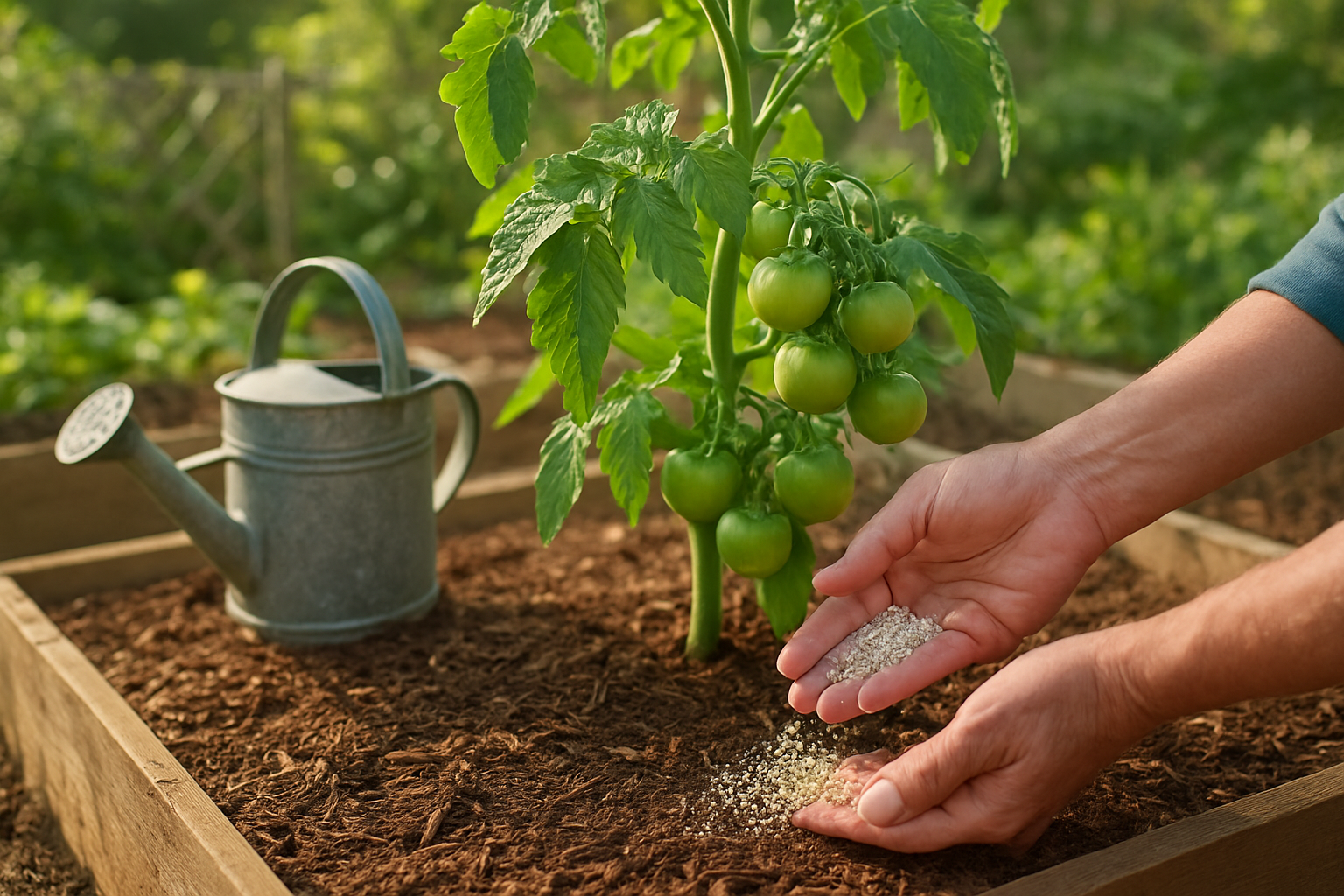
- Apply around the root zone. Spread granular fertilizer a few inches away from the stem, not right against it.
- Follow the label. More than the recommended amount will not create more tomatoes.
- Water after feeding. This helps nutrients move into the root zone.
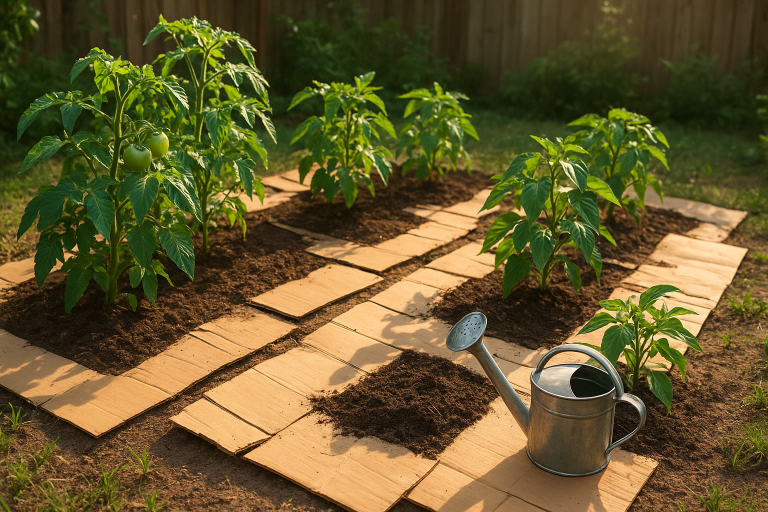
- Mulch afterward. Mulch helps retain moisture and keeps nutrients from washing away too quickly.
A simple tomato feeding schedule
If you want an easy routine, try this:
- At planting: add compost and a light dose of balanced fertilizer.
- 2 to 4 weeks later: feed again if growth is steady.
- When flowers appear: switch to regular light feedings every few weeks.
- During heavy fruiting: continue every 2 to 4 weeks, especially in containers.
- Late season: reduce feeding as production slows.
This approach keeps tomatoes nourished without encouraging excess foliage. If your plants are thriving and your soil is rich, you may need less frequent feeding. If they are in containers or sandy soil, you may need more.
Final tips for bigger, better harvests
Fertilizer helps, but it works best when paired with the basics: at least 6 to 8 hours of sun, consistent watering, mulch, sturdy support, and good airflow. Healthy tomato plants are less stressed, more productive, and easier to manage all season long.
Think of feeding tomatoes as a regular maintenance task rather than a rescue mission. When you give them steady nutrition at the right times, they reward you with stronger vines, more blossoms, and a much better chance of filling your kitchen with ripe, flavorful tomatoes.