How to Overseed a Patchy Lawn in Early Fall
If summer left your lawn thin, tired, or dotted with bare spots, early fall is one of the best times to help it recover. Learning how to overseed a patchy lawn is mostly about timing, seed-to-soil contact, and steady moisture—not fancy products.
This guide focuses on cool-season lawns such as tall fescue, Kentucky bluegrass, and perennial ryegrass, which are common across much of the northern United States and transition-zone areas. Warm-season lawns are handled differently, so check your local extension office if you have bermudagrass, zoysia, or St. Augustine.
Why Early Fall Works So Well
Fall overseeding works because the weather starts to favor grass again. Soil is still warm enough for seed germination, but air temperatures are usually cooler and less stressful than midsummer. University extension guidance commonly points to late August through September as a strong overseeding window for cool-season lawns, though the best exact timing depends on your region and first frost date. ([hort.extension.wisc.edu](https://hort.extension.wisc.edu/over-seeding-lawn-in-autumn/?utm_source=openai))
Try to seed early enough that new grass has several weeks to sprout, root, and be mowed before hard cold arrives. One University of Nebraska extension article notes that each week of delay in fall seeding can mean two to four extra weeks needed for grass to mature in fall. ([newsroom.unl.edu](https://newsroom.unl.edu/announce/lancasterextension/15891/89055?utm_source=openai))
What You’ll Need
- Grass seed suited to your lawn and sun conditions
- Lawn mower
- Leaf rake or thatch rake
- Broadcast, drop, or handheld spreader
- Compost or screened topsoil, optional but helpful for bare spots
- Sprinkler or hose-end sprayer with a gentle setting
- Starter fertilizer, if allowed and recommended by your soil test
- Flags, string, or stakes to keep foot traffic off seeded areas
Step 1: Figure Out Why the Lawn Got Patchy
Before you throw seed everywhere, take a few minutes to look at the problem. If the grass thinned because of summer heat, foot traffic, pet wear, or a one-time drought, overseeding can help. If the cause is still there—deep shade, compacted soil, grubs, poor drainage, or a sprinkler that misses the area—the new grass may fail just like the old grass did.
For shady yards, choose a seed mix labeled for shade and understand that even shade-tolerant grass needs some light. For wet areas, improve drainage before seeding. For hard, compacted soil, core aeration can help create openings where seed, water, and air can reach the root zone.
Step 2: Choose the Right Seed
Match the seed to your yard instead of buying the cheapest bag. Tall fescue is often a good choice for many home lawns because it tolerates heat and wear better than some cool-season grasses. Kentucky bluegrass can fill in well by spreading, but it usually takes longer to germinate. Perennial ryegrass germinates quickly, which can be useful in mixes, but it may not handle every climate equally well.
Look for a seed label with low weed seed content and a grass type that fits your region, sun exposure, and how your family uses the lawn. A reputable local garden center or county extension office can usually give better regional advice than a one-size-fits-all national recommendation.
Step 3: Mow Low, Then Rake Out Debris
Mow the existing lawn shorter than usual before overseeding. You do not need to scalp it down to dirt, but cutting it lower helps sunlight reach the new seedlings and keeps seed from getting trapped on top of tall blades.
After mowing, rake the thin areas firmly enough to loosen dead grass, leaves, and matted debris. The goal is simple: grass seed needs contact with soil. Seed sitting on dry thatch or old clippings is much less likely to sprout well.
Step 4: Aerate If the Soil Is Compacted
If your lawn feels hard underfoot, puddles after rain, or gets heavy traffic, core aeration is worth considering before overseeding. Core aeration removes small plugs of soil and creates channels where seed can settle. Iowa State and Wisconsin extension resources both recommend improving seed-to-soil contact for successful overseeding, and larger areas may benefit from slit seeding or similar equipment. ([yardandgarden.extension.iastate.edu](https://yardandgarden.extension.iastate.edu/how-to/overseeding-lawn?utm_source=openai))
If you rent an aerator, make several passes in different directions over the thin area. Leave the soil plugs on the lawn; they will break down naturally. For a small bare patch, you can skip the machine and simply rough up the top half-inch of soil with a rake.
Step 5: Spread the Seed Evenly
Follow the seeding rate on the bag. More seed is not always better. If you apply too much, seedlings crowd each other, compete for water, and may grow weak and disease-prone.
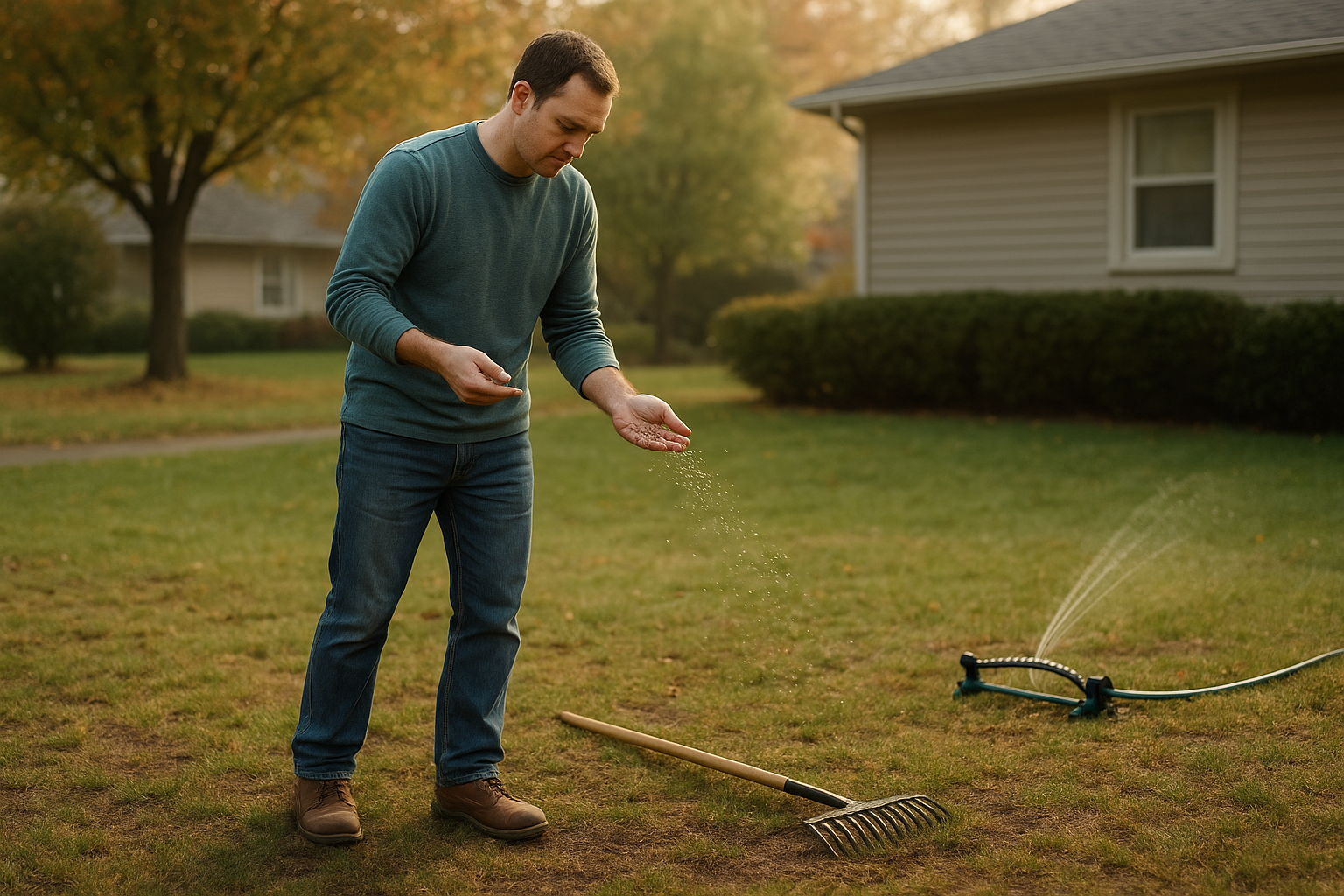
For a whole lawn, use a broadcast or drop spreader. For small patches, a handheld spreader or careful hand scattering is fine. A simple trick is to apply half the seed walking north to south, then the other half east to west. This helps prevent obvious stripes and missed spots.
Step 6: Lightly Cover Bare Soil
On bare spots, sprinkle a very thin layer of compost or screened topsoil over the seed. You should still be able to see some seed through the covering. A heavy layer can bury seed too deeply or form a crust that seedlings struggle to push through.
For thin areas where existing grass remains, you may not need topdressing at all. Just make sure the seed has worked down to the soil surface by raking lightly after spreading.
Step 7: Water Lightly and Often
Watering is where many overseeding projects succeed or fail. After seeding, water gently so the top layer of soil is moist but not puddled. Heavy droplets from a hose can wash seed into clumps, so use a soft spray or sprinkler pattern.
During germination, keep the seedbed consistently moist. Extension guidance commonly recommends frequent, light watering until the seed germinates and young grass is established; the exact number of minutes depends on sprinkler output, temperature, wind, and soil type. ([ask.extension.org](https://ask.extension.org/kb/faq.php?id=849465&utm_source=openai))
As a practical starting point, water once or twice a day in mild weather, and more often during warm, dry, or windy spells. The surface should not dry into a crust. Once the new grass is up and growing, gradually shift from frequent light watering to deeper, less frequent watering to encourage stronger roots.
Step 8: Stay Off the Seeded Area
New seedlings are delicate. Keep kids, pets, lawn games, and heavy equipment off the seeded area as much as possible until the grass has been mowed a couple of times. If the seeded spot is in a traffic path, mark it with stakes and string or place a temporary stepping path nearby.
When to Mow After Overseeding
Do not rush the first mow. Wait until the new grass is tall enough to cut cleanly and the soil is firm enough that mower wheels will not leave ruts. Some extension guidance suggests waiting roughly 7 to 14 days after overseeding before mowing, but growth rate depends on grass type and weather. ([ask.extension.org](https://ask.extension.org/kb/faq.php?id=742523&utm_source=openai))
Use a sharp mower blade, mow when the grass is dry, and remove no more than about one-third of the blade height at a time. If the mower pulls seedlings out, stop and wait a few more days.
What About Fertilizer and Weed Killer?
A soil test is the best guide for fertilizer. If you already have a recent soil test, follow those recommendations. University of Delaware extension notes that overseeding can use recommendations from a valid soil test from the last three years. ([udel.edu](https://www.udel.edu/academics/colleges/canr/news/2026/july/preparations-for-fall-turfgrass-establishment/?utm_source=openai))
Be careful with weed killers. Many pre-emergent herbicides prevent grass seed from sprouting, which is the opposite of what you want. Read the label before applying any crabgrass preventer, broadleaf weed killer, or “weed and feed” product near seeding time. When in doubt, seed first and deal with weeds later after the new grass is established.
Common Overseeding Mistakes to Avoid
- Seeding too late: New grass needs time to establish before winter.
- Skipping soil contact: Seed on thatch, leaves, or tall grass often dries out.
- Overwatering: The seedbed should be moist, not swampy.
- Using the wrong seed: Sun-loving grass will struggle in shade, and bargain seed may contain unwanted weeds.
- Mowing too soon: Tender seedlings can be pulled up by mower suction or tires.
- Applying pre-emergent herbicide: Many products stop desirable grass seed from germinating too.
A Simple Weekend Overseeding Plan
- Friday evening: Mow low and rake out loose debris.
- Saturday morning: Aerate compacted areas or rough up bare patches with a rake.
- Saturday afternoon: Spread seed at the label rate and lightly rake it in.
- Saturday evening: Add a thin compost cover to bare spots and water gently.
- Next 2 weeks: Keep the seedbed moist and limit traffic.
- After germination: Ease into deeper watering and mow only when the grass is ready.
Overseeding a patchy lawn is not instant, but it is one of the most practical fall yard jobs you can do. Give the seed good soil contact, steady moisture, and enough quiet time to grow, and those thin summer-worn spots can look much fuller by next spring.