How to Clean a Humidifier Before You Use It
If your humidifier has been sitting in a closet since last winter, do not just fill it and switch it on. A humidifier holds water in small corners, seams, caps, and trays, which makes a quick pre-season cleaning worth the few extra minutes.
This guide walks through how to clean a humidifier before you use it, plus the simple daily habits that keep it fresher through dry-air season. Always check your owner’s manual first, especially before using vinegar, bleach, or hydrogen peroxide on a model with sensors, filters, or special coatings.
Why a Humidifier Needs Cleaning Before First Use
A portable humidifier can help make dry indoor air more comfortable, but only if the machine is clean and used correctly. The EPA recommends emptying the tank, wiping surfaces dry, and refilling portable humidifiers with fresh water daily; it also recommends cleaning portable humidifiers every third day during use. ([epa.gov](https://www.epa.gov/indoor-air-quality-iaq/use-and-care-home-humidifiers?utm_source=openai))
The two main problems are mineral scale and microbial growth. Scale is the chalky white or crusty buildup left behind by minerals in water. It can clog the humidifier and, in some cool-mist models, contribute to fine “white dust” around the room. Germs and mold can also grow in standing water if the tank and base are not cleaned regularly. EPA guidance notes that cool-mist and ultrasonic humidifiers should be cleaned according to the manufacturer’s instructions and refilled with fresh water daily. ([epa.gov](https://www.epa.gov/indoor-air-quality-iaq/inside-story-guide-indoor-air-quality?utm_source=openai))
What You’ll Need
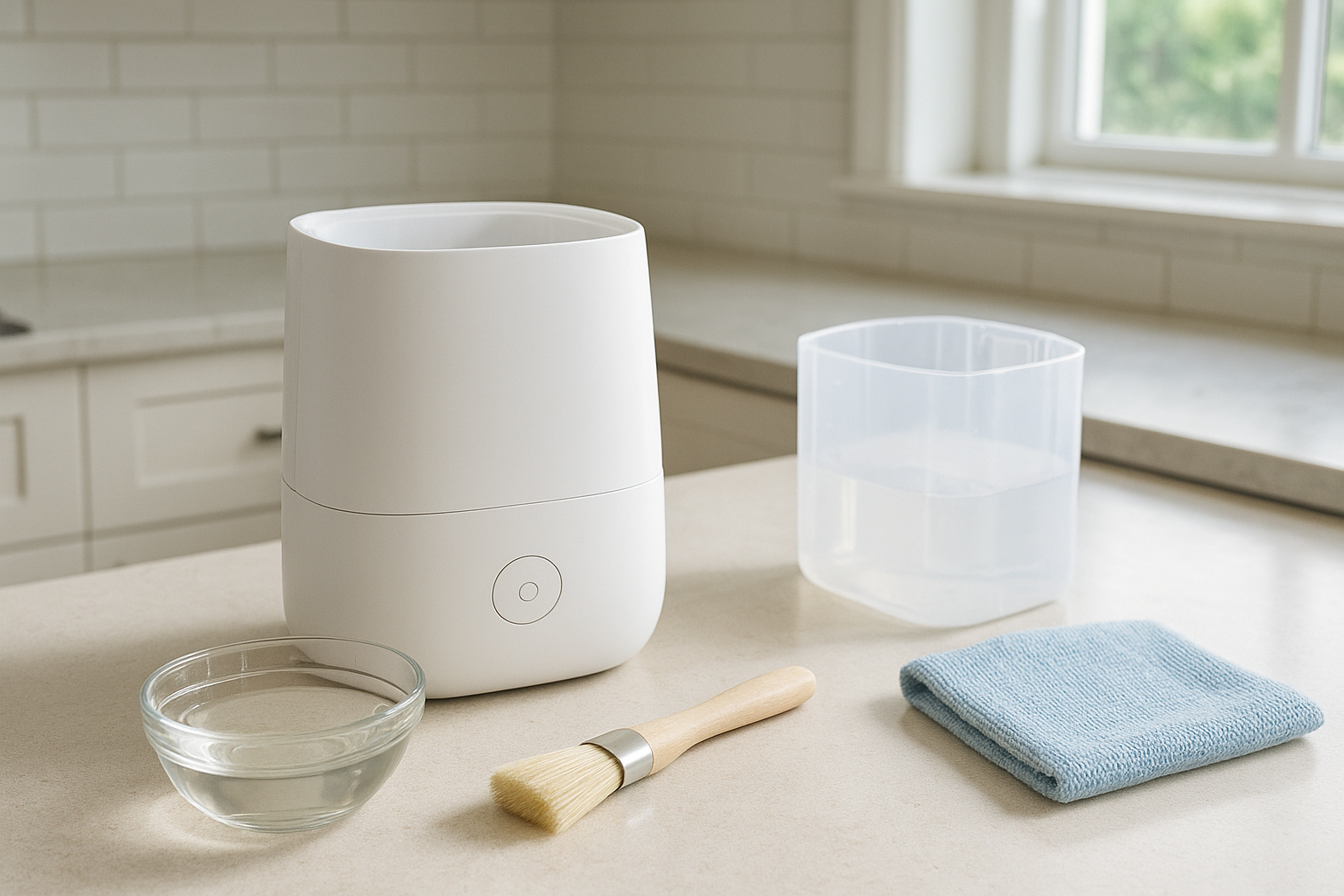
- White distilled vinegar
- Clean water, preferably distilled for refilling
- Soft bottle brush, old toothbrush, or small detail brush
- Microfiber cloths or paper towels
- 3% hydrogen peroxide or a disinfectant approved by your humidifier manual
- Rubber gloves, optional but helpful
- Cotton swabs for tight corners
Do not mix cleaners. Never combine vinegar with bleach, hydrogen peroxide, or other disinfectants. Clean, rinse, and then disinfect as separate steps if your manual allows disinfecting.
Step 1: Unplug and Take the Humidifier Apart
Turn the humidifier off and unplug it before doing anything else. Remove the tank, tank cap, mist nozzle, tray, filter, wick, float, and any other removable parts your model allows.
If your humidifier has a disposable wick or filter, check its condition before soaking anything. Many paper-like wicks are not meant to be scrubbed or disinfected. If it is stiff, discolored, musty, torn, or crusted with scale, replace it rather than trying to rescue it.
Step 2: Dump Old Water and Rinse Loose Debris
Pour out any old water from the tank and base. Rinse the tank with warm water and swish it around to loosen dust or residue. Wipe the base with a damp cloth, taking care not to splash water into the motor housing or control panel.
If you see slimy residue, pink film, black specks, or a sour smell, treat the humidifier as dirty enough to need both descaling and disinfecting. Vinegar helps dissolve mineral buildup, but it is not the same as a true disinfecting step.
Step 3: Descale the Tank and Base With Vinegar
Pour enough white vinegar into the tank to wet the areas with scale. For a lightly crusted tank, a cup or two is often enough; for a tank with scale on the bottom, use more so the buildup is covered. Replace the cap, gently swish, and let it sit for 20 to 30 minutes.
For the base, pour vinegar only into the water reservoir area, not into the fan opening, electrical parts, or control panel. Let it sit long enough to soften the chalky buildup. Use a soft brush or cotton swab to loosen scale around the float, corners, and mist outlet.
When the scale has softened, pour out the vinegar and rinse several times with clean water. If the vinegar smell remains strong, keep rinsing. Lingering vinegar odor can carry into the first mist cycle, and vinegar left on some parts may irritate sensitive noses.
Step 4: Disinfect If the Manual Allows It
After descaling and rinsing, disinfect the tank if your manufacturer’s instructions recommend it. Many household routines use either 3% hydrogen peroxide or a diluted bleach solution, but the safest choice is the one listed in your manual. The CDC notes that commercially available 3% hydrogen peroxide is an effective disinfectant on inanimate surfaces, and the CPSC has noted that humidifier maintenance should include rigorous cleaning and disinfection, especially at the end of the season. ([cdc.gov](https://www.cdc.gov/infection-control/hcp/disinfection-sterilization/chemical-disinfectants.html?utm_source=openai))
For a simple hydrogen peroxide approach, pour a small amount of 3% hydrogen peroxide into the tank, close it, swish to coat the interior, and let it stand for the time recommended on the product label or humidifier manual. Pour it out, then rinse thoroughly with clean water.
If your manual calls for bleach instead, follow the exact dilution and contact time it gives. More bleach is not better. After disinfecting, rinse until there is no cleaner smell left. Let all parts air-dry before reassembling.
Step 5: Dry Every Part Completely
Drying matters. A damp tank put back into a closed machine can quickly smell musty again. Set the tank upside down on a clean towel with the cap off. Place the base, cap, nozzle, and small parts on a towel where air can circulate.
If you are cleaning the humidifier before storing it, let it dry completely for at least several hours, and preferably overnight. Store it with the tank cap loose or off so trapped moisture does not sit inside.
Step 6: Refill With the Right Water
When you are ready to use the humidifier, fill it with fresh water. Distilled water is the best choice for many portable cool-mist, ultrasonic, and impeller humidifiers because it has lower mineral content than typical tap water. The EPA says using water with lower mineral content can reduce the release of minerals into indoor air and help reduce white dust. ([epa.gov](https://www.epa.gov/indoor-air-quality-iaq/use-and-care-home-humidifiers?utm_source=openai))
If distilled water is not practical every day, pay extra attention to scale and dust. Homes with hard water may need more frequent descaling, and ultrasonic humidifiers are especially likely to show mineral dust when filled with tap water.
A Simple Humidifier Cleaning Schedule
Daily
- Empty the tank and base.
- Wipe accessible wet surfaces dry.
- Refill with fresh water, ideally distilled.
- Do not “top off” old water with new water.
Every 3 Days During Use
- Unplug and disassemble the humidifier.
- Descale with vinegar if you see mineral buildup.
- Clean the tank, base, cap, and nozzle.
- Rinse well and dry before refilling.
Weekly or As Needed
- Disinfect if recommended by your manual.
- Inspect the wick, cartridge, or filter.
- Check nearby surfaces for dampness, condensation, or white dust.
Common Humidifier Cleaning Mistakes
Using harsh tools: Steel wool, abrasive pads, and knives can scratch plastic, which gives grime more places to cling. Use a soft brush instead.
Cleaning while plugged in: Always unplug first. Water and electrical parts do not mix.
Forgetting the cap and nozzle: The tank may look clean while the cap threads or mist outlet hold residue. Scrub these small parts gently.
Running the room too humid: More moisture is not always better. EPA guidance advises not allowing areas around humidifiers to become damp and not humidifying to relative humidity levels above 50 percent. ([livescience.com](https://www.livescience.com/best-humidifiers?utm_source=openai))
Skipping the manual: Some humidifiers have antimicrobial cartridges, electronic sensors, or filters that should not be soaked in vinegar or disinfectant. When in doubt, clean the removable tank and wipe the base carefully, but avoid saturating electrical components.
When to Replace Instead of Clean
Replace the humidifier or part if you cannot remove a musty smell, if plastic is cracked, if the cord is damaged, or if mold is growing in seams you cannot reach. Replace wicks and filters on the schedule listed by the manufacturer, and sooner if they smell, discolor, or harden.
A clean humidifier is not complicated, but it does need a routine. Start the season with a good vinegar descale, disinfect only as directed, dry the parts well, and refill with fresh water each day. Those small habits help your humidifier do its job without adding stale smells, scale, or unnecessary dust to your home.