Frozen Peas for Birds: A Simple Summer Heatwave Aid
When temperatures climb, garden birds can struggle to find enough water. A small serving of plain frozen peas for birds can offer a simple, low-cost way to add moisture to their day while they forage in your yard.
It’s not a replacement for a birdbath or fresh water, but it can be a helpful supplement during hot spells. The key is to keep it plain, easy to reach, and offered in sensible portions.
Why frozen peas can help birds in hot weather
Heatwaves put real stress on wild birds. They lose water quickly, spend energy cooling themselves, and may find fewer insects and muddy puddles than usual. That means any extra source of moisture can be useful, especially for ground-feeding birds that already spend time looking around your lawn and borders.
Frozen peas are mostly water, and once thawed they’re soft enough for many common garden birds to eat easily. They also come in small pieces, which makes them convenient for birds that prefer to peck at manageable bites rather than tackle larger foods.
One of the biggest advantages is that peas hold their shape. If you scatter a few on a tray or hard surface, they don’t disappear into dry soil the way a splash of water might. They thaw gradually, giving birds a little moisture over time instead of all at once.
How to serve peas safely
The safest option is plain frozen peas with nothing added. Avoid salted, buttered, seasoned, or microwaved peas that have been prepared for your own meal. Birds need simple, unprocessed food.
Best way to offer them
- Use a small handful at a time.
- Thaw them first or place them out frozen on a cool tray.
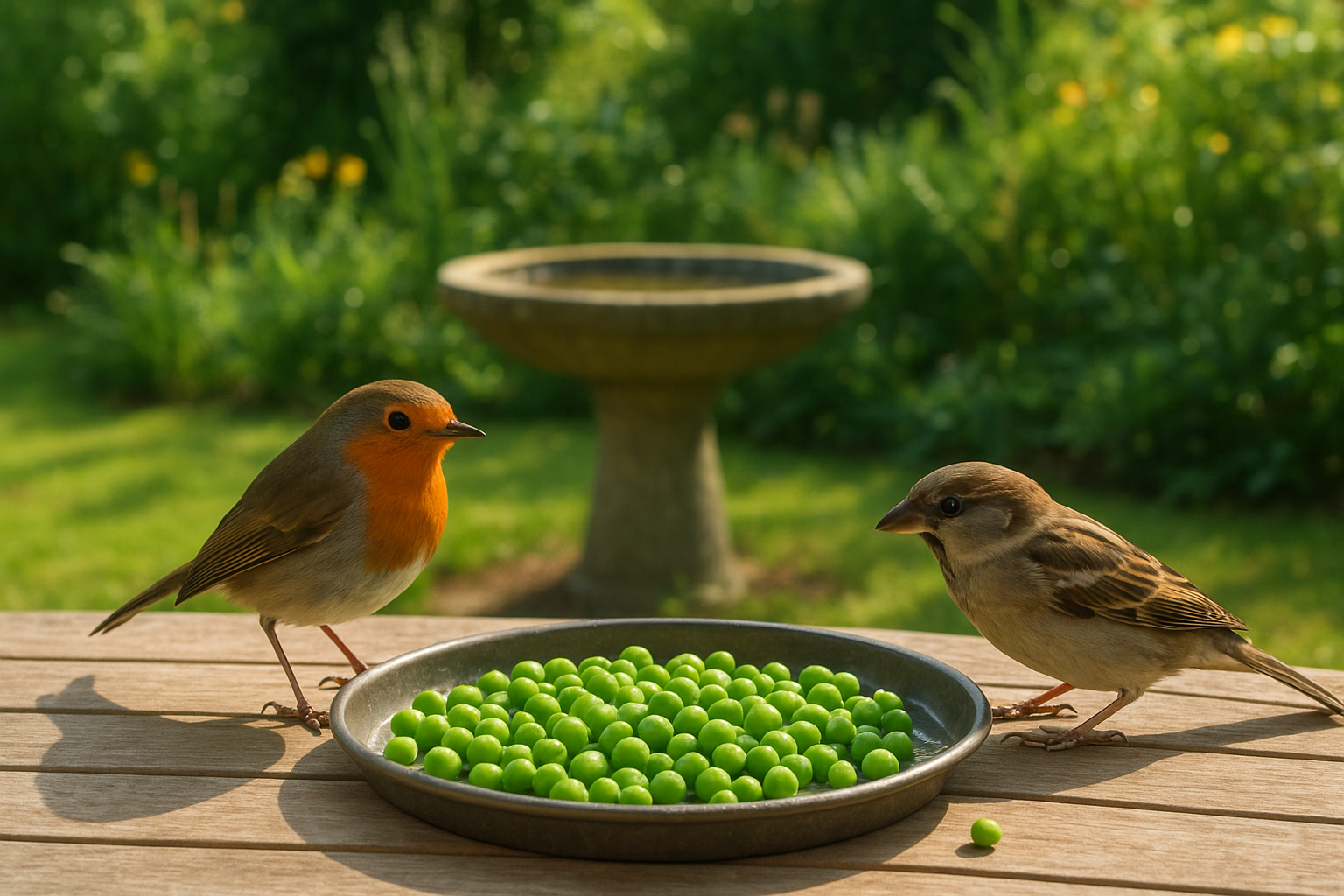
- Serve on a clean bird table, shallow dish, or feeder tray.
- Refresh leftovers daily in warm weather.
If you want to make them easier for birds to spot, spread them thinly rather than piling them up. A thin layer also helps prevent spoilage and keeps more birds from crowding one spot.
Keep them off the ground when possible
Ground feeding is natural for many species, but in very hot weather, peas can sit on warm soil and spoil faster. A raised tray or platform feeder is a better choice because it keeps food cleaner and more visible. It also reduces the chance of ants getting to it first.
If you only have a patio or balcony, that works too. A shallow dish placed in a shaded area can be enough to attract birds passing through the garden.
Which birds are most likely to eat them?
Many common backyard birds will take interest in peas, especially those that feed on the ground or from platform feeders. Depending on where you live, you may see robins, blackbirds, starlings, sparrows, thrushes, tits, or other familiar garden visitors.
Some birds may take to them immediately, while others need time to get curious. If they haven’t seen peas before, it can help to place them near a feeder they already use or alongside other bird-safe foods they recognize.
What not to offer in a heatwave
Not every vegetable or leftover kitchen scrap is bird-friendly. In hot weather, digestion can become even more demanding, so the goal is to provide food that is easy to eat and easy to process.
- Do not add salt, oil, butter, or seasoning.
- Avoid large chunks of hard vegetables that could be difficult to swallow.
- Skip moldy or spoiled food entirely.
- Don’t leave food out too long in direct sun.
It’s also a good idea not to overwhelm birds with too much food. A small offering is better than a large one that sits until it becomes warm and unappealing.
Pair peas with fresh water
If you really want to help birds during hot weather, pair your pea offering with a reliable source of clean water. A shallow birdbath, dish, or saucer can make a big difference. Birds need water not only for drinking but also for cooling and preening.
Change the water frequently, especially in extreme heat. Stagnant water can quickly become dirty, warm, and less attractive to birds. A quick rinse and refill each day is usually enough, and in severe heat you may want to check it more often.
Extra birdbath tips for summer
- Choose a shallow basin so small birds can stand safely.
- Place it in partial shade if possible.
- Keep it away from dense cover where predators can hide.
- Add a few stones or pebbles to create safe footing if the bowl is deep.
How often should you offer peas?
Think of peas as an occasional warm-weather boost rather than a permanent feeder item. In a heatwave, you can offer a small amount once a day and see whether birds are interested. If the peas are left untouched, reduce the amount until you find a portion size that disappears quickly.
Because weather changes fast, it’s smart to adjust your routine. On cooler days, birds may need less supplemental moisture and may rely more on natural foods. On the hottest days, a simple tray of peas can be a welcome option alongside water.
A simple summer bird-care routine
If you enjoy supporting wildlife in your garden, a consistent routine can make things easier. Here’s a straightforward approach:
- Refill your birdbath early in the morning.
- Set out a small handful of plain peas in a shaded feeding spot.
- Check the tray later in the day and remove anything uneaten.
- Wash feeding dishes regularly to keep them hygienic.
This takes only a few minutes, but it can help birds stay more comfortable when the weather is punishing.
When peas are a good idea — and when they aren’t
Plain peas are best in warm, dry weather when birds may need extra moisture and a soft, easy food source. They are especially useful if you already see birds searching the lawn or bird table during the afternoon heat.
They are less useful if they’re left out too long, mixed with rich human foods, or offered as a substitute for water. Like any bird food, they work best as part of a thoughtful setup that includes shade, clean water, and regular cleaning.
Used wisely, frozen peas for birds are a simple, affordable way to lend a hand during summer’s toughest days. A small bowl of plain peas may not seem like much, but for a thirsty bird on a scorching afternoon, it can make all the difference.