How to Remove Hard Water Stains from Shower Glass
If your shower glass looks cloudy no matter how often you clean it, you are probably dealing with hard water stains. These pale spots and streaks are left behind when water dries and minerals cling to the glass, so regular glass cleaner often is not enough.
The good news: you usually do not need harsh cleaners or a full afternoon of scrubbing. Start with vinegar, give it enough contact time, use a non-scratch pad, and then build one tiny drying habit into your shower routine.
What You’ll Need
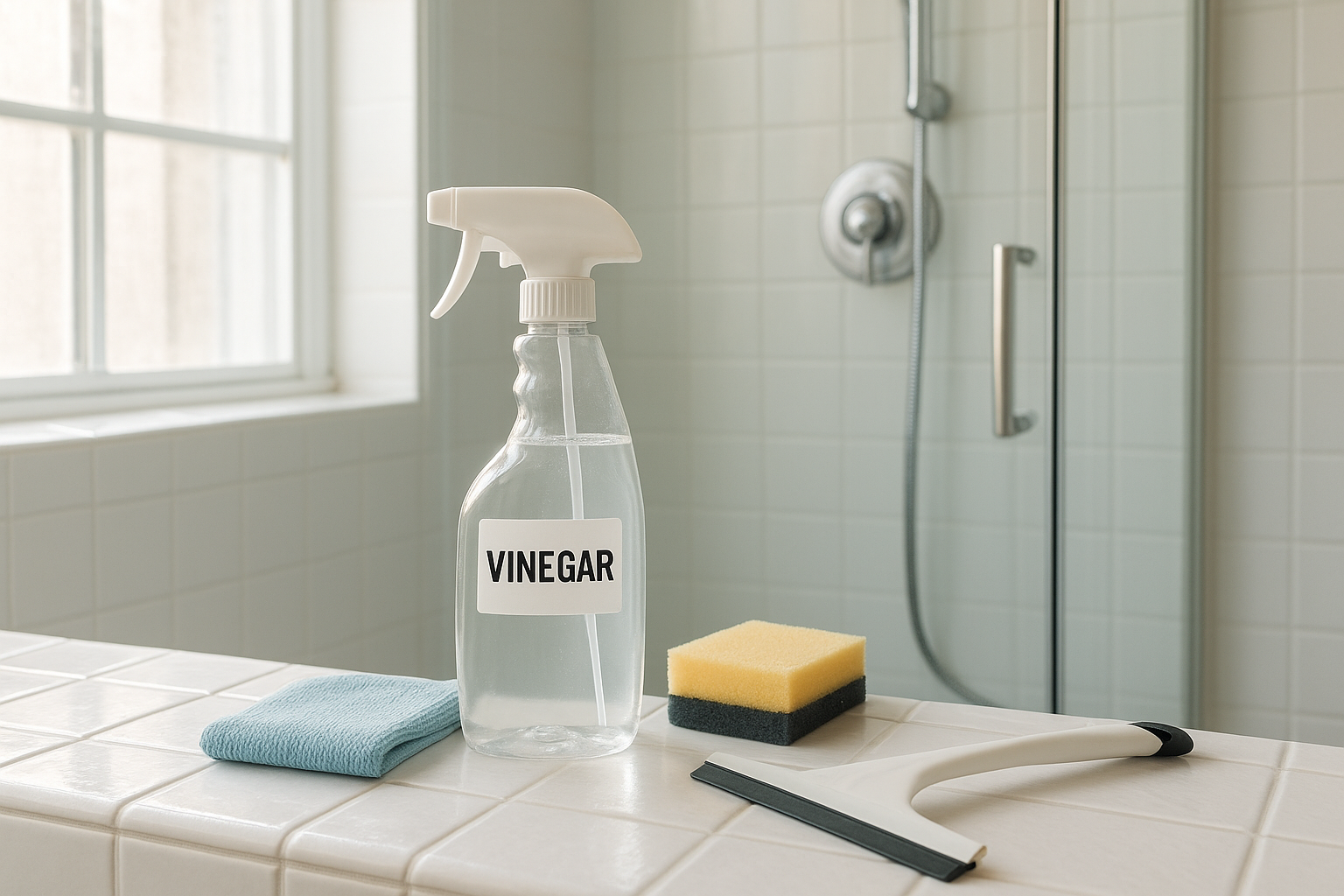
- Distilled white vinegar
- Warm water
- Spray bottle
- Grease-cutting dish soap, optional
- Non-scratch sponge or scrub pad
- Microfiber cloths
- Plastic scraper or old credit card, optional
- Squeegee
- Rubber gloves
Vinegar is commonly recommended for shower glass because its mild acidity helps loosen mineral deposits and soap scum. Several cleaning guides suggest a half vinegar, half water solution for glass shower doors, with extra soak time for stubborn buildup. ([homedepot.com](https://www.homedepot.com/c/ah/how-to-clean-glass-shower-doors/9ba683603be9fa5395fab90133d48922?utm_source=openai))
Before You Start: Check the Shower Door
Look closely at the glass and hardware before spraying anything. If your shower door has a special water-repellent or “easy clean” coating, use the mildest method first and avoid abrasive powders, steel wool, razor blades, and harsh chemicals. Some shower glass care instructions recommend regular drying and mild detergent or vinegar solutions, but warn that the coating should be treated gently. ([images.thdstatic.com](https://images.thdstatic.com/catalog/pdfImages/ba/bae80f10-cb54-4be6-b85b-1ebaedb932be.pdf?utm_source=openai))
Also check nearby stone surfaces. Vinegar can damage natural stone such as marble, limestone, and travertine. If your shower has stone tile, protect it with towels and spray the cloth instead of spraying vinegar freely across the shower.
Step-by-Step: How to Remove Hard Water Stains from Shower Glass
1. Rinse and wipe away loose grime
Start with a quick rinse of warm water, then wipe the glass with a damp microfiber cloth. This removes hair, dust, and loose soap residue so your cleaner can work directly on the mineral film.
2. Mix a basic vinegar spray
In a spray bottle, combine equal parts distilled white vinegar and warm water. For a standard shower door, 1 cup vinegar and 1 cup warm water is plenty. Put on gloves, turn on the bathroom fan, and open a window if you have one.
Important safety note: never mix vinegar with bleach or bleach-based bathroom cleaners. The EPA warns against mixing bleach with other chemicals, including vinegar and ammonia, because the combination can create toxic fumes. ([epa.gov](https://www.epa.gov/sites/production/files/2020-11/documents/leonard_r9asktheexperts_508c_english.pdf?utm_source=openai))
3. Spray and let it sit
Spray the vinegar solution generously over the cloudy areas. Let it sit for 10 to 15 minutes for light spotting. For heavier white film, give it 20 to 30 minutes, keeping the glass damp by misting again if it starts to dry. The dwell time matters; if you spray and immediately wipe, the vinegar has little chance to loosen the mineral layer.
4. Scrub with a non-scratch pad
Use a non-scratch sponge or scrub pad and work in small circles. Do not press so hard that the pad drags. You want steady, even scrubbing, especially along the lower half of the door where minerals and soap scum collect.
If the glass still feels rough, spray again and repeat. For thick buildup near the bottom edge, a plastic scraper or old credit card can help lift softened residue without the risk of scratching that comes with metal tools.
5. Rinse very well
Rinse the glass with warm water until it no longer feels slippery. This step is easy to rush, but leftover vinegar and loosened minerals can dry into new streaks.
6. Dry and buff
Use a clean microfiber cloth to dry the glass completely. Then buff with a second dry cloth. If you see a few remaining dots, they may be spots you missed, or they may be older marks that have begun to etch the glass. Regular cleaning can improve the look, but true etching is damage to the surface, not dirt sitting on top.
For Stubborn Shower Glass: Try the Dish Soap Boost
If vinegar alone improves the glass but does not fully clear it, add dish soap. Mix 1 cup warm vinegar solution with 1 teaspoon grease-cutting dish soap in a spray bottle. Spray the glass, let it sit for up to 30 minutes, scrub with a non-scratch pad, rinse thoroughly, and dry.
This works well when hard water stains are mixed with body oils and soap scum. Some cleaning experts recommend combining vinegar with dish soap for more severe shower door buildup because the soap helps cut through greasy residue while the vinegar tackles mineral deposits. ([thisoldhouse.com](https://www.thisoldhouse.com/cleaning/how-to-clean-shower-doors?utm_source=openai))
What Not to Use on Shower Glass
- Steel wool or abrasive scouring pads: they can scratch glass and metal trim.
- Razor blades on coated glass: they may damage protective coatings.
- Toilet bowl cleaner: it is too harsh for shower doors and can damage finishes.
- Bleach mixed with vinegar: this is unsafe and should be avoided completely.
- Dry abrasive powders: they can leave fine scratches that make future buildup cling faster.
How to Keep Hard Water Stains from Coming Back
The easiest prevention is also the least glamorous: dry the glass after each shower. A 30-second squeegee habit removes the water before minerals can dry onto the door. Home improvement cleaning guides also recommend drying shower door tracks, since standing water there contributes to buildup and mildew. ([homedepot.com](https://www.homedepot.com/c/ah/how-to-clean-glass-shower-doors/9ba683603be9fa5395fab90133d48922?utm_source=openai))
- Keep a squeegee in the shower and use it from top to bottom after the last shower of the day.
- Leave the door open so the shower dries faster.
- Wipe the bottom rail or track with a cloth a few times a week.
- Use a vinegar maintenance spray every few weeks if your bathroom has hard water.
- Switch to liquid body wash if bar soap leaves heavy scum on your glass.
When Vinegar Is Not Enough
If the glass has years of buildup, you may need two or three cleaning rounds. If it still looks cloudy after repeated cleaning, the surface may be etched from long-term mineral deposits. At that point, a commercial hard water stain remover made for shower glass may help, but read the label carefully and test in a small corner first.
For homes with very hard water, a water softener can reduce future mineral spots throughout the bathroom. That is a bigger investment, but it may be worth considering if you are also fighting scale on faucets, showerheads, dishes, and appliances.
The Simple Routine That Works
For most homes, the best routine is simple: deep clean the shower glass with a vinegar solution, rinse and dry it well, then squeegee after showers. Repeat the vinegar cleaning every few weeks or whenever the glass starts to look hazy again.
Hard water stains are much easier to manage when they are fresh. Once you get the glass clear, the daily squeegee is the small habit that keeps the job from turning into a major scrub session later.