How to Clean a Dehumidifier So It Stops Smelling
A dehumidifier does hard, quiet work in basements, laundry rooms, bathrooms, and other damp spots. But if the bucket gets slimy, the filter clogs, or the drain hose grows gunk inside, the machine can start smelling musty instead of helping your home feel fresher.
Here is how to clean a dehumidifier safely, including the bucket, filter, coils, intake grille, and drain hose. The whole job usually takes 20 to 30 minutes, plus drying time.
Why Cleaning a Dehumidifier Matters
A dehumidifier pulls moisture from the air and collects it as water, which means the inside of the machine is often damp. That makes routine cleaning important, especially in warm weather or in a basement where the unit runs daily.
The EPA’s mold guidance says moisture control is the key to mold prevention, and it recommends keeping indoor relative humidity below 60%, ideally between 30% and 50% when possible. The CDC gives similar practical advice: keep home humidity as low as you can, no higher than 50% all day long, and fix the moisture source if mold is present. ([epa.gov](https://www.epa.gov/mold/mold-course-chapter-9?utm_source=openai))
Cleaning the dehumidifier does two things: it helps the appliance work more efficiently, and it keeps the parts that touch water from becoming a source of odor.
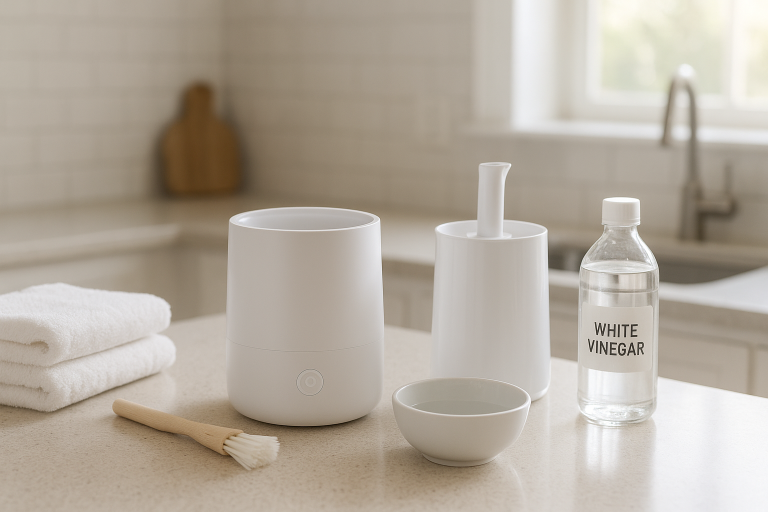
What You’ll Need
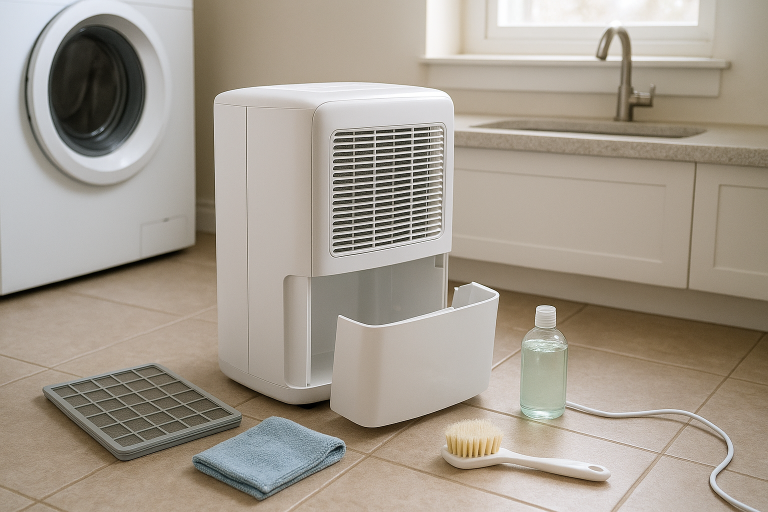
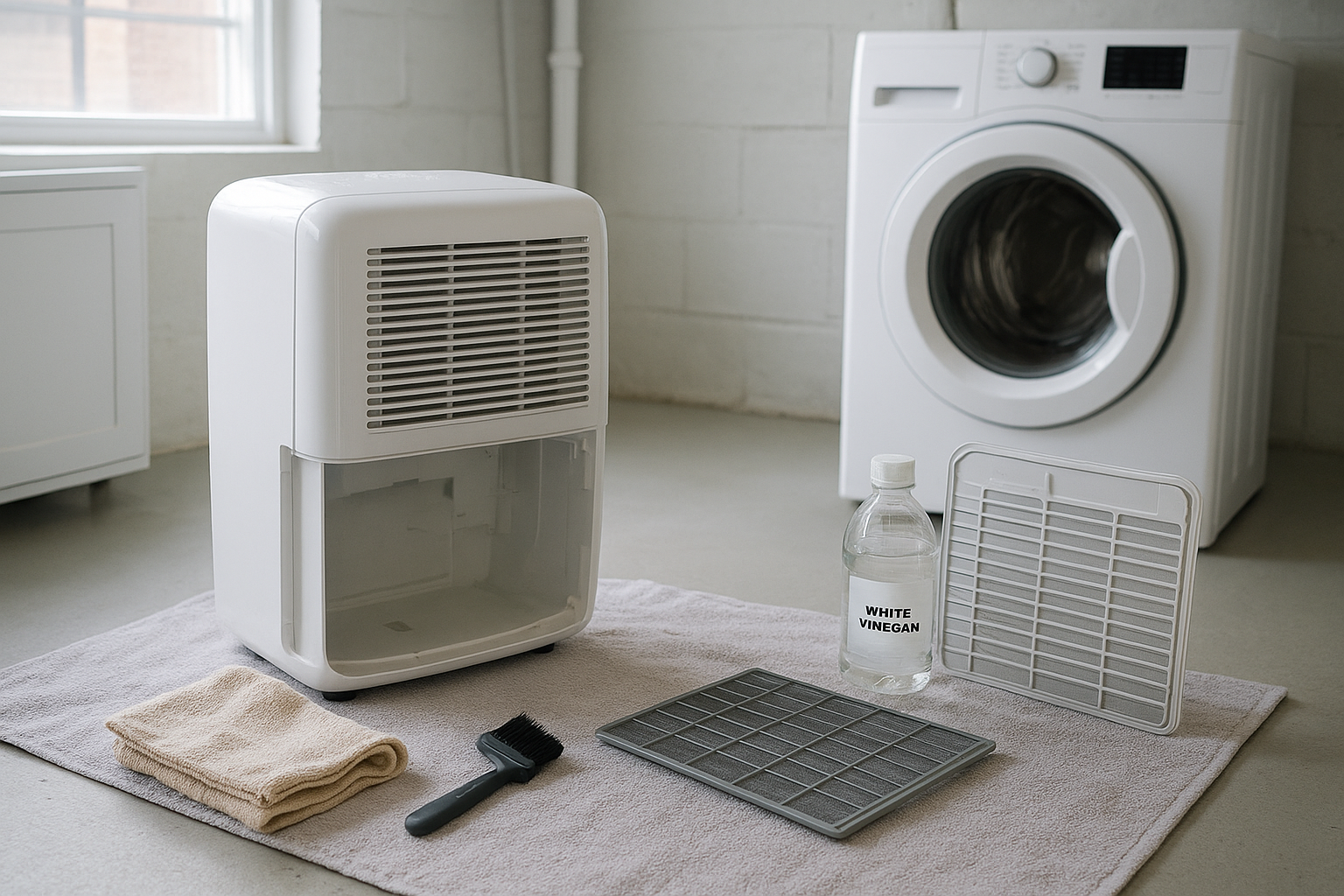
- Warm water
- Mild dish soap
- White vinegar
- Soft cloths or microfiber towels
- Small soft brush or old toothbrush
- Vacuum with brush attachment
- Pipe cleaner or flexible bottle brush for the drain port or hose
- Clean towel for drying parts
Skip harsh cleaners unless your owner’s manual specifically allows them. Bleach, abrasive powders, and strong solvents can damage plastic parts, leave fumes, or create unsafe residue inside the machine.
Step 1: Turn It Off and Unplug It
Always turn the dehumidifier off, unplug it, and move it away from the wall before cleaning. If it has been running, give it a few minutes to stop dripping internally before you remove the bucket.
Set the machine on a towel if you are cleaning it indoors. A little water may drip from the bucket area or drain port.
Step 2: Empty and Wash the Water Bucket
The bucket is usually the smelliest part of a neglected dehumidifier. Empty it completely, then wash it with warm water and a few drops of dish soap.
- Remove the bucket and dump the water.
- Add warm soapy water and wipe all interior surfaces.
- Use a soft brush to scrub corners, seams, and the float mechanism gently.
- Rinse well.
- To help with odor, wipe the inside with a mix of equal parts white vinegar and water.
- Rinse again if the vinegar smell bothers you, then dry fully.
Do not force the float up or down. That small moving piece tells the machine when the bucket is full, and if it sticks or breaks, the dehumidifier may shut off too soon or overflow.
Step 3: Clean the Filter
Most home dehumidifiers have a removable air filter behind the front or back grille. A dirty filter restricts airflow, which can make the machine run longer and collect less water.
ENERGY STAR notes that efficient dehumidifiers use coils, compressors, and fans to remove moisture, and good airflow helps that system do its job. ENERGY STAR-certified dehumidifiers are designed to use about 20% less energy than conventional models while removing the same amount of moisture. ([energystar.gov](https://www.energystar.gov/products/dehumidifiers?utm_source=openai))
- Slide or pop out the filter according to your manual.
- Vacuum loose dust with a brush attachment.
- If the filter is washable, rinse it under lukewarm water.
- For greasy or stubborn dust, use a tiny amount of mild dish soap.
- Rinse thoroughly and let it air-dry completely before reinstalling.
Important: Never put a damp filter back into the machine. That just adds moisture where you do not want it.
Step 4: Vacuum the Grilles and Exterior
Dust on the intake and exhaust grilles makes the dehumidifier work harder. Use a vacuum brush attachment to remove lint, pet hair, and dust from the outside vents.
Then wipe the exterior with a damp cloth. Pay attention to the handle area, control panel edges, and the rim where the bucket slides in. Dry with a clean towel.
Step 5: Check the Coils Without Soaking Them
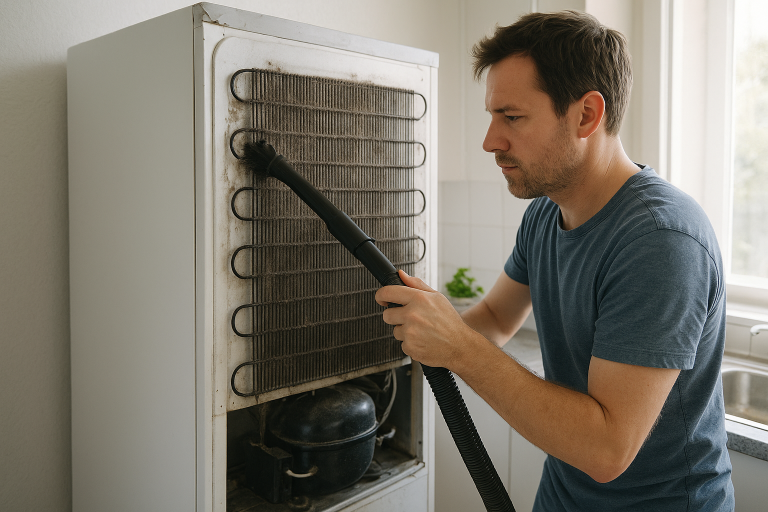
Behind the filter, you may see metal coils or fins. These can collect dust, but they are delicate. If your manual allows access, use a vacuum brush gently or a soft paintbrush to loosen dust. Do not bend the fins, spray the coils with water, or pour cleaner into the machine.
If the coils are icy, very dirty, or the unit runs but collects little water, stop and check the manual’s troubleshooting section. Ice on the coils can happen when the room is too cool for the model, airflow is poor, or the appliance needs service.
Step 6: Clean the Drain Hose and Drain Port
If you use continuous drainage, the hose can develop slime inside, especially in summer. ENERGY STAR recommends placing a dehumidifier close enough to a floor drain or sump so you do not need a long, unwieldy hose. A shorter, steady downhill run is easier to keep clear. ([energystar.gov](https://www.energystar.gov/products/dehumidifiers?utm_source=openai))
- Unplug the dehumidifier and disconnect the hose.
- Take the hose to a sink, utility tub, or outside spigot.
- Flush it with warm water.
- If it smells musty, fill it with a 1:1 mix of white vinegar and water and let it sit for 10 to 15 minutes.
- Run clean water through until it flows freely.
- Use a flexible bottle brush if buildup remains.
- Let the hose drain and dry before reconnecting.
Also check the drain port on the machine. A cotton swab, pipe cleaner, or small flexible brush can remove lint or mineral buildup near the opening. Be gentle, and do not push debris deeper into the unit.
Step 7: Let Everything Dry Before Reassembly
Set the bucket, filter, and hose on a towel and let them dry completely. Reassemble the unit only when the parts are dry to the touch.
Once everything is back in place, plug in the dehumidifier and run it. Make sure the bucket seats correctly, the filter is locked in, and the drain hose does not leak.
How Often Should You Clean a Dehumidifier?
Use this simple schedule for a dehumidifier that runs often:
- Every use or every few days: Empty the bucket if you are not using a drain hose.
- Weekly: Rinse or wipe the bucket if the unit runs daily.
- Every 2 to 4 weeks: Clean the filter, or sooner if you have pets, dust, or heavy pollen.
- Monthly: Wipe the exterior, vacuum grilles, and check the drain port.
- Every 1 to 3 months: Flush the drain hose if using continuous drainage.
- Before storage: Clean all parts and let them dry fully for at least 24 hours.
If the room smells musty even after cleaning, the dehumidifier may not be the whole problem. Look for wet cardboard, damp rugs, leaking pipes, condensation on walls, or water seeping through a foundation. The EPA emphasizes that mold prevention depends on fixing moisture problems, not just cleaning visible growth. ([epa.gov](https://www.epa.gov/mold/brief-guide-mold-moisture-and-your-home?utm_source=openai))
What Humidity Setting Should You Use?
For most homes, setting the dehumidifier around 45% to 50% is a practical target. That is low enough to help discourage musty odors, but not so low that the machine runs nonstop in many climates.
If your basement still feels damp at 50%, try 45% for a few days. If the unit runs constantly and the room feels comfortable, raise it slightly. A small standalone hygrometer can help you check whether the dehumidifier’s built-in reading is accurate.
Common Mistakes to Avoid
- Ignoring the bucket: Even clear-looking water can leave residue and odor behind.
- Running with a dirty filter: Poor airflow makes the unit less effective.
- Using a long, sagging drain hose: Low spots can hold water and grow slime.
- Putting it tight against a wall: Leave space around the intake and exhaust vents.
- Storing it wet: A damp bucket or hose can smell terrible by next season.
When to Replace Instead of Clean
Cleaning can fix most odors, but not every problem. Consider replacing the unit if it leaks from the cabinet, trips outlets, has a burnt smell, freezes repeatedly in a warm room, or runs for hours without collecting water after you have cleaned the filter and checked the settings.
For normal mustiness, though, a careful cleaning is usually enough. Keep the bucket washed, the filter clear, the hose flushed, and the room’s humidity in a healthy range, and your dehumidifier will do a much better job keeping damp spaces comfortable.