How to Clean a Range Hood Filter the Easy Way
If your kitchen still smells like last night’s stir-fry after the dishes are done, the range hood filter may be the reason. A greasy filter traps cooking oil, dust, and food residue until the fan can’t move air as well as it should.
The good news: learning how to clean a range hood filter is simple, cheap, and usually takes less than an hour of mostly hands-off soaking. Here’s the no-fuss method for washable metal filters, plus what to do if yours is charcoal instead.
First, Know What Kind of Filter You Have
Most range hoods and over-the-range microwaves use one of two filter types:
- Washable metal grease filters: Usually aluminum mesh, stainless mesh, or baffle-style filters. These are meant to be removed, washed, dried, and reused.
- Charcoal or carbon filters: These are used in many ductless or recirculating hoods to help reduce odors. They are not washable and should be replaced on the schedule in your manual.
Major appliance guidance generally treats metal grease filters as washable, often by hand or in the dishwasher, while charcoal filters are replaced rather than washed. Bosch, for example, says metal ventilation filters can be washed in the dishwasher, but charcoal/carbon filters should be replaced every 3 to 4 months depending on use. ([bosch-home.com](https://www.bosch-home.com/us/owner-support/get-support/support-selfhelp-clean-ventilation?utm_source=openai))
How Often Should You Clean a Range Hood Filter?
For everyday home cooking, a good rule is to clean washable metal filters about once a month. Broan-NuTone recommends washing aluminum mesh grease filters in the dishwasher approximately monthly, depending on use, and Wolf also advises monthly cleaning for aluminum mesh filters. ([help.broan-nutone.com](https://help.broan-nutone.com/en/range-hoods/How-often-should-I-clean-my-filters-79f5?utm_source=openai))
If you fry often, cook with a wok, sear meat, or have a smaller kitchen where grease builds quickly, check the filter every 2 to 4 weeks. Some range hood manufacturers recommend cleaning baffle or aluminum mesh filters every 2 to 4 weeks in heavier-use kitchens. ([help.victoryrangehoods.com](https://help.victoryrangehoods.com/hc/en-us/articles/38524087019795-Maintenance-Cleaning-FAQ?utm_source=openai))
What You’ll Need
- Dishwashing gloves
- Sink, dish tub, or rimmed baking sheet large enough for the filter
- Very hot water
- Degreasing dish soap
- Baking soda
- Soft scrub brush or old toothbrush
- Microfiber cloth or old towel
- Optional: dishwasher, if your manual allows it
A quick safety note: metal filters can have sharp edges, especially older mesh filters. Turn the fan and cooktop lights off, let the stove area cool, and handle the filter by its frame.
Step-by-Step: How to Clean a Range Hood Filter by Hand
1. Remove the filter
Most filters slide, tilt, or pop out with a small latch. If it doesn’t move easily, don’t force it. Look for arrows, tabs, or a release clip. For over-the-range microwaves, the filters are often on the underside of the unit.
2. Knock off loose crumbs and dust
Hold the filter over the trash and gently tap it. If the outside is sticky, wipe it with a paper towel first so you don’t smear grease all over the sink.
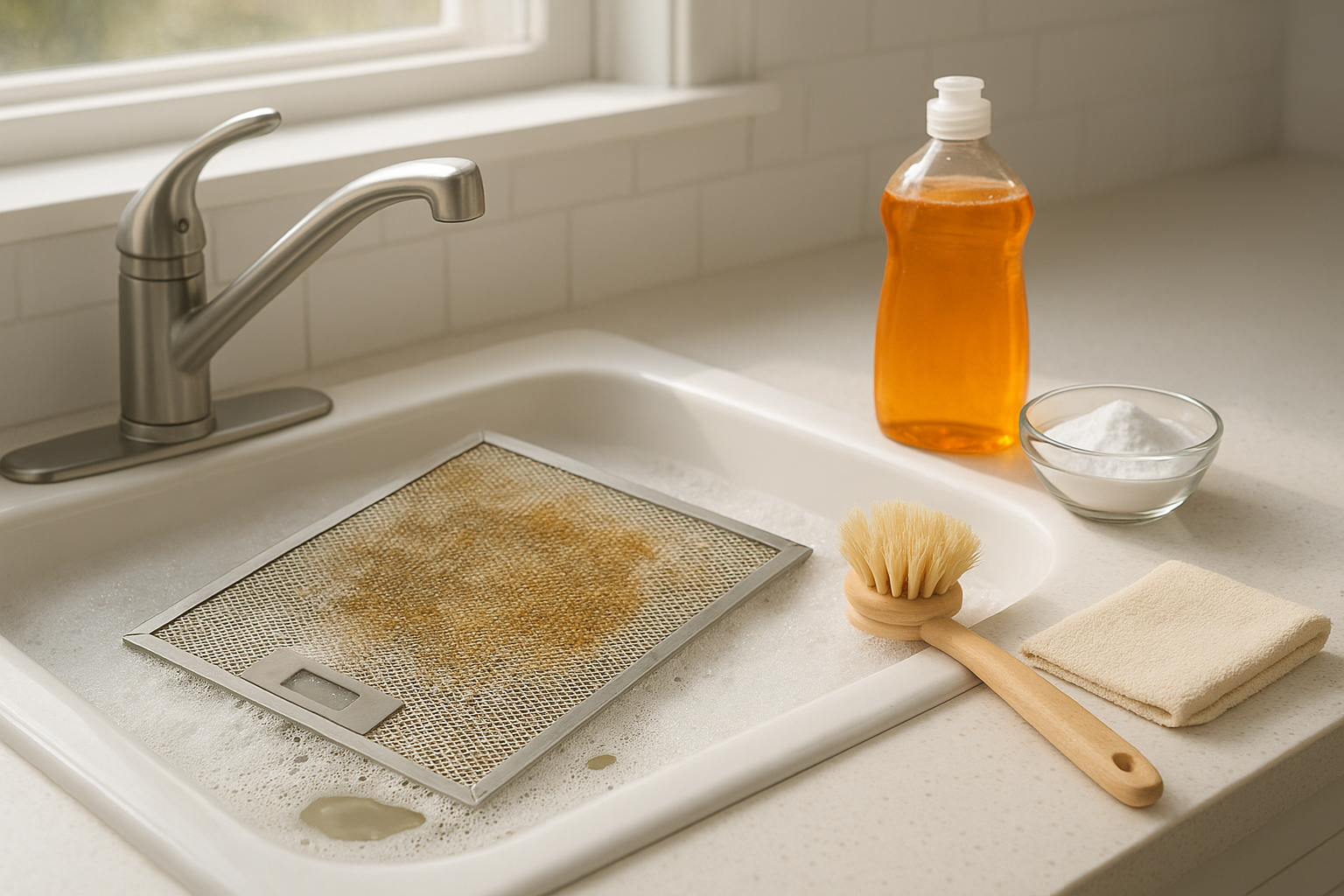
3. Fill the sink with hot, soapy water
Use the hottest water your sink can safely handle. Add a generous squirt of degreasing dish soap and about 1/4 cup baking soda. Stir with a spoon or gloved hand until the water looks cloudy and slippery.
Dish soap helps break up cooking grease, while baking soda adds mild scrubbing power and helps loosen stuck-on residue. This simple combination is especially useful for mesh filters because grease hides deep in the layers.
4. Soak for 15 to 30 minutes
Submerge the filter fully. If one end sticks out of the water, soak one side first, then flip it. A lightly greasy filter may only need 15 minutes. A neglected one may need a full 30 minutes or a second soak in fresh hot water.
5. Scrub gently
Use a soft brush and scrub with the grain or pattern of the filter. Pay attention to the corners and frame, where grease collects. For mesh filters, brush both sides. For baffle filters, work along the channels and edges.
Avoid steel wool or aggressive scraping, especially on aluminum filters. You want to remove grease, not bend the filter or rough up the metal.
6. Rinse very well
Rinse under hot running water until the water runs clear and the filter no longer feels slick. Soap left in the filter can drip later or leave a film when the fan runs.
7. Dry completely before reinstalling
Shake off extra water, then stand the filter on a towel to air-dry. Do not put a wet filter back into the hood. Moisture can drip onto the stove, light cover, or fan area.
Can You Put a Range Hood Filter in the Dishwasher?
Sometimes, yes. Many metal grease filters are dishwasher-safe, but it depends on the filter material and your manufacturer’s instructions. GE says dishwasher cleaning is acceptable for metal grease filters, though it may discolor the filter. Bosch gives similar guidance for metal ventilation filters. ([products.geappliances.com](https://products.geappliances.com/appliance/gea-support-search-content?contentId=16685&utm_source=openai))
If you use the dishwasher, place the filter loosely so water can pass through it. Wash it by itself or with other non-food, greasy kitchen items, not with your regular dishes. Be aware that aluminum filters can darken or discolor in the dishwasher, especially with certain detergents or water conditions. Broan-NuTone notes that discoloration does not affect filter performance. ([help.broan-nutone.com](https://help.broan-nutone.com/en/range-hoods/How-often-should-I-clean-my-filters-79f5?utm_source=openai))
When in doubt, hand-wash. It takes a little more effort, but it’s gentler and lets you see whether the grease is actually coming out.
Clean the Hood While the Filter Is Out
With the filter removed, take five extra minutes to clean the surrounding hood. This keeps fresh grease from dripping right back onto your clean filter.
- Spray a cloth with a mild degreaser or use warm, soapy water.
- Wipe the underside of the hood, staying clear of electrical parts.
- Clean around the filter slot and the lip where grease collects.
- For stainless steel, wipe in the direction of the grain, which Bosch also recommends for hood cleaning. ([bosch-home.com](https://www.bosch-home.com/us/owner-support/get-support/support-selfhelp-clean-ventilation?utm_source=openai))
- Wipe again with a clean damp cloth, then dry.
Do not spray cleaner directly up into the fan motor, controls, or light sockets. Put the cleaner on the cloth first.
When to Replace Instead of Clean
Replace a washable metal filter if it is torn, crushed, rusted through, separating at the frame, or still clogged after repeated soaking. A filter needs open pathways for air to move; if the mesh is packed solid with old grease, cleaning may not restore it.
Replace charcoal filters on schedule, not when they look dirty. Since they are designed to absorb odors rather than catch visible grease, they can stop working before they look dramatic. Check your hood or microwave model number before ordering, because sizes and clips vary.
Simple Habits That Keep the Filter Cleaner Longer
- Run the fan while cooking, especially when frying, searing, or boiling strongly flavored foods.
- Start the fan early instead of waiting until the kitchen is smoky.
- Wipe the hood exterior weekly with warm, soapy water before grease hardens.
- Use back burners when practical if your hood captures steam and grease better there.
- Add a monthly reminder to clean the filter when you clean the dishwasher filter or wipe cabinet fronts.
Quick Troubleshooting
The filter is still sticky after soaking
Drain the dirty water and soak it again in fresh hot water, dish soap, and baking soda. Old grease often needs two rounds.
The filter turned darker in the dishwasher
This is common with some aluminum filters. If the filter is clean and intact, discoloration usually does not mean it is ruined. Several manufacturers note that dishwasher cleaning may discolor metal filters. ([help.broan-nutone.com](https://help.broan-nutone.com/en/range-hoods/How-often-should-I-clean-my-filters-79f5?utm_source=openai))
The kitchen still smells greasy
Clean the underside of the hood, check for a charcoal filter if your hood is ductless, and make sure the fan is actually pulling air. If suction seems weak after a clean filter is reinstalled, the duct or fan may need attention.
The Bottom Line
A clean range hood filter helps your kitchen smell fresher, keeps greasy buildup under control, and lets the fan do its job. For most homes, a monthly soak in hot water, degreasing dish soap, and baking soda is enough to keep a washable metal filter in good shape.
If you cook a lot of high-heat or oily meals, clean it more often. It’s one of those small kitchen chores that pays you back right away the next time you turn on the fan.