How to Clean a Garbage Disposal That Smells Bad
A smelly garbage disposal usually is not broken. Most of the time, the odor comes from food residue stuck under the rubber splash guard, inside the grind chamber, or in the drain line just past the disposal.
The good news: you can clean it with ordinary kitchen supplies and a few safe habits. Here is how to clean a garbage disposal that smells bad without reaching for harsh drain chemicals first.
Before You Start: Safety First
Garbage disposals are convenient, but they deserve respect. Before you clean near the opening, turn the disposal off. If you will be scrubbing the rubber splash guard by hand, unplug the disposal under the sink if you can, or switch off the breaker that powers it.
Never put your hand down into the disposal chamber. If something is lodged inside, use tongs or pliers after the power is off. Also avoid mixing random cleaners. Bleach, ammonia, drain openers, and vinegar can create unsafe fumes or damage finishes when used carelessly.
What You’ll Need
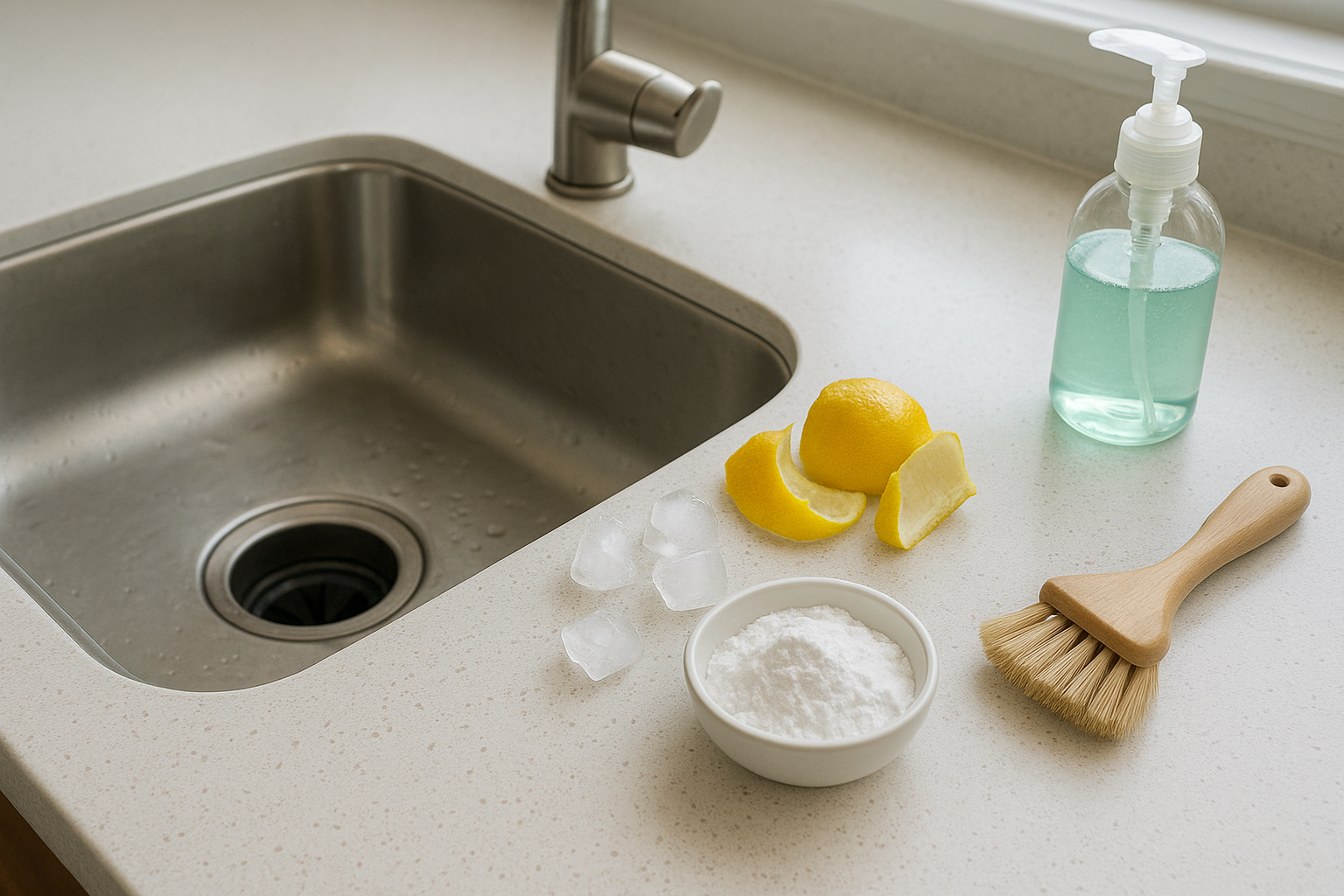
- Dish soap
- Old toothbrush, bottle brush, or small scrub brush
- Ice cubes
- Coarse salt, optional
- Baking soda
- White vinegar, optional
- Lemon, lime, or orange peel, optional
- Long-handled tongs
- Flashlight
Step 1: Flush the Disposal with Cold Water
Start simple. Run a strong stream of cold water into the disposal for about 30 seconds. Turn on the disposal and let it run while the water continues. After you switch the disposal off, keep the water running another 15 to 30 seconds to help rinse loosened bits through the drain.
This matters because food buildup is often caused by not using enough water during and after grinding. InSinkErator notes that odor can come from food buildup related to insufficient water flow during and after use. ([support.insinkerator.com](https://support.insinkerator.com/app/answers/detail/a_id/521/~/theres-an-odor-coming-from-garbage-disposal?utm_source=openai))
Step 2: Scrub the Rubber Splash Guard
If your sink smells sour even after rinsing, the rubber splash guard is a likely culprit. That flexible black gasket catches splatters and traps greasy food film on its underside.
- Turn off power to the disposal if you will be working close to the opening.
- Lift one flap of the splash guard with a gloved finger or spoon handle.
- Scrub the underside with hot water, dish soap, and an old toothbrush.
- Work around the whole ring, rinsing the brush often.
- If your model has a removable splash guard, pull it out and wash it in hot, soapy water, then replace it securely.
This one step often fixes the “I cleaned it but it still smells” problem. The chamber may be fairly clean while the hidden underside of the gasket is still coated with old food residue.
Step 3: Use Ice to Knock Loose Grime
Next, use ice to help clean the grind chamber. Ice does not sharpen disposal blades in the way people often claim; many disposals use impellers rather than knife-like blades. What ice can do is help knock loose stuck food and greasy film as it rattles around.
- Put 2 cups of ice cubes into the disposal.
- Add 1 tablespoon of coarse salt if you have it.
- Turn on cold water.
- Run the disposal until the grinding noise settles down.
- Keep the water running for another 30 seconds.
Manufacturer guidance from InSinkErator includes an ice-cleaning method for its garbage disposals, and GE Appliances also recommends ice with a small amount of rock salt as a cleaning option. ([insinkerator.com](https://www.insinkerator.com/en-us/kitchen-better/faq?utm_source=openai))
Step 4: Deodorize with Baking Soda
Baking soda is useful for neutralizing mild odors. With the disposal off, sprinkle about 1/2 cup of baking soda into the opening. Let it sit for 10 to 15 minutes, then rinse with cold water while running the disposal.
For a little fizzing action, pour in 1/2 cup white vinegar after the baking soda. Let it bubble for several minutes, then rinse well. The fizz can help loosen light residue near the top of the chamber, but do not think of it as a miracle clog remover. If the drain is truly blocked, baking soda and vinegar usually are not enough.
Step 5: Freshen with Citrus Peels, But Use Them Sparingly
A few small strips of lemon, lime, or orange peel can make the sink smell fresher after cleaning. Use citrus as a finishing touch, not as the main cleaning method.
Cut peels into small pieces, run cold water, turn on the disposal, and feed in just a few pieces at a time. Avoid tossing in half a lemon or a pile of thick peels, especially if your disposal is older or your plumbing is prone to clogs.
What Not to Put Down a Garbage Disposal
Preventing odors is easier than cleaning old buildup. Be picky about what goes down the drain.
- Avoid grease and cooking oil. They can coat the disposal and pipes, then trap food particles.
- Skip coffee grounds in large amounts. They may smell nice briefly, but they can collect in pipes.
- Do not grind fibrous scraps like celery strings, corn husks, onion skins, and artichoke leaves.
- Avoid starchy foods such as pasta, rice, and potato peels in large quantities because they can turn gummy.
- Do not put bones, shells, pits, or hard seeds into a standard household disposal unless your manufacturer specifically says your model can handle them.
- Keep paint, chemicals, and drain cleaners out unless the product label and disposal manual say they are safe.
If You Have a Septic System
If your home uses a septic system, be more conservative. The U.S. EPA advises limiting garbage disposal use because food waste adds unnecessary solids to the septic tank. EPA guidance also says reducing or avoiding disposal use can reduce solids and may help avoid more frequent pumping. ([epa.gov](https://www.epa.gov/septic/frequent-questions-septic-systems?utm_source=openai))
That does not mean every septic home must remove its disposal, but it does mean you should compost or trash most food scraps instead of grinding them. When you do use the disposal, use plenty of water and keep portions small.
How Often to Clean a Garbage Disposal
For a disposal that gets regular use, a quick rinse after every use and a deeper cleaning about once a week works well for many kitchens. If you cook often, use the disposal daily, or notice odors sooner, clean the splash guard and run an ice cycle more often.
Here is a simple routine:
- Every use: Run cold water before, during, and after grinding.
- Weekly: Scrub the splash guard and clean with ice.
- As needed: Deodorize with baking soda and a few citrus peels.
- Monthly: Shine a flashlight into the opening, with power off, and check for stuck debris.
Why the Smell Keeps Coming Back
If odor returns within a day or two, look beyond the chamber. Common causes include a dirty splash guard, food stuck in the drain pipe, a clogged P-trap, or buildup in a dishwasher drain hose connected to the disposal.
Try cleaning the splash guard again, then flush with plenty of cold water. If the sink drains slowly, gurgles, backs up, or smells like sewage instead of old food, stop using the disposal and troubleshoot the plumbing. A sewage smell may point to a dry trap, venting problem, or drain issue that needs a plumber.
When to Call a Pro
Call a plumber or appliance repair professional if the disposal hums but will not spin, trips the reset button repeatedly, leaks from the bottom, drains very slowly after cleaning, or smells bad no matter what you do. Those signs can point to a jam, failing seal, clog, or aging unit.
For everyday odors, though, the fix is usually simple: water, scrubbing, ice, baking soda, and better disposal habits. Clean the hidden rubber guard first, rinse longer than you think you need to, and keep greasy or fibrous scraps out of the drain. Your kitchen sink should smell clean again without a big project.