How to Clean Electric Baseboard Heaters Safely
If your electric baseboard heaters smell dusty the first time you turn them on, they are probably overdue for a cleaning. Dust, pet hair, and lint collect inside the fins and vents, which can reduce airflow and make the heater run hotter than it should.
The good news: this is a manageable home maintenance job if you work carefully and turn the power off first. Here is how to clean electric baseboard heaters safely before the coldest part of the season.
Why Electric Baseboard Heaters Need Cleaning
Electric baseboard heaters warm air as it moves through the heater and over the heating element or fins. When the inside is packed with dust, the heater cannot breathe as well. The U.S. Department of Energy recommends cleaning baseboard heaters and radiators as needed and keeping them clear of furniture, carpeting, and drapes. ([energy.gov](https://www.energy.gov/sites/default/files/2022-08/energy-saver-guide-2022.pdf?lv=true&utm_source=openai))
A dusty heater may give off a burnt-dust smell, cycle off more often, or heat the room unevenly. In some cases, dirt buildup or blocked airflow can contribute to overheating. Cadet’s safety guidance notes that common causes of a tripped heater limit switch include furniture too close to the heater, dirt or dust accumulation, or objects inside the heater. ([comdac.com](https://www.comdac.com/literature/cadet/heater-safety-tips.pdf?utm_source=openai))
What You’ll Need
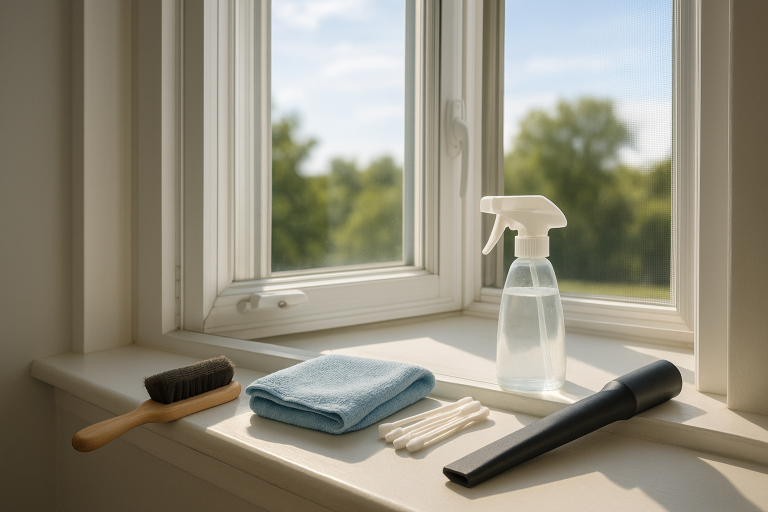
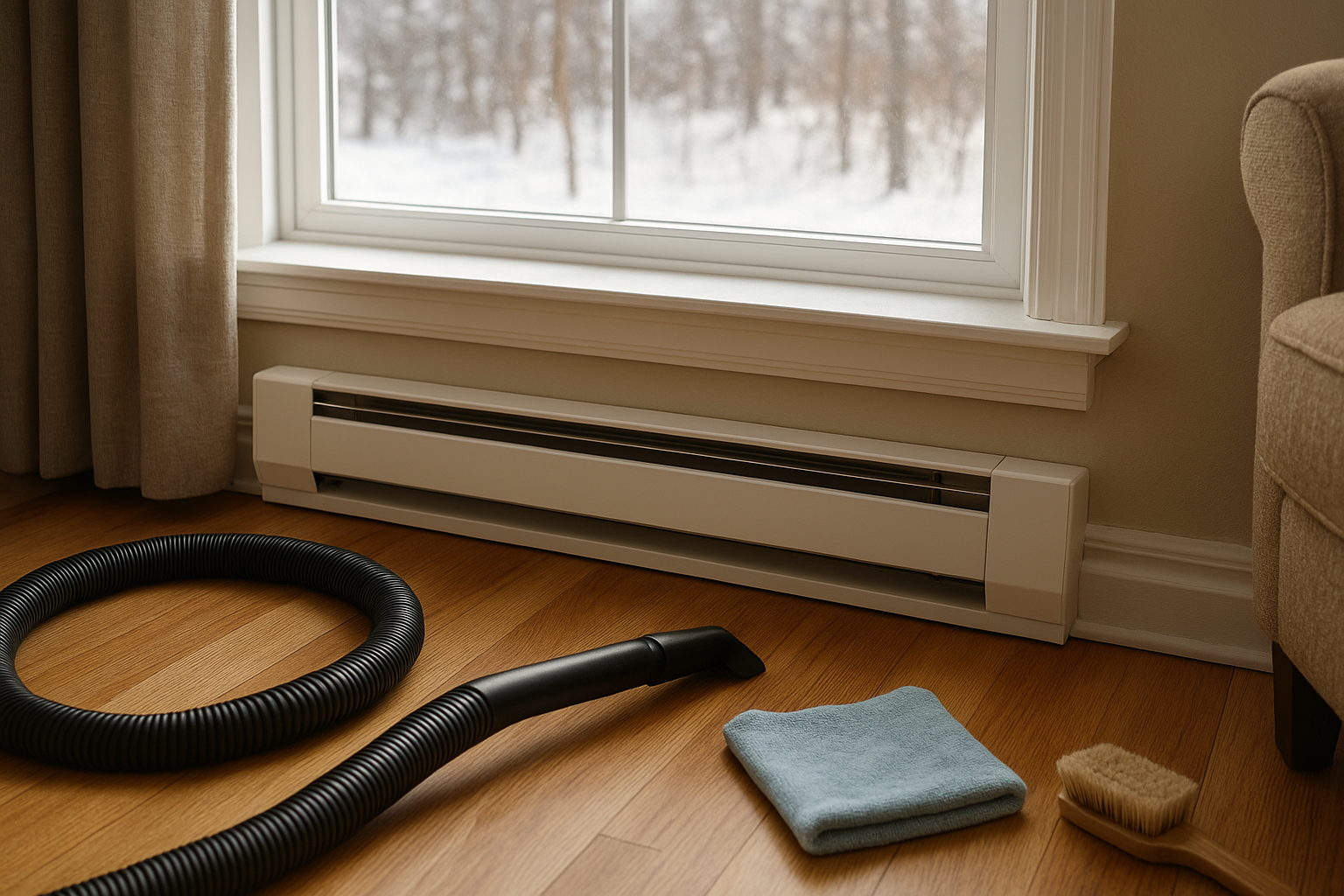
- Vacuum with hose and brush attachment
- Microfiber cloth
- Soft paintbrush or long-handled duster
- Safety glasses
- Hair dryer or shop vac with blower setting, optional
- Mild dish soap and warm water, optional for removable covers
- Non-contact voltage tester, optional but helpful
Do not use harsh cleaners, spray polishes, waxes, or anything dripping wet inside the heater. A damp cloth is fine for the outside cover, but the electrical parts should stay dry.
Step 1: Turn Off the Power
This is the step you should not skip. Turn the thermostat all the way down, then shut off power to the heater at the electrical panel. Many electric baseboard heaters are hardwired, so turning the thermostat down alone may not remove power from the unit.
Manufacturer instructions commonly tell homeowners to turn power off at the breaker or main disconnect panel before cleaning. Cadet’s cleaning instructions also say to verify that power is off and let the element cool before working inside the heater. ([cadetheat.com](https://www.cadetheat.com/en-us/articles/how-to-clean-baseboard?utm_source=openai))
If you are not sure which breaker controls the heater, stop and figure that out before opening anything. Label the breaker once you find it so next time is easier.
Step 2: Let the Heater Cool Completely
Give the heater plenty of time to cool. Even after the thermostat is lowered, the metal fins and heating element can stay hot for a while. Wait until the cover and the air around the heater feel completely cool.
This is also a good moment to move nearby items out of the way. Keep curtains, baskets, pet beds, furniture, cords, and rugs away from the heater. One Cadet owner’s guide specifies minimum clearances of 12 inches in front and above, and 6 inches on both sides for that model, so your own heater’s manual is the best place to confirm exact clearance requirements. ([homedepot.com](https://www.homedepot.com/catalog/pdfImages/6d/6db99504-fc91-4ef1-8f02-10ff289c01e5.pdf?utm_source=openai))
Step 3: Remove or Open the Front Cover
Many electric baseboard heater covers can be gently lifted, tilted, or unclipped from the front. Some have end caps or small screws. Go slowly and do not force anything, especially on older heaters where metal edges may be bent or painted in place.
If the cover comes off easily, set it on a towel. If it only opens partway, that is usually enough room to vacuum and brush out the inside. Take a quick photo before removing any parts so you know how everything fits back together.
Step 4: Vacuum Dust From the Inside
Use the vacuum hose first to remove loose dust, pet hair, and crumbs from the bottom of the heater. Then use a brush attachment lightly along the inside cover and accessible metal surfaces.
Be careful around the thin metal fins. They bend easily, and you do not need to scrub them. Cadet’s guidance for baseboard heaters says to vacuum inside the heater and be careful around the aluminum fins; other maintenance instructions warn not to touch the element while vacuuming. ([comdac.com](https://www.comdac.com/literature/cadet/heater-safety-tips.pdf?utm_source=openai))
If your vacuum attachment is too bulky, use a soft paintbrush to loosen dust while holding the vacuum hose nearby. Work from one end to the other so you are not pushing debris deeper into the heater.
Step 5: Blow Out Stubborn Dust, If Needed
For packed-in dust, a hair dryer on a cool or low setting can help blow debris down and out where you can vacuum it. Cadet’s cleaning instructions suggest using a blower device, such as a shop vac or hair dryer, and wearing safety glasses to protect your eyes from dust. ([cadetheat.com](https://www.cadetheat.com/en-us/articles/how-to-clean-baseboard?utm_source=openai))
Do this gently. You are not trying to blast the heater apart; you are just moving dust out of tight spaces. Keep the vacuum running nearby to catch what comes loose.
Step 6: Wipe the Cover
Wipe the outside cover with a lightly damp microfiber cloth, then dry it. If the cover is removable and greasy or grimy, wash it with warm soapy water, rinse, and dry it completely before reinstalling. Never put a wet cover back on the heater.
Check the wall and floor around the heater too. Dust bunnies often hide underneath, and curtains can drop lint right into the top vents.
Step 7: Reassemble and Test
Put the cover and end caps back the way they were. Make sure nothing is rattling, pinched, or touching the heating element. Once everything is dry and secure, turn the breaker back on and raise the thermostat.
It is normal to smell a faint dusty odor for a short time after cleaning, especially if the heater has not run in months. But if you smell melting plastic, see smoke, hear buzzing, or the breaker trips, turn the heater off at the panel and call an electrician or qualified service technician.
How Often Should You Clean Electric Baseboard Heaters?
At minimum, clean them before heating season. Homes with pets, carpet, heavy dust, or heaters in bedrooms may need cleaning more often. Cadet recommends cleaning some baseboard heaters at least every 24 months, while other heater maintenance guidance suggests annual cleaning at the beginning of heating season or more often in dirty environments. ([manualslib.com](https://www.manualslib.com/manual/811050/Cadet-2f500-1.html?utm_source=openai))
A practical schedule for most homes is simple: vacuum the outside vents monthly during winter, then do a deeper inside cleaning once a year before you rely on the heat daily.
What Not to Do
- Do not spray cleaner into the heater. Moisture and electrical parts do not mix.
- Do not bend the fins. Bent fins can restrict airflow and are annoying to straighten.
- Do not store items against the heater. Boxes, blankets, and toys can block airflow and create a fire hazard.
- Do not paint over moving seams. Paint can glue covers shut and make future cleaning difficult.
- Do not ignore repeated shutoffs. A heater that keeps overheating needs more than a quick dusting.
When to Call a Pro
Cleaning is homeowner-friendly; electrical troubleshooting is not. Call a licensed electrician or qualified service technician if the heater does not turn on, will not turn off, trips the breaker, sparks, makes loud buzzing noises, or has damaged wiring. You should also get help if you find melted plastic, scorch marks, or a foreign object lodged near the element.
A clean electric baseboard heater does not just look better. It can move heat more freely, smell fresher when it runs, and help you spot problems before a cold night makes them urgent.