How to Clean a Dishwasher Filter So Dishes Come Out Clean
If your dishwasher smells musty or leaves little specks of food on clean plates, the filter is one of the first places to check. Learning how to clean a dishwasher filter takes only a few minutes, and it can make a tired-looking wash cycle work much better.
Most newer dishwashers have a removable manual filter near the bottom spray arm. It traps food particles so they do not recirculate onto your dishes, which is why regular cleaning helps water flow and wash performance. Whirlpool notes that cleaning the filter helps prevent food from recirculating during the cycle and keeps water moving properly. ([producthelp.whirlpool.com](https://producthelp.whirlpool.com/Dishwashers/Dishwasher/Other/Cleaning_and_Odor/Cleaning_and_Maintenance/Cleaning_the_Filter/Cleaning_the_Filter_-_Dishwasher?utm_source=openai))
How Often Should You Clean a Dishwasher Filter?
For many households, once a month is a good habit. If you run the dishwasher daily, scrape plates poorly, have hard water, or notice odors, check it more often.
A few signs your dishwasher filter needs attention:
- Dishes come out gritty, cloudy, or dotted with food.
- The dishwasher smells sour, fishy, or stale.
- Water pools in the bottom after a cycle.
- The bottom spray arm looks blocked or weak.
- You can see food scraps around the filter area.
If your dishwasher manual gives a different schedule, follow that first. Some brands and models use slightly different filter assemblies, and older dishwashers may have a self-cleaning grinder-style filter instead of a removable one.
What You’ll Need
- Dish gloves, if desired
- Soft sponge or dishcloth
- Old toothbrush or small soft brush
- Warm water
- Mild dish soap
- Small bowl or towel for setting parts aside
Avoid steel wool, stiff wire brushes, bleach, and harsh scouring powders. A dishwasher filter is usually plastic mesh or fine screen, and rough tools can damage it.
Step-by-Step: How to Clean a Dishwasher Filter
1. Empty the bottom rack
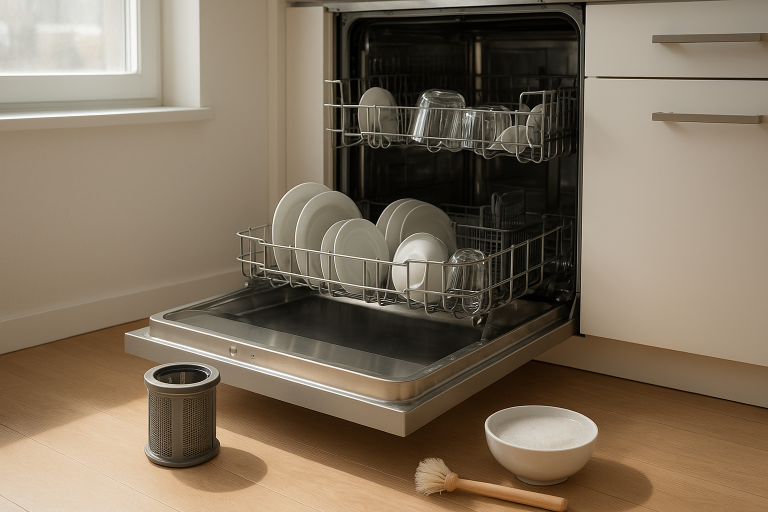
Pull out the bottom rack so you have clear access to the floor of the dishwasher. If there are loose noodles, labels, glass bits, twist ties, or bones in the tub, remove them carefully. Sharp debris can hide near the drain area, so go slowly.
2. Find the filter
The filter is usually centered under the bottom spray arm or slightly toward the back. Many modern dishwashers have a two-part filter: an upper cylindrical filter that twists out and a lower flat screen that lifts out after the cylinder is removed.
If you are not sure where yours is, search your model number and owner’s manual. Whirlpool’s current dishwasher care guidance, for example, describes removable filters and recommends consulting model-specific instructions when needed. ([whirlpool.com](https://www.whirlpool.com/services/manuals.html?utm_source=openai))
3. Unlock and remove the filter
Most cylindrical filters unlock with a short counterclockwise twist, then lift straight up. Do not force it. If it feels stuck, check for arrows, lock symbols, or tabs. Once the upper filter is out, lift out the lower screen if your model has one.
4. Rinse away loose food
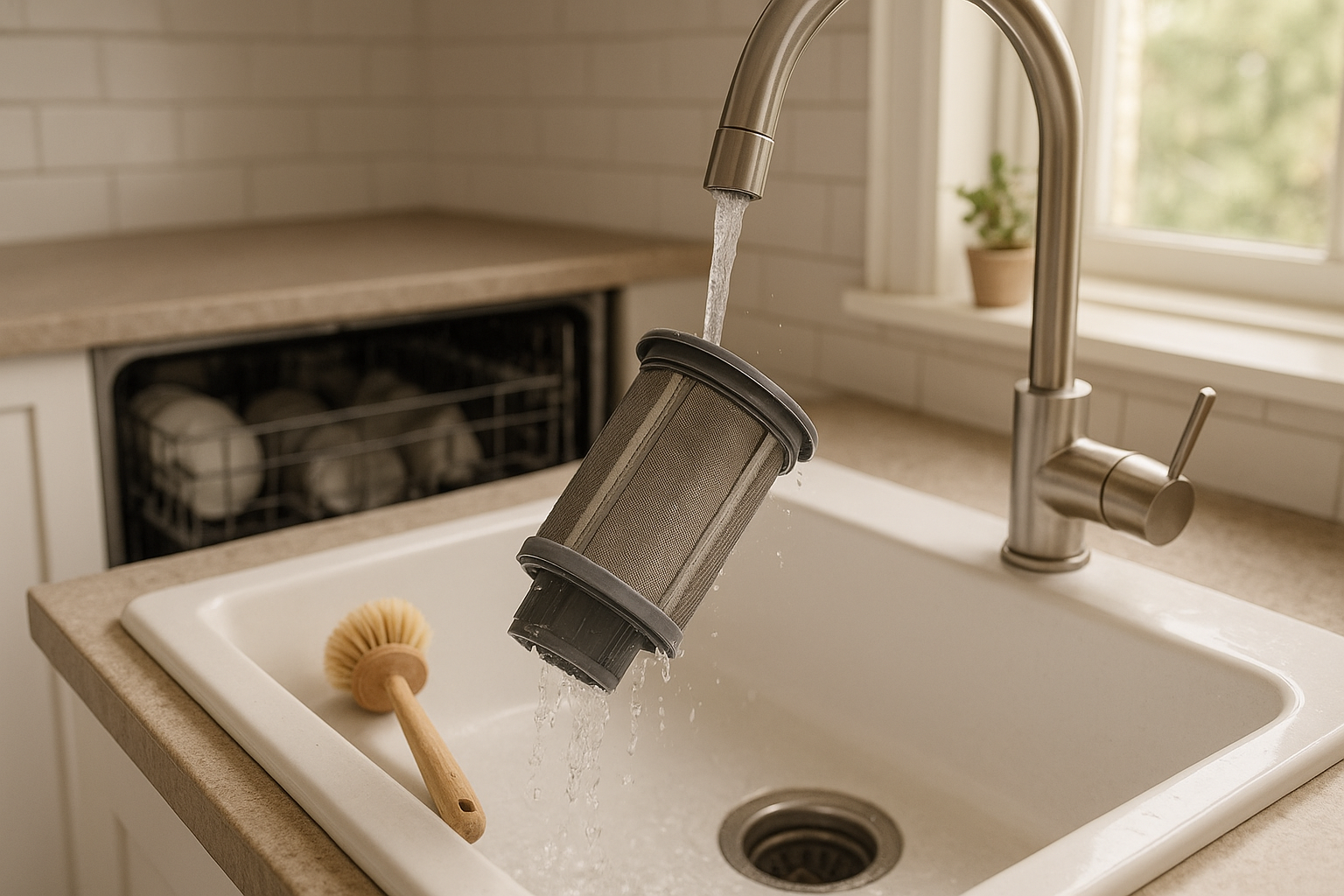
Hold the filter under warm running water. Rinse from both sides to push out trapped food and grease. Whirlpool’s filter instructions say to rinse the filter under running water until most soil is removed. ([producthelp.whirlpool.com](https://producthelp.whirlpool.com/%40api/deki/pages/16774/pdf/Cleaning%2Bthe%2BFilter%2B-%2BDishwasher.pdf?utm_source=openai))
5. Gently scrub the mesh
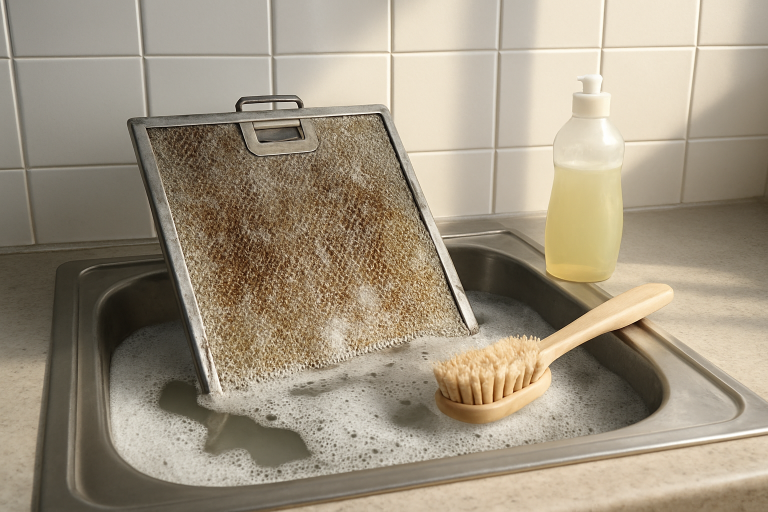
Add a drop of mild dish soap to a soft sponge or toothbrush and gently clean the mesh, rim, and grooves. Pay attention to greasy buildup, seeds, rice, coffee grounds, and bits of paper label. Rinse well so no soap remains.
If the filter smells bad, let it sit for 10 minutes in a bowl of warm, soapy water, then brush and rinse again. Do not soak it in bleach unless your manufacturer specifically says it is safe.
6. Wipe the filter well
Before reinstalling the filter, wipe the opening where it sits. Food often collects in this little sump area. Use a damp cloth or sponge to remove gunk around the edges, but do not push debris deeper into the drain.
7. Reinstall and lock it in place
Put the lower screen back first, then insert the upper filter and twist it clockwise until it locks. This step matters. A loose filter can let food particles pass through and may interfere with the spray arm.
8. Run a hot empty cycle if needed
If the dishwasher still smells after the filter is clean, run an empty hot cycle with a dishwasher cleaner or the cleaning method recommended in your manual. Whirlpool recommends monthly dishwasher cleaning to help with filming, spotting, residue, and odors. ([whirlpool.com](https://www.whirlpool.com/blog/kitchen/how-to-clean-a-dishwasher.html?utm_source=openai))
Should You Rinse Dishes Before Loading?
Usually, no. Scrape plates well, but skip the full pre-rinse unless your dishwasher manual says otherwise or food has dried on for a long time. ENERGY STAR says modern dishwashers and detergents are designed to clean without pre-rinsing, and recommends scraping instead of rinsing. ([energystar.gov](https://www.energystar.gov/products/dishwashers?utm_source=openai))
The U.S. EPA’s WaterSense guidance also recommends scraping food waste into the trash or compost before loading, rather than rinsing dishes first. ([epa.gov](https://www.epa.gov/watersense/home-maintenance?utm_source=openai)) That said, “scrape” does not mean “load half a casserole.” Remove bones, pasta, rice clumps, greens, fruit stickers, and thick sauces before they reach the filter.
Common Dishwasher Filter Problems
The filter is greasy
Grease often builds up when the dishwasher runs mostly cool cycles or when plates go in with heavy oil left on them. Scrape greasy pans well, use the correct detergent amount, and occasionally run a hotter cycle if your dishes and manufacturer’s instructions allow it.
The filter smells even after cleaning
Check the door gasket, detergent cup, spray arm holes, and the area under the bottom rack. Odors can also come from a clogged drain hose or garbage disposal connection, especially if the smell is more like sewage than old food.
The filter will not twist out
Do not pry it with a knife. Look for a locking arrow or tab, then try again with dry hands or rubber gloves for grip. If it still will not move, consult the manual for your exact model.
The filter has holes or torn mesh
Replace it. A damaged filter cannot trap food properly, and loose particles can end up on dishes or in the pump area.
A Simple Monthly Dishwasher Filter Routine
- Pull the bottom rack out.
- Remove and rinse the filter.
- Brush away grease and stuck food.
- Wipe the filter well and door gasket.
- Check that the spray arm spins freely.
- Reinstall the filter so it locks firmly.
- Run a cleaning cycle if the tub smells or looks filmed.
This small chore is easy to forget, but it is one of the most useful dishwasher maintenance tasks you can do. Clean the filter regularly, scrape instead of rinsing, and your dishwasher has a much better chance of doing what it is supposed to do: sending dishes back to the cabinet clean, fresh, and ready for dinner.