Can You Plant a Hedge on a Property Line? What to Know
Hedges can be a beautiful way to add privacy, soften a yard, and create a living boundary between neighbors. But planting a hedge on a property line is not as simple as digging a trench and spacing out shrubs. A little planning now can help you avoid arguments, overgrown roots, and expensive do-overs later.
If you want your hedge to look great and stay trouble-free, start with the basics: know exactly where your property ends, understand how the plants will grow, and think ahead about maintenance. A hedge can be a wonderful landscape feature, but only if it fits both your yard and your local rules.
Why people choose hedges over fences
Hedges do a lot more than mark a boundary. They can create a softer look than a wood or vinyl fence, reduce wind, screen unsightly views, and provide food and shelter for birds and pollinators. In many yards, they also blend in better with the landscape than a hard structure.
That said, hedges are living things. They grow, spread, shed leaves, attract wildlife, and require regular care. Unlike a fence, they do not stay the same size forever. That is why the location matters so much.
First step: confirm the actual property line
Never assume the edge of the lawn, a row of bushes, or an old fence marks the true boundary. Before planting, check your survey, deed, subdivision plat, or county property records. If you do not have a recent survey, it may be worth hiring a professional surveyor, especially if the hedge will sit close to the line.
This matters because even a few inches can become a problem once shrubs mature. A hedge that starts out neatly inside your yard may eventually crowd a neighbor’s side, overhang a sidewalk, or interfere with a shared fence.
Helpful ways to verify the line:
- Review your property survey or closing documents.
- Look for permanent boundary markers if they exist.
- Ask your local land records office for parcel maps.
- Hire a surveyor if the boundary is unclear or disputed.
Check local rules before digging
Many homeowners are surprised to learn that planting near a boundary can involve local ordinances, homeowners association rules, easements, and utility restrictions. Some areas require shrubs and trees to stay a certain distance from sidewalks, streets, drains, or property lines. Others limit plant height near driveways or corners for visibility.
If you live in a neighborhood with an HOA, check the architectural or landscaping guidelines before choosing plants. You may need approval for hedge height, plant type, or placement. Public utility easements are another common issue. Even if the hedge is on your land, you may not be allowed to plant in an area where workers need access to buried lines.
Watch for these common restrictions
- Setback requirements from property lines or sidewalks
- Visibility rules for driveways and street corners
- HOA landscaping standards
- Utility easements or drainage easements
- Rules about invasive or nuisance plants
Choose plants with mature size in mind
The biggest hedge mistake is buying shrubs based on their size at the nursery instead of their size in five to ten years. A compact hedge plant may look tiny when you bring it home, but many shrubs double or triple in width and height with time. Always read the mature width and height on the plant tag.
For a boundary hedge, choose varieties that respond well to pruning and have a growth habit suited to your space. If the hedge is close to a fence, patio, or walkway, select plants that stay narrower or tolerate shaping. If you want a taller privacy screen, make sure there is enough room on your side to keep up with trimming.
Good planning questions to ask:
- How tall will the hedge eventually grow?
- How wide will each shrub spread?
- Will it need heavy pruning to stay in bounds?
- Does it drop berries, flowers, or leaves that could bother neighbors?
Leave enough room for maintenance
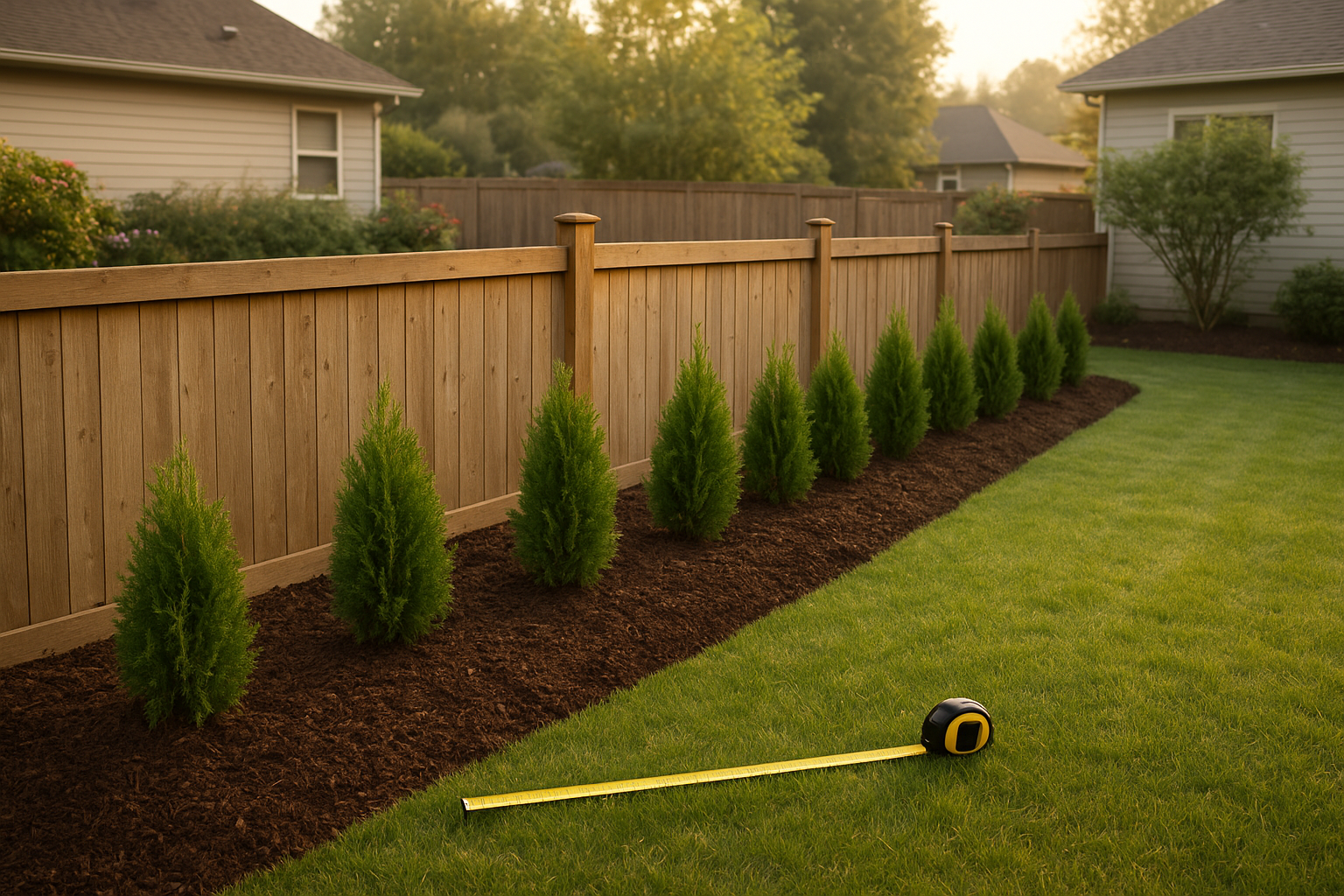
A hedge planted too close to the line can become a constant source of tension. Even if your neighbor does not object, you may struggle to trim it without leaning into their yard. That is why many gardeners place shrubs a bit inside their own boundary rather than right on the line.
As a general practical rule, give the hedge enough space so you can prune from your side without reaching across a fence or stepping onto someone else’s property. The exact distance depends on the shrub type and mature size, but extra breathing room almost always makes life easier.
Also think about access. Will you be able to weed, mulch, water, and replace plants if one dies? Crowded hedge rows are hard to maintain and can thin out faster at the base if air circulation is poor.
Talk to your neighbor early
Even if you are planting entirely on your own land, a hedge near the boundary can affect both properties. A quick conversation before planting can prevent surprises later. Let your neighbor know what you are planning, how tall you expect the hedge to get, and whether you expect it to be purely decorative or intended for privacy.
If you share a fence, wall, or drainage area, the discussion is even more important. Your neighbor may have plans for their side of the yard, and a hedge can affect sunlight, access, and view lines. A friendly heads-up now is much easier than a complaint after the plants are in the ground.
Know your rights and responsibilities
Property law varies by location, but in many places a landowner can trim branches or roots that cross onto their side, as long as they do not damage the plant beyond the line. That does not mean you should plant recklessly and hope for the best. A hedge that spreads aggressively can create friction, especially if it blocks light, sheds debris, or interferes with shared structures.
On your side, you are usually responsible for keeping your own hedge trimmed and healthy. If it grows into a sidewalk, blocks visibility, or damages a neighbor’s fence, you may be asked to correct it. In some cases, local officials can step in if a hedge becomes a safety hazard.
Common boundary problems to avoid
- Planting too close to an uncertain property line
- Choosing fast-growing shrubs without enough space
- Letting the hedge overhang a neighbor’s yard
- Blocking access to a fence, gate, or utility area
- Ignoring height limits near roads or driveways
Best practices for a smooth hedge planting project
If you want your hedge to succeed long term, treat it like a landscape project, not just a row of plants. Mark the boundary carefully, measure the mature width of your chosen shrubs, and leave room for pruning. Use good soil preparation, mulch, and watering during the establishment period so the hedge grows evenly instead of becoming leggy or patchy.
It also helps to think about the hedge’s purpose. For a formal screen, choose a plant that handles shaping well and respond quickly to pruning. For a looser, wildlife-friendly border, you may prefer a mixed shrub planting that creates habitat without looking overly rigid.
A simple planning checklist:
- Verify the property line with records or a survey.
- Check HOA, city, and utility rules.
- Select shrubs based on mature size, not nursery size.
- Allow space for pruning and access.
- Talk with your neighbor before planting.
- Water, mulch, and maintain the hedge regularly.
The bottom line
A hedge can be one of the most attractive and useful ways to define a yard, but it works best when you plan ahead. The safest approach to planting a hedge on a property line is to confirm the boundary, understand local restrictions, choose the right plants, and leave enough room for future growth.
Do that, and your hedge is far more likely to become a long-lasting feature that adds privacy and curb appeal without creating neighborhood drama.