How to Clean a Dishwasher Filter and Spray Arms
If your dishwasher smells musty, leaves grit on glasses, or seems to be “washing” with dirty water, the filter and spray arms are good places to start. Learning how to clean a dishwasher filter takes about 15 to 30 minutes, uses basic sink-side tools, and can make a noticeable difference in everyday loads.
Most newer dishwashers have a removable filter near the bottom spray arm, while some older models may have a self-cleaning grinder system. Always check your owner’s manual for your exact model, but the steps below will work for many common household dishwashers.
Why the Filter and Spray Arms Matter
The dishwasher filter catches food bits so they do not recirculate onto your dishes. Whirlpool notes that many filters are found around the base of the bottom spray arm or in a back corner of the tub, and recommends cleaning them with running water and a soft brush when debris builds up. ([whirlpool.com](https://www.whirlpool.com/blog/kitchen/fixing-removing-and-replacing-dishwasher-filters.html?utm_source=openai))
The spray arms are just as important. Those little holes send water across the racks, and when they clog with seeds, bits of label, mineral scale, or food, you may see cloudy glasses, gritty bowls, or plates that only look clean on one side. Bosch and Thermador both point to clogged spray arm nozzles as a common cleaning-performance issue, especially where limescale is present. ([bosch-home.com](https://www.bosch-home.com/us/experience-bosch/heart-of-the-home/tips-and-tricks/all-articles/how-to-clean-dishwasher-spray-arms?utm_source=openai))
What You’ll Need
- Soft-bristle brush or old clean toothbrush
- Dish soap
- Warm running water
- Microfiber cloth or sponge
- Toothpick, wooden skewer, or thin wire for spray arm holes
- White vinegar or dishwasher cleaner, if allowed by your manual
- Towel for laying parts on the counter
- Your dishwasher manual, or the model number for looking it up
Avoid steel wool, stiff metal brushes, harsh scouring powder, and bleach unless your manual specifically allows it. These can scratch parts, damage finishes, or react badly with residue from other cleaners.
Step 1: Empty the Dishwasher and Remove the Bottom Rack
Start with a completely empty dishwasher. Pull out the bottom rack and set it aside. If the dishwasher has just finished running, let everything cool before you reach into the tub.
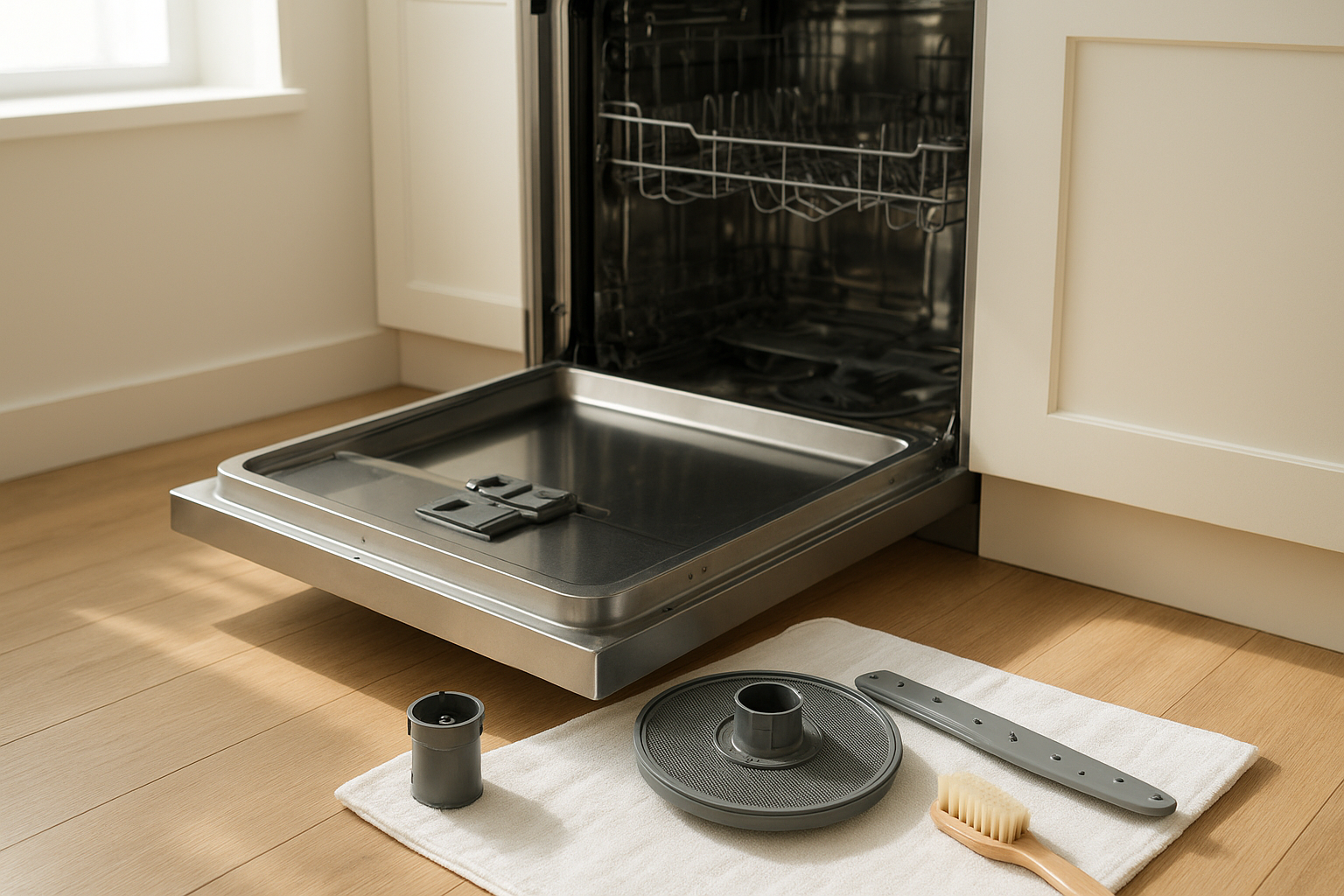
Look at the bottom of the dishwasher around the lower spray arm. In many models, the filter assembly sits directly below or near that arm. You may see a round or cylindrical piece, a flat mesh screen, or a twist-lock handle.
Step 2: Remove the Dishwasher Filter
Most removable filters twist counterclockwise and lift out, but the exact design varies. Some have an upper cylindrical filter and a lower flat filter. Others have a fine and ultra-fine filter. GE, Bosch, and Whirlpool all show similar general care: remove the filter assembly, rinse it, scrub gently, and reinstall it securely before running the dishwasher again. ([bosch-home.com](https://www.bosch-home.com/us/owner-support/get-support/support-selfhelp-dishwashers-cleaning-dishwasher-filter?utm_source=openai))
- Turn the filter handle gently, usually counterclockwise, until it releases.
- Lift the upper filter straight up.
- If there is a flat lower filter, remove it carefully.
- Check the sump area underneath for loose food, glass, bones, labels, or toothpicks.
Safety note: Use care when reaching into the bottom of the dishwasher. Broken glass can hide near the drain area. If you see shards, use gloves and remove them carefully.
Step 3: Wash the Filter at the Sink
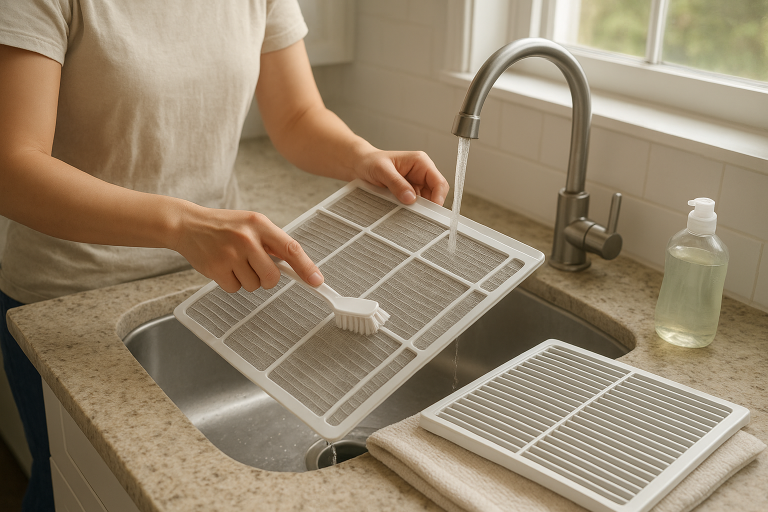
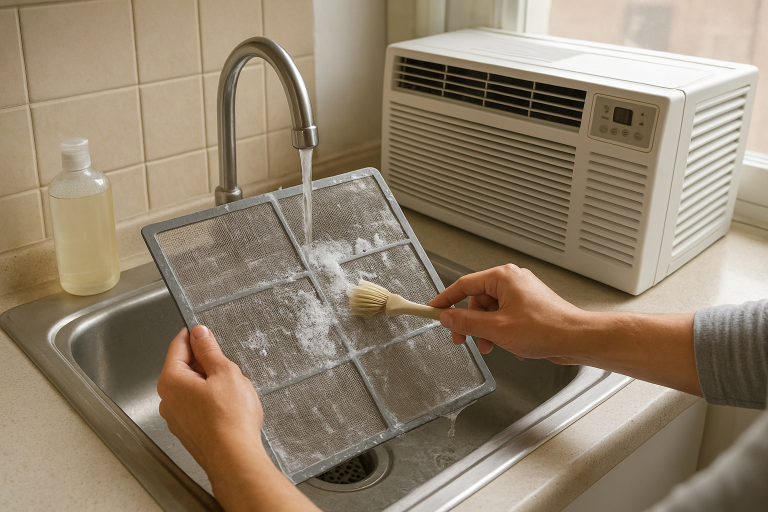
Rinse the filter under warm running water. Add a drop of dish soap and use a soft brush to loosen grease, calcium deposits, and food residue. Bosch specifically recommends mild soap and a soft brush for cleaning the dishwasher filter under running water. ([bosch-home.com](https://www.bosch-home.com/us/owner-support/get-support/support-selfhelp-dishwashers-cleaning-dishwasher-filter?utm_source=openai))
Do not scrub so hard that you tear mesh or bend plastic tabs. If the filter has a greasy film, let it sit in warm, soapy water for 5 to 10 minutes, then brush again. Rinse until the water runs clear and the filter no longer feels slick.
Step 4: Clean the Filter Well and Door Gasket
Before you put the filter back, wipe the area where it sits. Food sludge often collects around the filter well, along the door gasket, and at the lower inside edge of the door. Use a damp cloth or sponge with a little dish soap.
Pay special attention to the rubber gasket around the door. Crumbs and grease can hide in the folds, causing odors even after the filter is clean. Wipe once with soapy water, then again with a clean damp cloth.
Step 5: Check and Clean the Spray Arms
Spin the lower spray arm with your hand. It should rotate freely without bumping dishes, the rack, or the tub. GE’s support materials emphasize that spray arms need to rotate freely for good wash performance. ([products.geappliances.com](https://products.geappliances.com/appliance/gea-specs/GDF640HSMSS/support?utm_source=openai))
If your spray arms are removable, take them off according to your manual. If they are not easy to remove, clean them in place.
- Look closely at every spray hole.
- Use a toothpick or wooden skewer to loosen visible clogs.
- Rinse removable spray arms under running water.
- Shake them gently to remove trapped debris.
- Reinstall them and spin each arm to make sure it moves freely.
If your area has hard water, mineral deposits may clog the holes more often. Whirlpool manual guidance for some models recommends cleaning the filter at least once per month when hard water is above 15 grains, which is a helpful reminder that local water conditions affect maintenance needs. ([whirlpool.com](https://www.whirlpool.com/content/dam/global/documents/201708/UserInstructions-W11040103-RevA.pdf?utm_source=openai))
Step 6: Reinstall the Filter Correctly
This step matters. A loose or poorly seated filter can let food debris circulate through the dishwasher and may interfere with the spray arm. Put the lower filter back first if your model has one, then insert the upper filter and twist it until it locks.
Give the filter a gentle tug. It should feel secure, not wobbly. Then reinstall the bottom rack and spin the lower spray arm again to make sure nothing is blocking it.
Step 7: Run a Cleaning Cycle
Once the filter and spray arms are clean, run the dishwasher empty on a hot cycle. Use a dishwasher cleaner if your appliance manual recommends one. GE notes that citric acid or dishwasher cleaner can be used for cleaning and deodorizing certain dishwashers, but you should follow your model’s instructions. ([products.geappliances.com](https://products.geappliances.com/appliance/gea-support-search-content?contentId=21552&utm_source=openai))
If you use vinegar, place a dishwasher-safe cup of white vinegar upright on the top rack and run a hot cycle only if your manual allows it. Do not mix vinegar with bleach or other cleaners.
How Often Should You Clean a Dishwasher Filter?
A practical schedule is once a month for busy kitchens, households that do not scrape plates well, or homes with hard water. If you rinse or scrape dishes thoroughly and run the dishwasher often, every two to three months may be enough.
Clean it sooner if you notice:
- Grit or food specks on clean dishes
- A sour or musty smell after a cycle
- Water pooling in the bottom
- Cloudy glasses that used to come out clear
- Weak spray or dishes clean on only one rack
Simple Habits That Keep It Cleaner Longer
- Scrape plates, but do not prewash everything. Remove bones, labels, seeds, and large scraps before loading.
- Load dishes so the arms can spin. Tall pans, cutting boards, and utensils can block water flow.
- Use the right detergent amount. Too much detergent can leave residue; too little may not cut grease.
- Run hot water at the sink first. This helps the dishwasher start with hotter water, especially in colder months.
- Clean the gasket monthly. A clean filter will not fix odors hiding in the door seal.
When Cleaning Is Not Enough
If the dishwasher still smells, drains poorly, or leaves heavy grit after you clean the filter and spray arms, check the drain hose, air gap if you have one, and garbage disposal connection. A blocked drain path can make clean parts act dirty again.
Also look for a cracked spray arm, damaged filter mesh, broken tabs, or a spray arm that does not stay seated. Those parts are usually model-specific, so use your dishwasher model number when ordering replacements.
The Bottom Line
A clean dishwasher filter and clear spray arms help your machine do the job it was built to do: move clean, hot water around the tub. Make this a quick monthly habit, and you can prevent many of the smells, specks, and half-clean loads that make people think their dishwasher is failing.