How to Clean a Dishwasher Filter the Right Way
If your dishwasher smells a little sour or keeps leaving crumbs on clean plates, the filter is a good place to start. Learning how to clean a dishwasher filter takes about 10 minutes, and it can make a surprisingly big difference in how well your machine washes.
Most newer dishwashers use a removable filter near the bottom of the tub to catch food bits before water recirculates through the wash arms. When that filter gets clogged, dishes may come out gritty, greasy, or cloudy even when you are using good detergent.
First, Check What Kind of Filter You Have
Before you start twisting parts loose, take a quick look at your owner’s manual or search the model number online. Many modern dishwashers have a manual-clean filter that lifts or twists out from the bottom of the dishwasher. Some older models use a self-cleaning filter or hard food disposer system, which may not have the same removable cup-style filter.
Manufacturers vary a bit, but the basic advice is consistent: if your dishwasher has a removable filter, it needs periodic cleaning. GE Appliances says its fine and ultra-fine dishwasher filters should be cleaned every other month or more often depending on use, while Whirlpool recommends rinsing removable filters under running water and using a soft brush for stuck-on debris. ([products.geappliances.com](https://products.geappliances.com/appliance/gea-support-search-content?contentId=35611&utm_source=openai))
How Often Should You Clean a Dishwasher Filter?
For most households, clean the dishwasher filter about once a month. If you scrape dishes well, run the dishwasher only a few times a week, and rarely see food stuck in the filter, every other month may be enough. If you run daily loads, wash lots of starchy foods like rice or pasta, or notice odors, check it every two weeks until you know your machine’s pattern.
You should also clean the filter anytime you notice these signs:
- Dishes come out with grit, crumbs, or a greasy film.
- The dishwasher smells musty or like old food.
- Water pools in the bottom after a cycle.
- The spray arms seem weaker than usual.
- You see visible food debris around the drain area.
A clean filter is not the only reason dishes get clean, but it is one of the easiest problems to fix. ENERGY STAR notes that modern dishwasher performance relies on features such as water filtration, soil sensors, efficient jets, and rack design. A clogged filter can work against all of that. ([energystar.gov](https://www.energystar.gov/products/dishwashers?utm_source=openai))
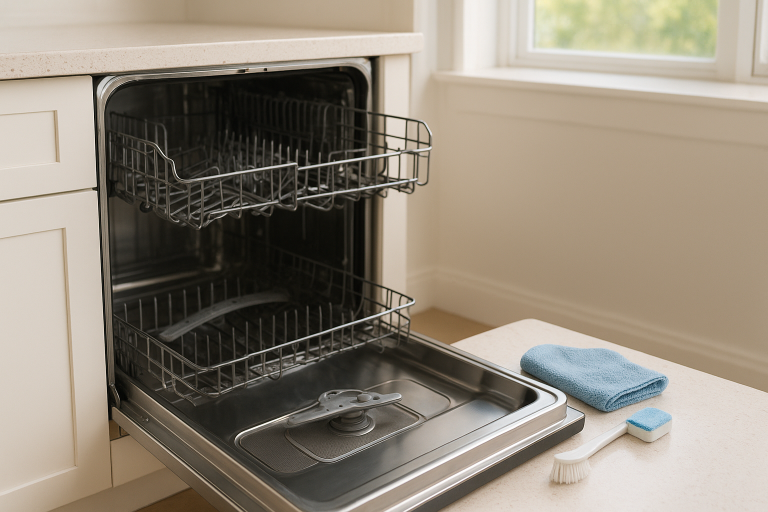
What You’ll Need
- Rubber gloves, optional but helpful
- A soft dish brush or old toothbrush
- Warm running water
- A few drops of dish soap, if greasy
- A microfiber cloth or sponge
- Flashlight, optional
Avoid steel wool, stiff wire brushes, bleach, harsh drain cleaners, or anything abrasive. Dishwasher filters are usually made from plastic and fine mesh, and rough scrubbing can damage them.
Step-by-Step: How to Clean a Dishwasher Filter
1. Empty the Bottom Rack
Pull out the bottom rack and set it aside or roll it onto the open door if your dishwasher design allows it. This gives you room to see the bottom of the tub clearly.
2. Find the Filter Assembly
Look at the bottom of the dishwasher, usually near the center or back. The filter may look like a round cylinder, a flat mesh screen, or a two-part assembly with an upper and lower piece. If you are not sure what you are looking at, stop and check the manual for your model.
3. Remove Loose Debris First
Before removing the filter, carefully pick out any obvious food scraps, toothpicks, labels, olive pits, bits of glass, or other debris from the drain area. Whirlpool specifically advises removing larger particles or foreign objects around the filter area before taking the filter out. ([producthelp.whirlpool.com](https://producthelp.whirlpool.com/Dishwashers/Dishwasher/Other/Cleaning_and_Odor/Cleaning_and_Maintenance/Cleaning_the_Filter/Cleaning_the_Removable_Filtration_System_-_Dishwasher?utm_source=openai))
If you suspect broken glass, wear gloves and use a damp paper towel to lift pieces instead of reaching blindly.
4. Unlock and Lift Out the Filter
Most removable filters twist counterclockwise to unlock, then lift straight out. Some have arrows or small lock and unlock symbols molded into the plastic. Do not force it. If it will not move, check the manual because some models have clips, a lower spray arm, or a second filter piece that must be handled in a specific order.
5. Rinse Under Warm Water
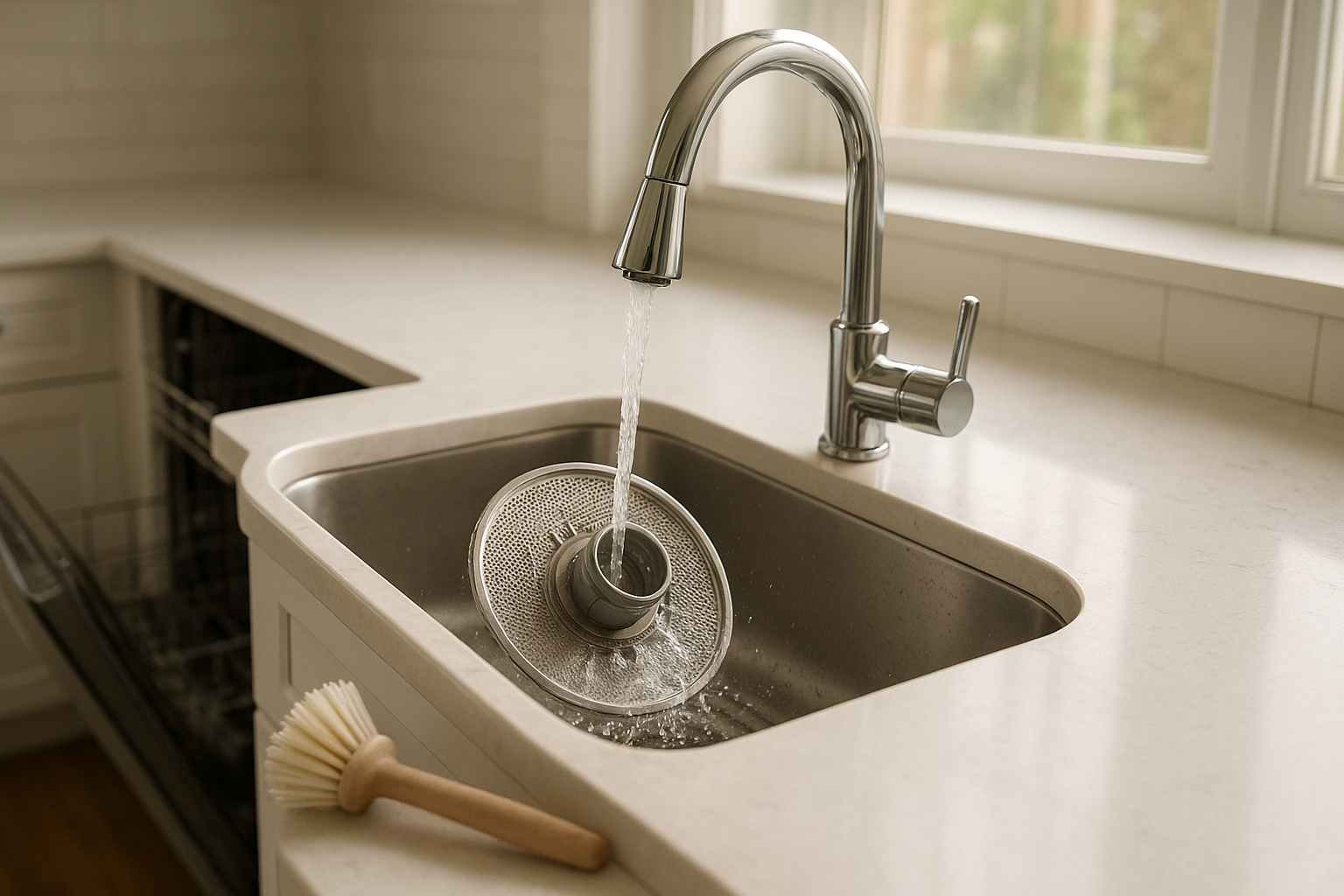
Hold the filter under warm running water and rinse away food particles from both sides. Pay attention to the mesh, seams, and the inside of the cylinder if your model has one. You may be surprised by how much gray film or soggy food collects there.
6. Gently Brush Stuck-On Grime
Use a soft brush to loosen greasy buildup, calcium deposits, or bits of food caught in the mesh. Whirlpool’s guidance suggests running water and a soft cleaning brush for stuck-on food and mineral deposits, which is safer than scraping with a knife or scouring pad. ([whirlpool.com](https://www.whirlpool.com/blog/kitchen/fixing-removing-and-replacing-dishwasher-filters.html?utm_source=openai))
If the filter feels oily, add a drop of dish soap to the brush, scrub gently, then rinse very well. You do not want suds left behind in the dishwasher.
7. Wipe the Filter Well
Before reinstalling the filter, wipe the area where it sits. A damp cloth can remove sludge, seeds, onion skins, and other small bits that keep odors going. Check that nothing is blocking the drain opening.
8. Reinstall Securely
Put every filter piece back exactly as it came out. Twist the filter until it locks in place. This step matters: a filter that is not seated properly can let debris circulate and may reduce dishwasher performance. Some manufacturer care instructions specifically warn that filters must be fully seated after cleaning. ([geappliances.ca](https://geappliances.ca/medias/?context=bWFzdGVyfGltYWdlc3w4ODAxMTAyfGFwcGxpY2F0aW9uL3BkZnxhR0V3TDJoaU5DOHhNREEzTURFeU1UWXhNVEk1TkF8YjE1MjAxMjZlMmQ1YWY5MzBjMzk2YmU5OWUyMjE3M2QyNDNhZWZmZGIyYTEwYmM4OTJkM2UyZTljZTU5ZDY2Ng&utm_source=openai))
Should You Run Vinegar Through the Dishwasher?
After cleaning the filter, you can freshen the empty dishwasher if odors linger. GE Appliances says a hot empty cycle with a commercially available dishwasher cleaner, or a bowl with one cup of white vinegar on the upper rack, can help neutralize tub odors. ([geappliances.com](https://www.geappliances.com/ge/service-and-support/faq-dishwasher.htm?utm_source=openai))
Use vinegar occasionally, not as an every-load habit. Also, do not pour vinegar directly into the detergent cup, mix it with bleach, or use it at the same time as dishwasher detergent unless your manual says it is safe. If your manufacturer recommends a specific dishwasher cleaner, follow that guidance.
How to Keep the Filter Cleaner Longer
- Scrape, don’t pre-wash. Remove bones, peels, rice clumps, and large scraps before loading. You usually do not need to fully rinse dishes unless your manual says so.
- Load so water can move. Avoid nesting bowls and blocking the spray arms with tall pans or cutting boards.
- Run hot water first. Let the kitchen tap run hot for a few seconds before starting the dishwasher, especially if the sink is far from the water heater.
- Use the right detergent amount. Too much detergent can leave residue; too little can leave grease behind. Follow the product label and your machine’s manual.
- Check the spray arms. If dishes are still dirty after filter cleaning, look for clogged spray holes and make sure the arms spin freely.
When Cleaning the Filter Is Not Enough
If the filter is clean but the dishwasher still drains poorly, smells terrible, or leaves food on everything, the issue may be deeper than routine maintenance. Check the air gap if your sink has one, make sure the garbage disposal knockout plug was removed if the dishwasher was recently installed, and inspect the drain hose for kinks.
You should call a repair professional if you hear grinding, see standing dirty water after every cycle, smell electrical burning, or find repeated leaks. A filter cleaning is simple maintenance; it should not require forcing parts, removing sealed components, or taking apart the pump.
The Simple Monthly Habit
Put a reminder on your calendar for the first weekend of each month: clean the dishwasher filter, wipe the door gasket, and check the spray arms. It is a small chore, but it helps prevent the kind of mystery grime that makes people think their dishwasher is failing.
Once you know where the filter is and how it locks into place, the job becomes quick and easy. A few minutes at the sink can mean cleaner glasses, fresher smells, and fewer repeat washes.