How to Clean a Dishwasher Filter the Right Way
If your dishwasher smells a little stale or your glasses come out gritty, the problem may be hiding in the bottom of the machine. Learning how to clean a dishwasher filter is one of those small home chores that can make a big difference in how well your dishwasher actually washes.
Most newer dishwashers have a removable filter that catches food bits before they recirculate onto dishes or reach the pump. The good news: you usually need only warm water, dish soap, and a soft brush.
Why the Dishwasher Filter Gets Dirty
The filter sits below the lower spray arm, where wash water drains and recirculates. It catches rice, seeds, onion skins, bits of label, broken glass, and greasy residue. Over time, that buildup can slow water flow, cause odors, and leave dishes looking dull or speckled.
Whirlpool’s product guidance notes that regular filter cleaning helps keep water flowing strongly and helps prevent food particles from recirculating during the wash cycle. Many Whirlpool-style removable filters include an upper fine filter and a lower coarse filter or mesh screen. ([producthelp.whirlpool.com](https://producthelp.whirlpool.com/Dishwashers/Dishwasher/Other/Cleaning_and_Odor/Cleaning_and_Maintenance/Cleaning_the_Filter/Cleaning_the_Filter_-_Dishwasher?utm_source=openai))
How Often Should You Clean It?
For most busy kitchens, a monthly check is a smart habit. If you scrape plates well and run the dishwasher only a few times a week, you may not need a full scrub every month. If you run daily loads, wash lots of starchy foods, or have hard water, check it more often.
Manufacturer recommendations vary by model and household habits. Thermador suggests cleaning the filter every one to four months depending on use and after loads with heavy food soil or starch. Whirlpool manual guidance says that if you have hard water above 15 grains, you should clean the filter at least once per month. ([thermador.com](https://www.thermador.com/us/support/customer-care/dishwashers/how-to-clean-your-dishwasher?utm_source=openai))
What You’ll Need
- Rubber gloves, if you prefer
- A soft sponge or dishcloth
- A soft-bristled brush or old toothbrush
- Warm running water
- A small amount of dish soap
- Toothpick or wooden skewer for spray-arm holes
- Towel for drips
Avoid steel wool, harsh scouring pads, or anything sharp on the filter mesh. You want to remove grime without bending or tearing the filter.
Step-by-Step: How to Clean a Dishwasher Filter
1. Empty the dishwasher and pull out the lower rack
Start with a cool, empty dishwasher. Slide out the bottom rack and set it aside. If the floor of the dishwasher is wet, that is normal, but standing water above the filter area may point to a clog that needs extra attention.
2. Find the filter assembly
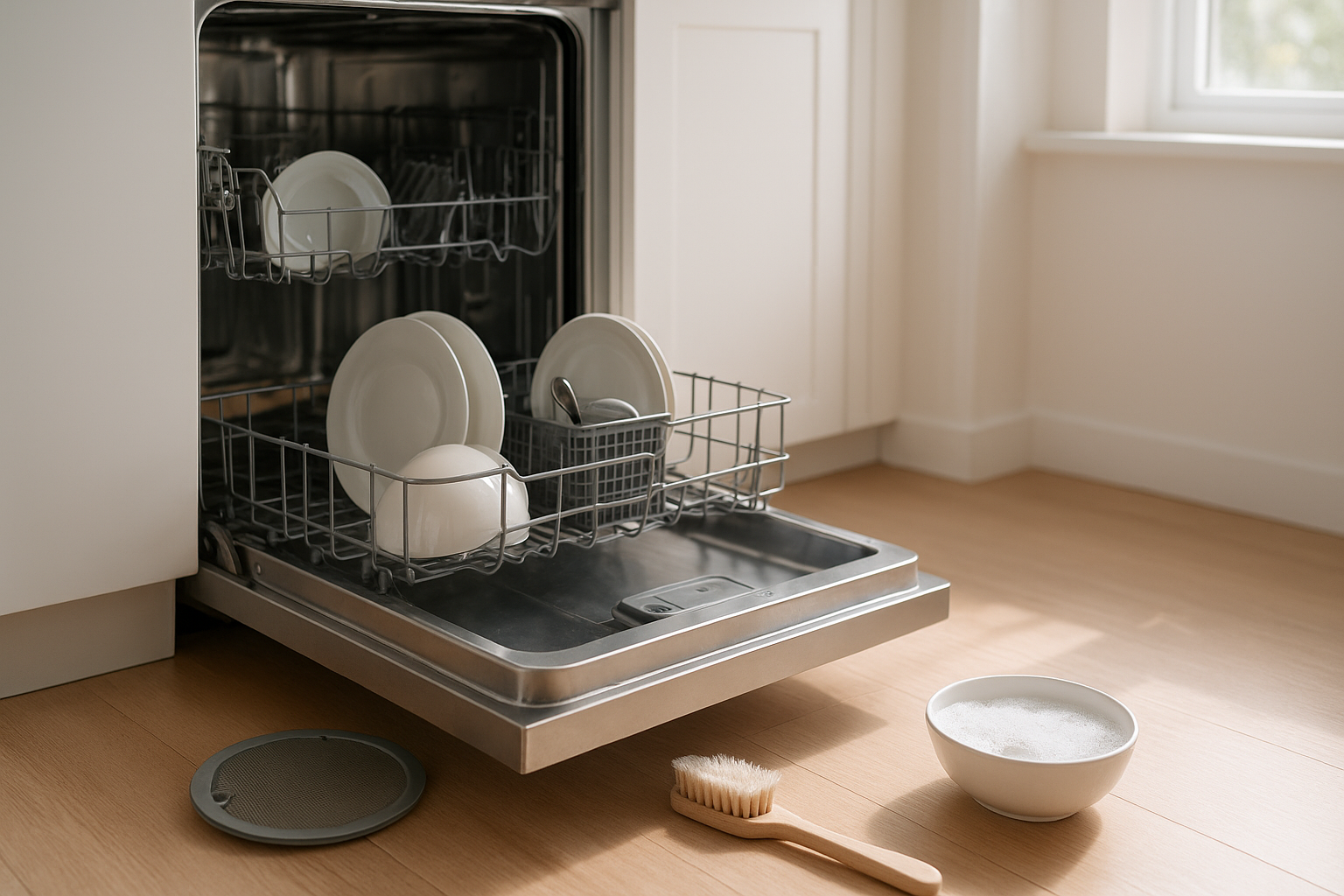
Look in the bottom of the tub, usually near the center or back corner under the lower spray arm. Many removable filters are round and twist to unlock. Some older dishwashers have self-cleaning filters or grinder-style systems that are not meant to be removed the same way, so check your model manual if the filter does not lift or twist easily.
3. Remove the filter gently
Most removable filters come out by turning the upper filter counterclockwise, lifting it out, and then removing the lower filter plate or screen. Do not force it. If it resists, stop and look up the manual for your exact model number, usually found on a label along the door edge.
4. Rinse away loose debris
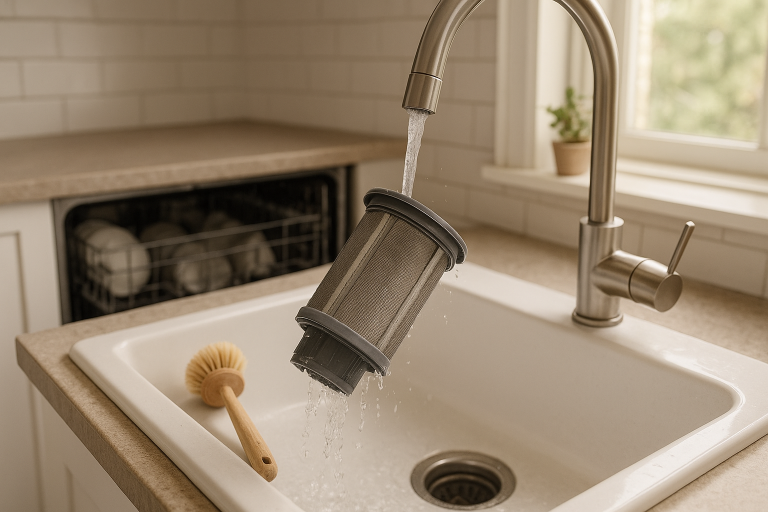
Hold the filter under warm running water. Rinse from both sides so trapped food works loose instead of being pushed deeper into the mesh. Whirlpool’s filter-cleaning instructions recommend rinsing under running water and using a soft cleaning brush for stuck-on food bits or mineral deposits. ([whirlpool.com](https://www.whirlpool.com/blog/kitchen/fixing-removing-and-replacing-dishwasher-filters.html?utm_source=openai))
5. Scrub lightly with soap
Add a drop of dish soap to a soft brush and gently scrub the mesh, plastic frame, and any crevices. Pay special attention to greasy film, which can hold odors even after visible food is gone. Rinse until the water runs clear and the filter no longer feels slick.
6. Wipe the filter well in the dishwasher
Before reinstalling the filter, wipe the sump area where it sits. Remove any labels, lemon seeds, bones, twist ties, or glass chips you can safely reach. If you suspect broken glass, wear gloves and use a damp paper towel to pick up tiny shards.
7. Reinstall and lock it in place
Put the lower filter or screen back first, then seat the upper filter and twist it until it locks. This step matters. A filter that is not seated correctly can allow debris to circulate or interfere with the wash system. Whirlpool care guidance emphasizes replacing the filter assembly correctly because it is essential for efficient dishwasher operation. ([whirlpool-cdn.thron.com](https://whirlpool-cdn.thron.com/static/QMWDTO_F100087.pdf_ORQCG5.pdf?response-content-disposition=inline%3Bfilename%3D%22F100087.pdf%22&xseo=&utm_source=openai))
Don’t Forget the Spray Arms
If you are already cleaning the filter, take one extra minute to check the spray arms. The tiny holes can clog with food particles or mineral scale, which weakens the spray pattern and leaves dishes dirty.
Spin the lower spray arm by hand to make sure it moves freely. If your model allows easy removal, rinse the spray arm under warm water and clear blocked holes with a toothpick. Consumer Reports includes clearing the filter and spray arm as part of dishwasher cleaning, and Thermador notes that limescale can block spray-arm nozzles and affect cleaning performance. ([consumerreports.org](https://www.consumerreports.org/appliances/dishwashers/how-to-clean-a-dishwasher-a1075685014/?utm_source=openai))
Should You Run Vinegar Through the Dishwasher?
Vinegar is often suggested for dishwasher odors, but use it carefully. It can help with light mineral film, but frequent or improper use may not be ideal for every machine, especially around rubber parts. A safer routine is to clean the filter first, wipe the gasket, and use a dishwasher cleaner made for the appliance if your manual allows it.
Many manufacturer guides recommend a monthly dishwasher-cleaning product to help with filming, spotting, residue, and odors. Always follow the product label and your dishwasher manual, and run the cycle empty. ([producthelp.whirlpool.com](https://producthelp.whirlpool.com/Dishwashers/Dishwasher/Other/Cleaning_and_Odor/Cleaning_and_Maintenance/Cleaning_the_Filter/Cleaning_the_Filter_-_Dishwasher?utm_source=openai))
Simple Habits That Keep the Filter Cleaner
- Scrape plates, but do not obsessively pre-rinse. Remove bones, pits, toothpicks, and large scraps before loading.
- Load so the spray arms can spin. Tall pans, cutting boards, and utensils can block water flow.
- Use the right detergent amount. Too much detergent can leave residue, especially in soft water.
- Run hot water at the sink first. This helps the dishwasher start with hotter water, especially in kitchens far from the water heater.
- Check labels on jars and containers. Paper labels can peel off and clog filters or spray holes.
When Cleaning the Filter Isn’t Enough
If dishes still come out dirty after the filter and spray arms are clean, look for other common issues: an overloaded rack, a blocked detergent dispenser, low rinse aid, a kinked drain hose, or water that is not getting hot enough. If there is standing water after a cycle, Whirlpool troubleshooting points to checking for a clogged filter as an early step, but persistent drainage problems may involve the drain path, hose, or pump. ([producthelp.whirlpool.com](https://producthelp.whirlpool.com/Dishwashers/Product_Info/Dishwasher_Product_Assistance/Dishwasher_Not_Draining?utm_source=openai))
Call a repair professional if you hear grinding, smell burning, see leaking, or cannot reinstall the filter securely. Also stop using the machine if you find broken glass in the pump area and cannot remove it safely.
A Quick Monthly Dishwasher Refresh
- Pull the bottom rack and remove the filter.
- Rinse and gently scrub the filter.
- Wipe the filter well and door gasket.
- Check spray-arm holes and clear visible clogs.
- Reinstall the filter firmly.
- Run an empty cleaning cycle if your manual recommends it.
That whole routine usually takes about 10 to 15 minutes once you know where the filter is. It is not glamorous, but it is one of the easiest ways to help your dishwasher smell fresher, drain better, and get dishes cleaner without buying a new appliance.