How to Clean a Dehumidifier So It Stops Smelling Musty
A dehumidifier works hard in a damp basement, laundry room, bathroom, or garage, but it can start to smell musty if the bucket, filter, or drain hose gets neglected. The good news is that learning how to clean a dehumidifier is simple, and most of the job takes less than 30 minutes of hands-on time.
Regular cleaning helps the machine move air better, keeps dust from clogging the filter, and prevents that stale “wet basement” smell from coming right back. Always check your owner’s manual first, but the steps below work for many portable home dehumidifiers.
How Often Should You Clean a Dehumidifier?
If you use your dehumidifier daily during humid weather, give the bucket a quick rinse every few days and a deeper wash about once a week. Clean the air filter whenever it looks dusty or when the clean-filter light comes on. Many manufacturers note that a clean filter helps the unit run efficiently, and ENERGY STAR also points homeowners toward regular maintenance to keep dehumidification systems performing well. ([energystar.gov](https://www.energystar.gov/products/dehumidifiers?utm_source=openai))
If the dehumidifier sits in a basement, crawl-space entry, laundry area, or anywhere dusty, check it more often. Dust plus moisture is exactly the kind of grime that turns a useful appliance into a musty-smelling one.
What You’ll Need
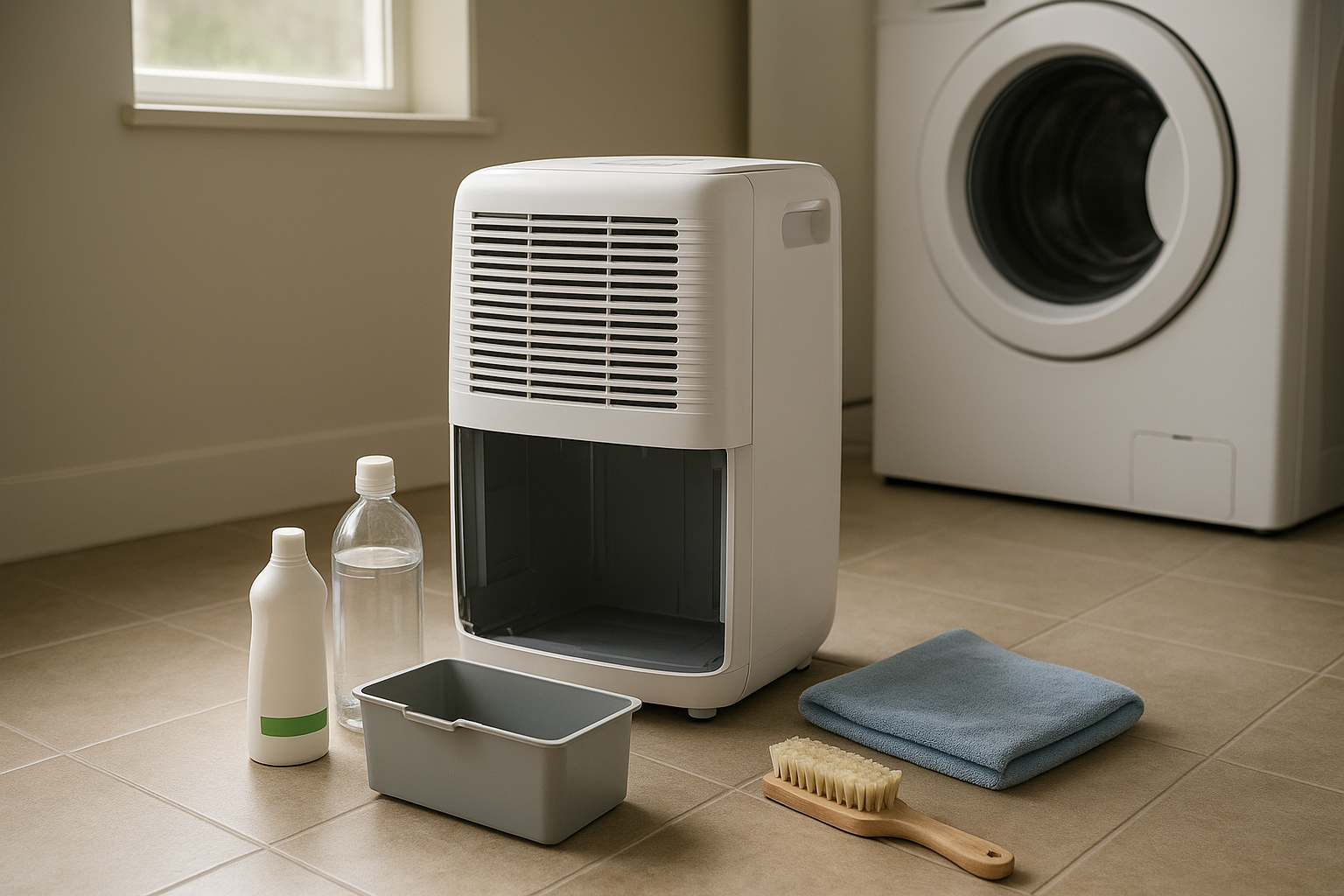
- Mild dish soap
- Warm water
- White vinegar
- Soft sponge or dishcloth
- Old toothbrush or small soft brush
- Microfiber cloth or towel
- Bucket or sink for washing parts
- Optional: flexible bottle brush for drain hoses
Safety note: Unplug the dehumidifier before cleaning it. Do not spray water into the motor, control panel, plug, or electrical openings. If you see heavy mold growth, flood contamination, damaged wiring, or a burning smell, stop and call a qualified repair pro or replace the unit.
Step 1: Empty and Rinse the Water Bucket
Turn the machine off, unplug it, and slide out the water bucket. Dump the water down a utility sink, toilet, or drain. Avoid using dehumidifier water for drinking, cooking, pet bowls, or vegetable gardens; it may contain dust, microbes, or residues from the appliance.
Rinse the bucket with warm water. If it has a slimy feel, visible film, or musty odor, wash it with a few drops of dish soap and a soft sponge. Pay special attention to corners, seams, the handle area, and the float mechanism if your model has one. Do not force the float; it usually tells the machine when the bucket is full.
Step 2: Deodorize the Bucket With Vinegar
For a bucket that still smells sour or musty, pour in enough white vinegar to coat the bottom and sides. Let it sit for 10 to 15 minutes, then scrub gently with a sponge or soft brush. Rinse well and dry with a clean towel before reinstalling.
If you see small spots of mold on hard plastic, the CDC says mold can be removed from hard surfaces with household products, soap and water, or a properly diluted bleach solution of no more than 1 cup household laundry bleach in 1 gallon of water. Never mix bleach with vinegar, ammonia, or other cleaners, and keep the area ventilated. ([cdc.gov](https://www.cdc.gov/mold-health/about/?utm_source=openai))
Step 3: Clean the Air Filter
The filter is usually behind a front or back grille. Slide it out gently. If you are not sure where it is, check your manual before tugging on any panel.
- Take the filter outside or over a trash can and tap off loose dust.
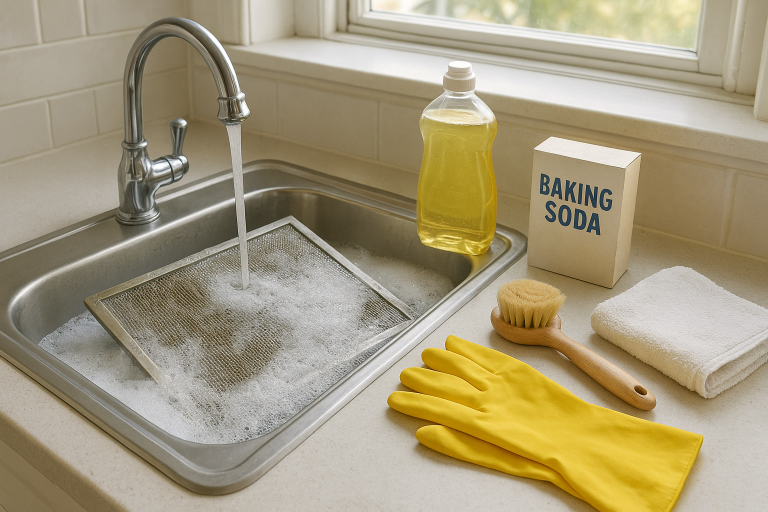
- Rinse it under lukewarm running water, unless your manual says it is not washable.
- For sticky dust, add a tiny bit of dish soap and rub gently with your fingers.
- Rinse until the water runs clear.
- Let the filter air-dry completely before putting it back.
Do not reinstall a damp filter just to get the machine running sooner. A wet filter can blow stale air, attract dust, and make the dehumidifier smell worse. If the filter is torn, warped, brittle, or still smells bad after washing, replace it with the correct part for your model.
Step 4: Wipe the Intake and Exhaust Grilles
Dust builds up on the grilles where air enters and leaves the machine. Wipe them with a dry microfiber cloth first. If grime remains, use a barely damp cloth with a little soapy water, then wipe again with a clean damp cloth.
Avoid pushing lint into the openings. If you use a vacuum brush attachment, use light suction and keep it on the outside of the grille. Do not open the sealed body of the machine unless your manual specifically instructs you to do so.
Step 5: Flush the Drain Hose, If You Use One
A continuous drain hose is convenient, but it can grow biofilm inside if water trickles through it for weeks. Disconnect the hose and take it to a sink, tub, or outdoor spigot. Flush it with warm water. If it smells musty, fill it with a 1:1 mix of white vinegar and water, let it sit for 10 minutes, then rinse thoroughly.
Check for kinks, low spots, and clogs. A gravity drain hose should slope steadily toward the drain. If the hose loops upward or lies flat on the floor, water can sit inside and turn smelly.
Step 6: Dry Everything Before Restarting
Let the bucket, filter, and hose dry fully. Wipe any splashes from the outside of the unit. Reinstall the parts, plug the machine back in, and run it as usual.
If your dehumidifier has a filter reset button, hold it according to the manual after cleaning the filter. Some models track run time and will keep showing a clean-filter reminder until you reset it.
What Humidity Level Should You Set?
For most homes, a setting around 40% to 50% relative humidity is a practical target. The CDC notes that controlling moisture is key to controlling mold, and mold problems should be addressed by cleaning the mold and fixing the moisture source. ([cdc.gov](https://www.cdc.gov/mold/pdfs/You_Can_Control_Mold.pdf?utm_source=openai))
If your basement still smells damp at 50%, try 45% and use a separate hygrometer to confirm the room reading. If the air feels too dry, your skin feels irritated, or wood furniture starts to shrink or crack, raise the setting slightly.
How to Keep the Musty Smell From Coming Back
- Empty the bucket before it sits full. Standing water gets stale fast in warm weather.
- Leave space around the unit. Keep it away from walls, curtains, boxes, and furniture so air can move freely.
- Vacuum the room. Less dust in the room means less dust in the filter and bucket.
- Fix leaks. A dehumidifier helps with damp air, but it will not solve a leaking pipe, foundation crack, or wet carpet.
- Wash before storage. Clean and dry the bucket, filter, and hose before storing the unit for the season.
When Cleaning Is Not Enough
If the dehumidifier smells musty again within a day or two, check the room itself. Damp drywall, cardboard boxes, carpet padding, wood shelving, and stored fabrics can all hold odors. The CDC advises considering professional help for mold growth larger than 10 square feet, and people with asthma, allergies, immune suppression, or chronic lung disease should be especially cautious around mold cleanup. ([cdc.gov](https://www.cdc.gov/natural-disasters/psa-toolkit/preventing-mold.html?utm_source=openai))
You may also be dealing with an older appliance that has buildup on internal coils or hidden areas you cannot safely reach. If the unit leaks, freezes repeatedly, trips a breaker, or keeps a sour odor after a careful cleaning, replacement may be the better choice.
The Simple Routine
For an easy habit, remember this: empty often, wash weekly, dry thoroughly, and check the filter monthly or whenever the machine asks for it. A clean dehumidifier does a better job pulling moisture from the air—and it should make your home smell fresher, not mustier.