September Stagger Pruning for Fuller Fall Borders
By late September, many flower borders start to look a little unruly. Stems lean outward, spent blooms hang heavy, and a few perennials seem determined to spill into the path. A simple selective pruning method can bring the whole display back into balance while encouraging a second wave of color.
This approach is often called September stagger pruning. Instead of cutting everything back at once, you trim different plants to different heights so the border keeps its shape, improves airflow, and continues blooming for longer.
What is September stagger pruning?
September stagger pruning is a light, strategic late-season trim for fall-blooming perennials. The idea is to reduce weight on top-heavy plants, remove tired flowers, and create a layered effect across the border rather than a flat, all-at-once haircut.
It works especially well on plants that tend to flop after a burst of growth or after heavy rain. When done thoughtfully, it can keep the garden looking fresh through the last stretch of the season without removing the flowers you are still waiting to enjoy.
Why it helps fall borders
Late-season borders face a few common problems:
- Heavy blooms bend stems and push plants into neighboring spaces.
- Dense growth traps moisture, which can encourage mildew and other fungal issues.
- Spent flowers distract from fresh buds and make the whole bed look older than it is.
- Wind and rain can damage tall, crowded plants more easily than well-shaped ones.
Selective pruning solves these issues without stripping the bed bare. It also lets sunlight and air reach the lower parts of the plants, which helps keep foliage healthier as days get shorter.
Best plants for this technique
Not every perennial needs the same treatment, but the September stagger is particularly useful for plants that bloom heavily in late summer and early fall. Good candidates include:
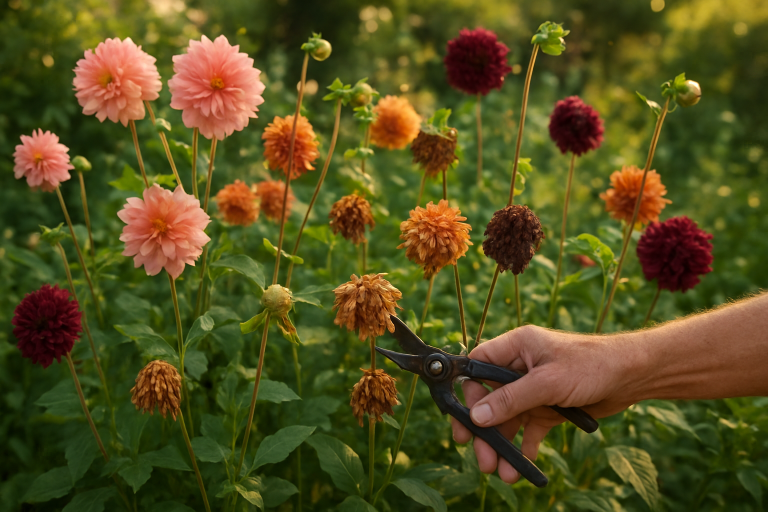
- Dahlias
- Asters
- Japanese anemones
- Heleniums
- Goldenrod varieties that get tall and top-heavy
- Chrysanthemums in mixed borders
Some upright salvias, sedums, and tall perennial daisies may also benefit if they are getting floppy. The key is to judge the plant’s shape and how it sits next to the plants around it.
How to do it step by step
Before you start, make sure your tools are clean and sharp. A pair of bypass pruners works well for thicker stems, while snips or micro-tip shears are useful for smaller, crowded stems and deadheading.
- Look at the border as a whole. Step back and identify the plants that are leaning, crowding their neighbors, or blocking smaller flowers behind them.
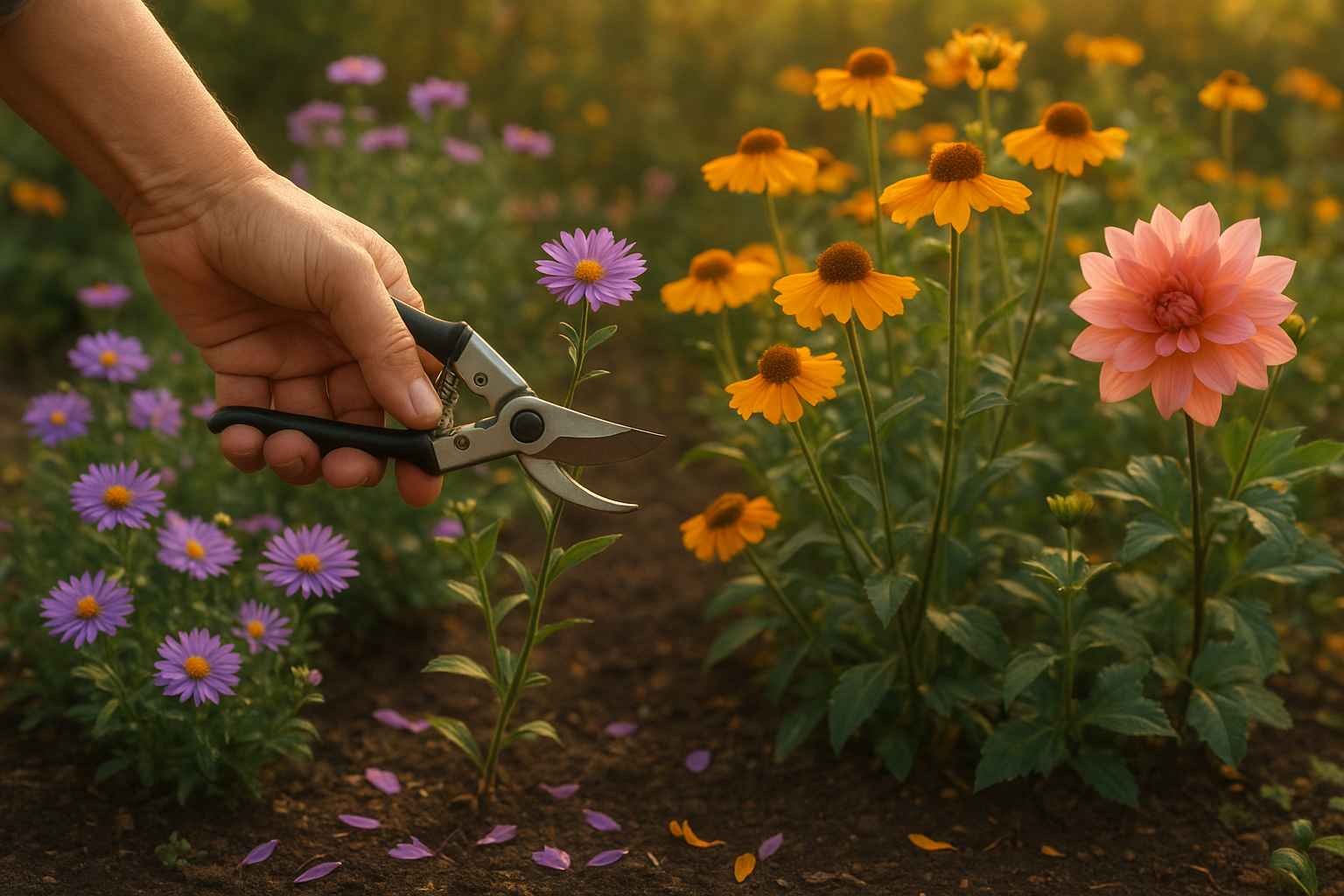
- Start with the most tired blooms. Remove spent flowers first. Cut just above a healthy leaf node or side shoot when possible.
- Trim only part of the plant. For taller clumps, take back some stems by a third, leaving others untouched so the plant keeps a natural shape.
- Stagger the heights. Cut different plants at slightly different levels so the bed looks layered rather than squared off.
- Clear weak or damaged growth. Remove broken stems, yellowing leaves, and anything that is rubbing against a neighbor.
- Finish with a tidy deadhead. On plants that are still actively blooming, snip old flowers regularly to encourage more buds.
If you have a large border, work in sections. This makes it easier to see the effect of each cut and keeps you from over-pruning in one area.
How much should you cut?
There is no single rule for every plant, but a useful guideline is to start small. Remove only what is clearly spent or causing the plant to flop. If a perennial is very leggy, you can take more from the tallest stems and leave shorter, healthier shoots in place.
A good habit is to prune, then pause. Step back every few minutes and look at the bed from the angle you see most often, such as from a patio, path, or kitchen window. The goal is a border that feels relaxed and balanced, not obviously sheared.
Pruning tips that protect plant health
Late-season pruning is about more than appearance. It can also help prevent problems that develop when plants stay crowded and damp.
- Clean your blades between plants if you spot mildew, leaf spots, or any suspicious damage.
- Use a light touch in wet weather. Avoid cutting when foliage is soaked if you can help it.
- Do not remove too much green growth from plants that are still actively feeding roots for next year.
- Keep the center open on clump-forming perennials so air can move through the plant.
For cleaning tools, rubbing alcohol on a cloth is a simple option. This small habit can reduce the chance of carrying disease from one plant to another.
What to do with the clippings
Healthy, disease-free stems can usually go into a compost pile if your compost system gets hot enough to break them down properly. If the cut material shows signs of disease, it is safer to bag it and remove it from the garden.
You can also save a few attractive seed heads for wildlife-friendly interest, especially if the border still looks full enough without them. Birds often appreciate the extra food later in the season.
Common mistakes to avoid
Selective pruning is simple, but a few mistakes can undo the benefits:
- Shearing everything evenly, which can create a flat, unnatural look.
- Cutting too low and removing blooming buds that were about to open.
- Ignoring the surrounding plants, which can lead to crowded, shaded spots.
- Pruning too late on plants that need time to produce a final flush of flowers before cold weather.
If a plant is already very close to the end of its season, deadheading may be enough. Save the heavier trimming for the perennials that still have weeks of performance left.
Aftercare for better fall color
Once you have finished pruning, give the border a little support. Water deeply if the soil is dry, especially for newly trimmed plants that may push out fresh side growth. A thin layer of compost can also help feed the soil without forcing weak, soft growth the way high-nitrogen fertilizer can.
Keep watching the border over the next couple of weeks. In many gardens, the first round of staggered cuts triggers a second bloom cycle, and you may only need a quick touch-up deadheading to maintain the look.
A simple late-season routine
If you want an easy way to remember the process, think of it this way:
- Remove the spent blooms.
- Shorten the most awkward stems.
- Leave some height variation.
- Improve airflow and light.
- Step back and adjust only if needed.
That small amount of effort can make a big difference. Instead of letting fall borders collapse into a tangle, you keep them lively, layered, and blooming for as long as the weather allows. September stagger pruning is one of those garden tasks that is quick to do, easy to learn, and surprisingly rewarding by the end of the season.