How to Build a Puddle Bird Bath for Ground-Feeding Birds
If your standard bird bath gets occasional visits but your yard still feels oddly quiet, the answer may be closer to the ground. A puddle bird bath mimics the shallow rain pools many birds naturally trust, making it especially appealing to ground-feeding species that prefer a low, open spot.
The good news is that you do not need a fancy fixture or plumbing to create one. With the right shallow container, a stable location, and a little routine care, you can build a simple water feature that feels safe, looks natural, and brings more birds into view.
Why a puddle bird bath works
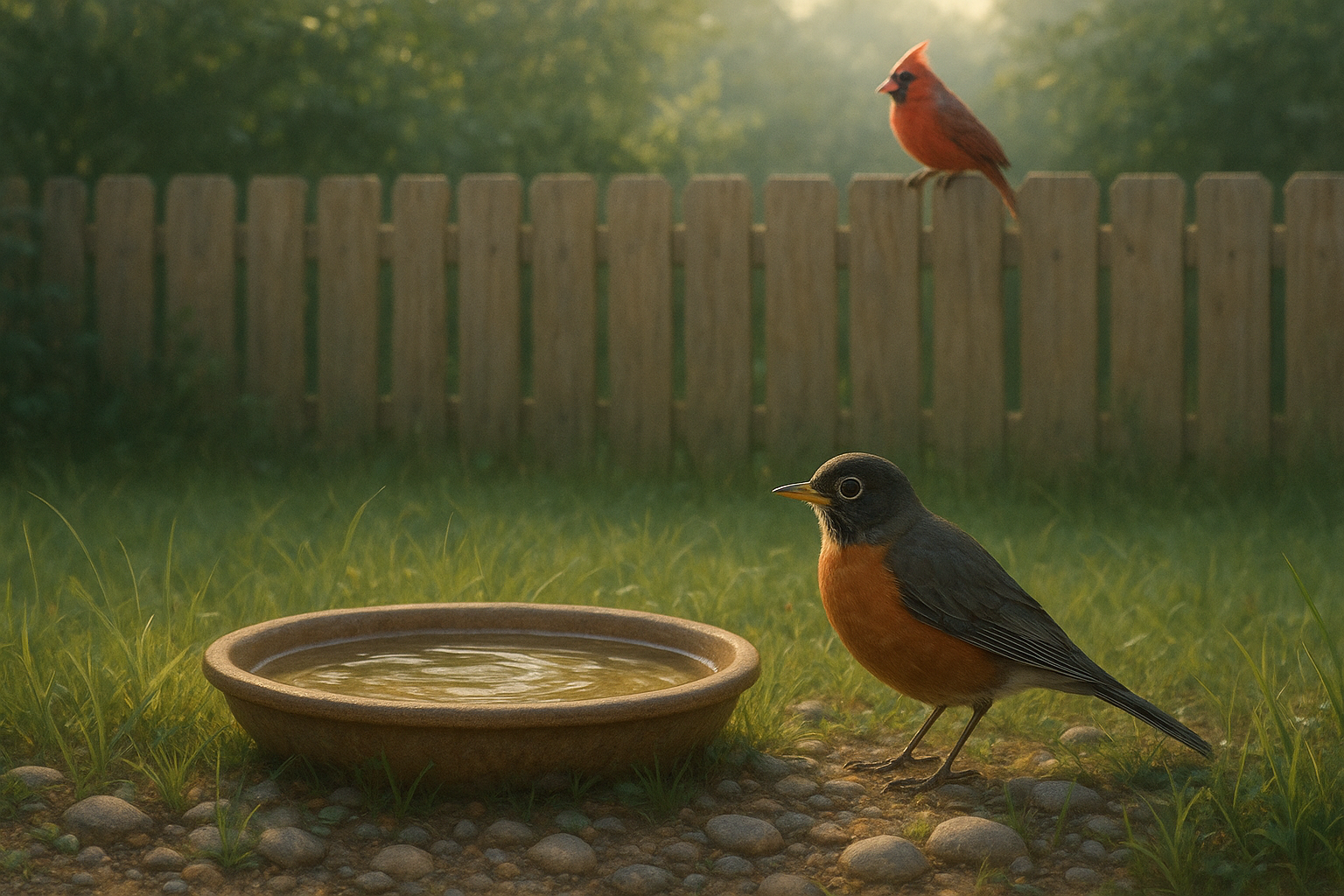
Many birds are cautious around tall or deep baths. Species such as robins, mourning doves, towhees, thrashers, juncos, and cardinals often spend time foraging close to the ground, so a low water source feels more familiar than a raised pedestal.
A puddle-style bath offers three main advantages:
- It feels safer. Birds can watch for predators more easily when they are not perched high above the ground.
- It mimics nature. Shallow water resembles the little rain pools birds encounter in the wild.
- It is easier to access. Small songbirds can step in and out without struggling against deep sides.
This setup is especially helpful during hot, dry weather when natural puddles disappear quickly. A reliable source of shallow water can bring more regular activity to your yard.
Choose the right container
You do not need anything specialized to make a puddle bird bath. In fact, some of the best options are simple household items repurposed for outdoor use. The key is to choose something shallow, stable, and easy to clean.
Good options include:
- A plant saucer
- A shallow ceramic dish
- A terra-cotta tray
- A wide bird bath bowl placed at ground level
- A shallow metal or resin basin
Look for a depth of about 1 to 2 inches at the deepest point, with sloped edges if possible. Birds are more comfortable when they can wade in gradually rather than step into a steep bowl.
If the surface is slick, add a few small stones or pebbles. These give birds traction and create a perch-like edge for tiny feet. Just be sure the stones are large enough that they cannot be swallowed or shifted easily.
Where to place it for the best results
Placement matters almost as much as the bath itself. Ground-feeding birds tend to choose open but not exposed spaces, so aim for a location that balances visibility with a little nearby cover.
Try placing your puddle bath:
- Near shrubs, low trees, or tall ornamental grasses
- In a spot where birds can quickly retreat if startled
- Away from dense predator hiding places like tall brush piles
- Where you can see it from a window or patio chair
It is also smart to keep the bath a few feet away from bird feeders. Seed hulls and dropped food can dirty the water quickly, and crowded feeding areas may make timid birds hesitate. A separate drinking and bathing spot is usually more inviting.
Morning sun is helpful because it encourages birds to bathe early in the day. However, avoid full-day blazing sun if you can, since warm water spoils faster and evaporates more quickly.
How to set up a safe puddle bath
Setting one up is simple, but a few details will make it work better and last longer.
- Level the ground. Clear away stones, sticks, and debris so the container sits flat.
- Anchor the bath. Bury part of a saucer or dish slightly into the soil so it cannot tip easily.
- Add texture. Place a few pebbles or rough stones in one section of the bath.
- Fill with fresh water. Keep the water shallow, ideally just enough to cover the stones slightly.
- Check stability. Make sure the bath does not wobble if a bird lands on the rim.
If you want a more natural look, tuck the edge into mulch, gravel, or low-growing plants. The goal is for the bath to look like a tiny, safe pool rather than a decorative object dropped into the yard.
Keep the water clean
Because a puddle bird bath sits close to the ground, it can collect dirt, leaves, seed hulls, and algae quickly. Clean water is essential for birds and helps prevent odors and mosquito problems.
For best results:
- Change the water daily in warm weather.
- Scrub the basin every few days with a brush and plain water.
- Use a mild vinegar rinse if mineral buildup starts to appear, then rinse thoroughly.
- Dump standing water after storms if it has filled with debris.
Avoid soaps, bleach, or harsh chemicals unless you are disinfecting a bath that has been removed from use and rinsed extremely well afterward. In most cases, regular brushing and fresh water are enough.
If mosquitoes are a concern, do not let the water sit for long periods. A shallow bath that is refreshed often is less likely to become a breeding spot.
Make it more attractive to birds
Birds are more likely to trust a water source that feels calm and familiar. Small adjustments can help.
Helpful extras:
- A nearby branch or branch pile for waiting and watching
- Low shrubs for quick cover
- Moving water such as a dripper or very gentle bubbler
- Light-colored stones that make the water easier to spot
Movement often draws birds in from a distance. A slow drip or tiny fountain is enough; you do not need splashing noise. Some birds approach cautiously and prefer to watch the bath for a while before landing.
If you have not seen immediate visitors, be patient. Birds often need time to notice a new water source, especially if they already have established routines in the neighborhood.
Seasonal tips for year-round use
A puddle bird bath can be useful beyond summer. In dry spring weather, birds may be nesting and need easy access to water. In autumn, migrating birds may stop by looking for reliable hydration.
In winter, use caution if temperatures dip below freezing. A shallow bath can freeze quickly, and solid ice is not helpful to birds. If you live in a cold climate, you can:
- Bring the bath indoors until warm weather returns
- Use a bird-safe heated bath designed for outdoor use
- Place the bath in a sheltered area where it thaws more slowly
Always avoid adding salt or antifreeze. Those substances are dangerous to wildlife.
Common mistakes to avoid
Even a simple setup can be less effective if a few details are overlooked.
- Too deep: Deep water makes timid birds uneasy.
- Too exposed: Open lawns can feel risky without nearby cover.
- Too dirty: Stale water quickly loses its appeal.
- Too slippery: Smooth surfaces without traction can be hard for birds to use.
- Too hidden: Birds still need to see the bath from a safe distance.
Think of it as a compromise between visibility and shelter. Birds want to feel alert, but not trapped.
A simple upgrade with big wildlife value
A puddle bird bath is one of the easiest wildlife-friendly additions you can make. It does not take much space, money, or maintenance, yet it can make your yard more welcoming to birds that often avoid traditional raised baths.
If you have been hoping to see more robins, doves, cardinals, and other ground-loving visitors, start with a shallow dish, fresh water, and a safe spot near cover. Once birds discover a good puddle bath, they often return again and again.
Sometimes the smallest change creates the biggest difference in a garden. In this case, a little puddle on the ground may be exactly what your backyard birds have been waiting for.